
Pool stone pavers are natural or manufactured stone materials designed specifically for pool decking and surrounding areas. They combine beauty, safety, and durability in wet environments.
Quick Overview: What You Need to Know About Pool Stone Pavers
If you’ve ever stepped onto scorching concrete around a pool on a summer day, you already understand why material choice matters. Nothing beats a stylish in-ground swimming pool for enhancing your outdoor space, but the deck surrounding it deserves just as much attention.
Natural stone pavers offer what poured concrete simply cannot: a combination of elegance, safety, and comfort that elevates your entire backyard. They resist fading from chlorine and sun exposure, provide slip-resistant surfaces when wet, and stay significantly cooler underfoot during hot Massachusetts summers.
Whether you’re building a new pool in Methuen or upgrading an existing deck in North Andover, understanding your stone paver options helps you make an informed decision that balances aesthetics, performance, and budget. This guide walks you through everything from material selection to installation methods, helping you create a pool deck that’s both beautiful and built to last.
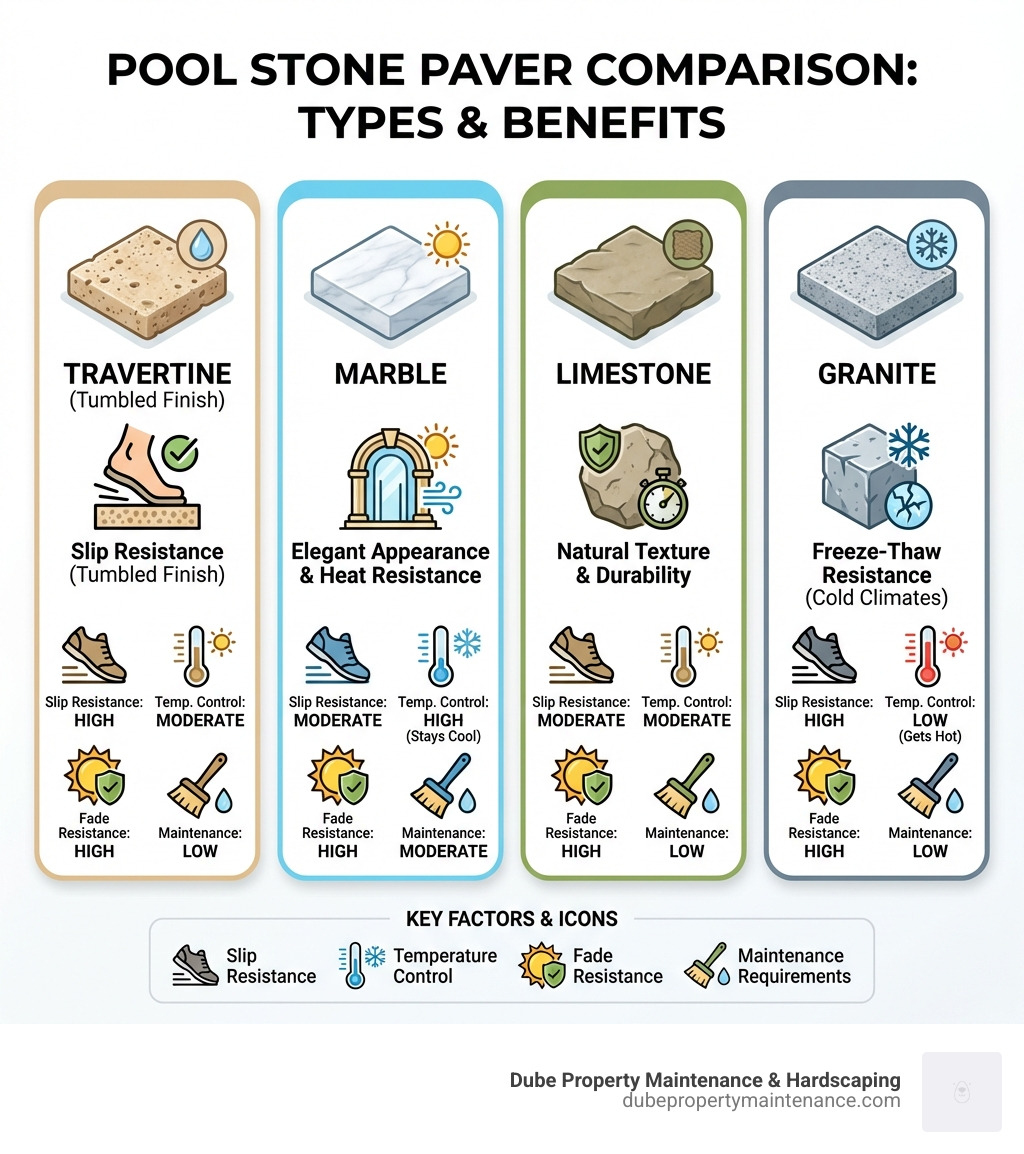
Learn more about pool stone pavers:
When we talk to homeowners in places like Andover, MA, or Salem, NH, the conversation often starts with aesthetics but quickly moves to performance. A pool deck isn’t just a patio; it is a high-traffic, high-moisture environment that faces intense sun in the summer and brutal freeze-thaw cycles in the winter.
Pool stone pavers offer a level of durability that synthetic materials or poured concrete often lack. Because stone is a natural product, it has already survived thousands of years in the elements. When installed as pool deck paving, these stones provide a dense, hard-wearing surface that resists the corrosive effects of salt and chlorine.
One of the most significant advantages of natural stone is its resistance to fading. While stained concrete or plastic-based decking can lose its luster after a few seasons of New England sun, stone keeps its color for decades. Furthermore, stone is inherently low-maintenance. If a single paver cracks—which is rare with professional installation—you can replace that specific stone rather than tearing up an entire section of the deck.
According to scientific research on stone performance, the density and mineral composition of stones like granite and travertine make them uniquely suited for outdoor “wet” zones.
Swimmer safety is our number one priority. Wet feet and smooth surfaces are a recipe for disaster. This is where the texture of pool stone pavers becomes a lifesaver. By choosing stones with a “tumbled,” “honed unfilled,” or “natural cleft” finish, you create a surface that provides grip even when submerged under a layer of splash water.
For pavers around inground pools, we recommend materials with a high coefficient of friction. Travertine, for example, is naturally porous. These tiny, microscopic holes (which can be left unfilled for maximum grip) act like tiny suction cups for your feet. Similarly, sandblasted or flamed granite provides a gritty texture that is comfortable to walk on but provides excellent traction.
Have you ever done the “hot foot dance” across a dark asphalt driveway? You don’t want that experience on your pool deck. Heat retention is a major factor in our region. While we appreciate the sun, dark materials can reach temperatures that cause physical discomfort or even burns.
Natural stones, particularly light-colored ones like Ivory Travertine or White Marble, have high solar reflectance. This means they bounce the sun’s rays away rather than absorbing them. Light-colored pool stone pavers can stay up to 20-30% cooler than dark concrete or brick pavers. This makes the area “cool underfoot,” allowing you to walk from the lounge chair to the water without needing flip-flops.

Choosing the right stone is a bit like choosing the right car—you need to balance how it looks with how it handles the road (or in this case, the weather). In the Merrimack Valley and Southern New Hampshire, we have to be particularly mindful of the “freeze-thaw” cycle. Some stones absorb water, which then freezes and expands, causing the stone to crack. We help our clients select stones that are “winter strong.”
These three stones are the “Big Three” of the pool world.
For more details on these specific materials, check out our guides on travertine pavers and how they perform in our local climate.
Many homeowners consider concrete pavers as an alternative. While modern manufacturing has allowed concrete to mimic the look of stone, there are distinct differences in performance and long-term value.
| Feature | Natural Stone Pavers | Concrete Pavers |
|---|---|---|
| Durability | Extremely High (Decades/Centuries) | High (20-30 years) |
| Heat Retention | Low (Stays Cool) | Moderate to High |
| Color Longevity | Permanent (Natural Pigment) | May fade over time (Dyes) |
| Slip Resistance | Excellent (Natural Texture) | Good (Manufactured Texture) |
| Average Cost | $15 – $55+ per sq. ft. | $5 – $25 per sq. ft. |
| Aesthetic | Unique, “Old-World” Elegance | Uniform, Modern |
While concrete pavers for pool decks are a budget-friendly and versatile option, natural stone is generally considered a “value-add” upgrade that increases property resale value more significantly.
The beauty of pool stone pavers lies in their versatility. You can create a backyard that looks like a rustic Mediterranean villa or a sleek, minimalist resort.
The pattern you choose changes the entire “vibe” of the space.
Explore more swimming pool paving ideas to see how these patterns look in real-world settings. For those aiming for a cutting-edge look, modern pool deck pavers often utilize larger scales and monochromatic color palettes.
Color isn’t just about what you like; it’s about how it interacts with the sun and the house.
For visual inspiration for pool designs, looking at galleries of completed projects can help you visualize how these colors change under different lighting conditions.
A pool deck is only as good as the ground beneath it. In our service areas—from Methuen, MA to Nashua, NH—the soil can be tricky. Proper excavation and base preparation are non-negotiable.
“Coping” is the term for the stone that caps the edge of the pool shell. It’s the transition between the water and the deck.
It is vital to pair your pavers and coping for inground pools correctly to ensure a seamless look. We often use the same material for both, but a contrasting coping color can create a beautiful “frame” around your pool.
People often ask, “Should I seal my stone?” The answer is usually yes, especially for travertine. Sealing helps protect the stone from salt, chlorine, and organic stains like leaves or bird droppings. We provide detailed advice on sealing travertine pavers to help you decide which product is right for your deck.
For daily care, a simple rinse with a garden hose is usually enough. For the joints between the pavers, we use polymeric sand. This is a special sand that “locks” in place when wet, preventing weeds from growing and keeping ants from making homes under your deck.
If you are installing pavers around swimming pools yourself or hiring a pro, ensure that the pitch is correct. Water should always flow away from the pool and the house to prevent puddling and structural damage.
When planning your budget, it’s important to understand that stone is a premium material. The costs listed below are average costs based on national internet data and do not represent the specific pricing of Dube Property Maintenance & Hardscaping. Every project is unique based on site access, soil conditions, and stone availability.
The cost for a stone pool deck typically ranges from $5 to $55 per square foot.
For a deeper dive into these numbers, visit our page on pool deck pavers cost.
Travertine and Marble are the winners here. Because of their light colors and high density, they reflect more heat than they absorb. Generally, the lighter the color, the cooler the stone.
While not strictly “required” for the stone’s survival, we highly recommend it. A high-quality penetrating sealer will protect against chlorine/salt erosion and make it much easier to clean off spilled drinks or leaf stains.
Natural stone is virtually permanent. While the installation (the sand or base) might need a “tune-up” after 20 years, the stones themselves will last a lifetime. Concrete pavers typically have a lifespan of 20-30 years before they begin to show significant wear or surface erosion.
Upgrading to pool stone pavers is one of the best investments you can make for your home. It turns a standard swimming area into a true luxury retreat that is safe for your family, comfortable for your feet, and stunning to look at.
At Dube Property Maintenance & Hardscaping, we specialize in bringing these high-end outdoor visions to life. From the initial design and material selection to the final walkthrough, our team of professional masons and installers ensures your project is handled with the highest level of craftsmanship. We proudly serve residential and commercial clients throughout Massachusetts and Southern New Hampshire, including Methuen, Andover, North Andover, Haverhill, and Salem, NH.
Ready to give your pool the deck it deserves? Explore our hardscaping services or contact us today to start planning your backyard transformation. Whether you’re in Lowell, Dracut, or any of our other service areas, we’re here to help you build something beautiful.
