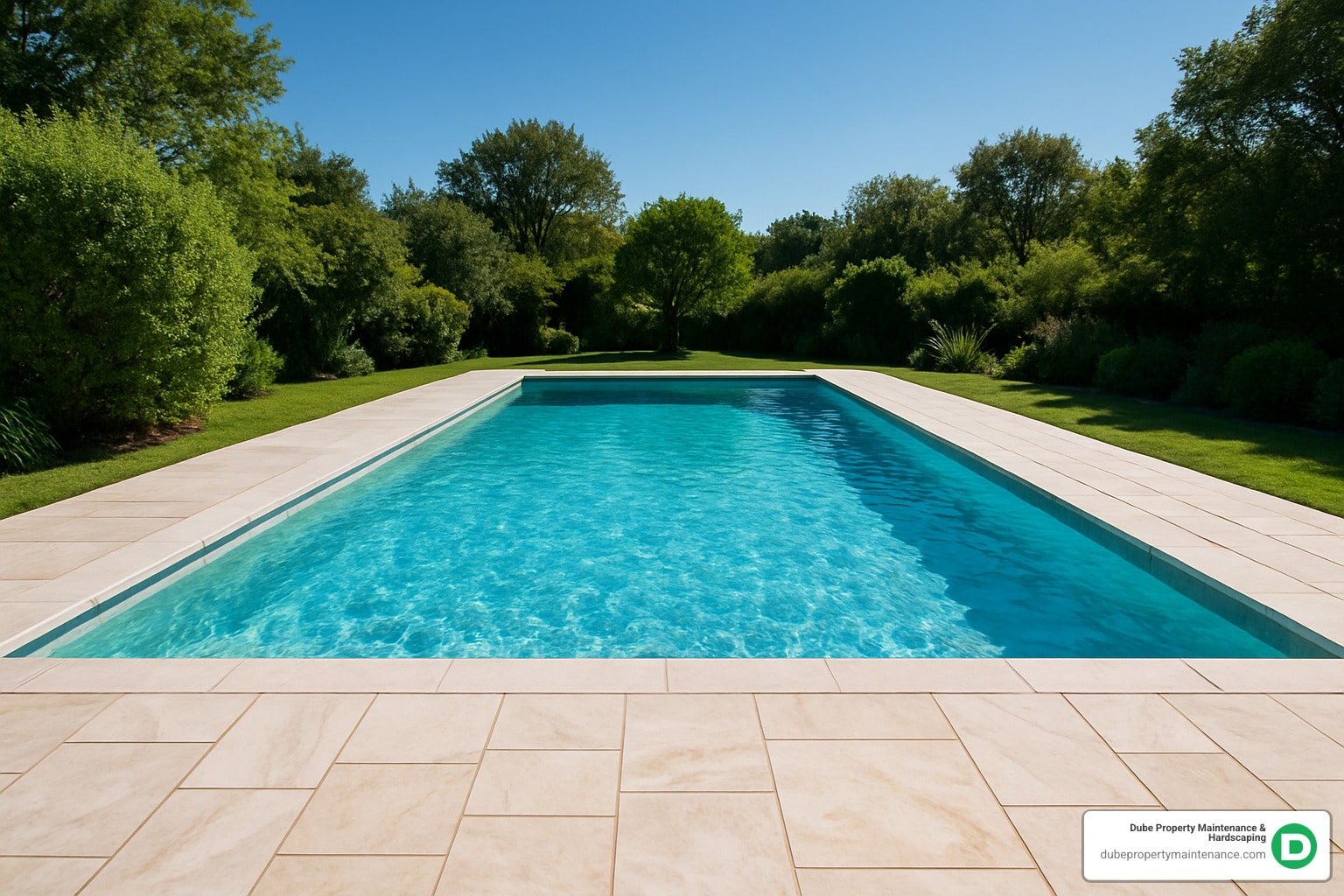

Marble pavers around pool areas offer best elegance and natural cooling properties, but require careful consideration of finish types, maintenance needs, and initial costs to ensure both safety and longevity.
Quick Answer: Marble Pool Paver Benefits
Pool decks face unique challenges that most homeowners don’t consider until it’s too late. Harsh sunlight, pool chemicals, constant wet-dry cycles, and heavy foot traffic can quickly turn your dream outdoor space into a maintenance nightmare.
Natural stone has been the gold standard for luxury outdoor spaces for centuries. From ancient Roman baths to modern resort pools, marble has proven its worth in wet environments. But here’s the thing – not all marble installations are created equal.
The key question isn’t whether marble works around pools (it absolutely does), but rather: Is it the right choice for your specific situation, climate, and maintenance preferences?
As one industry expert with over 20 years of experience noted in recent discussions: “I wouldn’t use any of those materials in or around a pool… they do not hold out well with the chemicals.” Yet countless homeowners report excellent results with proper installation and care.
This contradiction highlights exactly why you need the complete picture before making your decision.

Explore more about marble pavers around pool:
There’s something magical about stepping onto a marble pavers around pool deck that instantly transforms your backyard into a luxury resort. The natural veining patterns that dance across each marble paver create a unique masterpiece – no two pieces are exactly alike, giving your pool area a character that manufactured materials simply can’t match.
We’ve worked with countless homeowners throughout Massachusetts and New Hampshire, and the reaction is always the same when they see their finished marble pool deck. The timeless elegance never goes out of style. While other materials might look dated in a few years, marble has that classic appeal that actually gets better with age.
Think about it – the ancient Greeks and Romans knew what they were doing when they chose marble for their most important structures. The unique patterns and natural veining in marble create visual interest that keeps drawing your eye back for another look. It’s like having a work of art as your pool deck.
Property values tell the story too. A well-installed marble pool deck doesn’t just look amazing – it’s a smart investment that increases property value significantly. Future buyers recognize quality when they see it, and marble has that timeless look that appeals across generations.
As one homeowner put it after we completed their marble installation: “This might be the most beautiful pool deck I’ve ever seen. It looks like something you’d find at a five-star resort.”
If you’re considering extending that luxury feel throughout your outdoor space, our paver patios can create a seamless flow from your pool area to your entertaining spaces.

Here’s where marble really shows off – and your feet will thank you for it! Those scorching summer days when concrete feels like a frying pan? Marble pavers around pool areas stay surprisingly comfortable underfoot, even when the sun is blazing overhead.
The science behind this comfort is pretty cool (pun intended). Marble’s dense, crystalline structure doesn’t absorb and hold heat like concrete or asphalt does. Instead, it has amazing heat resistance and actually reflects sunlight rather than soaking it up like a sponge.
Lighter colors work even better for this cooling effect. Arctic White and Carrara White marble pavers are like natural air conditioning for your feet. One homeowner in Florida told us their leather-finish marble stayed comfortable even in direct Florida sun – and if it works there, imagine how perfect it is for our New England summers!
This natural cooling property is especially great for families with kids who are always running around the pool barefoot. No more watching them hop across burning concrete like they’re walking on hot coals. The comfortable surface in hot climates means everyone can enjoy the pool area without worrying about burned feet.
The difference is so noticeable that many of our clients are amazed the first time they walk on their new marble deck during a hot day. It’s one of those “you have to feel it to believe it” moments.
When we talk about marble’s durability, we’re not just throwing around fancy marketing terms – the numbers back it up. Quality marble like Arctic White has a compressive strength of 7,528 psi. That’s serious strength that easily handles heavy foot traffic, pool furniture, and even the occasional dropped poolside equipment without breaking a sweat.
The historical use of marble speaks volumes about its lasting power. Those Roman and Greek structures built thousands of years ago? Many are still standing strong today. If marble can handle centuries of weather, wars, and wear, it can definitely handle your pool parties and family gatherings.
With a hardness rating of 3.5 on the Mohs scale, marble hits that sweet spot – tough enough to resist daily wear but workable enough for our installation team to cut and shape precisely. It’s like having the best of both worlds: strength and flexibility.
Here’s a technical detail that matters for our New England climate: marble’s water absorption rate is incredibly low at just 0.12%. This means less water gets into the stone, which is crucial for surviving our freeze-thaw cycles without cracking or damage.
This durability makes marble a long-lasting investment that withstands heavy foot traffic year after year. While the upfront cost might be higher than some alternatives, the longevity means you won’t be replacing or major repairs anytime soon.
For more detailed comparisons of different pool deck materials and their performance, check out our guide on choosing the best pavers for your pool deck.
Let’s be honest – marble pavers around pool installations aren’t exactly budget-friendly. The material costs alone can make your wallet feel a little lighter, with prices typically ranging from $2 to $12 per square foot based on internet data (not actual costs for Dube Property Maintenance & Hardscaping). However, premium marble options can stretch much higher, sometimes reaching $36 per square foot or more for the finest quality stones.
But here’s the thing – the material cost is just the beginning. Professional installation is absolutely essential with marble, and that’s where the investment really adds up. Unlike basic concrete pavers that some brave homeowners might tackle as a weekend project, marble demands skilled craftsmanship to ensure proper drainage, leveling, and long-term performance.
The complexity of working with natural stone means you’re looking at a significant investment in professional expertise. However, this isn’t just an expense – it’s an investment in your property’s value and your family’s enjoyment for years to come.
One homeowner put it perfectly: “While the upfront cost made me pause, the increased property value and the fact that I won’t need to replace these pavers in five years like I would with cheaper alternatives made the decision easier.”
Quality marble pavers, when properly installed and maintained, can last decades. The timeless elegance doesn’t go out of style, and the durability means you’re not facing replacement costs down the road. For detailed cost breakdowns and financing options, check our comprehensive guide on pool deck paver costs.
Here’s something that surprises many homeowners: marble is naturally porous. Those tiny openings that give marble its breathable quality can also absorb liquids if you’re not careful. This means that poolside barbecue sauce, sunscreen, or that glass of red wine could potentially leave a permanent reminder of your summer fun.
The good news? Quality marble isn’t as porous as you might think. Arctic White Marble, for instance, has a water absorption rate of just 0.12% – that’s actually quite impressive for natural stone. But even this low porosity means proper sealing is your best friend for long-term stain resistance.
Without proper sealing, marble pavers around pool areas can develop discoloration over time. Pool chemicals, while essential for keeping your water safe and clean, can gradually affect unsealed marble surfaces. Think of sealing as giving your marble a protective shield against life’s little accidents.
As one experienced homeowner learned the hard way: “I thought I could skip the sealing step to save money. Big mistake. One barbecue later, and I had permanent stains that could have been easily prevented.”
The solution isn’t to avoid marble – it’s to understand that proper maintenance is part of the package. With appropriate sealing and quick cleanup of spills, your marble pavers can maintain their stunning appearance for decades.
For homeowners who prefer even less maintenance, our article on travertine pavers as a less porous alternative explores other natural stone options that might better suit specific lifestyle preferences.
Marble’s elegance comes with a trade-off – it’s softer than granite or quartzite, which means it can be scratched by sharp or heavy objects. Dragging that heavy metal pool chair across your beautiful marble pavers? That’s a recipe for permanent scratches that will make you wince every time you see them.
The solution is simple awareness and prevention. Protective pads under furniture legs, careful handling when moving items, and teaching family members to lift rather than drag can prevent most scratching issues.
Pool chemicals present another consideration that’s worth understanding upfront. While marble can absolutely handle normal pool chemical exposure, the combination of chlorine, pH fluctuations, and other pool treatments can gradually affect the stone’s surface finish over time. It’s not an immediate concern, but it’s something to factor into your long-term maintenance planning.
Saltwater pools add another layer of complexity. Marble actually has decent salt vapor resistance at 0.07%, which sounds technical but basically means it can handle salt exposure reasonably well. However, salt can cause etching or dulling of the finish without proper care.
One saltwater pool owner shared their experience: “I was worried about the salt affecting my marble, but with regular rinsing and proper sealing, it’s been beautiful for three years now. The key is staying on top of maintenance.”
The bottom line? Marble requires more thoughtful care than some alternatives. This isn’t necessarily a dealbreaker – many homeowners find the extra attention worthwhile for the incredible aesthetic and comfort benefits marble provides. It’s about matching your lifestyle and maintenance preferences with the right material choice.

Here’s where we need to have a serious conversation about safety. The finish you choose for your marble pavers around pool can literally be the difference between a relaxing poolside experience and a trip to the emergency room.
Too many homeowners get swept away by the glossy beauty of polished marble and forget they’re installing it in one of the wettest areas of their property. Don’t make this mistake.
Tumbled finish creates that naturally weathered look with slightly rounded edges and a wonderfully textured surface. One homeowner told us: “It’s tumbled and not slippery. It’s actually very easy on the feet.” This finish gives you excellent slip resistance while maintaining that authentic, old-world charm.
Honed finish strikes a beautiful balance between elegance and practicality. You get that smooth, sophisticated matte surface that’s far less slippery than polished marble, but still refined enough for the most discerning taste. It’s like the perfect compromise between safety and style.
For maximum grip, sandblasted finish creates a coarser, highly textured surface that’s incredibly slip-resistant. However, some of our fellow contractors warn that sandblasted surfaces can chip more easily and may show stains more readily if you choose very light colors.
Leathered finish offers something special – small surface bumps and ridges with shallower crevices than tumbled finishes. This makes cleaning easier while still providing excellent traction. As one user noted, it’s “slip resistant” and great at “eliminating glare and staying cool in hot sun.”
The one finish to absolutely avoid? Polished marble around wet areas. Yes, it’s gorgeous in showrooms, but it becomes dangerously slippery when wet. Save the polished look for indoor applications where safety isn’t compromised.
Color choice isn’t just about aesthetics – it’s about comfort and functionality too. Lighter colors like Arctic White, Carrara White, and Diana Royal work like natural air conditioning for your feet. They reflect sunlight instead of absorbing it, keeping surfaces significantly cooler.
A Las Vegas homeowner put it perfectly: “I actually prefer the leathered finish but I wanted the lighter color for the pool deck” specifically to combat that intense desert heat. Smart thinking!
But here’s the trade-off – very light colors can create glare that has you squinting like you’re staring into the sun. One homeowner shared: “It’s pretty bright in the direct sunlight but not a problem for us. I always wore sunglasses out there before we got the marble added.”
Popular marble colors that work beautifully around pools include Arctic White with its clean appearance and subtle gray veining, Diana Royal offering warm beige tones with natural variation, and Carrara White featuring that classic white with distinctive gray veining that never goes out of style.
Thickness matters more than you might think. For pool decks, we recommend at least 2 cm (about 0.79 inches) thickness to handle heavy foot traffic and pool furniture without cracking. If you want to go the extra mile, 1.25-inch thick pavers provide even better long-term performance.
Thicker pavers handle our New England weather changes better too. They’re less likely to crack when temperatures swing from summer heat to winter freeze, and they provide better stability for the installation overall.

Getting your marble pavers around pool installation right from the start saves you headaches and money down the road. Trust us – we’ve seen too many beautiful marble installations fail because corners were cut during the foundation work.
The most popular method for residential pool decks is sand set installation. This involves carefully excavating the area, installing a compacted crushed stone base, and setting your marble pavers on a leveled sand bed. What makes this method so appealing is its flexibility – individual pavers can expand and contract with New England’s temperature swings without cracking.
For areas that need rock-solid stability, mortar set installation bonds pavers directly to a concrete base using mortar. While this creates an incredibly durable surface, it requires more skill and doesn’t allow for easy repairs if a single paver gets damaged.
Sometimes we work with homeowners who want to upgrade existing concrete pool decks. Concrete base installation can transform that boring concrete into a stunning marble surface using specialized adhesives and proper surface preparation.
Here’s what many DIY enthusiasts don’t realize – proper drainage is absolutely critical regardless of which installation method you choose. Pool decks must be graded to direct water away from both the pool and your home’s foundation. Standing water doesn’t just create safety hazards; it can cause premature deterioration of even the highest-quality marble.
Edge restraints are another detail that separates professional installations from amateur attempts. Without proper edge restraints, your beautiful marble pavers will gradually shift and separate over time, creating trip hazards and an unsightly appearance.
The Oregon State University guide to the paver installation process provides excellent technical details, and our comprehensive article on installing pavers around swimming pools covers the specific challenges of pool deck installations.
Maintaining marble pavers isn’t complicated, but it does require consistency. Think of it like caring for a luxury car – regular attention keeps everything looking and performing like new.
Regular sweeping should be your first line of defense. Those innocent-looking leaves and twigs can actually scratch marble surfaces when ground underfoot. A quick sweep every few days prevents most problems before they start.
For deeper cleaning, stick with pH-neutral cleaners mixed with water. Here’s where many homeowners go wrong – they assume stronger cleaners work better. Harsh chemicals like bleach or vinegar can permanently etch marble surfaces, creating dull spots that require professional restoration.
Pressure washing can be incredibly effective for marble pavers, but keep the pressure below 2,000 PSI. Use a wide-angle nozzle and sweeping motions rather than concentrating all that water pressure in one spot. We’ve seen homeowners accidentally create permanent “clean lines” in their marble by holding the pressure washer too close.
Now let’s talk about sealing – this is where the magic happens for long-term protection. Marble pavers should be sealed every 1-5 years, depending on how much use they get and how much pool chemical exposure they face. High-traffic areas or pools with heavy chemical use definitely need more frequent attention.
The type of sealer matters tremendously. Penetrating sealers work by soaking into the stone’s pores, creating protection from within. Surface coatings might seem easier, but they can peel and create maintenance nightmares.
One homeowner shared their successful sealing experience: “I sealed it with an impregnate sealant. It did not change the color or texture of the stone. Hopefully that will help with staining.” They used a professional-grade sealer that’s “supposed to last about 15 years.”
For stubborn stains that do occur, don’t panic. Create a simple poultice using baking soda and water, apply it to the stain, cover with plastic wrap, and let it work overnight before rinsing thoroughly.
Timing your initial sealing is crucial – wait 24-48 hours after installation before applying that first coat. The pavers need to be completely dry for the sealer to penetrate properly.
For specialized applications like pool edges, our guide on pavers coping for inground pools explains how proper coping installation affects your overall maintenance requirements.
This is probably the most common concern we hear, and the answer depends entirely on the finish. Slipperiness is not an inherent property of marble – it’s determined by surface texture.
Tumbled, honed, sandblasted, and leathered finishes all provide excellent traction when wet. One homeowner with extensive experience reported: “It’s tumbled and not slippery. It’s actually very easy on the feet.”
The key is avoiding polished marble finishes for wet areas. Polished surfaces, while beautiful, become dangerously slippery when wet and should never be used around pools.
Proper installation also affects slip resistance. Ensuring adequate drainage prevents water from pooling on the surface, which could create slippery conditions regardless of the paver material.
Yes, marble pavers can absolutely handle saltwater pools with proper care and maintenance. Marble has a salt vapor resistance of 0.07%, which is actually quite good for natural stone.
However, saltwater does require additional attention. Salt can cause etching or dulling of the finish over time without proper care. The solution is twofold:
One pool owner noted: “Sealing with a high-grade sealer specifically designed for saltwater can significantly boost durability. Regular rinsing after exposure to saltwater can also help prolong the finish.”
Marble’s cooling properties come from its physical structure and composition. As a dense, crystalline metamorphic rock, marble doesn’t absorb and retain heat like concrete or asphalt.
The cooling effect is improved by:
Real-world experience confirms this science. A Florida homeowner with leather-finish marble pavers reported excellent results: the pavers remained comfortable even in direct Florida sun, with effective “glare elimination” and coolness in hot weather.
For maximum cooling effect, choose lighter colors like Arctic White or Carrara White, which reflect the most sunlight and stay coolest underfoot.

After walking through all the ins and outs of marble pavers around pool installations, here’s the honest truth: marble can be absolutely stunning and incredibly practical – but only if you’re willing to do it right.
Think of marble like owning a luxury car. It’s gorgeous, performs beautifully, and turns heads everywhere you go. But you wouldn’t skip oil changes or use cheap gas, right? The same principle applies to marble pool pavers.
Marble shines brightest when you value timeless elegance over trendy looks, natural cooling comfort during those scorching summer days, and the kind of durability that lets you enjoy your investment for decades. The unique veining patterns mean your pool deck will be truly one-of-a-kind – something you simply can’t get with manufactured materials.
But let’s be real – marble isn’t for everyone. If you’re looking for the absolute lowest upfront cost, want something you can completely ignore maintenance-wise, or prefer tackling installation as a weekend DIY project, other materials might suit you better.
The magic happens when three things come together perfectly:
First, choosing the right finish is non-negotiable. Tumbled, honed, sandblasted, or leathered finishes keep you safe around water. Save the polished marble for indoor spaces where it belongs.
Second, professional installation makes all the difference. Marble isn’t forgiving of shortcuts. Proper drainage, solid base preparation, and skilled craftsmanship determine whether your investment lasts five years or fifty.
Third, maintenance isn’t optional – it’s part of the package. Regular cleaning, quick spill cleanup, and periodic sealing aren’t burdensome chores when you see how they preserve your marble’s beauty.
Here in New England, we’ve seen marble pool decks that look as stunning after fifteen years as they did on installation day. We’ve also seen what happens when corners get cut or maintenance gets skipped. The difference is dramatic.
At Dube Property Maintenance & Hardscaping, we’ve helped families throughout Massachusetts and New Hampshire create poolside spaces that become the heart of their summer memories. Our experience with New England’s freeze-thaw cycles and variable weather means we know exactly how to install marble pavers that will thrive in our climate.
Ready to explore whether marble is right for your pool? Contact us for expert pool deck paving services and let’s discuss how we can bring your vision to life with the quality and care it deserves.