

Travertine pavers pool deck are a top choice for creating a durable and beautiful outdoor space. If you want to improve your backyard with a stunning pool deck, travertine offers several benefits. This natural stone provides:
Creating a luxurious and functional pool area doesn’t have to be complicated. Travertine pavers offer a perfect blend of aesthetics, safety, and performance. Dive into the details of why this material can transform your pool deck into an inviting oasis.
Travertine pavers pool deck vocab explained:
– pool deck pavers cost
– concrete pavers for pool deck
– swimming pool paving ideas
Aesthetic Appeal
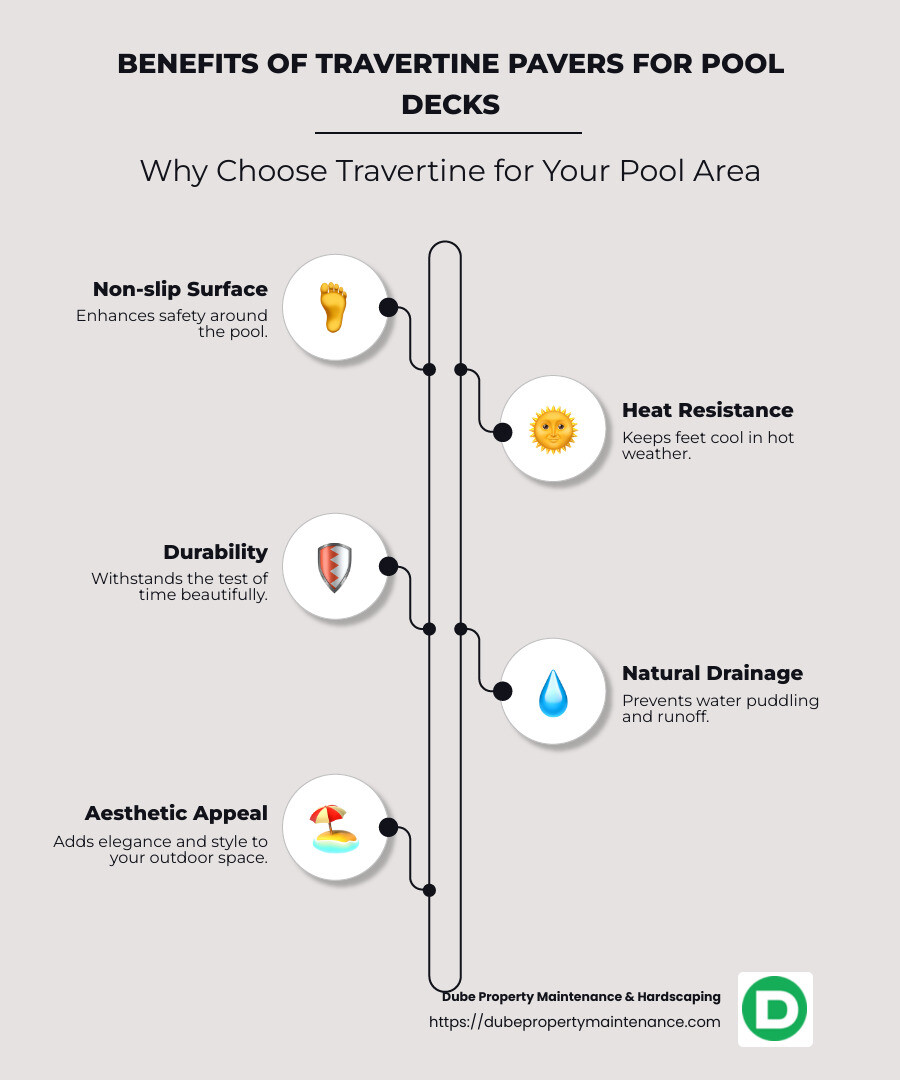
Travertine pavers are renowned for their natural elegance and timeless beauty. They come in various colors like beige, ivory, silver, and walnut, offering versatility to complement any design style. This makes them an ideal choice for those who want a pool deck that stands out while blending seamlessly with the surrounding landscape.
Slip Resistance
Safety is a top priority around pools, and travertine pavers excel in this area. Their textured or honed finish provides excellent slip resistance, which is crucial for wet surfaces. This feature reduces the risk of accidents, making it a safe option for families and guests.
Heat Reflectivity
Walking barefoot on hot surfaces can be uncomfortable, but travertine pavers have the ability to reflect heat rather than absorb it. Lighter-colored options like beige or ivory stay cooler underfoot, which is a significant advantage in hot climates.
Durability
Travertine is a durable natural stone that withstands the elements well. It resists cracking, chipping, and fading, even with constant sun exposure and contact with pool chemicals. This durability ensures that your travertine pavers pool deck will maintain its beauty and functionality for years.
Natural Drainage
The natural porosity of travertine allows water to drain through the surface, preventing water pooling. This feature not only reduces the risk of slipping but also keeps the area around the pool cleaner and drier.
Initial Cost
While travertine offers many benefits, it comes with a higher initial cost compared to materials like concrete. This can be a hurdle for homeowners on a tight budget. However, the long-term benefits often justify the investment.
Maintenance
Maintaining travertine pavers requires some effort. Regular cleaning and sealing are necessary to prevent staining and maintain their appearance. Neglecting maintenance can lead to a diminished look and reduced lifespan.
Susceptibility to Etching
Travertine is a calcium-based stone, making it susceptible to etching from acidic substances like citrus juices or harsh cleaners. Promptly cleaning spills and using pH-neutral cleaners can help maintain the pavers’ beauty.
Color Variation
While the unique patterns and color variations of travertine are appealing to many, they can be a drawback for those seeking a more uniform look. Careful selection and installation are required to achieve the desired appearance.
By weighing these pros and cons, you can decide if travertine pavers are the right choice for your pool deck. They offer a blend of beauty, safety, and durability, making them a strong contender for changing your outdoor space into a luxurious oasis.
Installing a travertine pavers pool deck is a task best left to professionals. Proper installation is crucial to ensure the pavers are stable and long-lasting. The process involves preparing the sub-base, laying the pavers, and ensuring they are level. This ensures a smooth, even surface that improves both the beauty and safety of your pool area. If you’re confident in your DIY skills, it’s possible to tackle this project yourself, but professional installation guarantees a flawless finish.
Maintaining your travertine pool deck is essential to preserve its aesthetic appeal and longevity. Regular maintenance includes sweeping to remove debris and washing with a pH-neutral cleaner to avoid damaging the stone. This keeps the surface free from dirt and grime, ensuring your pool deck looks pristine.
Sealing travertine is not mandatory, but it’s highly recommended. A good sealant protects the stone from stains and water damage, enhancing its durability. Experts suggest sealing your travertine every 3-5 years. This simple step can significantly extend the life of your pool deck and keep it looking beautiful.
Cleaning travertine is straightforward. Use a soft mop or cloth with a mild, pH-neutral cleaner. Avoid harsh chemicals or acidic substances, as they can cause etching. Regular cleaning prevents stains and maintains the stone’s natural beauty.
Common issues with travertine include staining, etching, and cracks. Stains can often be removed with a poultice, while etching requires polishing with a stone-safe product. Cracks may need professional repair to ensure they don’t worsen over time.
If your travertine pavers get damaged, repair is possible. Small chips and cracks can often be fixed with a stone repair kit. For more significant damage, it’s best to consult a professional. Regular inspection can help catch issues early, making repairs less costly and time-consuming.
By following these guidelines, you can enjoy a stunning and durable travertine pavers pool deck that improves your outdoor space for years to come.
When choosing the perfect material for your pool deck, weigh the pros and cons of each option. Here’s how travertine pavers stack up against other popular choices like concrete, marble, and limestone.
Cost: Concrete is often the most budget-friendly option. It’s less expensive upfront compared to natural stones like travertine and marble.
Durability: Concrete is durable but can crack over time, especially in areas with temperature fluctuations. Proper sealing can help mitigate this issue.
Aesthetics: Concrete can be customized with various colors and patterns, but it lacks the natural elegance of stone. It can mimic the look of natural stone but may not achieve the same authenticity.
Cost: Marble is typically more expensive than travertine and concrete. It’s considered a luxury material, which is reflected in its price.
Durability: While marble is durable, it is more prone to staining and fading. It requires regular maintenance to keep its polished appearance.
Aesthetics: Marble offers a luxurious and neat look with its polished surface. However, its susceptibility to staining may deter some homeowners.
Cost: Limestone is generally more affordable than marble but can be comparable to travertine depending on the quality and source.
Durability: Limestone is durable but can be more susceptible to weathering than travertine. It requires sealing to protect against moisture and stains.
Aesthetics: Limestone provides a classic and timeless appeal, with softer tones that blend well with natural surroundings.
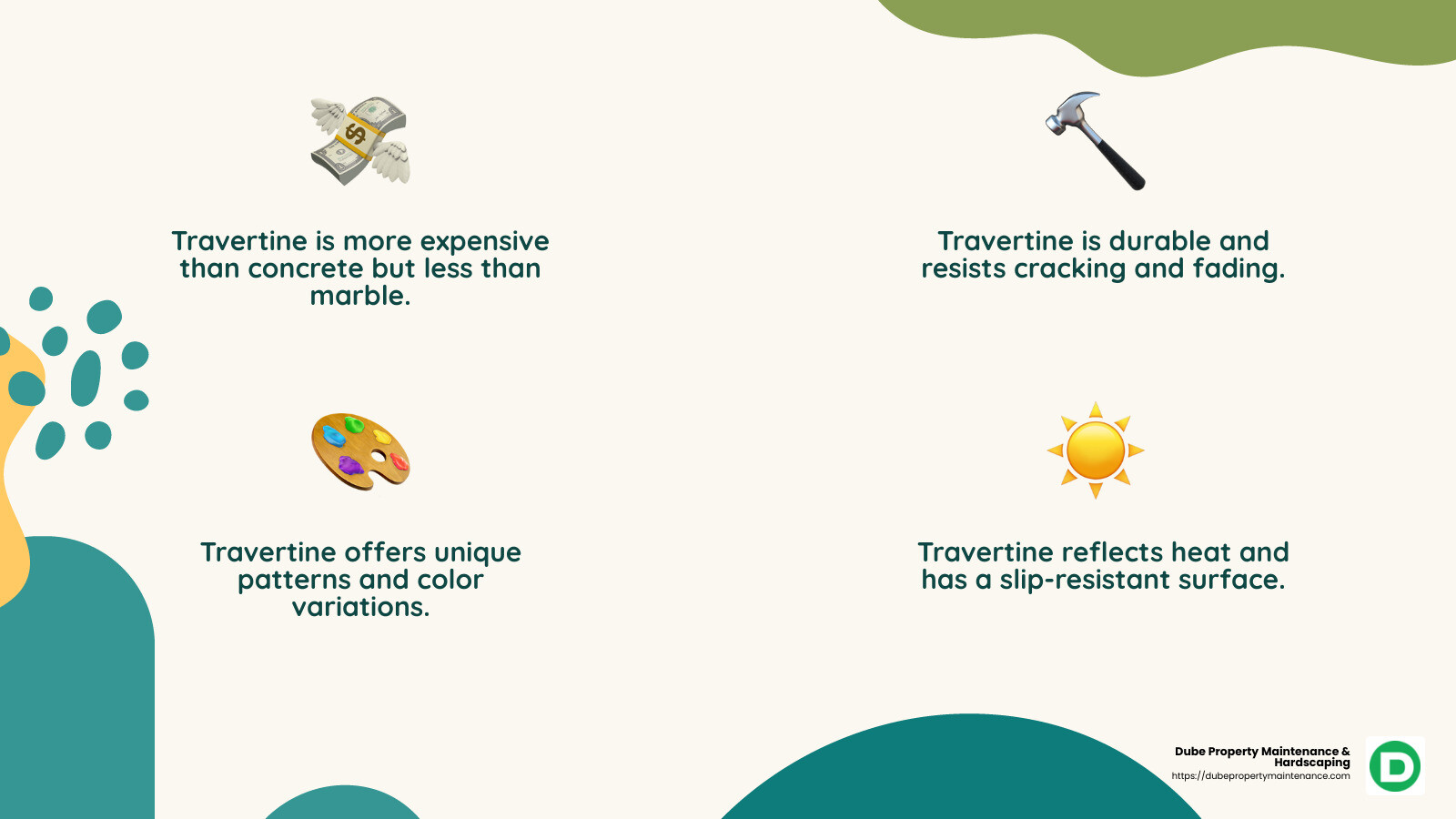
Cost: Travertine is more expensive than concrete but generally less costly than marble. It offers a good balance between luxury and affordability.
Durability: Known for its durability, travertine withstands outdoor elements well. It resists cracking and fading, making it ideal for pool decks.
Aesthetics: Travertine exudes natural elegance with its unique patterns and color variations. Its slip-resistant surface and heat reflectivity make it both beautiful and practical for pool areas.
In summary, while travertine pavers may have a higher initial cost compared to concrete, they offer superior aesthetics and durability. Marble and limestone provide luxury and classic appeal, respectively, but may require more maintenance. The choice depends on your budget, style preferences, and willingness to invest in maintenance.
Yes, travertine is an excellent choice for pool decking. One of its standout features is durability. Travertine can withstand outdoor elements like sun exposure and pool chemicals without cracking or fading. This makes it a long-lasting option for pool areas.
Another advantage is its slip resistance. Travertine pavers often have a textured finish, which offers excellent grip, even when wet. This is crucial for safety around pools, reducing the risk of slips and falls.
Additionally, travertine’s heat reflectivity keeps the surface cooler underfoot compared to other materials. This is especially beneficial for bare feet during hot summer days.
Despite its many benefits, travertine does have some downsides. One notable disadvantage is its porosity. Being a naturally porous stone, travertine can absorb water and other liquids, which may lead to staining if not properly sealed.
Maintenance is another consideration. Travertine requires regular cleaning and periodic sealing to maintain its appearance and protect against stains. This can be a bit more demanding compared to materials like concrete.
Finally, there’s the cost. Travertine is generally more expensive than concrete, both in terms of material and installation. However, it is often less costly than marble.
The cost of a travertine pool deck can vary based on several factors. Material cost is a significant component, with travertine typically being more expensive than concrete but less than marble. The quality of the stone and the size of the area will also affect the price.
Labor cost is another factor. Travertine installation can be complex, requiring skilled professionals to ensure proper placement and sealing. This can increase the overall expense.
Lastly, installation complexity plays a role in the cost. If your pool area has intricate designs or requires custom cuts, the price may be higher due to the additional labor and time required.
Choosing the right paver for your pool deck can transform your outdoor space into a stunning and functional area for relaxation and entertainment. At Dube Property Maintenance & Hardscaping, we understand the importance of selecting materials that not only improve the beauty of your property but also stand the test of time.
Travertine pavers offer a unique combination of aesthetic appeal and practical benefits. Their natural elegance and versatility make them a favorite among homeowners looking to lift their pool areas. With features like slip resistance and heat reflectivity, they ensure safety and comfort, which are essential for any pool deck.
However, it’s crucial to consider factors like initial cost and maintenance requirements. Travertine pavers may require a higher initial investment and ongoing care, such as sealing and cleaning, to keep them looking their best. Despite these considerations, the long-term benefits often outweigh the costs, providing a durable and eye-catching solution for your outdoor space.
Our professional team at Dube Property Maintenance & Hardscaping is dedicated to delivering high-quality, comprehensive outdoor solutions custom to your needs. We have years of experience in landscape and hardscape design, ensuring that your project is handled with expertise and care.
Ready to transform your pool area with the timeless beauty of travertine pavers? Contact us today to explore your options and get started on creating the outdoor oasis of your dreams. Let us help you bring your vision to life with our expert services and commitment to excellence.
