

Pavers coping for inground pool projects might sound technical, but they’re actually the most important safety and style feature around your pool. Think of coping as the protective cap that sits on top of your pool wall – it’s where swimmers grab when getting in and out, and it’s the first line of defense against water damage to your pool structure.
Quick Answer for Pool Coping Pavers:
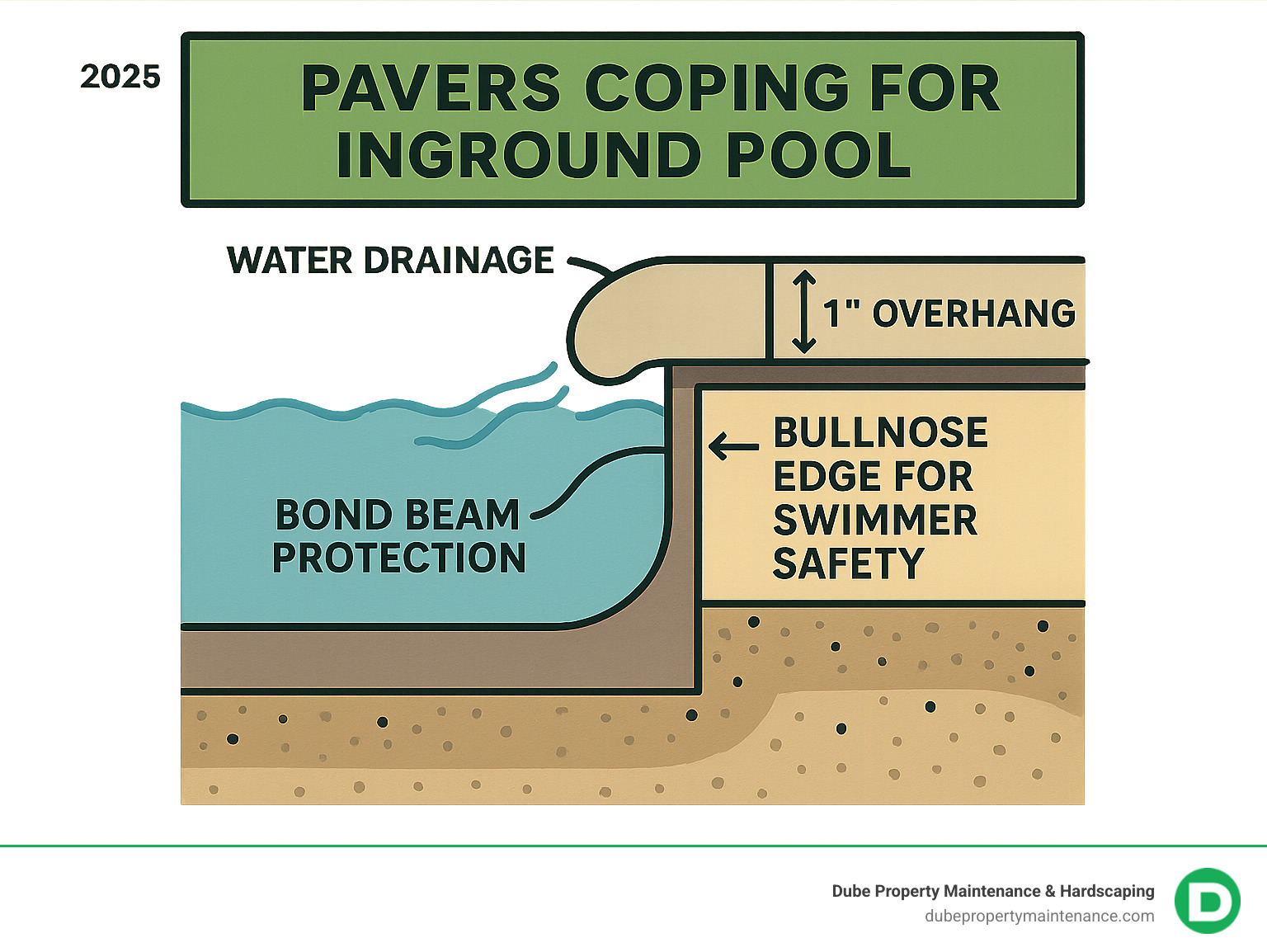
Pool coping serves three critical jobs. First, it protects your pool’s structural integrity by sealing the bond beam and preventing water from getting behind the pool shell. Second, it creates a safe, non-slip surface for swimmers to grab onto. Third, it ties your pool design together with your deck and landscape.
Natural stone coping like sandstone and limestone is up to 10 times stronger than concrete coping, offering superior durability and freeze-thaw resistance – crucial for our Massachusetts climate. But concrete pavers offer more color options and easier replacement if damaged.
The key is choosing materials with low water absorption rates (under 3%) and slip-resistant surfaces that won’t become dangerously hot in summer sun.
By the end of this guide, you’ll understand the essential functions of pool coping, know how to compare different material choices, find design tips that keep your pool area both safe and stunning, learn installation basics, understand maintenance requirements, and get realistic pricing expectations for your project.
Think of pavers coping for inground pool installations as your pool’s protective armor and safety system rolled into one. While it might look like just a decorative border, coping is actually working overtime to keep your pool – and your family – safe.
The most important job of pool coping is acting as a protective lip that caps your pool wall. This creates a crucial barrier preventing water from sneaking behind your pool shell, where it could cause serious structural damage over time. This protection is especially vital around the bond beam area, where steel reinforcement needs to stay dry to avoid rust and deterioration.
But coping does much more than just protect structure. It provides essential splash-out control by directing water away from the pool edge toward your drainage systems. This keeps your deck area drier and significantly reduces those slippery conditions that can lead to accidents.
When swimmers grab the pool edge to get in or out, they’re relying on coping to provide a non-slip surface they can trust. Rounded bullnose edges are particularly smart for family pools. As research confirms, bullnose coping with its curved profile is one of the most popular safety choices because it reduces injury risk and prevents snagging on swimsuits.
Here in Massachusetts and New Hampshire, we deal with serious freeze-thaw cycles that can destroy poorly chosen materials. Your coping needs freeze-thaw resistance built right in. The secret is selecting materials with low water absorption rates – quality sandstones absorb less than 1% water, which minimizes cracking and prevents algae from taking hold in porous surfaces.
Pool coping also acts as a debris barrier, preventing leaves and dirt from accumulating in gaps where they’re hard to clean out. Scientific research on concrete slip resistance shows that properly textured concrete pavers naturally resist slipping while staying comfortable underfoot.
The right pool coping system delivers injury reduction through those rounded edges and slip-resistant surfaces. It blocks water infiltration that could damage your pool structure and surrounding hardscaping – potentially saving you thousands in repairs down the road.
Good coping also makes cleaning easier by preventing debris from getting trapped in joints and crevices where it’s nearly impossible to remove. Most importantly, quality coping extends your pool’s overall life by protecting structural elements from water damage and our harsh New England freeze-thaw cycles.
When you’re shopping for pavers coping for inground pool projects, you’ll quickly find that not all materials are created equal. You have three excellent options that each bring something special to the table: concrete pavers, natural stone, and porcelain slabs.
Concrete pavers are your reliable everyday choice – versatile, comfortable, and ready for anything. Natural stone is like a quality leather boot – built to last decades and looking better with age. Porcelain slabs are the sleek modern option – contemporary, sophisticated, and incredibly easy to keep clean.
The key is understanding what matters most for your specific pool situation. Are you dealing with harsh freeze-thaw cycles? Natural stone’s superior strength might be worth the investment. Want endless color options to match your home’s exterior? Concrete pavers deliver that flexibility. Dreaming of a contemporary zero-edge design? Porcelain could be your perfect match.
All quality coping materials should meet ASTM and CE certification standards. Look for ASTM C140-15 compliance, which covers the important stuff like compressive strength, water absorption rates, and slip resistance.
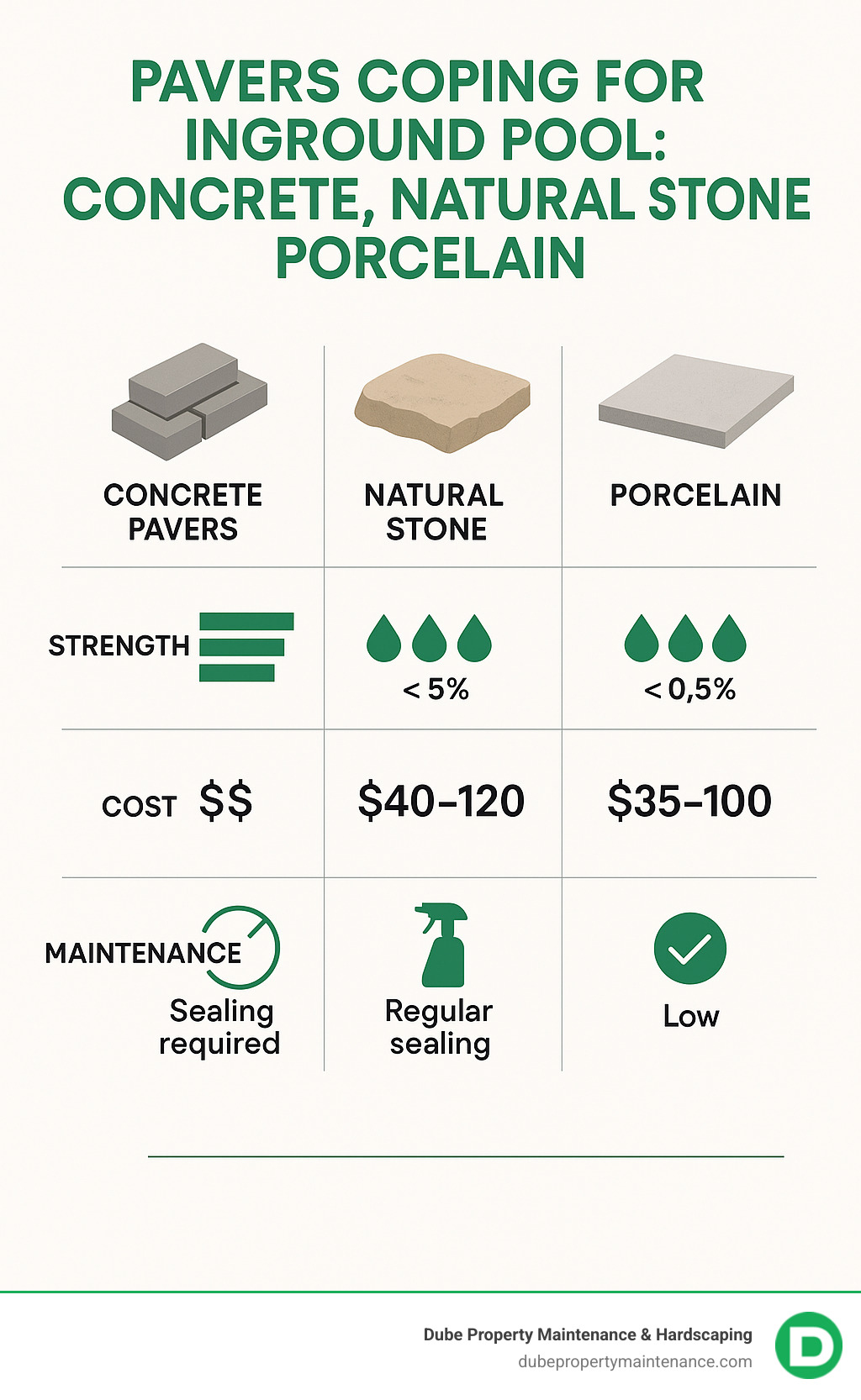
Concrete pavers are the workhorses of pool coping. With compressive strengths typically exceeding 8,000 PSI, they can handle whatever New England weather throws at them. The absorption rates stay under 5%, which means they’ll laugh off freeze-thaw cycles that would crack lesser materials.
What really sets concrete pavers apart is their incredible versatility. Want a warm sandstone look? They’ve got it. Prefer sleek contemporary gray? No problem. Need to replace a single damaged piece in five years? Easy as pie – just pop out the old one and drop in a new one.
Based on internet data (not Dube pricing), expect costs from $25-75 per linear foot installed, though premium options can reach $225 per linear foot.
Natural stone brings that premium performance and timeless beauty that never goes out of style. Quality sandstone and limestone typically absorb less than 3% water, with some premium selections staying under 1%. That’s why natural stone coping can be up to 10 times stronger than standard concrete options.
The thermal mass of natural stone helps moderate temperature swings, keeping surfaces more comfortable for bare feet. Plus, there’s no color fading to worry about – these materials maintain their gorgeous appearance for decades without degradation. Internet pricing data shows costs typically ranging from $40-120 per linear foot installed, with high-end options reaching $360 per linear foot.
Porcelain slabs represent the cutting edge of pool coping technology. With absorption rates often under 0.5%, they’re virtually impervious to pool chemicals, wine spills, and whatever else life throws at them. The smooth surfaces make cleaning a breeze – just hose them down and you’re done.
The contemporary styling works beautifully with modern zero-edge pool designs where you want that sleek, continuous surface. Internet data suggests costs generally range from $50-150 per linear foot installed, with premium installations reaching $450 per linear foot.
For homeowners considering concrete options, our Concrete Pool Coping services offer budget-conscious solutions without compromising on quality. If you’re drawn to natural stone’s premium appeal, explore our Travertine Pavers Pool Deck installations for that luxurious Mediterranean look.
Low-absorption sandstone and limestone sourced from responsibly managed quarries offer an eco-friendly choice that’ll outlast multiple generations of pool enjoyment.
Many concrete paver manufacturers now incorporate recycled aggregates into their products, reducing environmental impact while maintaining all the performance you expect.
When shopping for materials, look for ASTM C140-15 certification, which ensures your coping meets strict standards for compressive strength and slip resistance. European EN1341 flagstone certification provides additional quality assurance for imported stone products.
When it comes to pavers coping for inground pool design, the devil is truly in the details. Your edge profile choice sets the entire tone for your pool area, and thankfully, you’ve got some fantastic options to work with.
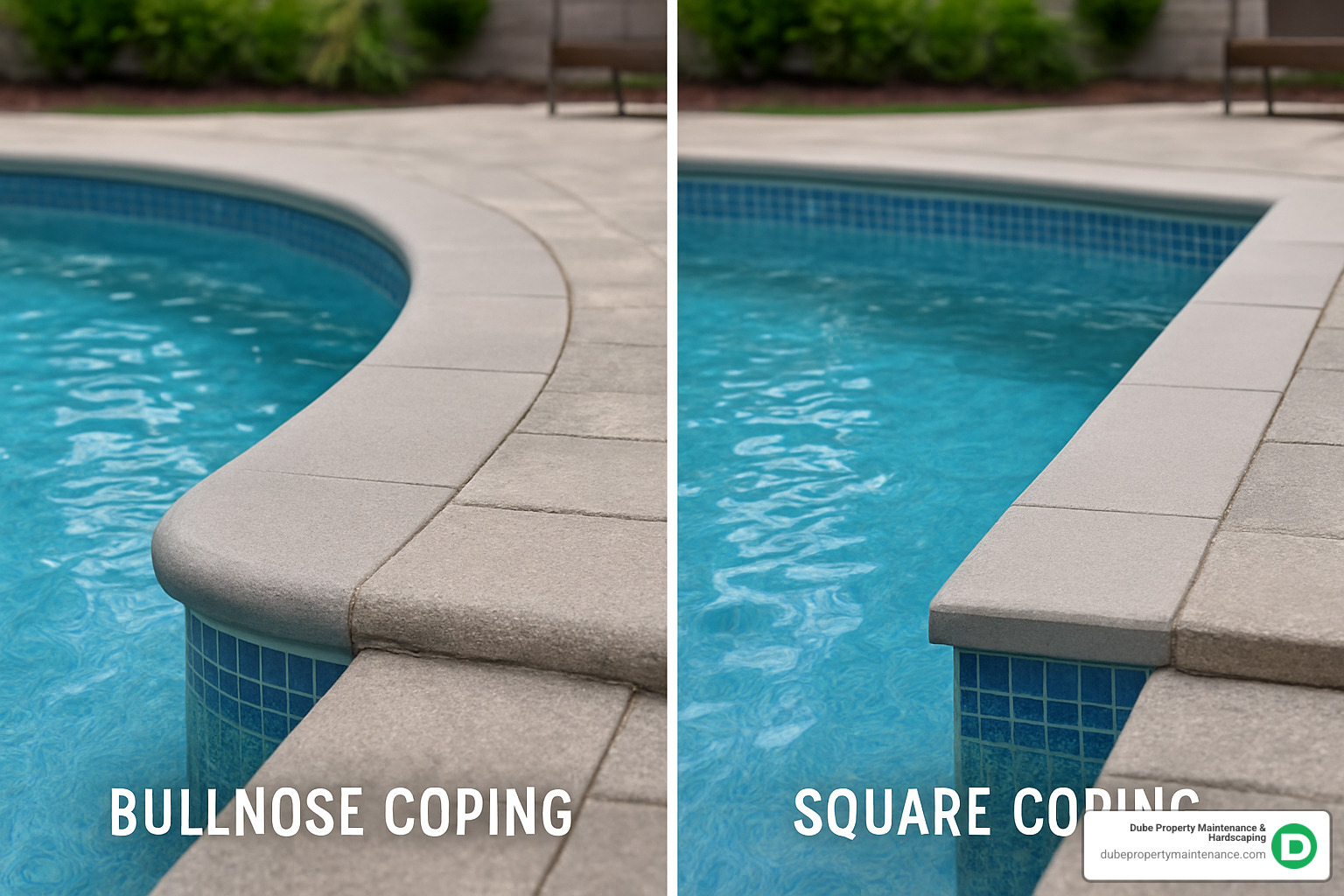
The bullnose profile remains the gold standard for family pools. That gentle, rounded front edge feels comfortable when swimmers grab it, and parents love knowing there are no sharp corners waiting to scrape little knees.
Square edges bring a completely different vibe – clean, contemporary, and architectural. They’re perfect if you’re going for that modern resort look, but they do require more careful attention to corner details.
For those who love character and texture, chiseled edges offer that perfect rustic charm. Each piece has its own personality with naturally varied textures that make your pool feel like it’s been nestled into the landscape for years.
If you really want to make a statement, cantilever options create that stunning “floating” appearance where the coping extends beyond the pool wall. It’s sophisticated engineering that creates serious visual impact.
Color selection is where practicality meets beauty. Light-colored coping reflects heat and stays cooler underfoot – crucial when you’re padding around barefoot on a hot July afternoon. Darker tones can look absolutely gorgeous but may become uncomfortably hot in direct sunlight.
Texture plays a starring role in safety too. Matte and lightly textured finishes give you that slip resistance without feeling rough on bare feet. Highly polished surfaces might photograph beautifully, but they can become dangerously slippery when wet.
The smartest approach? Coordinate your coping with adjacent deck patterns. Many manufacturers offer matching paver collections that let you extend the same material from pool edge to patio, creating that seamless, professionally designed look.
Solar reflectance isn’t just a fancy term – it’s the difference between happily walking around your pool and hopping from shadow to shadow like you’re crossing hot coals.
Light colors like beige, cream, and light gray reflect 50-70% of solar energy, while dark colors may reflect only 20-30%. That difference can literally mean the difference between comfortable surfaces and ones that could burn your feet.
Cool-touch surface technologies are game-changers for pool environments. Some premium pavers now use specialized aggregates and pigments to reduce heat absorption, staying 10-15 degrees cooler than standard pavers in direct sunlight.
Coordinating grout colors can make or break your overall look. Contrasting grout highlights each individual paver, creating definition and pattern, while matching grout creates a more seamless, monolithic appearance.
If you’re considering natural stone options, our Bluestone Pool Deck installations showcase how naturally cool stone surfaces can transform your pool experience.
The most stunning pool areas don’t stop at the water’s edge – they flow seamlessly into the entire outdoor living space. Smart designers use matching paver materials for fire pit caps, seat walls, and step treads throughout the landscape.
Your coping choice should play nicely with existing hardscaping elements too. Steps leading to the pool area become part of the story when they complement your coping choice.
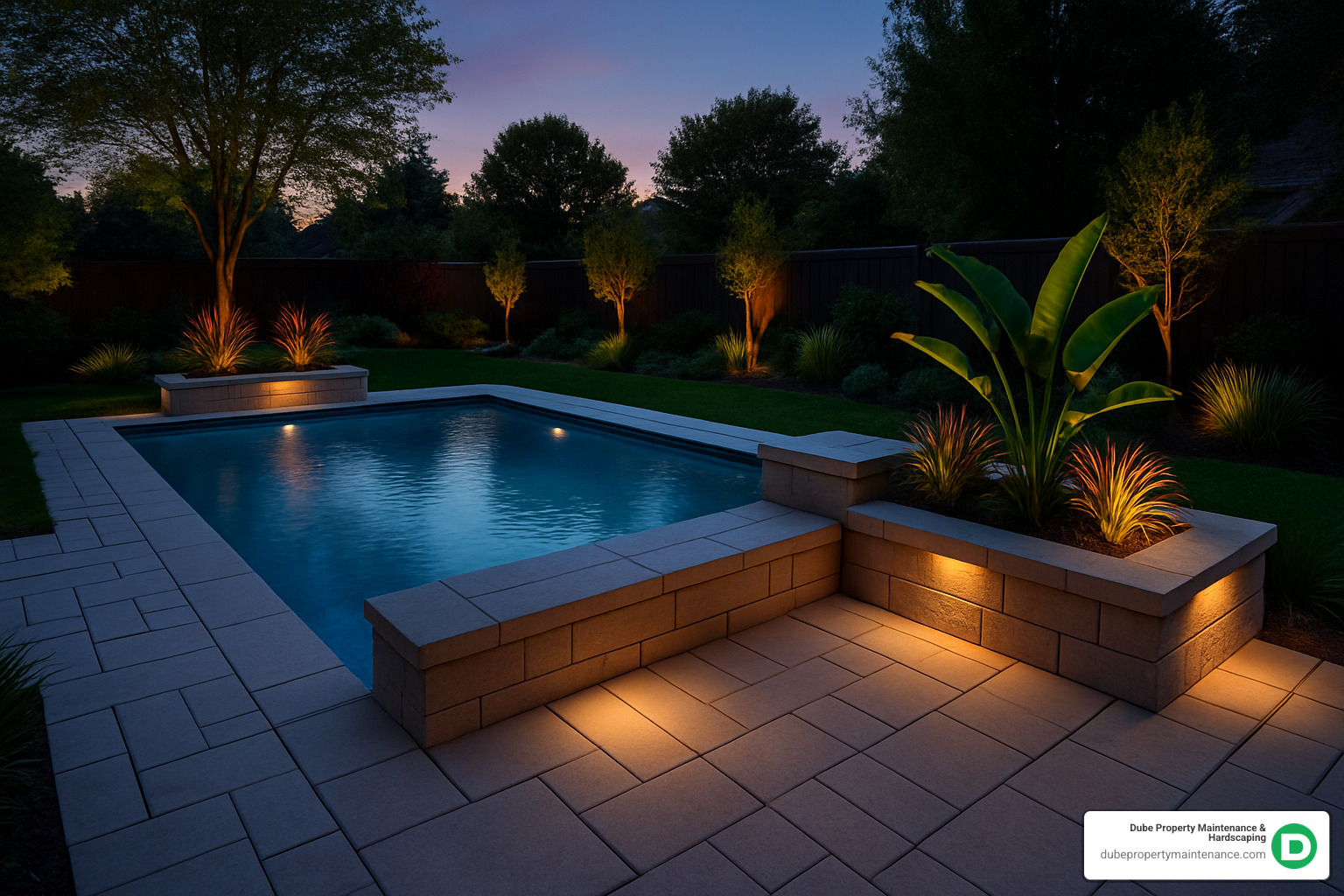
Here’s a detail that separates amateur installations from professional ones: accent lighting integrated under the coping lip. LED strip lights provide both safety for evening swimming and that magical ambiance that makes your pool area feel like a resort.
For comprehensive design inspiration that shows how coping integrates with overall deck design, check out our Best Pavers for Pool Deck guide.
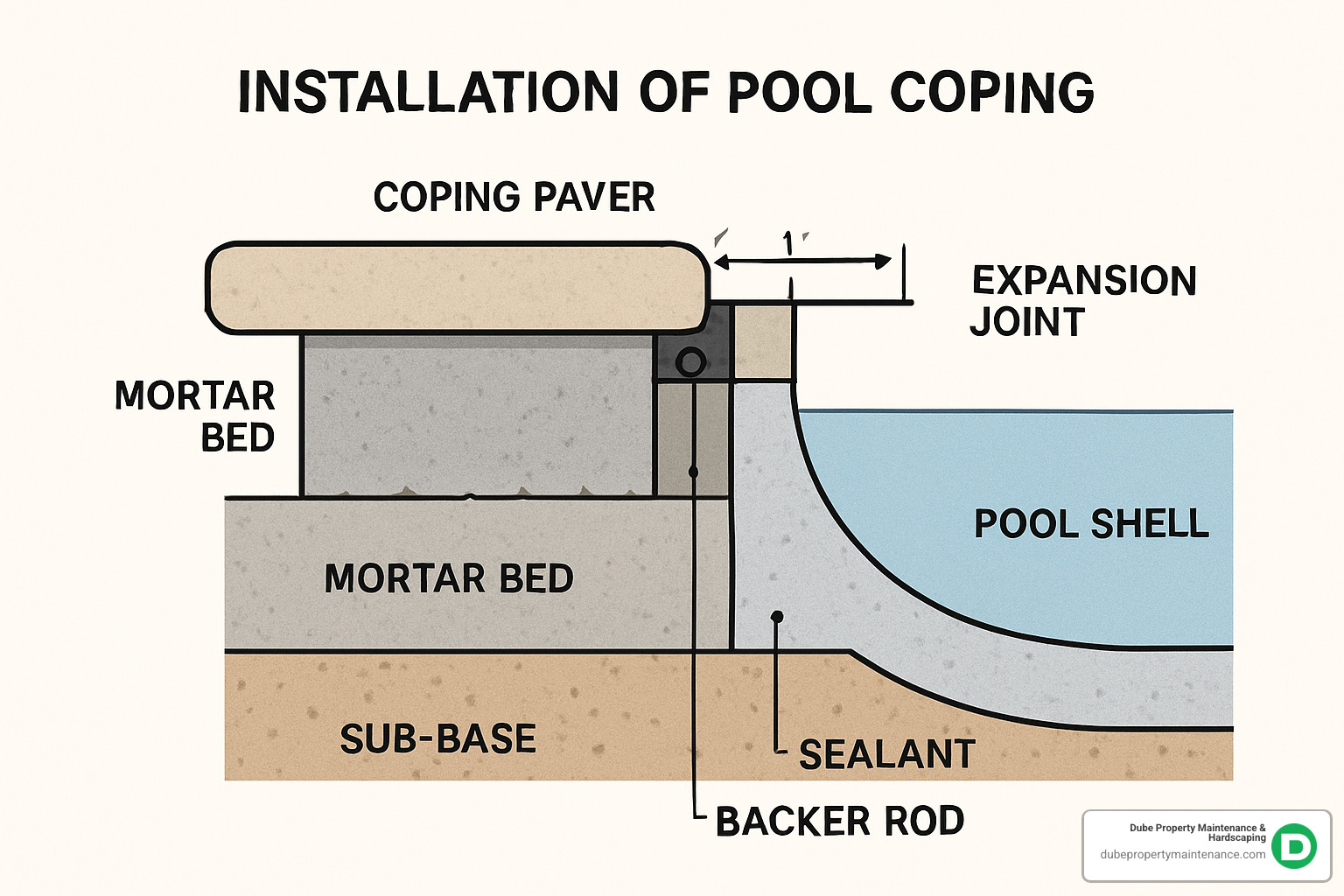
Getting pavers coping for inground pool installed the right way is 90 % planning and prep. Your contractor first compacts a stable sub-base, then sets the coping with a 1-inch overhang that doubles as a comfortable grab edge and mini-drip ledge. Vinyl-liner or fiberglass pools need a cured concrete collar; concrete pools often allow direct mounting.
Mortar beds give installers wiggle room for leveling, while modern construction adhesives speed up work on lighter concrete units. Either way, ask for expansion joints (backer rod + flexible sealant) every 8–10 ft so seasonal movement never cracks your edge. Joints are usually finished with polymeric sand for lock-up and easy maintenance.
Average internet data (not Dube pricing) shows:
Heavy materials, intricate edge profiles or freeze-thaw upgrades can push high-end projects to three times these averages, so always request a written quote.
Precise cuts, drainage pitch and warranty coverage tip the scales toward professional installation. The tool list alone (wet saws, mixers, lifts) can match the cost of hiring Dube’s crew, and many manufacturer warranties require pro workmanship. If you still lean DIY, review our step-by-step Installing Pavers Around Swimming Pool guide and budget for quality materials like polymeric sand.
A quick upkeep routine keeps your pavers coping for inground pool looking showroom-new.
New stain-blocking sealers dive deeper into the material, shielding against sunscreen oils, leaves and pool chemicals far longer than older formulas.
Let’s tackle the most common questions we hear from homeowners considering pavers coping for inground pool projects. These are the real-world concerns that come up during planning conversations, and getting clear answers helps you make confident decisions.
For most residential pools, 2⅜” thick coping hits the sweet spot between strength and practicality. This standard thickness handles everything from kids jumping in and out to adults sitting on the edge without worry about cracking or breaking.
If you’re planning a commercial pool or expect heavy use with pool furniture and equipment, bumping up to 3″ thickness provides extra peace of mind. The added strength comes in handy for high-traffic situations.
Going thinner than 2⅜” is asking for trouble – you’ll likely see stress cracks within a few seasons. On the flip side, going much thicker creates unnecessary weight and cost without meaningful benefits for most applications.
The thickness also affects your installation options. Standard 2⅜” pavers work with most mounting systems, while custom thicknesses may require special brackets or modified installation techniques.
Nobody wants a slip-and-fall accident around the pool, so choosing the right surface texture is crucial. Naturally textured materials like brushed concrete or tumbled stone provide excellent grip even when wet.
Stay away from highly polished surfaces that look great in the showroom but become skating rinks when pool water splashes on them. A little texture goes a long way for safety without being rough on bare feet.
Regular cleaning prevents the buildup of algae and organic matter that can turn even textured surfaces slippery. A simple weekly scrub with a non-acid cleaner keeps things safe and looking good.
If you already have smooth coping that’s proving problematic, some manufacturers offer anti-slip coating treatments that can be applied to existing surfaces. These treatments add texture without changing the appearance dramatically.
This is one of the big advantages of pavers coping for inground pool installations over poured concrete – individual pieces can usually be swapped out when needed.
If your coping was installed with polymeric sand joints, replacement is relatively straightforward. The sand can be removed, the damaged paver lifted out, and a new one dropped in place. It’s like replacing a single brick in a wall.
Mortared installations require more finesse but are still doable with the right tools and technique. You’ll need to carefully chip away the mortar around the damaged piece without disturbing neighboring pavers.
Here’s a pro tip: keep spare pavers from your original installation stored in a dry place. Pool chemicals, UV exposure, and weathering can change the appearance of pavers over time, making it tough to find perfect matches years later.
The key is working with an experienced installer who uses techniques that allow for future repairs. At Dube Property Maintenance & Hardscaping, we always plan installations with long-term maintenance in mind, so you’re not stuck replacing entire sections for minor damage.
Choosing the right pavers coping for inground pool might feel overwhelming at first, but it’s honestly one of the smartest investments you’ll make in your pool project. Think about it – this is the edge your family will touch every single day, the barrier protecting your pool structure, and the finishing touch that either makes or breaks your entire backyard design.
We’ve covered a lot of ground together in this guide, and the key takeaways really boil down to common sense. Safety comes first – those rounded bullnose edges and non-slip surfaces aren’t just nice features, they’re essential for preventing accidents. Durability matters – especially here in New England where freeze-thaw cycles can destroy poorly chosen materials, so stick with low water absorption options under 3%.
Your coping choice should work with your overall landscape, not fight against it. Whether you go with versatile concrete pavers, timeless natural stone, or sleek porcelain slabs, make sure it coordinates with your deck and hardscaping. And please, invest in professional installation – this isn’t the place to cut corners when warranty protection and code compliance are on the line.
At Dube Property Maintenance & Hardscaping, we’ve been installing pool coping throughout Massachusetts and New Hampshire long enough to know what works and what doesn’t. New England weather is tough on outdoor materials, but we know exactly which products will stand up to our harsh winters and humid summers.
The best part about working with experienced professionals? We help you avoid costly mistakes and guide you toward solutions that fit both your vision and your budget. Every pool is different, every family has unique needs, and cookie-cutter approaches just don’t work.
Ready to turn your pool area into something special? Let’s talk about how the right coping installation can transform both the safety and beauty of your outdoor space. For a complete picture of how coping works with your entire pool deck system, check out our More info about pool deck paving page.
Your pool deserves coping that’s built to last and designed to make your neighbors a little jealous. More importantly, it deserves coping that keeps your family safe and makes every swim more enjoyable.
