
Pool patio tiles are one of the most important decisions you’ll make for your outdoor space — and one of the easiest to get wrong.
Quick answer: The best pool patio tiles by category
| Goal | Best Material |
|---|---|
| Maximum durability & low maintenance | Porcelain pavers |
| Natural beauty & heat reduction | Travertine or natural stone |
| Budget-friendly DIY option | Interlocking PVC or composite tiles |
| Safest slip resistance | Textured porcelain (R11 rated) or rubber |
| Best for freeze-thaw climates (MA/NH) | Frost-resistant porcelain |
Here’s the reality: a pool deck takes more punishment than almost any other surface on your property. It gets wet constantly, bakes in the summer sun, and — if you’re in Methuen, Andover, or Salem, NH — it has to survive brutal New England freeze-thaw cycles every winter.
Pick the wrong tile and you’re looking at cracked surfaces, slippery hazards, or faded, stained stone within a few seasons.
Pick the right one and your pool area becomes the gathering spot — safe, beautiful, and built to last decades.
This guide walks you through every major material, what to look for in safety ratings, how professional installation works, and what realistic budgets look like. Whether you’re starting from scratch or resurfacing an existing deck, you’ll know exactly what to choose — and why — before you spend a dollar.
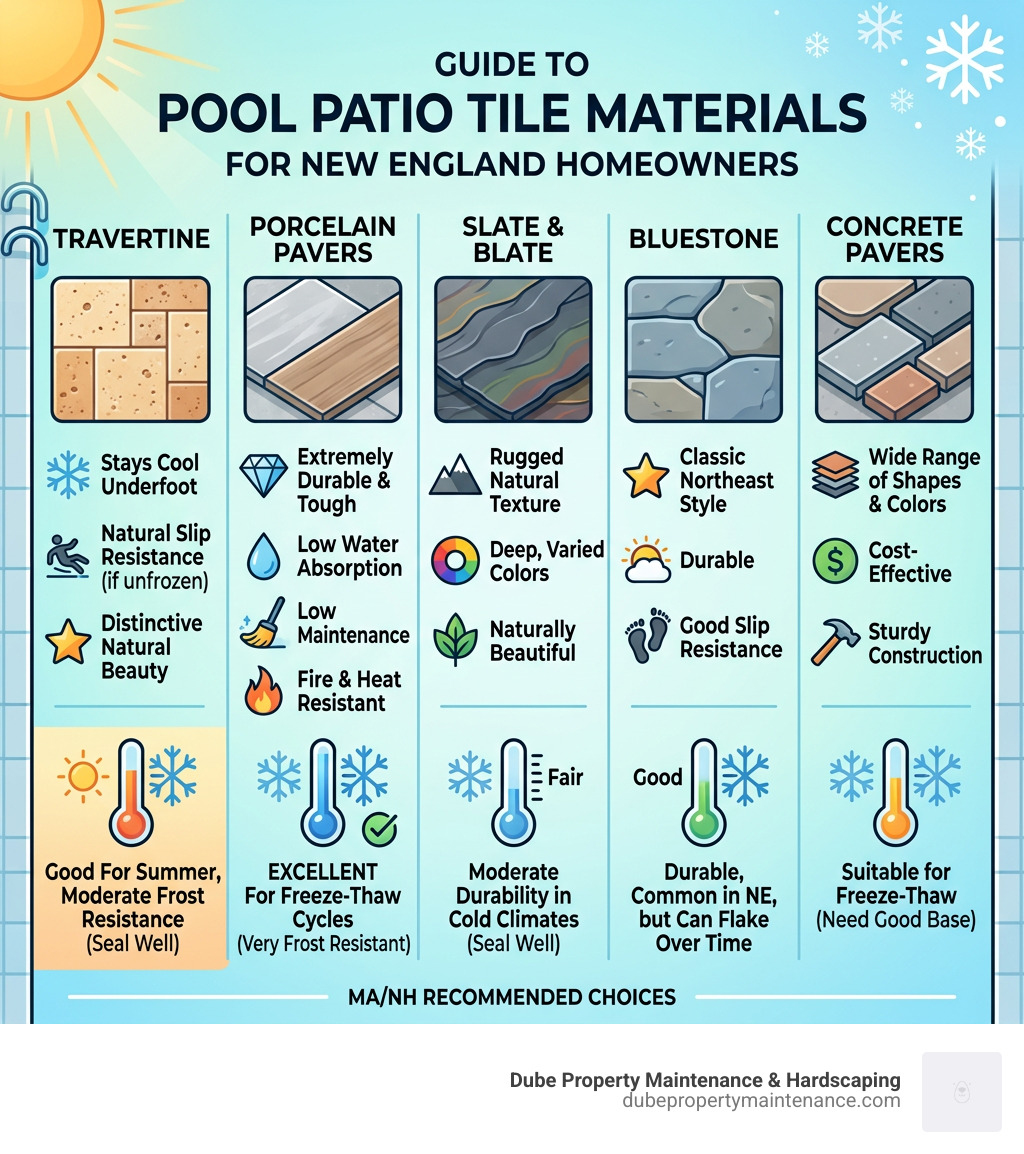
Terms related to pool patio tiles:
When we talk about pool patio tiles, we aren’t just talking about the thin ceramics you might find in a kitchen backsplash. High-performance pool surrounds require materials engineered for the outdoors. In our service areas like North Andover and Haverhill, we prioritize materials that can handle moisture and shifting ground.
Common materials include porcelain, natural stone (like travertine and marble), concrete pavers, and even specialized modular PVC. Each has a unique “personality” and set of requirements. For instance, modern pool deck pavers offer a sleek, contemporary look while providing the structural integrity needed for heavy foot traffic.
Furthermore, if you are running a saltwater system, you need to be particularly careful. Salt can be corrosive to certain natural stones, making saltwater pool coping considerations a vital part of your material selection process.

In recent years, outdoor porcelain pavers have become the undisputed heavyweight champion of pool decking. Unlike indoor tile, these are significantly thicker (usually 20mm or about 3/4 inch) and incredibly dense.
The manufacturing process involves firing refined clay at extremely high temperatures, resulting in a tile that is nearly impenetrable. This low porosity means they don’t absorb water, making them naturally frost-resistant—a “must-have” feature for Massachusetts winters. Porcelain also boasts incredible strength, with breakage loads reaching up to 2,000 lbs. According to technical benefits of porcelain, these tiles are also resistant to algae, mold, and chemicals like chlorine.
If you prefer a classic, organic look, natural stone remains a top-tier choice. Travertine and marble pavers for pool decks are favored for their unique veining and high-end aesthetic.
One of the biggest perks of natural stone is its thermal performance. Light-colored travertine, for example, stays remarkably cool under the summer sun, which is a blessing for bare feet in July. However, stone is porous. To protect your investment, you must consider whether you should seal travertine pavers to prevent staining and water intrusion.
New England presents a specific set of challenges. In places like Salem, NH, or Dracut, MA, the ground doesn’t just sit still; it heaves as it freezes and thaws. This movement is the #1 enemy of a rigid patio. When selecting pavers around inground pools, you need a system that offers both durability and a bit of flexibility.
Safety isn’t just a suggestion; it’s a requirement. When browsing pool patio tiles, look for an R11 finish. This is an international standard for slip resistance, indicating the tile has enough texture to provide grip even when soaking wet.
Some specialized tiles, like the StayLock Perforated series, even carry an ASTM fall height rating of 20 inches, meaning they provide a degree of cushion if someone takes a tumble. For more on how these safety features are integrated during the build, you can check out various safety and installation videos.
Have you ever hopped across a scorching hot deck like you’re walking on coals? That happens when a material has a low Solar Reflectance Index (SRI). Tiles with a high SRI (usually lighter colors like beige, light gray, or white) reflect more sunlight and stay cooler.
Research shows that while a black PVC tile might reach 123°F in the sun, a light blue or tan tile stays closer to the actual air temperature. Selecting a high-SRI tile is the best way to ensure barefoot comfort for your family and guests.
A beautiful tile is only as good as the ground it sits on. We’ve seen many DIY projects fail because the base wasn’t properly compacted or leveled. Professional installing pavers around swimming pools involves deep excavation, layers of crushed stone, and precise grading to ensure water flows away from the pool and your home’s foundation.
There are two main ways to lay your pool patio tiles:
The “wow” factor often comes from the details. Pool coping—the tile that caps the edge of the pool—is essential for a finished look. We recommend bullnose (rounded) edges for comfort and safety. Other accessories include:
No patio is truly “zero maintenance,” but some come close. Porcelain is the easiest to care for, requiring little more than a seasonal power wash. Natural stone requires a bit more love. Knowing how to seal pool deck pavers is key to preventing mold, mildew, and the buildup of calcium deposits (efflorescence).
To keep your deck looking “just laid,” follow these simple rules:
One of the biggest advantages of using individual tiles or pavers rather than poured concrete is repairability. If a single tile cracks or becomes stained by a spilled chemical, we can pop that one tile out and replace it without tearing up the whole yard. This “replaceable design” can extend the life of your patio to 50 years or more.
Budgeting for pool patio tiles requires looking at both the “sticker price” and the long-term ROI. While some materials are cheaper upfront, they may require replacement much sooner.
Note: The following are average costs based on internet data and do not reflect the specific pricing of Dube Property Maintenance & Hardscaping. Actual project costs vary based on site conditions, local labor rates, and material availability.
| Material Type | Average Cost (Installed) | Expected Lifespan |
|---|---|---|
| Interlocking PVC/Composite | $15 – $35 per sq. ft. | 10 – 15 Years |
| Concrete Pavers | $20 – $45 per sq. ft. | 20 – 30 Years |
| Natural Stone (Travertine/Marble) | $25 – $75 per sq. ft. | 30 – 50+ Years |
| Luxury Porcelain Pavers | $30 – $90+ per sq. ft. | 50+ Years |
When budgeting, remember to account for excavation and base materials, which can represent a significant portion of the total investment. For a deeper dive into the numbers, check out our pool deck pavers cost guide.
If you have kids or elderly family members, safety is the priority. Some modular tiles carry a 20-inch fall height rating, providing impact absorption that concrete simply cannot match. Always ensure your chosen material meets local residential building codes for slip resistance and drainage.
Yes! Porcelain pavers and modular interlocking tiles are excellent for “overlays.” As long as the existing concrete is structurally sound and level, we can often install new tiles directly over it, saving you the cost of demolition and hauling away the old slab.
Light-colored natural stones like travertine and marble generally stay the coolest. Porcelain is also excellent if you choose a light color with a high Solar Reflectance Index (SRI). Perforated modular tiles also stay cool because they allow air to circulate through the tile.
The best defense is a good offense. Choose a low-porosity material like porcelain, which doesn’t give mold a place to “root.” For natural stone, keeping the surface sealed and ensuring proper drainage (so water doesn’t sit in puddles) will prevent most biological growth.
Choosing the right pool patio tiles is a balance of aesthetics, safety, and budget. Whether you’re drawn to the indestructible nature of porcelain or the timeless elegance of marble, the key is professional installation and choosing materials suited for the New England climate.
At Dube Property Maintenance & Hardscaping, we specialize in turning these visions into reality. From our home base in Methuen, MA, our professional team serves homeowners throughout the Merrimack Valley and Southern New Hampshire. Whether you’re in Andover, Haverhill, North Andover, or Salem, NH, we’re here to help you build a backyard retreat that lasts a lifetime.
Ready to transform your pool area? Contact our hardscaping experts today for a consultation.
