
When you resurface driveway concrete, you give your home’s entrance a makeover without the massive expense of replacement. This process involves applying a fresh layer of material over existing concrete to create a smooth, attractive surface that looks brand new.
Quick Answer: How to Resurface Your Driveway
Over time, your once-pristine concrete driveway can show wear like cracks and surface damage. The good news is that resurfacing is a middle-ground option between simple repairs and full replacement, costing significantly less while delivering impressive results.
Resurfacing is ideal when your driveway has widespread surface damage—like shallow cracks, discoloration, or pitting—but the underlying concrete is structurally sound. If your slabs aren’t sinking and you lack deep structural cracks, resurfacing provides a fresh surface that can last 8-15 years.
The typical cost ranges from $3 to $20 per square foot (these are average costs based on internet data and not actual costs for Dube Property Maintenance and Hardscaping), making it 50-70% cheaper than a full replacement. For most homeowners in the Methuen area, this means saving thousands while achieving a “new driveway” look.

Easy resurface driveway word list:
Figuring out what your driveway needs is the first step. Think of it like a doctor’s visit: some issues need a band-aid, others require surgery. Your driveway is similar. Take an honest look at your concrete to determine the real problem.

If your driveway has a few minor cracks, small chips, or surface stains, you’re likely in repair territory. These are minor imperfections. Localized damage affecting less than 25% of the surface is a key indicator. A crack near the garage or a small chip doesn’t compromise the driveway’s overall structural integrity.
Crack fillers and patching compound are effective for these smaller problems. Our guide on cement driveway repair can help you decide if this is the right approach.
When you resurface driveway concrete, you’re addressing widespread surface damage that is cosmetic, not structural. It’s like a facelift for your driveway, not major surgery. Resurfacing is the answer for multiple shallow cracks, discoloration, or pitting where small chunks of concrete have popped off.
The key is that the slabs are not sinking. If the foundation is structurally sound, resurfacing is a great option. This approach is ideal when over 25% of the surface is rough, but the driveway’s structure is solid. You’re essentially adding a new skin over the old concrete. For more details, Concrete Network offers great insights on resurfacing with coatings and overlays.
Sometimes, replacement is unavoidable. Deep, wide cracks (wider than a quarter-inch), large potholes, or severe crumbling are red flags indicating it’s time for a replacement. Sunken or heaving slabs indicate soil instability underneath, which resurfacing can’t fix. Poor drainage is another deal-breaker; if water pools, you need to start over to correct the slope.
If your driveway is at the end of its lifespan (20-30 years for concrete) with multiple serious issues, replacement is the most sensible long-term investment. It’s more expensive upfront but provides decades of use. When you’re ready to explore this option, our guide on how to remove and replace concrete driveway walks you through everything you need to know.
Once you decide resurfacing is right for your driveway, it’s time to understand the process. We recommend professional help for the best results, as achieving a long-lasting finish requires the right tools and a meticulous approach, contrary to some “beginner-friendly” DIY guides.
The secret to a successful resurface driveway project is preparation. Rushing this step will cause the new surface to fail within a few years. Pressure washing with a high-psi washer removes dirt, grime, and loose concrete. Degreasing is also crucial, as oil and grease prevent the new surface from bonding properly. For oil stain removal, specialized cleaners are necessary.
Next, repair significant cracks or spalled areas with a high-quality patching compound for concrete. This creates a smooth, uniform base. Etching or grinding is essential to create a rough profile for the new surface to grip the old concrete. Afterward, rinse the surface and saturate it with water to prevent the old concrete from drying the resurfacer too quickly. Finally, mask expansion joints to keep them clear so they can move with temperature changes.
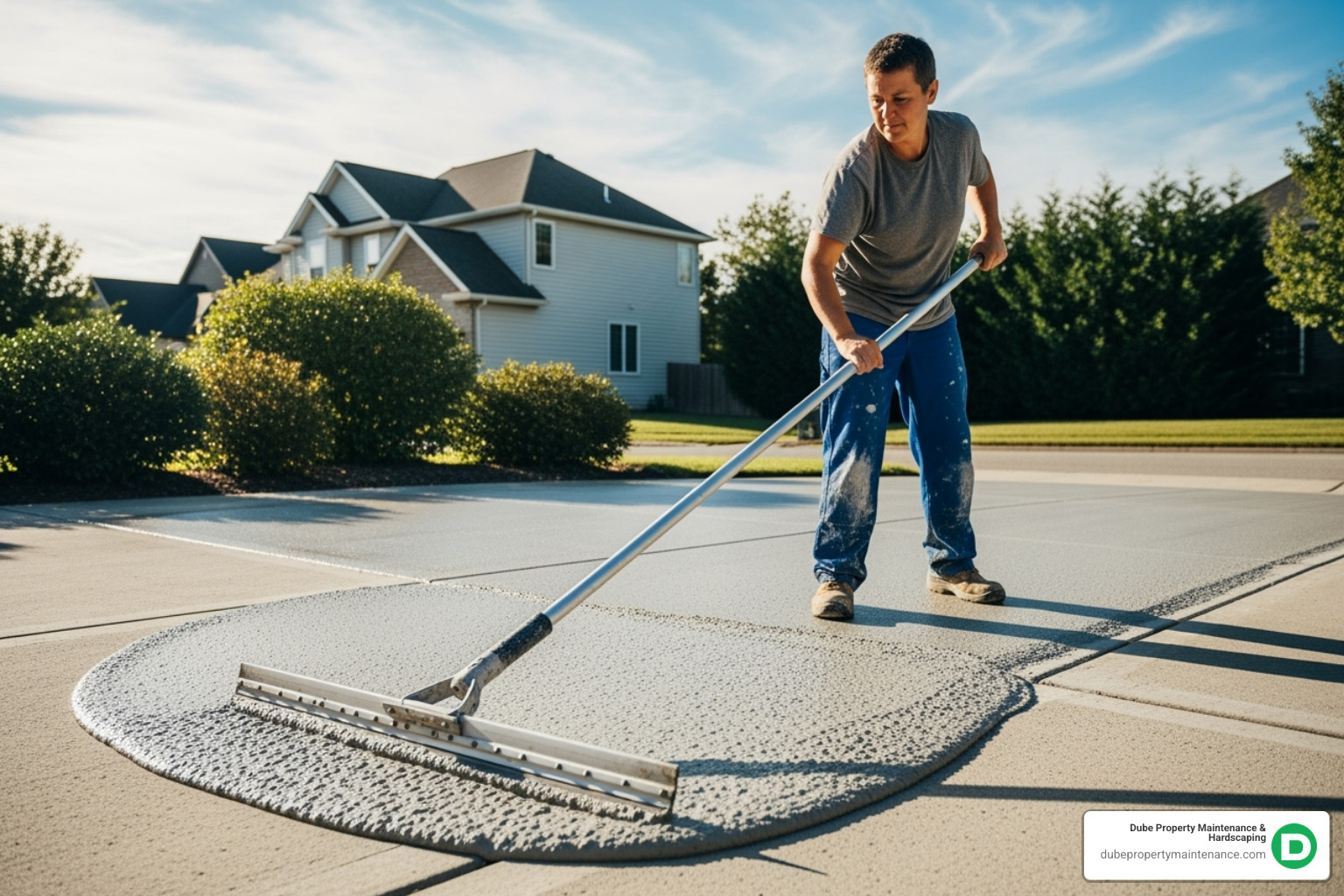
With the surface prepped, it’s time to apply the overlay. This step requires precision and speed, as concrete resurfacer mix typically has only a 30-minute working time. Always use a paddle mixer drill attachment for a lump-free consistency that flows like thick syrup. Hand-mixing can leave lumps, creating weak spots.
For professional results, work in manageable sections (e.g., 12×12 feet) to allow enough time for proper application and finishing. Spreading evenly with a squeegee requires practice. Pour the material in strips and use firm pressure to scrub it into the surface. Maintaining a wet edge between sections is critical to avoid visible seams. For more detailed guidance, How To: Resurface a Concrete Driveway offers excellent visual references.
The final steps are key to a professional result. After spreading, wait about five minutes, then create a broom finish for a non-slip texture. This also hides imperfections and provides a consistent look. Use an edging tool or paintbrush for edges and details while the surface is workable for a polished final appearance.
The curing process is crucial for long-term success. Allow about 6 hours for foot traffic and 24 hours for vehicle traffic. Rushing this step can ruin the job. In hot weather (above 90°F), mist the surface for up to 48 hours to prevent cracking. In cold weather, temperatures must stay above 50°F for at least 8 hours and above freezing for 24 hours.
Applying a sealer after full curing is a wise investment. It protects against stains, water penetration, and extends the driveway’s life. Our guide on the Cost to Seal Driveway Pavers covers similar treatments.
When considering whether to resurface driveway concrete yourself, you’ll weigh cost savings against professional results. Your driveway is a key part of your home’s first impression, making this an important decision.

The appeal of DIY is saving on labor. Materials might cost $500 to $2,000 (these are average costs based on internet data and not actual costs for Dube Property Maintenance and Hardscaping), and many online guides call it a simple project. Tempting, right?
Unfortunately, DIY projects can quickly become a nightmare. Common pitfalls include improper bonding from poor prep, causing the new layer to peel, and an uneven finish that looks unprofessional and creates hazards. The quick setting time of resurfacing materials is another challenge. You must race the clock to mix, pour, spread, and finish before it hardens. The physical effort is substantial, and if it goes wrong, you might pay a pro to fix your mistakes and then do the job right, doubling your cost.
Hiring professionals like us means investing in peace of mind and guaranteed results. We offer warranties, which a DIY project can’t provide. Our professional-grade equipment—industrial pressure washers, grinders, and mixers—makes a huge difference. Most homeowners can’t justify the cost of buying or renting this equipment for one job.
Proper surface preparation is where our experience is invaluable. We recognize subtle signs that indicate what treatment your concrete needs, preventing future problems. Our experience with materials means we know how temperature affects working time and how to achieve the perfect consistency for a smooth, professional finish.
Most importantly, we help you avoid costly mistakes. A failed DIY job can be expensive to fix, making professional installation a cost-effective choice. We get it right the first time with minimal disruption. If you’re ready to explore professional options, you can find experienced contractors by searching Concrete Driveways Near Me.
Understanding the financial investment involved in driveway resurfacing helps you make smart decisions. While resurface driveway projects are more affordable than full replacement, the final cost depends on several key factors.
Costs to resurface driveway concrete vary. The typical range is $3 to $20+ per square foot. For a residential driveway, this could be anywhere from $800 to over $15,000 for custom finishes. (Note: these are average costs based on internet data and not actual costs for Dube Property Maintenance and Hardscaping).
Several factors influence the final price:
(Note: all prices listed are average costs based on internet data and not actual costs for Dube Property Maintenance and Hardscaping). For detailed cost breakdowns, check our guide on Cement Driveway Resurfacing Cost.
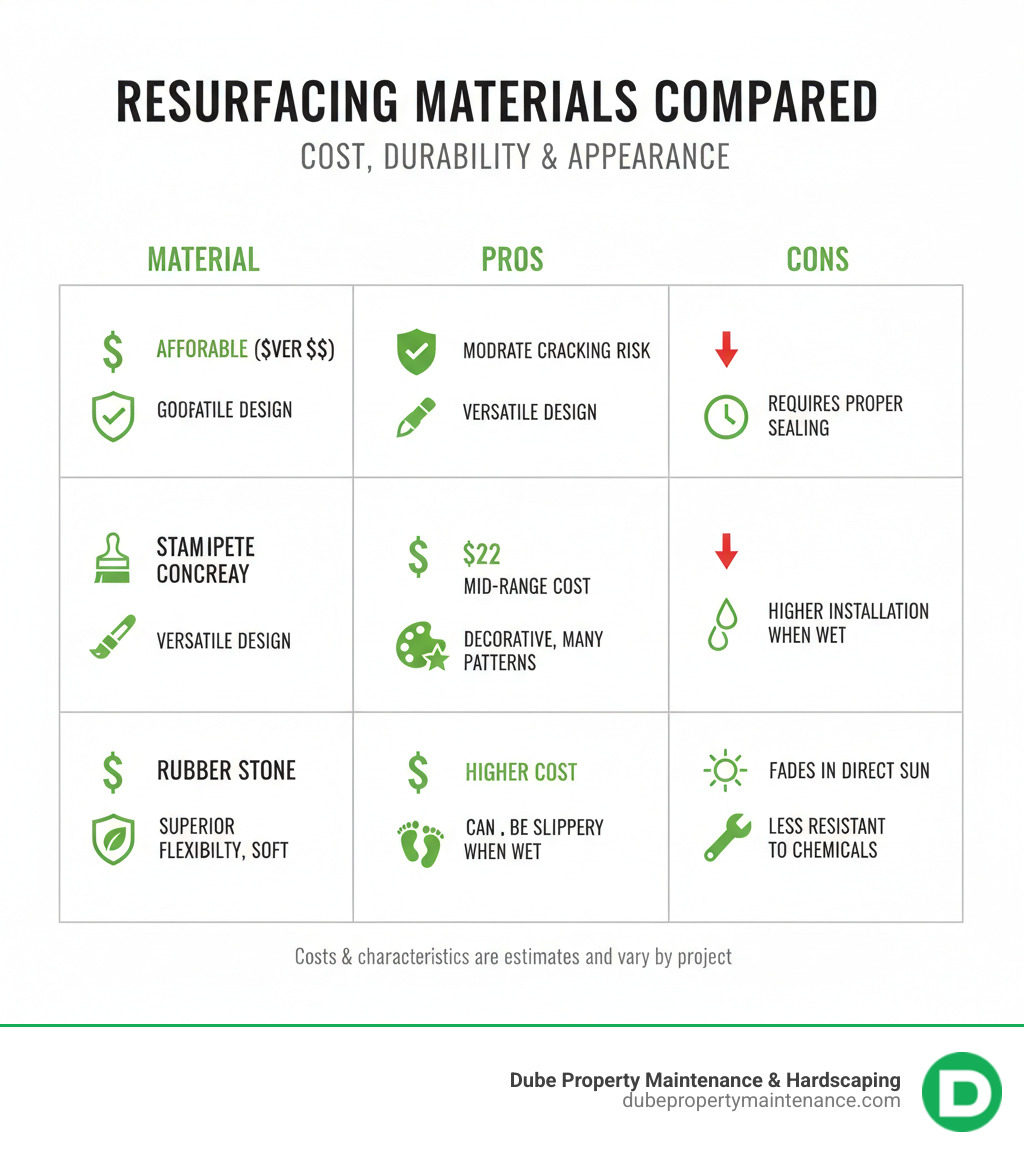
Choosing from the variety of available materials and finishes is an exciting part of the process. Standard concrete overlays are popular for being durable and cost-effective. Decorative options make your driveway stand out. Stamped concrete mimics materials like stone or brick, while stenciled patterns offer a similar look, often at a lower cost. Colored concrete adds pigments or stains for a wide range of color possibilities.
Alternative overlays like rubber aggregate (rubber stone) are gaining popularity. This material can last 15+ years, provides superior traction, and is more comfortable underfoot. It is aesthetically versatile, with many color and blend options. Installation is fast, often completed in a day. When comparing options, our Paver Driveway Cost vs Concrete guide can help.
Driveway resurfacing offers long-term benefits. It provides increased property value by boosting curb appeal, with homeowners often recouping 50-75% of the project cost. Resurfacing provides an extended lifespan of 8 to 15 years for your existing concrete with proper care.
To maximize these benefits, perform basic maintenance. This includes regular cleaning, periodic sealing every 2-3 years (similar to Paver Driveway Maintenance), avoiding harsh chemicals like de-icing salts, promptly cleaning spills, and keeping heavy equipment off the driveway.
When homeowners consider whether to resurface driveway concrete, they have questions about durability, limitations, and costs. Here are the answers to the most common ones.
A properly resurfaced driveway typically lasts 8 to 15 years. Longevity depends on factors like climate, usage, and the quality of installation and sealing. In Massachusetts, freeze-thaw cycles are tough on concrete, but a quality, well-sealed resurfacing job holds up well. Regular maintenance, including periodic cleaning and resealing every 2-3 years, can extend the lifespan. Some materials, like rubber stone overlays, may even last 15+ years and come with a warranty.
To be honest, no, you cannot successfully resurface a severely damaged driveway. Resurfacing is a cosmetic fix for surface-level problems. If the underlying structure isn’t sound, the new surface will fail. If your driveway has deep structural cracks, sinking slabs, or crumbling areas, it has foundational problems. In these cases, we recommend a full Concrete Driveway Replacement. Resurfacing over these issues means the new layer will crack and fail, wasting your money.
Resurfacing is significantly cheaper, typically costing 50-70% less than a complete replacement. This saves homeowners thousands while providing a fresh, new look.
Resurfacing costs typically range from $3 to $20 per square foot. Full replacement, on the other hand, can run $8 to $25 per square foot or more. For a 600-square-foot driveway, resurfacing might cost $1,800 to $12,000, while replacement could be $4,800 to $15,000 or more. (Note: these are average costs based on internet data and not actual costs for Dube Property Maintenance and Hardscaping).
The key is that resurfacing only makes financial sense if your driveway is structurally sound. Otherwise, you’ll pay for resurfacing now and replacement later. The sweet spot for resurfacing is a driveway that’s tired and worn but not falling apart. It’s a cost-effective refresh for surface cracks, discoloration, and minor wear.
Your driveway makes the first impression. When you resurface driveway concrete, you’re investing in your home’s curb appeal and your peace of mind. Imagine pulling into a smooth, attractive driveway instead of seeing the same old cracks and stains. That’s the pride a resurfaced driveway brings.
Resurfacing is the sweet spot between minor repairs and a full replacement. It provides a “new driveway” feel without the high cost, mess, or disruption of a total tear-out. We’ve covered how to assess your driveway, the process, and the costs. The key takeaway is: if your concrete is structurally sound but looks tired, resurfacing can add 8-15 years of life and dramatically improve its appearance.
The reality is that while DIY is tempting, professional expertise pays off. Common DIY mistakes like improper surface preparation, uneven application, or poor material mixing can lead to a failed project and costly redos.
At Dube Property Maintenance & Hardscaping, we’ve perfected driveway resurfacing in the Methuen area. Our team uses professional-grade equipment, has years of experience, and offers a warranty for your confidence. We manage the entire project, ensuring a finish that withstands New England weather.
Ready to transform your tired concrete? Contact us for a free estimate. Explore our hardscaping services to see how we can give your property’s entrance the professional look it deserves.
