
A grey Indian sandstone patio brings together natural beauty, proven durability, and low-maintenance practicality — making it one of the most popular paving choices for residential and commercial properties across Methuen MA, Andover MA, North Andover MA, and Salem NH.
Quick Answer: What to Know About Grey Indian Sandstone Patios
Grey Indian sandstone has earned its reputation across the UK and North America for good reason. It’s hard-wearing, naturally grippy underfoot, and develops a rich, weathered character over time. Whether you’re designing a modern courtyard or a traditional garden retreat, grey sandstone adapts to both.
In this guide, we’ll walk you through design ideas, material selection, installation best practices, and long-term maintenance — everything you need to plan a grey Indian sandstone patio that lasts.
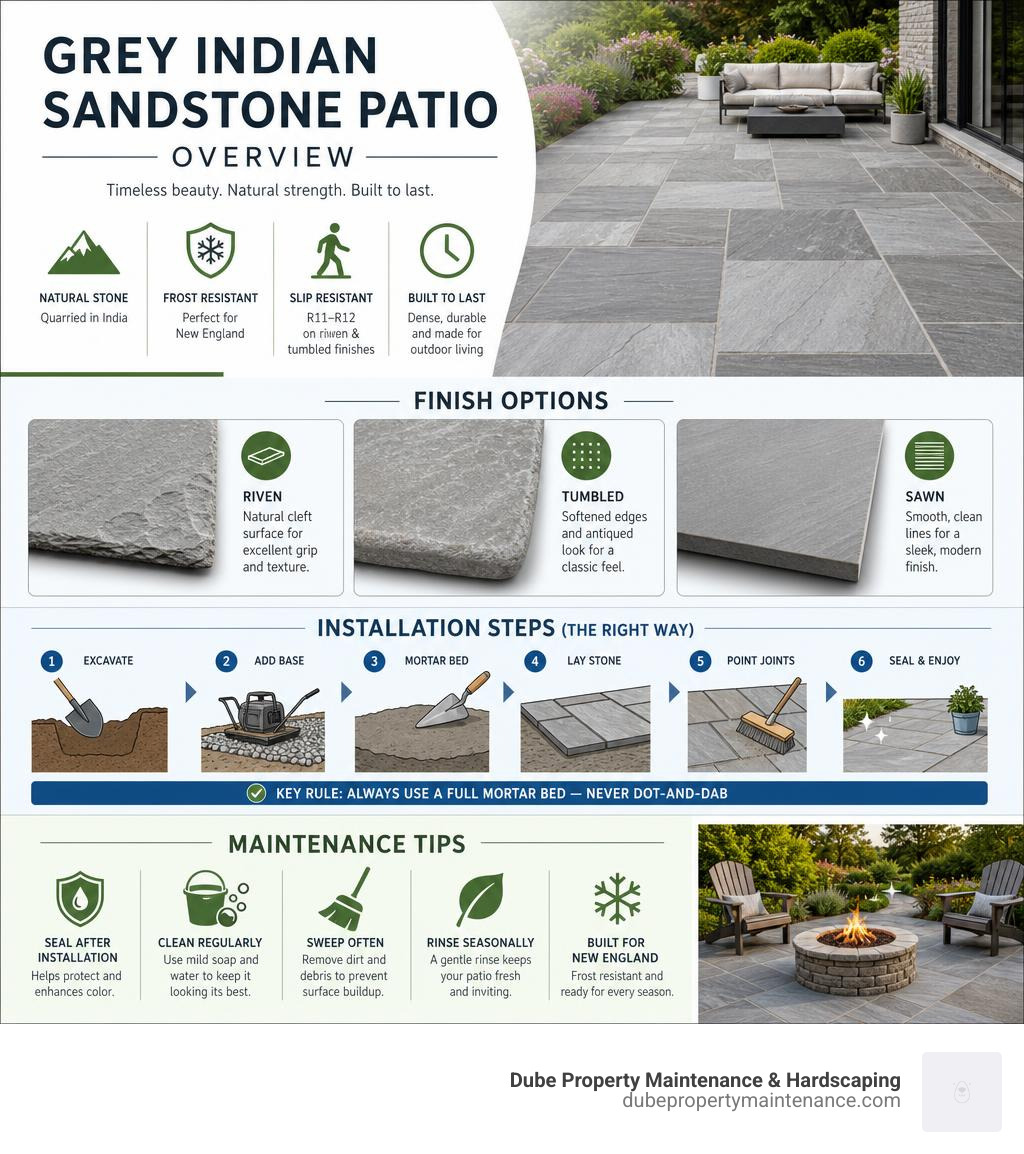
Grey Indian sandstone—frequently sold under names like Kandla Grey, Storm Grey, or Silver Grey—is a natural sedimentary stone sourced directly from quarries in India. What makes this stone exceptional is its high quartz content. This geological makeup yields an incredibly dense stone that is far less absorbent than other sandstones, making it highly resistant to temperature fluctuations and structural wear.
For properties in Massachusetts and New Hampshire, this density is a major benefit. Our local climate demands materials that can withstand intense freeze-thaw cycles without cracking or flaking. Grey Indian sandstone stands up to these challenges beautifully while offering a slip-resistant, textured surface that keeps outdoor spaces safe.
The aesthetic appeal of a grey indian sandstone patio lies in its sophisticated, contemporary palette. Unlike warmer, earth-toned stones, grey sandstone offers a clean, neutral backdrop featuring light-blue undertones, mid-grey slabs, and subtle natural veining. Each slab is entirely unique, displaying distinct patterns formed over millions of years.
Furthermore, its lightly riven texture provides a flatter, more usable surface than other heavily textured natural stones. This makes it an ideal choice for outdoor dining areas, walkways, courtyards, and entertainment zones where patio furniture needs to sit level.

When planning an outdoor living space, it is helpful to compare grey sandstone against other popular colors and materials. While buff and brown sandstone variants create a cozy, rustic, or warm atmosphere, cool grey sandstone lends a sleek, modern, and expansive feel to a property.
Compared to manufactured concrete pavers, natural sandstone offers incomparable color depth and aging characteristics; rather than fading under UV rays, natural stone matures gracefully. While porcelain pavers offer maximum stain resistance, they lack the organic texture and heavy underfoot feel of natural stone. Compared to premium materials like granite or local bluestone, grey Indian sandstone delivers a highly comparable level of durability at a much more accessible price point.
| Material / Colour | Appearance | Durability | Slip Resistance | Stain Risk | Freeze-Thaw Performance |
|---|---|---|---|---|---|
| Grey Indian Sandstone | Cool greys, subtle blue undertones, natural veining | High (dense quartz structure) | Excellent (R11-R12 on riven/tumbled) | Moderate (porous but manageable with sealer) | Excellent (high density) |
| Buff / Brown Sandstone | Warm beiges, golds, and tan tones | Moderate to High | Excellent (riven) | Moderate | Good |
| Concrete Pavers | Uniform colors, manufactured shapes | High (if installed correctly) | Good | Moderate to High | Good |
| Porcelain Pavers | Ultra-modern, highly consistent | Very High | Moderate to Good | Very Low | Excellent |
| Bluestone | Deep blues, greys, and browns | High | Excellent | Moderate | Excellent |
| Granite | Speckled, consistent mineral patterns | Extremely High | Good (textured finishes) | Low | Excellent |
If you are exploring different layout and material options for your property, you can read more about our work with paver patios and browse through our paver patio design ideas to find the perfect fit for your site.
Grey Indian sandstone is available in several distinct finishes, allowing the stone to be matched to the surrounding architecture and landscape plan:
Designing a patio is about more than just laying down stone; it is about creating functional zones that connect buildings, access routes, seating areas, and landscape features. Whether the goal is a spacious dining area, a quiet seating zone, or a transition walkway to the rest of the property, planning the layout is key.
For comprehensive inspiration, explore our patio design near me services and check out our favorite backyard paver patio ideas to see how different stone elements can transform a landscape.
The layout pattern you select will dictate the overall feel of the outdoor space.
For traditional, cottage-style, or rustic properties, a mixed-size pattern is highly recommended. These layouts utilize a four-size project pack laid in a random, interlocking design. Because no single joint line runs uninterrupted across the patio, the result is an informal, natural-looking surface that mimics historical European courtyards.

For modern or contemporary properties, a stretcher bond layout using large-format single-size slabs (such as 900x600mm) creates a clean, linear look. This symmetrical design emphasizes length and width, making compact outdoor areas feel significantly larger and more structured.
To truly elevate an outdoor space, consider integrating grey sandstone paving with vertical hardscape elements. The cool tones of Kandla Grey pair beautifully with darker charcoal stone borders, granite steps, or natural stone retaining walls.
For residential and commercial entertainment areas, we can design and build custom additions that integrate directly with the new stone floor:
The finishing touches can make or break a patio design. To frame grey sandstone, consider a “soldier course” border made of contrasting charcoal granite setts or dark basalt pavers. This creates a crisp visual boundary that outlines the space.
For jointing, we recommend using a high-quality, resin-based jointing compound in a mid-grey or basalt tone. A darker joint color highlights the individual shapes of the sandstone slabs and resists showing dirt over time.
Finally, soften the hardscape edges by planting lush greenery around the perimeter. Cool grey stone looks stunning when paired with deep purple salvias, delicate ornamental grasses, and structured boxwood hedges, creating a balanced, professional landscape.
When buying grey Indian sandstone, you will quickly find that it is sold in several formats, thicknesses, and pack sizes. Making the right choices during the design phase ensures that your installation proceeds smoothly and stays aligned with the project scope.
Most suppliers package natural stone in mixed-size project packs designed to cover a specific square footage. These packs typically contain a balanced mix of four standard sizes:
For example, a standard calibrated mixed pack might provide around 19.5 m² of coverage, containing approximately 60 individual pieces. You can review a detailed breakdown of this format on the Kandla Grey Indian Sandstone Paving | Infinite paving – Infinite Paving product page.
Always ensure you buy calibrated stone. Calibrated slabs are machine-processed to a consistent thickness of 22mm. Non-calibrated stone can vary in thickness by up to 10mm or more, requiring the installation team to spend significant extra time hand-leveling each individual slab during installation.
Note: All prices and cost ranges mentioned below are average planning references sourced from publicly available online data and general industry averages. They are provided for broad context only and do not represent the actual pricing, rates, estimates, or guarantees of Dube Property Maintenance & Hardscaping.
Material-only sandstone costs can vary widely based on thickness, edge finish, freight, taxes, quantity, and availability. For installed natural stone patio projects, broad online industry data shows that total costs can vary dramatically depending on site conditions. To account for that variability, a conservative planning range for a professionally installed natural stone patio is approximately $60 to $750+ per square foot depending on access, excavation, drainage, base depth, stone format, cuts, jointing, and custom masonry additions.
The total installed cost of a custom natural stone patio is influenced by several factors:
For a detailed look at budgeting for your project, read our comprehensive backyard patio cost guide.
When ordering natural stone, always include a 10% waste and cutting allowance on top of your precise measurements. This ensures you have enough stone to cover cuts, curves, and any minor transit damage.
Because sandstone is heavy, it is delivered via large freight trucks on pallets. The offload area must be a solid, flat surface like concrete or asphalt; delivery drivers cannot drop heavy stone pallets onto soft grass or gravel driveways.
Upon delivery, it is standard practice to inspect the crates. Natural stone is a product of nature, and minor scuffs or a couple of cracked slabs per pack are common and can usually be used for cuts. However, any significant transit damage should be photographed immediately and noted on the delivery paperwork. To prevent color banding, we always open multiple crates at once during installation and mix the slabs evenly to blend the stone’s natural color variations.
Natural stone is an investment in your property, and its longevity depends entirely on the quality of its installation. In our local New England climate—where winter ground freeze can easily shift poorly laid stones—following strict professional installation standards is non-negotiable.
If you are looking for local experts to handle your project, explore our patio installation services and see how we manage professional paver patio installation projects from start to finish.
A beautiful patio is only as good as the foundation beneath it. Our professional installation process follows these critical steps:
Premature patio failures are often caused by a few avoidable installation errors:
To keep your patio structurally sound and weed-free, we recommend using a modern, resin-based jointing compound. These jointing compounds are swept into the 8–12mm joints between the slabs and cured to form a strong, semi-permeable barrier.
Resin joints allow water to drain through while remaining flexible enough to expand and contract with seasonal temperature swings. This prevents the joint cracking that commonly occurs with traditional sand-and-cement mortar pointing.
While grey Indian sandstone is incredibly durable, a simple maintenance routine will keep it looking brand new for decades.
For routine cleaning, you don’t need expensive chemicals or heavy machinery. A bucket of warm water mixed with a mild, non-acidic detergent (like liquid dish soap) and a stiff-bristled broom is all it takes to remove everyday dirt and grime. Simply scrub the surface and rinse it down with a garden hose.
While pressure washers can be used, you must exercise caution. Keep the nozzle at a safe distance (at least 12 inches) and use a fan tip rather than a narrow jet, which can erode the natural riven texture of the stone or blast away the jointing compound. If you notice organic staining, moss, or algae building up in shaded areas, use a specialized, non-acidic outdoor cleaner designed specifically for natural stone.
Yes, we highly recommend sealing grey Indian sandstone patios in New England. Because sandstone is a natural, porous material, it can absorb oil, grease, leaf tannins, and dirty water, which can lead to permanent staining.
When sealing, always use a breathable, water-based impregnating sealer. Unlike cheap topical sealers that leave a shiny “wet-look” plastic coating, an impregnating sealer sinks deep into the pores of the stone, protecting it from within while allowing natural moisture vapor to escape.
Important Sealing Guidelines:
Over the years, your patio will develop a beautiful, mature character. Exposure to rain, sun, and snow will gently soften the stone’s natural colors, creating a timeless, organic look that complements the surrounding landscape.
In local service areas such as Methuen MA and North Andover MA, winter snow management is a key factor in patio longevity. Avoid using harsh chemical deicers or rock salt on natural stone, as these can damage the surface. Instead, use sand for traction, and utilize a plastic-edged shovel rather than a metal one to prevent scratching the stone’s natural riven face. To keep your property looking its best year-round, you can also pair your patio care with our professional spring yard cleanups and explore our full range of patio services near me.
No. The natural riven texture of grey Indian sandstone provides exceptional slip resistance (typically rated R11 to R12), making it highly secure and slip-resistant even after a heavy rainfall. Tumbled finishes also offer excellent grip. We recommend avoiding highly polished or honed sandstone finishes for outdoor wet areas, as they do not provide the same level of traction.
Absolutely. Because of its high quartz density and frost resistance, grey Indian sandstone is exceptionally hard-wearing. It is highly suited for high-traffic residential patios, garden walkways, steps, and commercial courtyards. For commercial or heavy-use areas, professional base preparation and utilizing a calibrated 22mm thickness are essential to ensure the stone can handle the load. Learn more about our commercial and residential options on our patio and walkway construction page.
We always recommend ordering 10% extra material beyond your exact square footage. This waste allowance covers necessary cuts around edges, curves, and corners, and accounts for any minor breakages that may occur during transport. Having a few extra matching slabs on hand also ensures you have perfectly matched replacement stones if you ever need to make utility repairs or expand your patio in the future.
A grey indian sandstone patio is a beautiful, durable, and highly practical investment that can completely transform an outdoor living space. With its cool grey tones, natural slip-resistant texture, and incredible resistance to New England’s harsh winter weather, Kandla Grey sandstone is an excellent material for creating a functional outdoor retreat.
However, the key to a patio that lasts for 25+ years without shifting, cracking, or staining lies in the installation. From deep, compacted base preparation to full wet-mortar beds and essential slurry priming, professional craftsmanship makes all the difference.
At Dube Property Maintenance & Hardscaping, our experienced team is proud to provide high-quality, comprehensive outdoor solutions for residential and commercial clients throughout Methuen MA, Andover MA, North Andover MA, Salem NH, and surrounding Massachusetts and New Hampshire communities.
Ready to design your dream outdoor space? Call +978-689-0612 or use our quote form button to get started: Request a Quote. You can also explore our professional hardscaping services, learn more about our patio installation process, or browse our full range of landscaping services to start planning your outdoor transformation.
