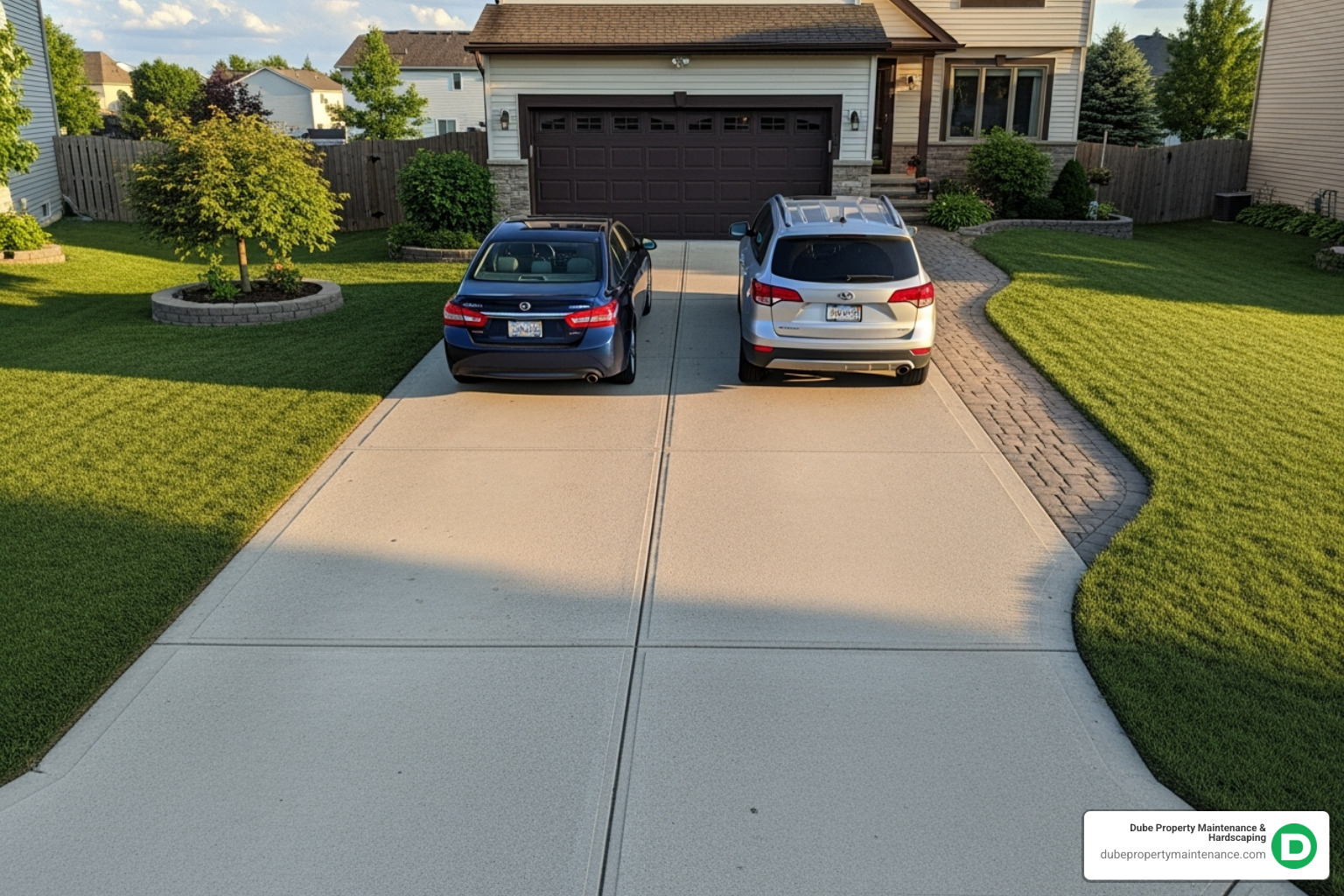
Why Accurate Cost Estimation Matters for Your Driveway Investment
To estimate concrete driveway replacement costs, expect to pay between $6-$25+ per square foot. Total project costs typically range from $3,000-$15,000+, depending on size, decorative finishes, site conditions, and regional labor rates.
Note: These are average costs based on internet data and not actual costs for Dube Property Maintenance & Hardscaping.
Your driveway is a major investment in your Methuen home’s curb appeal. A failing driveway detracts from your home’s appearance and can reduce its market value, while a well-designed replacement can increase property value by 5-10%.
Proper cost planning is essential, especially since harsh New England winters accelerate concrete deterioration. Understanding replacement costs upfront helps you budget for this expense and choose the right contractor for a long-lasting result.
Glossary for estimate concrete driveway replacement:
Breaking Down the Numbers: How to Estimate Concrete Driveway Replacement Costs
When you estimate concrete driveway replacement costs, the final price is broken down into several key components. We’ll help you understand the numbers so you can plan your budget with confidence.
Note: All prices mentioned are national averages based on internet data and not actual costs for Dube Property Maintenance & Hardscaping. Prices can vary significantly based on location, project complexity, and material choice. For a precise quote, a professional on-site evaluation is necessary.
Contractors typically price driveway replacement by the square foot. Costs start around $6 per square foot for standard concrete and can climb to $30+ per square foot for premium decorative finishes. A complete replacement, including demolition, usually costs between $3,000 and $15,000. The final price depends on your driveway’s size, finish, and any site-specific challenges.
Size is the primary driver of your final cost. More square footage means more materials, labor, and time. To calculate your area, multiply the length by the width (e.g., a 20′ x 20′ driveway is 400 square feet).
Single-car driveways (approx. 200 sq ft) typically cost $1,200 to $6,000. Basic concrete will be on the lower end, while decorative finishes and complex sites increase the price.
Two-car driveways (approx. 400 sq ft) are the most common, costing between $2,400 and $12,000.
Three-car driveways (approx. 864 sq ft) can range from $5,200 to $25,000 or more. Larger projects may benefit from better per-square-foot material pricing.
These figures are estimates; the final cost depends on many factors.
Cost of Basic vs. Decorative Concrete
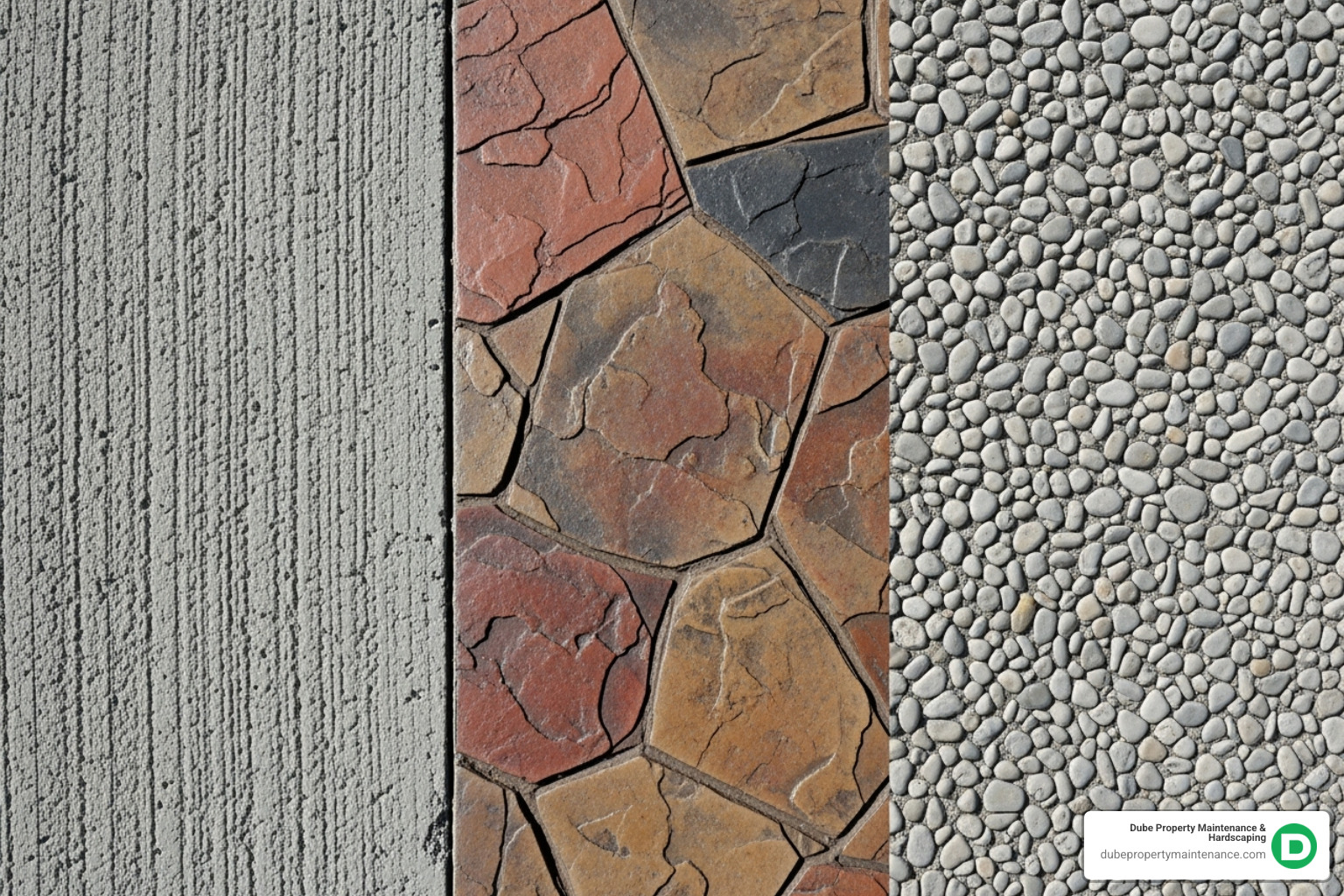
The finish you choose greatly impacts the final cost and aesthetic. Concrete offers incredible flexibility, from simple and functional to decorative finishes that mimic natural stone.
Plain gray concrete with a broom finish is the most budget-friendly choice at $6 to $18 per square foot. This classic, durable look provides excellent traction.
Colored concrete adds pigments to the mix or as a stain, opening up a world of design possibilities. Expect to pay $8 to $24 per square foot.
Stamped concrete uses patterns to mimic materials like brick, stone, or wood. This labor-intensive technique costs $10 to $30 per square foot and delivers stunning results.
Exposed aggregate reveals the natural stones in the concrete mix, creating a durable and slip-resistant surface for $12 to $36 per square foot.
While decorative options cost more upfront, they can significantly boost your home’s curb appeal and value. Want to see all the decorative possibilities? Check out our Decorative concrete driveway options.
Key Factors That Influence Your Replacement Estimate
When you estimate concrete driveway replacement costs, several key factors beyond size and finish will influence the final price.
Site Conditions: Accessibility for equipment, the slope of the driveway, and existing landscaping can all affect the cost. A sloped or hard-to-access site requires more labor and time.
Project Complexity: Simple rectangular shapes are less expensive than curved designs or driveways with decorative borders. Addressing drainage issues also adds to the cost.
Material Quality: The strength of the concrete mix (PSI) and the type of reinforcement (wire mesh vs. rebar) impact both the initial price and the driveway’s long-term durability.
Labor Rates: Costs for skilled labor vary by region. Local market conditions in Massachusetts and New Hampshire will affect the final price, which is why on-site estimates are crucial.
Demolition and Site Preparation
Proper preparation is critical for a long-lasting driveway. This foundational work is not the place to cut corners.
Old Driveway Removal: Breaking up and hauling away the existing driveway typically costs $2 to $6 per square foot. For a 400-square-foot driveway, this can be $800 to $2,400. Haul-away and disposal fees are usually included but should be confirmed.
Excavation and Grading: The site must be excavated to the proper depth and graded to ensure correct water drainage, preventing pooling and ice damage. This can cost $2 to $8 per square foot.
Soil Compaction: We compact the soil and sub-base to create a solid foundation, preventing the settling and cracking that plague poorly installed driveways.
Note: These are average costs based on internet data and not actual costs for Dube Property Maintenance & Hardscaping.
The right thickness and reinforcement are key to your driveway’s strength and longevity, especially with New England’s freeze-thaw cycles.
Standard 4-inch thickness is sufficient for cars and light trucks.
5-6 inch thickness is recommended for heavier vehicles like RVs, boats, or delivery trucks to prevent premature cracking.
Rebar vs. Wire Mesh: Wire mesh is a standard reinforcement that adds $1 to $3 per square foot. Rebar offers superior strength for thicker slabs or poor soil conditions, adding $2 to $6 per square foot.
Edge Thickness: A professional installation includes thickened edges (6-8 inches) to prevent chipping and cracking in high-stress areas where vehicles enter and exit.
Several other costs can affect your final estimate. A detailed quote should account for these possibilities.
Labor Costs: Typically 40-60% of the total project cost, or $3 to $15 per square foot, depending on complexity and regional rates.
Building Permits & Inspections: Most municipalities require permits for driveway replacement, with fees ranging from $50 to $1,500. Inspection fees may also apply.
Driveway Apron: The section connecting your driveway to the street is often subject to specific municipal codes and can cost $5 to $25 per square foot.
Other Potential Costs: Be prepared for potential expenses related to unexpected soil issues, necessary drainage solutions, or site access challenges.
Is It Time to Replace? Lifespan, Benefits, and ROI
Your driveway endures daily stress from vehicle weight and harsh New England weather. Eventually, even durable concrete will fail. Knowing when to estimate concrete driveway replacement instead of attempting repairs can save you money long-term. Key warning signs include:
Severe Cracking: Deep, interconnected “alligator” cracks that go beyond hairline fractures.
Pitting and Spalling: The surface chipping or flaking away, often caused by freeze-thaw cycles.
Poor Drainage: Water consistently pooling on the driveway, which can damage the slab and your home’s foundation.
Uneven Surface: Heaving or settling that creates a safety hazard and indicates foundation failure.
Lifespan and Maintenance of a Concrete Driveway
A professionally installed concrete driveway should last 20-30 years, sometimes longer with excellent care.
Climate Impact: New England’s freeze-thaw cycles are tough on concrete, making proper installation and drainage essential.
Sealing Benefits: Sealing your driveway every 2-5 years (at $1 to $3 per square foot) protects it from moisture, stains, and de-icing salts, dramatically extending its life.
Concrete Quality: Using a high-quality mix with a compressive strength of at least 4,000 PSI is crucial for durability. For more detailed information on concrete strength specifications, you can reference Concrete quality and strength (PSI).
Does a New Driveway Add Home Value?
Yes, a new driveway significantly boosts curb appeal and provides a strong return on investment (ROI).
Curb Appeal: A pristine driveway makes a powerful first impression on potential buyers, suggesting a well-maintained home.
Property Value: A new concrete driveway can increase your property’s value by 5-10%.
Attractiveness to Buyers: A move-in ready home with no major upcoming expenses is more desirable in a competitive market.
Medium (weed removal, sand refilling, occasional cleaning)
Wide variety of shapes, colors, patterns
Note: These are average costs based on internet data and not actual costs for Dube Property Maintenance & Hardscaping. Prices can vary significantly based on location, project complexity, and material choice. For a precise quote, a professional on-site evaluation is necessary.
Concrete strikes an excellent balance, offering superior longevity and design flexibility compared to asphalt, often at a more accessible price than premium pavers. To explore the full range of possibilities for your project, visit our page on More info about concrete driveway options.
Hiring a Professional for Your Driveway Replacement
Concrete work is not a simple DIY project; mistakes are permanent and costly to fix. A professional ensures your investment results in a durable, safe, and attractive driveway.
Find Qualified Contractors: Look for specialists in concrete driveways who understand local climate challenges and regulations, like Dube Property Maintenance & Hardscaping.
Get Multiple Quotes: Obtain at least three detailed, written estimates to compare scope, materials, and pricing. The lowest bid isn’t always the best value.
Vet Professionals: Check references, review their portfolio, and verify they are licensed and insured.
Review the Contract: Ensure the contract clearly details the scope of work, materials, timeline, payment schedule, and warranty.
Ask About a Warranty: Reputable contractors stand behind their work with a warranty on materials and workmanship.
The Driveway Replacement Process: What to Expect
A professional replacement follows a clear process:
1. Demolition & Removal: The old driveway is broken up and hauled away. 2. Site Grading & Base Prep: The area is excavated, graded for proper drainage, and a compacted sub-base is installed. 3. Formwork Installation: Forms are set to define the shape and ensure proper thickness. 4. Pouring & Finishing: Concrete is poured, leveled, and your chosen finish (broom, stamped, etc.) is applied. 5. Curing & Sealing: The concrete cures to full strength (this takes time), and a protective sealer is applied.
How to Save Money on Your Project
You can manage costs without sacrificing quality when you estimate concrete driveway replacement expenses.
Off-season scheduling: Booking your project in the late fall or early spring may result in better pricing.
Simple design choices: A standard rectangular driveway with a broom finish is more affordable than complex decorative options.
DIY prep work: If you’re handy, you might save on labor by handling minor site cleanup, but leave demolition and excavation to the pros.
Comparing quotes effectively means looking beyond the bottom line. Focus on finding the best combination of quality, service, and fair pricing for your specific project needs.
Frequently Asked Questions about Concrete Driveway Replacement
When homeowners are planning their project, we get plenty of questions. Here are the most common ones we hear when people want to estimate concrete driveway replacement costs and timelines.
How thick should a concrete driveway be?
The ideal thickness depends on the vehicles it will support.
4-inch thickness is the standard for cars and light trucks.
5 to 6-inch thickness is crucial for heavier vehicles like RVs, boats, or delivery trucks to prevent cracking.
Reinforcement (wire mesh or rebar) is essential. A professional will also create thickened edges (6-8 inches) where stress is highest.
How long does a new concrete driveway need to cure?
Concrete hardens through a chemical process called curing, not just drying. Patience is key.
24-48 hours: Safe for light foot traffic.
7-10 days: Safe for light passenger vehicles.
28 days: Reaches full design strength and can handle normal use, including heavier vehicles.
Is it cheaper to resurface or replace a concrete driveway?
It depends on the extent of the damage.
Resurfacing (around $3 to $10 per square foot) is a good option for cosmetic issues like minor hairline cracks or surface discoloration.
Replacement is the only long-term solution for structural problems like deep cracks, heaving, settling, or significant drainage issues. Resurfacing a failing foundation is a temporary fix that will fail again quickly.
Your Next Step to a New Driveway
Planning a concrete driveway replacement is a significant investment in your property’s value and curb appeal. You now understand the factors that influence cost, from size and materials to the critical importance of professional site preparation.
While the numbers can seem complex, understanding the “why” behind each cost helps with budgeting. Proper thickness, a solid base, and quality materials are your best defense against New England’s harsh weather, preventing costly future repairs.
Every property is unique, which is why a professional assessment is essential to remove guesswork and provide an accurate estimate. At Dube Property Maintenance & Hardscaping, we specialize in creating beautiful, durable concrete driveways for homeowners in Methuen, MA, and surrounding communities. We understand our local climate and are committed to high-quality hardscaping that lasts.
When you’re ready to transform your property, we’ll guide you through every step, from the initial evaluation to the final sealing.
For 25+ years Dube Property Maintenance & Hardscaping has provided top-rated residential and commercial landscape design, installations, hardscaping, irrigation systems and commercial snow and ice management. Our hardscaping division proudly serves the Merrimack Valley, Middlesex and Essex County and Southern, NH regions, transforming outdoor spaces into stunning works of art.