

Concrete removal cost ranges from $2 to $7 per square foot nationally, with most homeowners paying between $585 and $2,790 for complete projects. However, costs can exceed $9,000 for large or complex jobs involving thick, reinforced concrete.
Quick Cost Calculator:
Note: These are average costs based on internet data and not actual costs for Dube Property Maintenance & Hardscaping.
When an old concrete patio or driveway becomes a cracked eyesore, it’s time for removal. But what catches most homeowners off guard is that concrete removal pricing isn’t straightforward. The cost depends on far more than just square footage; factors like thickness, reinforcement, and site accessibility can dramatically change the final price.
Whether you’re dealing with a cracked driveway in Methuen or planning to replace a sunken patio, understanding these cost factors helps you budget properly. This guide breaks down every element influencing concrete removal pricing, from size and disposal fees to the pros and cons of DIY, so you can get accurate estimates for your project.

So, what will your concrete removal project cost? Nationally, most projects fall somewhere between $585 and $2,790, though quotes can exceed $9,000 for large jobs with thick or reinforced slabs.
By square footage, you’re typically looking at $2 to $7 per square foot. This wide range exists because concrete removal isn’t a one-size-fits-all service. A thin, unreinforced patio slab will be on the lower end of that range, while a thick, rebar-reinforced driveway will be at the higher end. Location also matters, as labor rates and disposal fees vary.
Important note: These figures represent national averages from various online sources and are not direct quotes for your specific project. Every job is unique, and an accurate estimate requires a professional assessment.
For more detailed pricing breakdowns, you can review industry resources like How Much Does Concrete Removal Cost? | Fixr.
The bottom line is that concrete removal cost depends on many factors, which we’ll explore next.
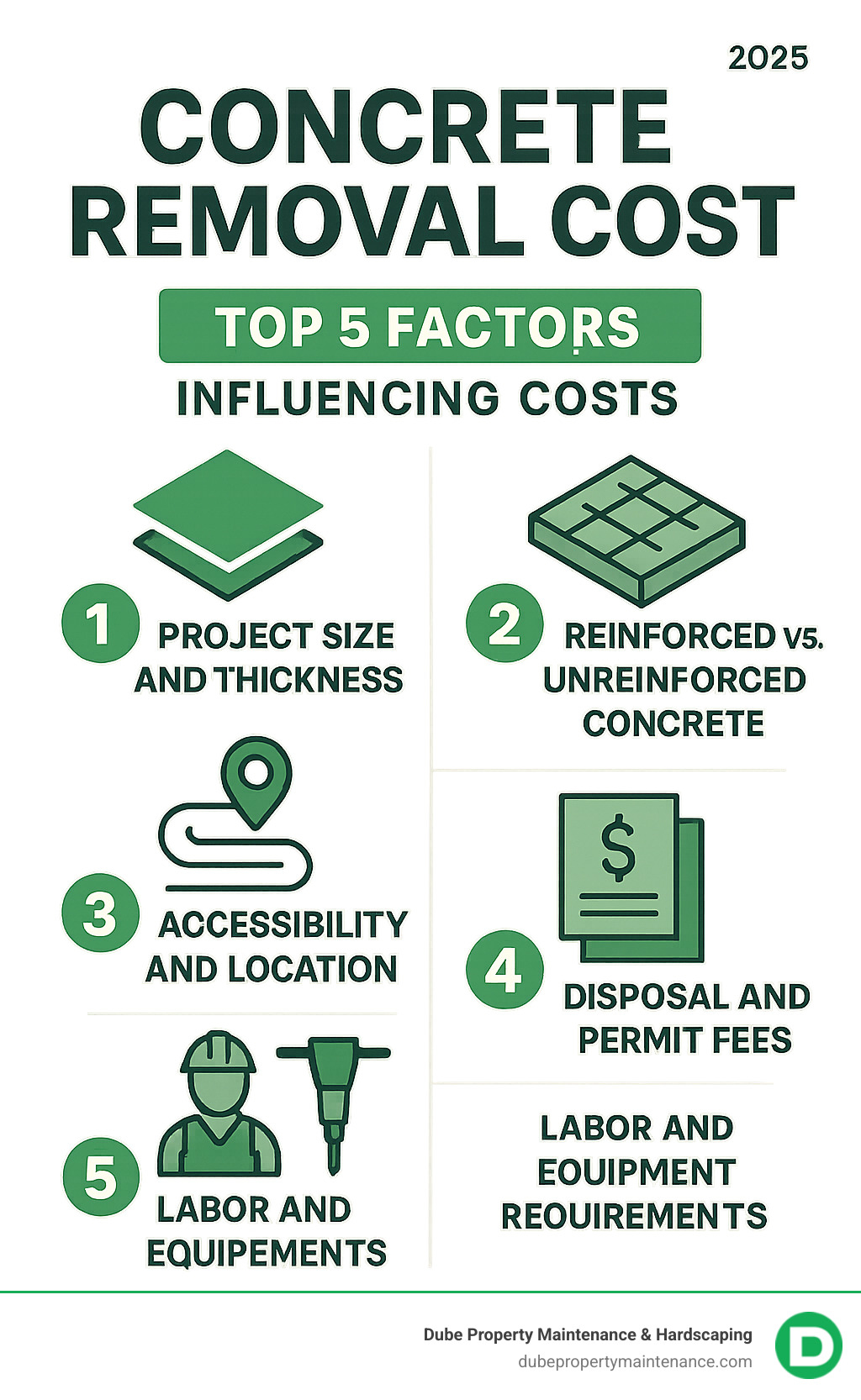
The concrete removal cost isn’t just about square footage. The complexity of your project, from labor requirements to equipment needs, makes all the difference. A simple, thin patio slab is far less expensive to remove than a thick, reinforced foundation in a tight space. Understanding these factors is key, especially if you’re planning a complete outdoor makeover that includes our hardscaping services.

While larger square footage naturally increases costs, thickness is just as critical. Most residential slabs are 4 to 6 inches thick, which serves as a pricing baseline. However, slabs that are 8, 10, or even 12 inches thick can easily double removal costs due to the increased labor, more powerful equipment, and higher disposal weight.
Here’s what different project sizes typically cost:
| Concrete Slab Size (Square Feet) | Estimated Cost Range (National Average)* |
|---|---|
| 100 sq ft (e.g., small patio) | $300 – $900 |
| 500 sq ft (e.g., large patio/small driveway) | $1,500 – $4,500 |
| 1,000 sq ft (e.g., large driveway/foundation) | $3,000 – $9,000 |
Note: These are average costs based on internet data and not actual costs for Dube Property Maintenance & Hardscaping.
The presence of rebar (steel bars) or wire mesh inside the concrete makes it significantly harder to break and remove. Plain concrete shatters relatively easily, but reinforced concrete requires specialized equipment like rebar cutters and more powerful jackhammers. This added complexity and labor will increase the cost per square foot. If you’re planning a major project like determining the cost to remove and replace concrete driveway, knowing if it’s reinforced is key for accurate budgeting.
A straightforward sidewalk removal costs less than a large, reinforced driveway or a complex foundation. The biggest variable, however, is site accessibility. If heavy equipment can easily reach the area, the job is faster and cheaper. Hard-to-reach areas that require manual hauling of debris through narrow gates will drive up labor costs. Geographic location also plays a role, with urban areas like Methuen and Salem often having higher labor rates and stricter disposal rules than rural locations.
Removing concrete is more than just demolition; it’s a process of breaking, hauling, and disposing of heavy materials, often with additional costs that can be a surprise if you’re not prepared.

A professional removal process ensures safety and efficiency. It starts with site preparation, including clearing the area and verifying utility line locations. Next, the concrete is broken up into manageable pieces using jackhammers or heavy machinery. Finally, the debris is loaded and transported to a disposal or recycling facility. This coordinated effort requires the right equipment and expertise, as detailed in resources like How Concrete Is Removed and How Much It Costs.
The concrete removal cost goes beyond demolition. Be prepared for additional expenses:
Note: These are average costs based on internet data and not actual costs for Dube Property Maintenance & Hardscaping.
Concrete recycling is a great way to save money and help the environment. Instead of going to a landfill, old concrete is crushed into recycled aggregate for use in new projects. This reduces landfill fees and conserves natural resources. We always explore recycling options for our projects. You can find local facilities through the Construction and Demolition Recycling Association’s C&D recycler locator.
Tackling concrete removal yourself to save money is tempting, but the reality of the work is often more than homeowners bargain for. It’s crucial to weigh the true costs and safety risks against the efficiency of hiring a professional.

While you save on professional labor, the DIY concrete removal cost has its own price tag. Tool rentals can add up quickly: a jackhammer ($50-$150/day), a concrete saw ($30-$100/day), and a skid-steer ($150-$450/day) are significant expenses. Add dumpster rental and disposal fees ($300-$800+), and the costs become substantial. The biggest factors, however, are the immense physical effort and time investment. A job that takes a professional crew a few hours can take a homeowner days of backbreaking work, with a high risk of property damage or injury.
Note: These are average costs based on internet data and not actual costs for Dube Property Maintenance & Hardscaping. Prices can vary widely based on specific project details.
Concrete demolition is dangerous. Whether DIY or pro, safety is paramount. Always use proper Personal Protective Equipment (PPE), including safety glasses, steel-toed boots, heavy-duty gloves, hearing protection, and a dust mask. The most critical step is to call 811 to have underground utility lines marked before you dig. Hitting a gas or electrical line can be deadly. For more information, consult OSHA safety guidelines.
Hiring a professional is the smart choice for large or complex projects, such as entire driveways, reinforced concrete, or sites with limited accessibility. If you lack the time, experience, or physical ability, calling a pro saves you from potential injury and property damage. We at Dube Property Maintenance & Hardscaping have the right equipment and expertise to handle the job safely and efficiently, including all disposal logistics. If you’re planning a replacement, we also provide services to estimate concrete driveway replacement.
When faced with damaged concrete, the big question is whether to repair or replace it. The right choice depends on the extent of the damage.
Minor, hairline cracks can often be patched. However, wide cracks (over 1/4 inch), sinking, or heaving are signs of deeper structural problems that patching won’t solve. These issues usually point to an unstable base or poor drainage.
Resurfacing, which costs around $1 to $5 per square foot, can be an option, but only if the underlying slab is sound. Applying a new layer over damaged concrete is a temporary fix, as the old cracks will reappear.
Note: These are average costs based on internet data and not actual costs for Dube Property Maintenance & Hardscaping.
While removal and replacement cost more upfront, it’s often the most cost-effective long-term solution. A new slab addresses the root cause of the problem, improves safety, and will last for decades. For major structural issues, we typically recommend replacing driveway sections or the entire slab as the smartest investment.
Here are answers to some of the most common questions we receive about concrete removal.
The timeline depends on several factors. A small, thin patio might take a few hours, while a large, reinforced driveway could take a full day or more. The key variables are the project’s size, thickness, reinforcement, and site accessibility. Most residential jobs, like patios or driveways, are completed in one to two days.
To help us provide an accurate estimate, you can measure the square footage and try to determine the thickness of the concrete. Note any visible reinforcement (rebar or wire mesh) and any access issues, like narrow gates. However, the best way to get a precise quote is with an on-site assessment, where a professional can evaluate all project variables.
We generally do not recommend this. The existing cracks will almost always transfer to the new layer, a problem known as “reflective cracking.” More importantly, pouring over an old slab doesn’t fix the underlying issues that caused the cracks in the first place, such as an unstable base or poor drainage. This leads to a shorter lifespan for your new concrete. For a lasting solution, complete removal and replacement is the best approach.
Note: These timing and pricing estimates are based on typical industry standards and may vary for specific projects with Dube Property Maintenance & Hardscaping.
Understanding concrete removal cost is the first step to a successful project. By considering factors like size, thickness, reinforcement, and disposal fees, you can budget properly and avoid surprises. Every project is unique, and knowing the variables helps you make smarter decisions for your property.
Safety is non-negotiable. While DIY is an option, the physical demands, equipment costs, and safety risks often make professional removal the wiser choice. A professional assessment can identify challenges early, ensuring the job is done efficiently and correctly. It’s not just about removing old concrete; it’s about preparing the ground for what comes next.
For homeowners in the Methuen, MA area and our broader service region in Massachusetts and New Hampshire, our experienced team has the right equipment to get your project done right.
Ready to transform your outdoor space? Get a professional quote for your concrete driveway replacement and let’s start planning together.
