Why Your Cement Driveway Deserves Better Than Band-Aid Fixes
Cement driveway repair is a common challenge for homeowners, especially in areas with harsh winters like Methuen, MA. Addressing hairline cracks, crumbling edges, or sunken slabs promptly can save you thousands in replacement costs.
Quick Answer for Cement Driveway Repair:
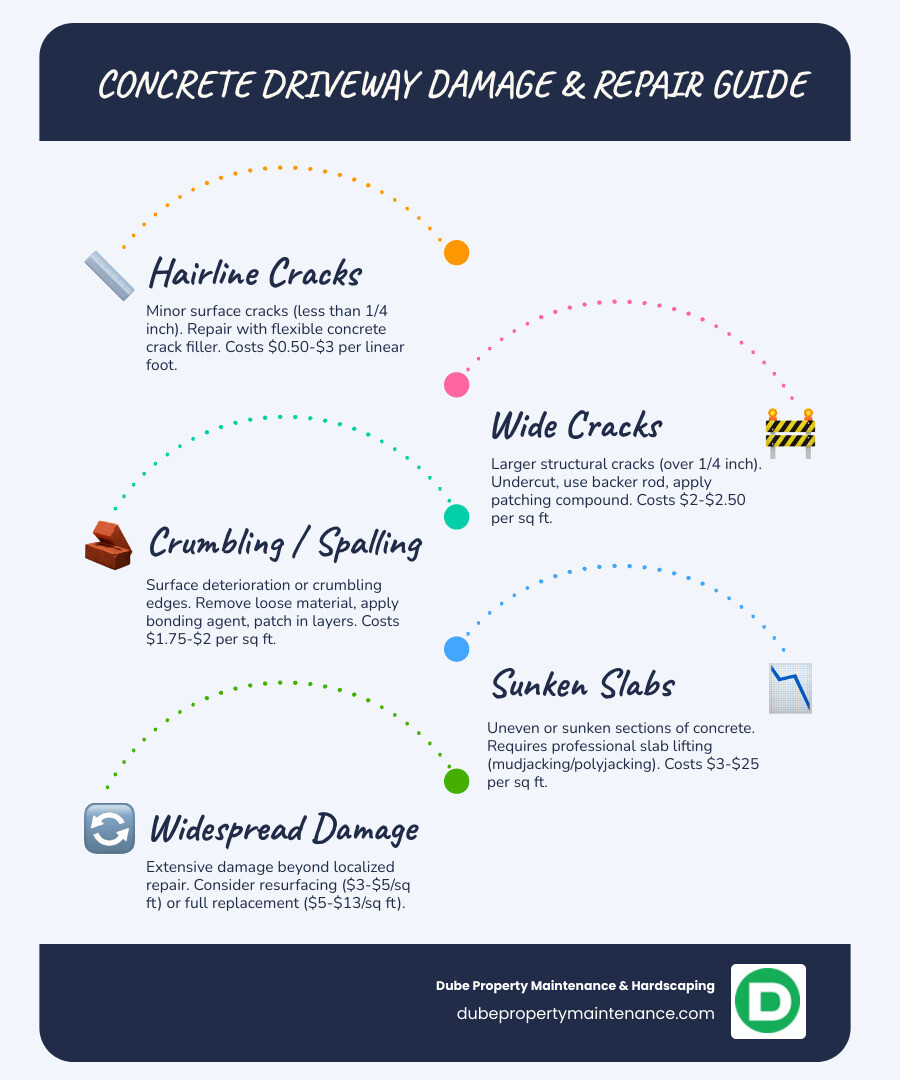
Small cracks (< 1/4 inch): Use flexible concrete crack filler – costs $0.50-$3 per linear foot
Large cracks (> 1/4 inch): Undercut, use backer rod, apply patching compound – costs $2-$2.50 per square foot
Crumbling concrete: Remove loose material, apply bonding agent, patch in layers – costs $1.75-$2 per square foot
Sunken sections: Professional lifting (mudjacking) required – costs $3-$25 per square foot
Widespread damage: Consider resurfacing at $3-$5 per square foot vs. replacement at $5-$13 per square foot
Note: These are national average costs based on internet data and do not represent quotes from Dube Property Maintenance & Hardscaping. Final costs may be 3x higher depending on project complexity.
Concrete driveways can last up to 50 years or more with proper maintenance, but they constantly battle freeze-thaw cycles, heavy loads, and water damage. Most problems are fixable when caught early.
Common causes of driveway damage include poor installation, improper subgrade preparation, freeze-thaw cycles, and general wear. The key is knowing when to patch, when to resurface, and when replacement is your only option.
Diagnosing the Damage: What’s Wrong With Your Driveway?
Before starting any cement driveway repair, it’s crucial to understand the root cause of the failure. A lasting repair depends on a correct diagnosis.
Common Causes of Concrete Deterioration
Several factors contribute to driveway damage, especially in New England:
Freeze-thaw cycles: Water enters cracks, freezes, expands, and breaks the concrete from within. This is a primary cause of damage in cold climates.
Poor initial installation: An improperly prepared subgrade or a poor concrete mix can lead to premature failure, settling, and cracking.
Heavy vehicle loads: Parking vehicles heavier than the driveway was designed for can cause structural stress and cracks.
Water damage and soil erosion: Poor drainage leads to standing water, which erodes the soil base, causing slabs to sink and crack.
Tree root intrusion: Growing roots can lift and crack concrete slabs with significant force.
De-icing salt damage: Harsh chemicals, particularly chlorides, eat away at the concrete surface, causing spalling (flaking and crumbling).
Shrinkage and weathering: Natural shrinkage during curing and long-term exposure to sun and rain contribute to wear and tear.
Telltale Signs Your Driveway Needs Attention
Look for these warning signs before major problems develop:
Hairline cracks: Small cracks that allow water to penetrate, leading to larger issues from freeze-thaw cycles.
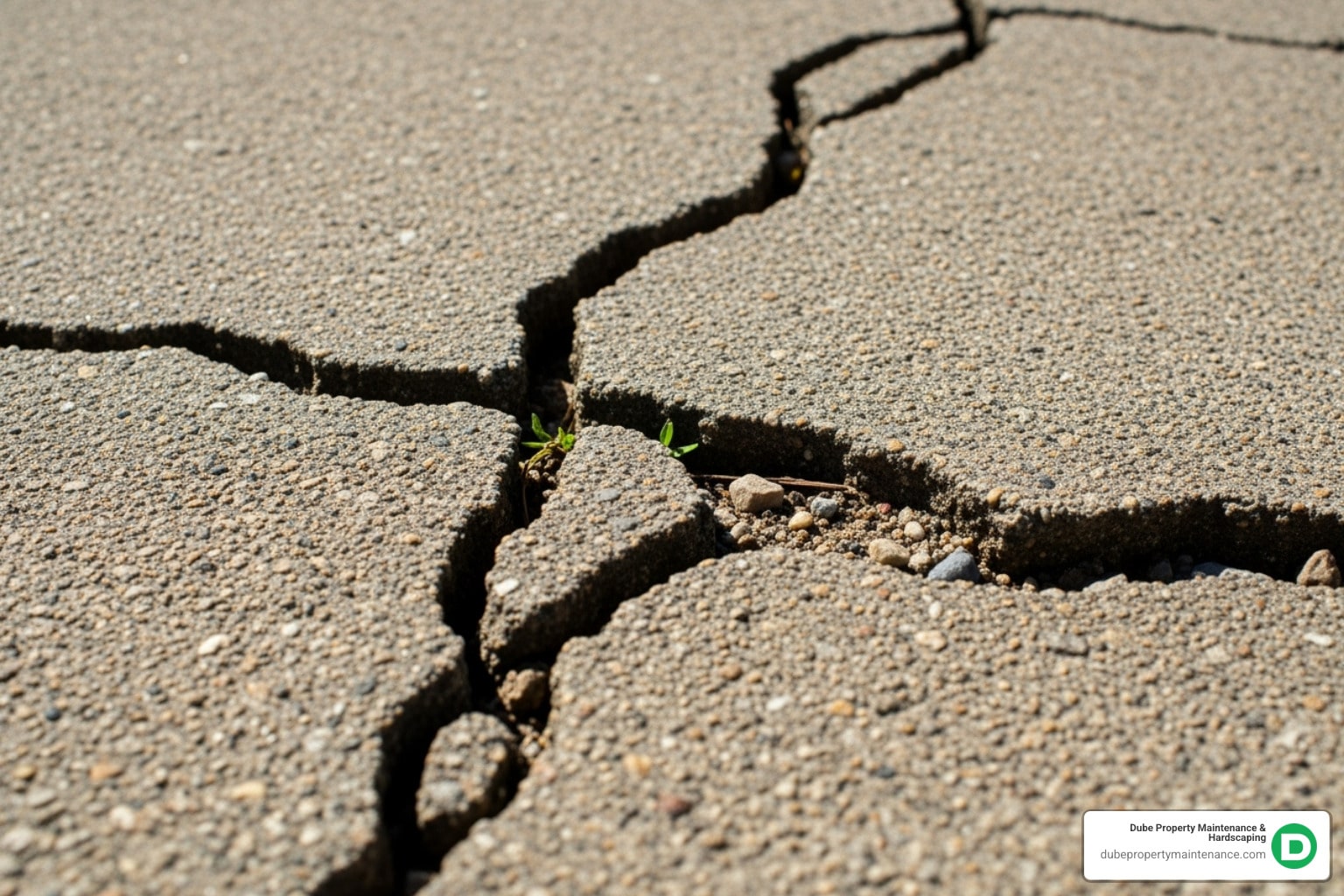
Wide cracks: Cracks over 1/4-inch wide often signal more serious structural problems.
Crumbling edges (spalling): The surface flakes and breaks away, typically along edges or in high-traffic areas.
Pitting: Small, shallow holes appear on the surface, indicating wear and abuse.
Discoloration: Widespread color changes can indicate water infiltration or chemical damage.
Sunken or uneven slabs: A trip hazard that points to soil settlement or erosion underneath.
Water pooling: Persistent puddles after rain are a clear sign of drainage problems and a compromised subgrade.
Your Complete Guide to Cement Driveway Repair
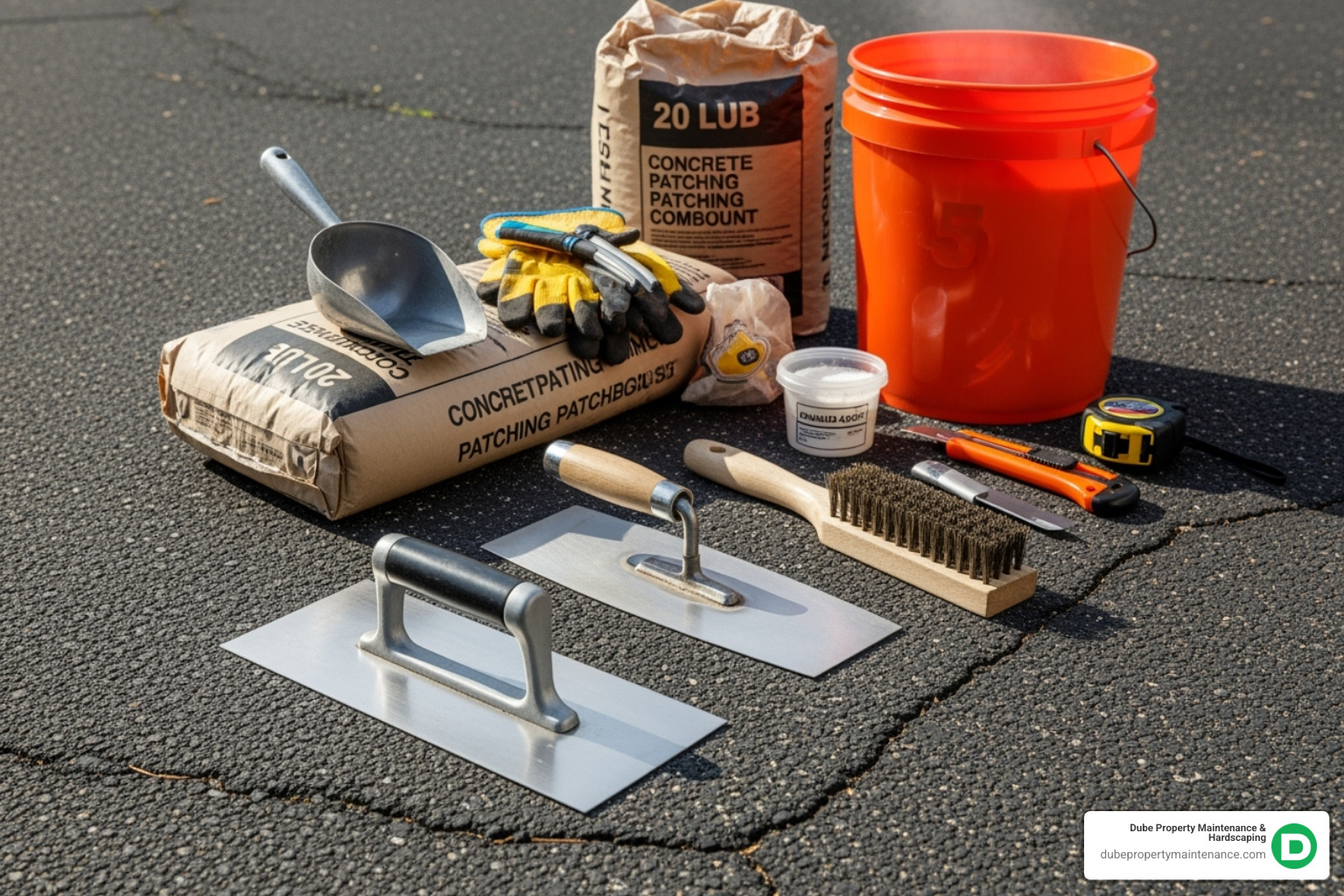
Many cement driveway repair projects are manageable for a DIY approach. Having the right tools and materials is key to a lasting fix. Your toolkit should include concrete patching compound, concrete resurfacer, and flexible sealant. Essential tools include a wire brush, trowel, and a pressure washer. Always use safety gear like gloves, eye protection, and a dust mask.
Step-by-Step Cement Driveway Repair for Cracks
Proper preparation is the secret to durable crack repair.
Clean Debris: Use a wire brush and shop vacuum to remove all dirt, weeds, and loose material from the crack.
Pressure Wash: Clean the area thoroughly and allow it to dry completely before applying repair compounds.
Undercut Wide Cracks: For cracks wider than 1/4-inch, use a hammer and chisel to make the crack wider at the bottom than the top. This creates a mechanical lock for the filler.
Use Backer Rod: For deep cracks, insert foam backer rod for deep cracks to save on filler and provide a stable base for the sealant.
Apply Filler: Use a flexible concrete crack filler for hairline cracks. For wider cracks, use polyurethane caulk over the backer rod. Avoid rigid fillers for cracks, as they will crack again with temperature changes.
Smooth the Surface: Tool the filler while it’s wet for a professional finish.
Cure Properly: Follow the manufacturer’s instructions for curing time, which is critical for strength and durability.
How to Fix Crumbling and Spalling Concrete
Spalling is common in New England due to winter conditions and road salt.
Remove Loose Material: Use a chisel and hammer to chip away all unsound concrete.
Apply a Bonding Agent: This primer helps the new patch adhere to the old concrete.
Layer Patching Compound: For deep damage, apply the compound in thin layers. For shallow areas, one application is usually sufficient.
Texture the Surface: While the patch is wet, use a trowel to match the texture of the surrounding driveway.
Improper Surface Preparation: Failing to clean the surface thoroughly is the most common reason for repair failure.
Using the Wrong Materials: Ensure products are rated for exterior use and match the specific repair type (e.g., flexible filler for cracks).
Ignoring Weather Conditions: Most repair products require temperatures above 50°F and dry conditions to cure correctly.
Rushing the Curing Process: Concrete needs time to cure chemically. Skipping this step results in weak patches.
Not Addressing the Root Cause: Surface repairs will fail quickly if the underlying issue, like poor drainage or soil settlement, isn’t fixed.
Repair, Resurface, or Replace? Making the Right Choice
Deciding whether to repair, resurface, or replace your driveway is a key strategic decision. The choice depends on the extent of the damage, distinguishing between cosmetic issues and problems with the driveway’s structural integrity.
For structural concerns, a professional opinion from a team like Dube Property Maintenance & Hardscaping can prevent costly mistakes.
When to Repair vs. When to Resurface
Choose repair for isolated damage on a structurally sound driveway. This is ideal for minor cracks (under 1/4 inch), small potholes, and isolated crumbling or spalling. Even some sunken slabs can be lifted via slabjacking if the concrete is solid. Repair is cost-effective and preserves your existing driveway.
Choose resurfacing when the driveway is structurally sound but has widespread cosmetic issues. This is the best option for extensive surface damage like spalling, pitting, or discoloration. It provides a fresh, uniform appearance that can last over 10 years.
Feature
Repair
Resurfacing
Cost
Lower (e.g., $0.50-$3 per linear foot for cracks)
Moderate ($3-$5 per square foot)
Lifespan
Varies by repair; Patch life can be limited
Typically 10+ years
Best For
Isolated, minor damage; Structural integrity is good
Replacement is necessary when the driveway’s foundation is failing. Signs that you need a full replacement include:
Deep, interconnected cracks that run through multiple slabs and reappear after repairs.
Severe sinking where large sections have dropped due to subgrade failure.
Widespread foundation issues, such as concrete that is crumbling throughout the slab.
A driveway over 30 years old with significant, widespread damage.
While replacement is the largest upfront investment (typically $5 to $13 per square foot), a new driveway can last 30+ years, often making it the most cost-effective long-term solution for a failing driveway. You can learn about concrete driveway replacement on our website.
Understanding the Costs of Cement Driveway Repair
Note: The following are national average costs based on internet data and do not represent a quote from Dube Property Maintenance & Hardscaping. Costs can vary significantly, with final prices potentially being 3x or more than the average.
Crack filling: $0.50 to $3 per linear foot.
Pothole repair: $100 to $400 for the first pothole, less for additional ones.
Resurfacing: $3 to $5 per square foot.
Leveling (Slabjacking): $3 to $25 per square foot, depending on the method.
Most homeowners spend around $1,795 on an average repair project, compared to an average of $6,400 for a full replacement. To get a more precise idea for your project, you can estimate your concrete driveway replacement on our website.
Proactive Care: Preventing Future Driveway Damage
The best cement driveway repair is the one you never have to make. Proactive care can save you thousands and extend your driveway’s life to 30-50 years or more. Most preventive measures are simple and inexpensive.
The Power of Regular Maintenance
Regular maintenance catches small issues before they become expensive emergencies.
Annual Cleaning: Power wash your driveway yearly to remove grime that traps moisture, which can cause cracks during winter freezes.
Prompt Crack Sealing: Seal hairline cracks as soon as they appear to prevent water from penetrating and causing damage from freeze-thaw cycles.
Stain Removal: Clean oil, grease, and chemical spills promptly to prevent them from damaging the concrete.
Inspect Expansion Joints: Check and reseal these joints every few years to allow for natural expansion and contraction.
Seal the Driveway: The benefits of sealing your driveway include protection from moisture and chemicals. Resealing every 2-3 years is a cost-effective preventive measure.
Smart Prevention Strategies
Strategic actions can dramatically reduce the risk of future damage.
Water Management: Ensure your landscape grading directs water away from the driveway and foundation to prevent erosion and settling.
Professional Drainage Solutions: If grading isn’t enough, consider French drains or dry wells to manage water flow. Dube Property Maintenance & Hardscaping can recommend comprehensive solutions.
Smart De-icing: Avoid harsh de-icing chemicals containing chlorides, which cause spalling. Use sand for traction or concrete-safe alternatives sparingly.
Traffic Management: Avoid parking heavy vehicles like construction equipment or delivery trucks on a driveway not designed for such loads to prevent structural cracks.
Frequently Asked Questions about Concrete Driveway Repair
Here are answers to common questions about cement driveway repair.
How long does a concrete driveway repair last?
The longevity of a repair depends on several factors:
Type of Repair: A properly filled crack can last 5-10 years, while professional resurfacing can last a decade or more.
Quality of Work: Durability hinges on using high-quality materials, thorough surface preparation, and allowing for proper curing time.
Addressing the Root Cause: A patch will fail quickly if the underlying problem (like poor drainage) is not resolved.
Maintenance: Regular sealing extends the life of any repair. Expect to reseal every 2-3 years.
While DIY repairs save money upfront, professional work often lasts longer, especially for structural issues.
Can you pour new concrete over an old cracked driveway?
Yes, this process is called resurfacing or applying an overlay. It involves pouring a thin layer of specialized concrete over a prepared existing surface. However, it is only advisable if the underlying concrete is structurally sound. Resurfacing cannot fix deep, interconnected cracks, severe settling, or foundation issues; it will only cover them temporarily.
For a successful overlay, the old surface must be perfectly clean and properly prepared with a bonding agent. If slabs have settled, they must be leveled before resurfacing.
Is it cheaper to repair or replace a concrete driveway?
This requires a cost-benefit analysis.
Short-Term: Repair is almost always cheaper. An average repair costs around $1,795, while a full replacement averages $6,400.
Long-Term: Replacement can be more cost-effective over time. If a driveway is over 25-30 years old and requires constant, expensive repairs, it has become a money pit. A new driveway offers 30-50 years of service life, making it a better long-term investment than repeated patching.
Repair is cost-effective for isolated damage on a younger, sound driveway. Replacement is the smarter choice for older driveways with widespread structural failure. For more details, you can see new driveway cost factors on our website.
Conclusion: Restore Your Driveway and Curb Appeal
Your driveway is a key component of your home’s curb appeal and deserves proper care. This guide has covered how to diagnose damage, choose the right cement driveway repair method, and prevent future issues.
The key takeaway is that timely action is crucial. Addressing small cracks and minor damage promptly prevents them from becoming large, expensive problems, especially with New England’s freeze-thaw cycles. A well-maintained driveway not only looks better but also protects your property value and prevents safety hazards.
While many minor repairs are suitable for DIY projects, complex issues like structural cracks or sunken slabs require professional expertise. For a lasting, high-quality finish, homeowners in the Methuen, MA area can rely on the expert team at Dube Property Maintenance & Hardscaping.
Whether you’re planning a DIY repair or need professional help, the most important step is to get started. Explore our hardscaping and masonry services to see how we can restore your driveway and improve your home’s curb appeal.
For 25+ years Dube Property Maintenance & Hardscaping has provided top-rated residential and commercial landscape design, installations, hardscaping, irrigation systems and commercial snow and ice management. Our hardscaping division proudly serves the Merrimack Valley, Middlesex and Essex County and Southern, NH regions, transforming outdoor spaces into stunning works of art.