
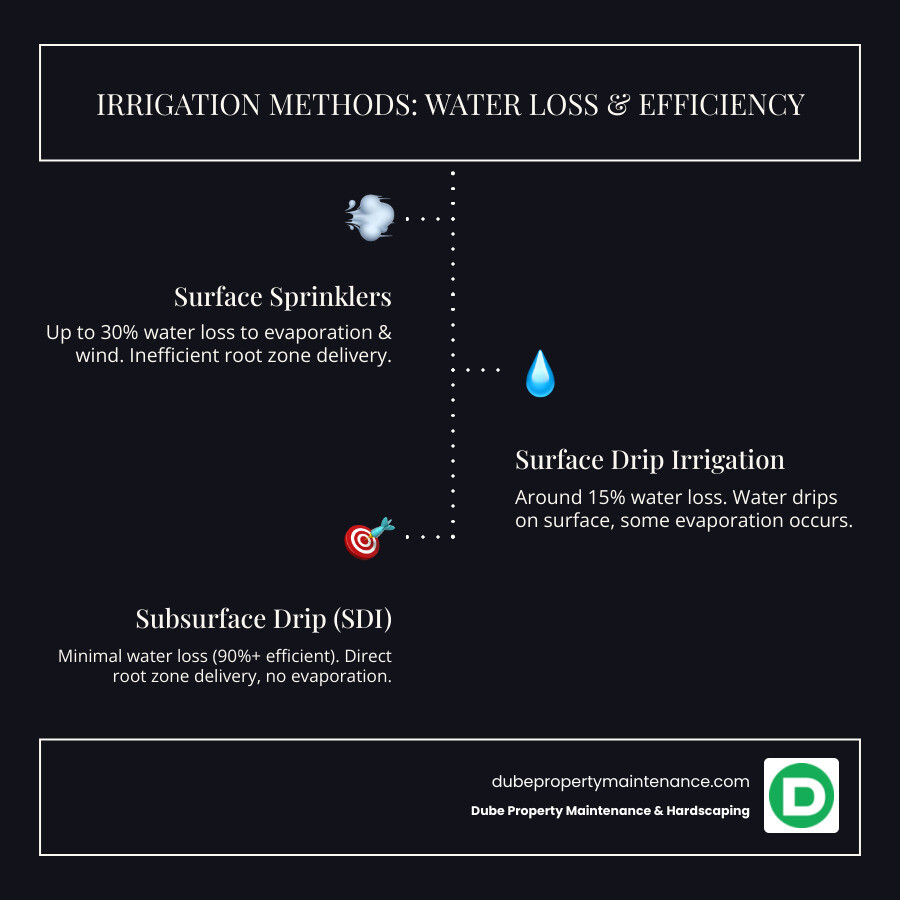
A below ground drip irrigation system delivers water directly to plant roots through buried tubing. This method eliminates surface evaporation and achieves up to 90% water efficiency, far surpassing traditional sprinkler systems.
Key Benefits of Subsurface Drip Irrigation (SDI):
For property owners in Methuen, MA, facing water restrictions and seeking efficient landscape management, subsurface drip irrigation is a game-changing solution. Unlike sprinklers that lose water to wind and evaporation, these systems work invisibly. Buried driplines deliver precise amounts of water to the root zone, changing lawns and gardens into thriving, water-efficient spaces.
Below ground drip irrigation system terms made easy:
Subsurface drip irrigation (SDI) is an advanced watering method that works beneath the surface to deliver water directly to plant roots. Unlike sprinklers that spray water into the air, SDI uses buried drip tubing with tiny emitters to release water slowly and precisely into the soil.
This approach offers precise control over moisture in the root zone, eliminating the guesswork in watering. Compared to surface drip systems, below ground drip irrigation systems are protected from foot traffic and lawn equipment. They are also far more efficient than sprinklers, which can lose 20-30% of water to evaporation and wind. With SDI, there is zero evaporation loss, no runoff, and no wet leaves that can lead to plant diseases. This efficiency leads to significant water savings and healthier landscapes. For a detailed comparison, see our guide on Drip vs Sprinkler Irrigation: Which is Right for Your Garden?.
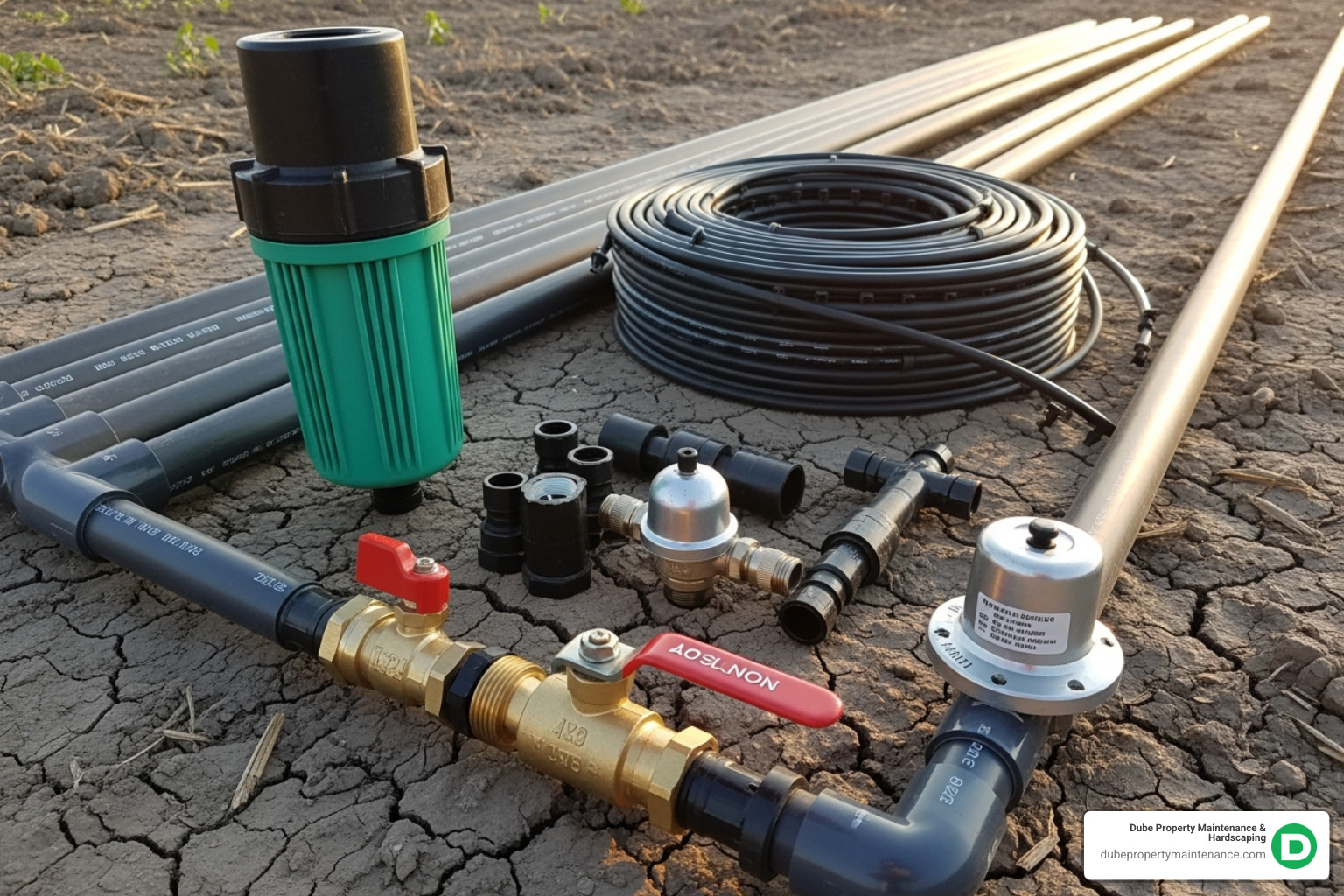
A below ground drip irrigation system is a network of components working together. The journey begins at the water source (city, well, etc.), where a pump creates adequate pressure. Water then passes through a crucial filtration system to remove debris that could clog emitters. From there, it flows through mainlines to different zones, controlled by valves. Finally, the water enters buried driplines, where emitters release it slowly into the soil. A central controller automates the watering schedule for maximum efficiency. This ensures every plant gets the right amount of water. Learn more in our guide on How Do Irrigation Systems Work?.
The installation depth of a below ground drip irrigation system depends on the plants and desired permanence.
Choosing a below ground drip irrigation system is an investment in efficiency, sustainability, and the long-term health of your landscape. The benefits extend far beyond simple watering.
The adaptability of a below ground drip irrigation system is a key advantage. It easily conforms to odd-shaped fields and garden beds, ensuring even watering where sprinklers might struggle. It also excels on sloped terrain and uneven surfaces, eliminating runoff issues common with surface watering.
Because the system is buried, you get uninterrupted lawn access. There are no visible sprinkler heads to create tripping hazards, clutter the landscape, or get damaged by lawnmowers. Your lawn remains pristine and fully usable, a major aesthetic and practical benefit.

Creating an effective below ground drip irrigation system requires professional expertise in both design and irrigation installation. The performance and lifespan of your system depend on a proper plan from day one. The process begins by establishing your goals, whether it’s water conservation, a greener lawn, or healthier gardens.
A properly designed system relies on key components like specialized drip tubing, clog-resistant emitters, and crucial filters. Pressure regulators, valves, and a smart controller work together to manage water flow, while air/vacuum relief vents protect the lines. For properties with low water pressure, a pump may be needed.
Every system design is customized based on several critical factors:
Our professional installation process is precise and minimizes disruption to your landscape.
Professional installation of these Automatic Irrigation Systems is crucial for optimal performance and longevity.
A below ground drip irrigation system is low-maintenance but requires regular care for longevity. Key tasks include:
Potential challenges are manageable. Clogging, the most common issue, is prevented with proper filtration and flushing. Root intrusion is deterred by modern emitters with built-in root barriers. Pest damage from rodents can be minimized by using heavy-wall tubing.
The upfront investment for a below ground drip irrigation system is typically higher than for traditional sprinklers, but it provides an impressive long-term ROI. The initial cost for residential systems can range from $3,000 to $15,000+, while commercial projects may range from $5,000 to $25,000+ depending on complexity.
However, the system pays for itself through significant water savings (20-40% over sprinklers), energy savings from lower pressure operation, and reduced fertilizer costs thanks to efficient fertigation. With a lifespan of 15-20+ years, the economics are compelling.
| Cost Factor | Below Ground Drip Irrigation System (SDI) | Traditional Sprinkler Systems |
|---|---|---|
| Initial Installation Cost | Higher | Moderate |
| Long-term Water Savings | High (90%+ efficiency) | Moderate (70-80% efficiency) |
| Energy Savings | High (lower pressure operation) | Moderate (higher pressure) |
| Maintenance Costs | Moderate (flushing, filter cleaning) | Moderate (head adjustment, repairs) |
| Fertilizer Efficiency | Very High (direct to root zone) | Low (surface application) |
| Weed Control | High (dry surface) | Low (surface wetting) |
Please note, these figures represent industry averages and may range significantly based on property size, complexity, and location. They are not a quote for services from Dube Property Maintenance & Hardscaping. For a detailed estimate for your property, visit our Irrigation System Cost page.
Here are answers to the most common questions we receive about a below ground drip irrigation system.
A below ground drip irrigation system is incredibly versatile and effective for a wide variety of landscapes:

A professionally installed below ground drip irrigation system is a long-term asset. Because the components are buried and protected from UV rays, foot traffic, and lawn equipment, the system is highly durable. With proper maintenance, you can expect a lifespan of 15 to 20 years or more. Using high-quality, heavy-wall tubing is key to achieving this longevity, making it a reliable piece of your property’s infrastructure.
Yes. The ability to add fertilizer through the system, a process called fertigation, is a major advantage. It allows you to “spoon-feed” nutrients directly to the roots along with water. This method is highly efficient, leading to better nutrient absorption, reduced fertilizer use, and less environmental runoff. Fertigation can result in higher crop yields and more vibrant ornamental plants, turning your irrigation into a complete plant health management system. Learn more in our guide on Garden Irrigation Systems.
A below ground drip irrigation system is more than just an irrigation method; it’s a smart investment in your property’s health and value. It combines superior water efficiency (90%+) with improved plant health, leading to lower water bills, stronger plants, and fewer weeds and diseases. Your landscape remains pristine and unobstructed, with no visible sprinkler heads to damage or avoid.
This technology adapts to any landscape challenge, from clay or sandy soils to sloped terrain. Proven in agriculture and now available for residential and commercial properties, its ability to deliver water and nutrients directly to the root zone makes it a complete plant management solution.
For expert design and Irrigation Installation in the Methuen, MA area, trust the professional team at Dube Property Maintenance & Hardscaping. We create custom solutions custom to your property’s unique soil, plants, and conservation goals. Our comprehensive approach covers everything from design and installation to maintenance guidance, ensuring your system performs efficiently for years.
Invest in a sustainable, beautiful, and healthy landscape with a below ground drip irrigation system.
Contact us today for a consultation!
