

Automatic irrigation systems are changing how we maintain beautiful landscapes by saving time and water while ensuring lush greenery. If you’re wondering about automatic irrigation systems, here’s a quick look:
In the busy areas of Methuen, MA, and surrounding locales, homeowners and business owners face the challenge of keeping their lawns green and thriving, especially through sweltering summers and harsh winters.
Here’s where automatic irrigation systems come in as a game-changer. These systems offer a seamless way to ensure your outdoor space remains vibrant, utilizing advanced technologies like moisture sensors and weather-based controls to optimize water usage.
Imagine a thriving, green oasis you never have to worry about watering again. That’s the promise of automated irrigation—efficient, sustainable, and worry-free gardening suited for every season.
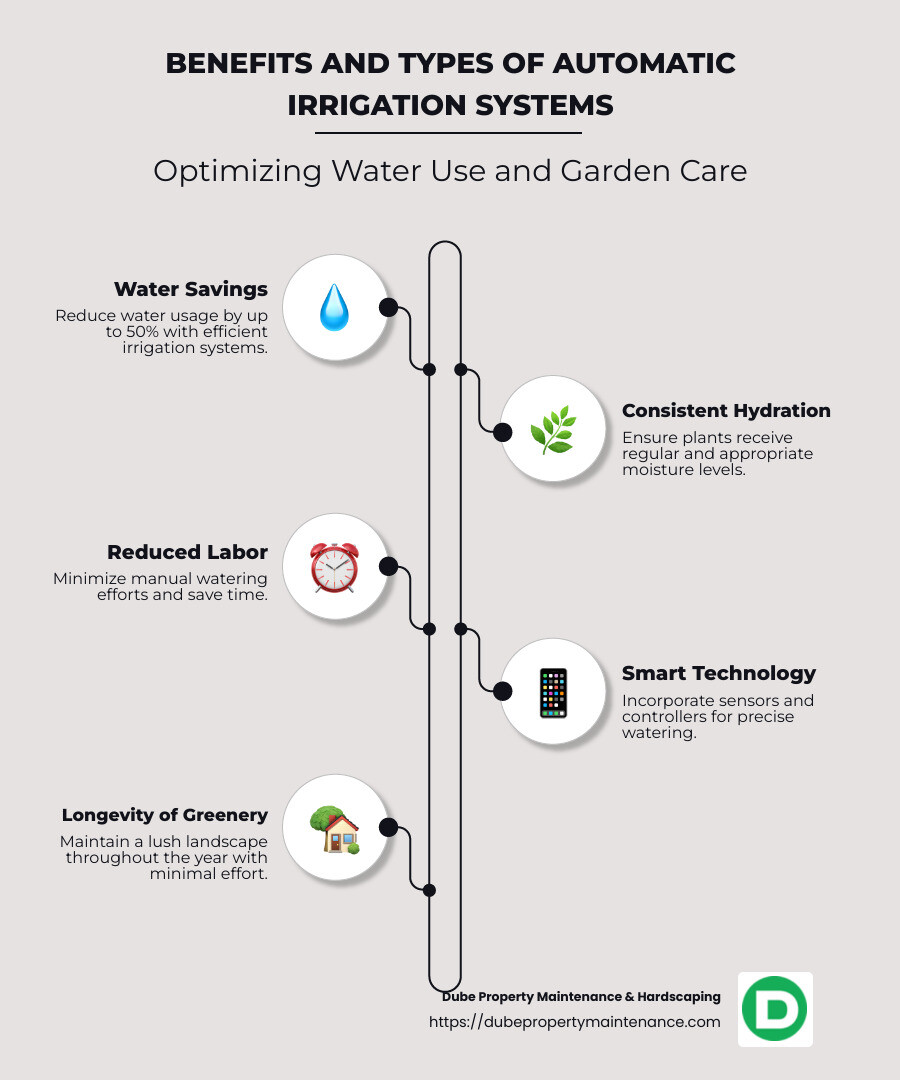
Automatic irrigation systems terms simplified:
– how do irrigation systems work
– irrigation system cost
– irrigation installation
Automatic irrigation systems are a modern solution for maintaining lush landscapes with minimal effort. These systems use technology to ensure your garden stays hydrated without wasting water. Let’s explore how they work and why they’re so effective.
At the heart of automatic irrigation systems is smart technology. These systems use sensors to gather real-time data about your garden’s needs. For instance, soil moisture sensors can detect how much water your plants need and adjust watering schedules accordingly. This means your garden gets just the right amount of water, reducing waste and promoting healthier plant growth.
Sensors are the eyes and ears of your irrigation system. They collect data on weather conditions, soil moisture levels, and even plant evaporation rates. This information is crucial for making informed decisions about watering schedules. By using real-time data, automatic irrigation systems can optimize water usage, ensuring that every drop counts.

Efficiency is the name of the game when it comes to automatic irrigation. Traditional watering methods can waste up to 50% of water due to evaporation and runoff. In contrast, smart irrigation systems minimize these losses by delivering water directly to the plant roots where it’s needed most. This not only conserves water but also ensures your plants are well-nourished.
Consider this: a well-designed irrigation system can save up to 30% more water compared to traditional methods. That’s a significant reduction, both for your water bill and the environment.
In areas like Methuen, MA, where the climate can be unpredictable, automatic irrigation systems provide a reliable way to maintain beautiful landscapes year-round. By leveraging smart technology and real-time data, these systems offer a hassle-free approach to garden maintenance. Whether you’re dealing with scorching summers or chilly winters, your garden will always have the hydration it needs to thrive.
In the next section, we’ll explore the various types of automatic irrigation systems available and how to choose the right one for your needs.
Automatic irrigation systems are a game-changer for anyone looking to maintain a lush landscape without the hassle of manual watering. Let’s explore the key benefits these systems offer.
One of the standout features of automatic irrigation systems is their ability to conserve water. Traditional watering methods often lead to significant water waste through evaporation and runoff. In contrast, automatic systems use precise watering schedules and delivery methods to minimize these losses.
By ensuring water is delivered directly to the plant roots, these systems optimize usage, making every drop count. This not only helps in reducing your water bill but also contributes to environmental sustainability.
Imagine having a beautiful garden without spending hours watering it. That’s the promise of automatic irrigation systems. Once installed, these systems run on set schedules, freeing you from the daily chore of watering.
Whether you’re on vacation or simply busy with other tasks, you can rest easy knowing your garden is getting the care it needs. This convenience is especially valuable in regions with unpredictable climates, like Methuen, MA, where maintaining a garden can be challenging.
Automatic irrigation systems are not just about saving water and time; they’re also about ensuring your plants get the optimal amount of moisture. With sensors that monitor soil moisture levels, these systems adjust watering schedules to prevent both overwatering and underwatering.
This precise control helps maintain the right soil moisture balance, promoting healthier root growth and reducing the risk of plant diseases. Healthier plants mean a more vibrant garden, which is the ultimate goal for any gardener.
In summary, automatic irrigation systems offer a trifecta of benefits: they conserve water, save you time, and optimize soil moisture for healthier plants. By investing in such a system, you’re not just enhancing your garden; you’re also making a smart choice for your wallet and the environment.
In the next section, we’ll dig into the different types of automatic irrigation systems and how to select the best one for your garden’s needs.
Choosing the right type of automatic irrigation system can make a big difference in how well your garden thrives. Here, we’ll break down the main types: sprinkler systems, drip irrigation, and smart controllers.
Sprinkler systems are one of the most common types of irrigation systems. They work by spraying water over your garden, much like rainfall. This type of system is perfect for lawns and larger garden areas.
Sprinklers can be fixed or pop-up, with adjustable patterns and ranges. For instance, the 32ETI Easy to Install Automatic Sprinkler System offers a seamless installation process and efficient water distribution. It uses rotary sprinklers with Rain Curtain technology, ensuring even coverage and minimal water waste.
Drip irrigation systems deliver water directly to the base of each plant through a network of tubes and emitters. This method is highly efficient, minimizing water loss through evaporation and runoff. It’s particularly useful for flower beds, vegetable gardens, and potted plants.
The GARDENA Micro-Drip-System is an example of a precise and adaptable drip irrigation setup. It allows for custom watering schedules, ensuring each plant gets the moisture it needs without overwatering.
Smart controllers take automatic irrigation to the next level. They use real-time data from sensors and weather forecasts to adjust watering schedules automatically. This means your garden gets the right amount of water, even if the weather changes unexpectedly.
Smart irrigation systems, like those equipped with LetPot technology, offer dual connectivity via Wi-Fi or Bluetooth. They allow you to control your system remotely, making adjustments as needed to prevent overwatering during unexpected rain.
Selecting the best automatic irrigation system depends on your garden’s specific needs. For large lawns, a sprinkler system might be the way to go. However, for more precise watering, especially in gardens with diverse plant types, drip irrigation could be more suitable. Adding a smart controller can improve any system, ensuring water efficiency and convenience.
In the next section, we’ll explore installation and maintenance tips to help you get the most out of your automatic irrigation system.
Setting up an automatic irrigation system may seem daunting, but with the right guidance, it can be a rewarding DIY project. Let’s explore some key tips for installation and maintenance to ensure your system runs smoothly and efficiently.
Installing an automatic irrigation system yourself can save money and give you a sense of accomplishment. Here are a few steps to get started:
Even the best systems require regular maintenance to stay in top shape. Here are some challenges and solutions:
To keep your automatic irrigation system reliable, consider these tips:
By following these installation and maintenance tips, you can enjoy a hassle-free automatic irrigation system that keeps your garden thriving.
Next, we’ll tackle some frequently asked questions about automatic irrigation systems to help you make informed decisions.
The cost of an automatic irrigation system can vary widely, depending on several factors. On average, installing a system can range from $500 to over $5,000. This range takes into account the size of your property, the type of system you choose, and any additional features like smart controllers.
While automatic irrigation systems offer many benefits, there are some drawbacks to consider:
Investing in automatic plant waterers can be highly beneficial for maintaining a healthy landscape:
In summary, while the initial investment in an automatic irrigation system may be high, the long-term benefits of water conservation, time savings, and optimal plant health often make it a worthwhile choice for many homeowners.
Next, we’ll explore the different types of automatic irrigation systems available and how to choose the right one for your needs.
At Dube Property Maintenance & Hardscaping, we believe in changing your outdoor spaces into thriving landscapes with minimal effort on your part. Our automatic irrigation systems are a cornerstone of this change, offering comprehensive solutions custom to meet your unique needs.
Our professional team is committed to delivering high-quality services that ensure your landscape remains lush and vibrant year-round. We take pride in our attention to detail and our ability to provide reliable, efficient, and environmentally friendly irrigation solutions. Whether you’re maintaining a residential garden or managing a commercial property, our systems are designed to optimize water usage and improve plant health.
By choosing us, you’re not just investing in an irrigation system; you’re investing in peace of mind and the long-term beauty of your outdoor space. Our team handles everything from installation to maintenance, ensuring your system runs smoothly and efficiently. We are here to support you every step of the way with our expert guidance and top-notch customer service.
Ready to enjoy a hassle-free, beautiful landscape? Contact Dube Property Maintenance & Hardscaping today to learn more about our comprehensive outdoor solutions and how we can help you achieve the garden of your dreams.
