
Walkways and steps are crucial elements of any property, connecting different areas while enhancing curb appeal and safety. Regular maintenance ensures longevity, prevents accidents, and preserves aesthetic value.
Quick Guide to Walkway and Step Maintenance:
- Inspect regularly: Check for cracks, loose materials, and uneven surfaces at least twice yearly
- Clean thoroughly: Remove debris, moss, and stains appropriate to your material type
- Repair promptly: Address small issues before they become major problems
- Seal properly: Apply appropriate sealants every 2-3 years depending on material
- Manage drainage: Ensure proper water runoff to prevent damage
- Winter care: Use appropriate ice melt products and avoid metal shovels
When properly maintained, walkways and steps not only provide safe passage but also improve the overall appearance of your property. According to research from the University of Vermont, well-designed and maintained walkways can increase a home’s resale value by up to 14%. Beyond aesthetics, proper maintenance prevents costly repairs and potential liability issues from accidents.
The key to effective maintenance lies in understanding your specific materials. Whether you have concrete, brick, natural stone, or another material, each requires different care approaches to maximize longevity and appearance.
Quick walkways and steps terms:
– hardscape walkways
– landscape around steps
– outdoor step designs
The foundation of proper walkways and steps maintenance begins with understanding the materials from which they’re constructed. Each material has unique characteristics, benefits, and maintenance requirements that affect their longevity and appearance.
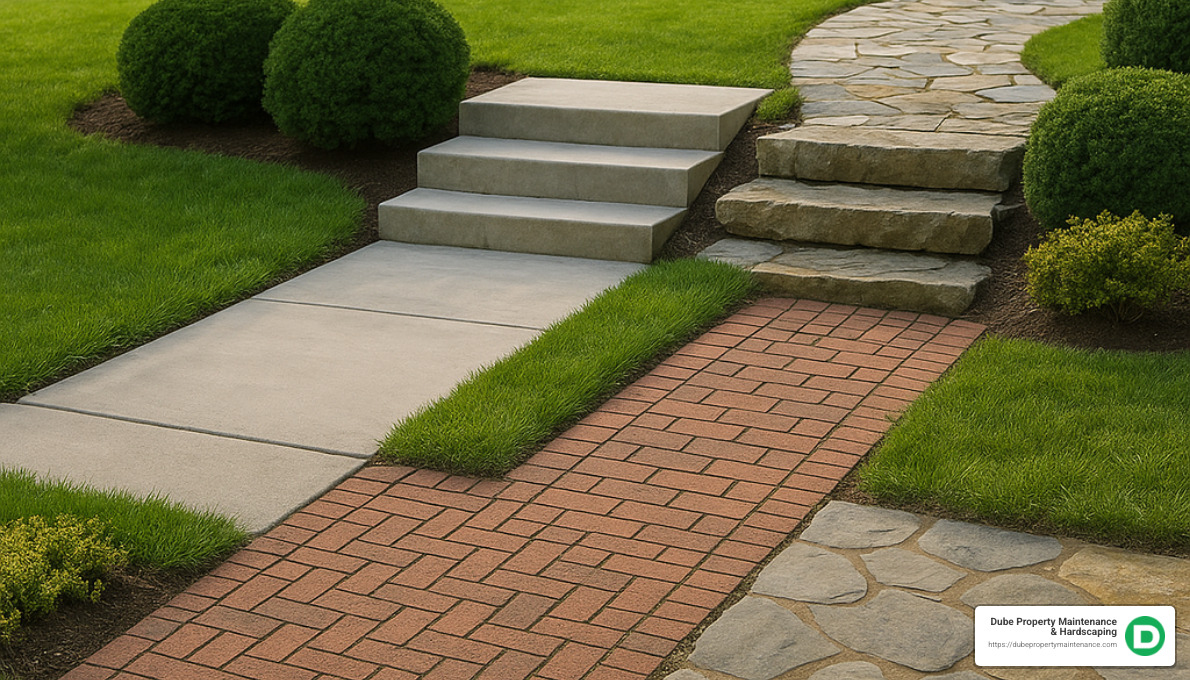
Here in New England, we’ve seen how material choices can make all the difference in both beauty and durability. At Dube Property Maintenance & Hardscaping, we’ve installed and maintained countless walkways throughout Methuen, MA and surrounding communities, giving us knowledge of how different materials perform through our challenging seasons.
Concrete remains one of the most popular choices for walkways and steps due to its remarkable versatility and durability. Today’s concrete is far from boring – we can customize it with various finishes, colors, and textures to complement any home style.
Modern concrete installations offer exceptional durability, often lasting 25-50 years with proper care. Many of our clients appreciate the design flexibility, including stamped patterns that beautifully mimic more expensive materials like natural stone.
The beauty of concrete maintenance is its simplicity. A regular cleaning with mild detergent and water keeps it looking fresh, while sealing every 2-3 years prevents staining and moisture damage. The key is addressing small cracks promptly before our freeze-thaw cycles turn them into bigger problems.
I remember a client in North Andover whose concrete walkway still looks nearly new after 15 years simply because they’ve stayed on top of regular sealing and minor repairs. That’s the kind of longevity we love to see!
There’s something timeless about brick pathways that adds character to any property. The warm, earthy tones create an inviting entrance that complements both colonial homes in Andover and contemporary designs in Salem.
Brick offers a unique combination of beauty and practicality. The individual units can be replaced if damaged (unlike a solid concrete slab), and the textured surface provides excellent slip resistance during our rainy New England springs.
Maintaining brick walkways is straightforward but requires consistency. Regular sweeping prevents debris accumulation, while occasional cleaning with a mild solution keeps the colors vibrant. The most important maintenance task is re-sanding the joints every few years to maintain stability and prevent weeds from taking hold.
“The secret to a long-lasting brick walkway isn’t in the bricks themselves – it’s in the joints,” as our lead hardscaping specialist often tells clients. Well-maintained joints prevent most common issues like shifting, settling, and those persistent weeds that seem determined to grow between every brick.
For best beauty and character, nothing compares to natural stone for walkways and steps. Here in New England, we frequently work with bluestone, granite, limestone, and flagstone – each bringing its own personality to outdoor spaces.
Natural stone creates truly one-of-a-kind walkways with variations in color and texture that can’t be replicated. While the initial investment is higher than other materials, the exceptional longevity and increased property value make it worthwhile for many homeowners. Some of the stone walkways we’ve installed will likely outlast the homes they accompany!
The maintenance needs vary by stone type, but generally include regular appropriate cleaning and periodic sealing (typically every 1-3 years depending on the stone’s porosity). With natural stone, prompt attention to stains is important, as porous varieties can absorb oils and other substances.
I’ll never forget an Andover client who chose a bluestone walkway with granite steps for their historic home renovation. The materials perfectly complement the property’s character while providing durability that will weather decades of New England seasons. The natural patina that develops over time only adds to its charm – something manufactured materials simply can’t match.
More info about Masonry Steps and Walkways
Keeping an eye on your walkways and steps is like checking in on an old friend – it needs to happen regularly to maintain a good relationship. Regular inspections are truly the backbone of effective maintenance, helping you catch small issues before they turn into expensive headaches.

Here in New England, we recommend at least two thorough inspections each year – once in spring after winter’s freeze-thaw cycles have done their worst, and again in fall before the snow flies. It’s also smart to take a quick look after major storms or unusually harsh weather. Think of it as preventive medicine for your hardscaping!
When you’re out there inspecting, keep your eyes peeled for several key issues. Cracks and fractures might seem minor at first, but they’re like tiny invitations for water to enter and expand during freeze-thaw cycles. Settling or heaving creates uneven surfaces that can send unsuspecting visitors tumbling. Pay attention to joint deterioration between pavers or bricks, as well as any drainage issues where water pools instead of running off properly.
Don’t overlook vegetation growth like weeds, moss, or algae that can create slippery surfaces and slowly damage your hardscaping. Staining from oil, rust, or organic materials can become permanent fixtures if not addressed quickly. And watch those edges – edge restraint failure often signals bigger structural problems brewing beneath the surface.
The financial case for regular inspections is compelling. Industry data shows that fixing small problems typically costs 80-90% less than waiting until major repairs become necessary. Plus, you’ll avoid the potential liability nightmares that come with slip-and-fall accidents on your property.
Cleaning your walkways and steps isn’t just about keeping up appearances – it’s essential for preserving their structural integrity. But just as you wouldn’t wash delicate wool the same way as denim, different hardscaping materials need different cleaning approaches.
The golden rule of hardscape cleaning is to start gentle. A good sweeping and rinse with plain water handles most routine dirt without risk of damage. When you do need something stronger, make sure it’s appropriate for your specific material, and always test in an inconspicuous spot first.
For concrete walkways and steps, a mild detergent mixed with water usually does the trick. Stubborn stains might call for a diluted bleach solution (about 10% bleach to water), but always rinse thoroughly afterward. Pressure washing can be your once-a-year deep cleaning method, but keep it at a moderate pressure (1500-2000 PSI) to avoid damaging the surface.
Brick surfaces appreciate a gentler touch. Water and a soft brush will handle most cleaning needs. For tougher situations, try a mixture of white vinegar and water (1 cup to 1 gallon), which safely cleans without harming the brick. High-pressure washing is risky business with brick – it can quickly erode those all-important mortar joints.
Natural stone requires special care, as each type has its own personality. Bluestone handles cleaning differently than granite or limestone. Your safest bet is using pH-neutral cleaners specifically designed for natural stone. Acidic cleaners (including vinegar) can be absolutely devastating to limestone and marble. When it comes to pressure washing natural stone, it’s best to leave that to professionals who understand your specific stone type.
Paver walkways benefit from regular sweeping to prevent dirt from settling into joints. For deeper cleaning, specialized paver cleaners help maintain color vibrancy without compromising the integrity of the surface or washing away joint sand.
“We’ve seen folks use harsh chemicals thinking they’re doing a thorough job, only to end up with damaged surfaces that need costly repairs,” shares our maintenance team lead. “A gentle quarterly cleaning is all most walkways need to stay looking sharp year-round.”
More info about Masonry Steps and Walkways
When it comes to damaged walkways and steps, timing is everything. Addressing problems promptly not only prevents further deterioration but also maintains safety for everyone using these pathways. The right repair approach depends on both your materials and how severe the damage is.

For smaller issues you might tackle yourself, concrete cracks under ¼ inch wide can be handled with a quality concrete crack sealer after thorough cleaning. Slightly wider cracks might need a proper patching compound designed specifically for concrete surfaces.
Dealing with loose brick or pavers is like fixing a wobbly tooth – you need to get in there and reset it properly. Remove the loose piece, clean out the area thoroughly, add fresh sand or base material if needed, and then reset the piece firmly. If you’re dealing with broken pieces, replacement is generally better than attempting repairs.
Natural stone repairs can be trickier. Minor chips sometimes respond well to epoxy fillers color-matched to your stone. For larger damages, however, it’s usually best to call in professionals who understand the unique properties of natural stone materials.
When joint materials wash away between pavers or bricks, fresh sand can be swept into the gaps to restore stability. For mortared joints, you’ll need to carefully remove damaged mortar and apply fresh material that matches the original in both color and composition.
Some situations clearly call for professional help. If you notice cracks wider than ½ inch, multiple cracks forming patterns (often indicating problems with the base), significant settling or heaving, large damaged sections, recurring issues despite previous repairs, or any step repairs that might affect structural integrity – it’s time to call in the experts.
A client of ours in Haverhill learned this lesson the hard way. They spotted a small crack in their concrete steps and planned to patch it themselves when they had time. Unfortunately, winter arrived first, and that tiny crack expanded dramatically during freeze-thaw cycles. When they finally called us, we finded an underlying drainage issue that was the real culprit. By addressing both the visible damage and the hidden cause, we provided a solution that actually lasted – saving them money and headaches in the long run.
Not all repairs are created equal. Sometimes what looks like a simple surface issue is actually a symptom of a deeper problem. When in doubt, having a professional assessment can save you time, money, and frustration in the long term.
Taking care of your walkways and steps before problems arise saves you both headaches and money down the road. Think of preventive maintenance as an insurance policy for your outdoor hardscape investments—a little effort today prevents major repairs tomorrow.

Here in New England, our walkways face everything from scorching summer sun to freezing winter conditions. Proper sealing acts like a shield against these elements, particularly against moisture that can seep in, freeze, expand, and crack your beautiful pathways.
Each material has its own sealing needs. Concrete walkways typically need resealing every 2-3 years with a quality concrete sealer. If you have decorative or exposed aggregate concrete, look for penetrating sealers that protect without changing the appearance.
Brick pathways are a bit more forgiving, usually needing treatment every 3-5 years. The key with brick is choosing breathable sealers—brick needs to “exhale” moisture vapor, or you’ll end up with even bigger problems down the road.
For natural stone, the schedule varies dramatically based on what stone you’ve chosen. Dense granite might only need attention every 5+ years, while more porous stones like sandstone benefit from a fresh coat every other year. Not sure what you have? We’re happy to help identify your stone type and recommend the appropriate sealing schedule.
Paver walkways typically need refreshing every 3-4 years. Many of our clients choose enhancing sealers that not only protect but also restore the vibrant color that can fade over time.
“Regular maintenance is as crucial as initial design for ongoing safety and accessibility.”
While DIY sealing is certainly possible, our professional application ensures proper preparation, appropriate product selection, and even application—no streaking or pooling that can happen with inexperienced application. Many of our Methuen and Andover clients tell us they appreciate the peace of mind that comes with professional sealing, knowing their investment is properly protected.
Winter in Massachusetts and New Hampshire presents unique challenges for maintaining walkways and steps. The wrong ice melt product can cause more damage than the ice itself!
For concrete surfaces, we recommend avoiding traditional rock salt (sodium chloride) whenever possible. Calcium magnesium acetate provides safer ice control with less damage to your concrete. Brick walkways respond better to potassium chloride or calcium magnesium acetate. If you have natural stone, use ice melt products sparingly—sometimes simple sand provides enough traction without the chemical exposure.
Always remove snow promptly, but ditch the metal shovels! Plastic or rubber-edged shovels prevent scratching and chipping of your hardscape surfaces. Pay special attention to drainage paths—keeping these clear prevents the dangerous melt-and-refreeze cycle that creates those treacherous ice patches.
For clients with steep steps or high-traffic areas, we sometimes recommend heated walkway systems. While the initial investment is higher, many of our North Andover and Haverhill clients find the convenience, safety benefits, and protection of their hardscape well worth it.
Being good stewards of our environment doesn’t mean sacrificing beautiful, functional walkways and steps. In fact, sustainable practices often improve both appearance and longevity.
We’re seeing more clients choose permeable materials that allow water to seep through rather than run off. This approach reduces puddles on your walkway while helping replenish groundwater and prevent erosion. It’s a win-win!
When it comes to cleaning, environmentally friendly products protect both your investment and our local ecosystems. Many traditional cleaners contain harsh chemicals that can damage plants along your walkway and potentially harm local water systems.
Proper drainage design is another area where environmental considerations meet practical benefits. A well-designed drainage system prevents erosion around your walkway edges while keeping water away from your foundation—all while minimizing pollution in local waterways.
One of our Newburyport clients beautifully combined form and function with a permeable paver walkway bordered by native plants. Their pathway not only handles our notorious New England rainstorms with ease but also provides a haven for local pollinators. The low-maintenance native plants require less water and care while adding natural beauty throughout the seasons.
At Dube Property Maintenance & Hardscaping, we believe that taking care of your property and taking care of our environment go hand in hand. Our team can help you develop a maintenance plan that protects your investment while respecting our shared natural resources.
More info about walkway installation services
There’s something magical about a well-lit pathway guiding you home on a dark evening. Strategic lighting transforms your walkways and steps from simple daytime necessities into nighttime features that improve both safety and beauty.

Many of our clients throughout Methuen and surrounding communities initially consider lighting for purely practical reasons – to prevent tripping hazards or to see their way to the door when returning home after dark. Yet they’re often surprised by how dramatically the right lighting improves their property’s overall appearance and ambiance.
Safety is naturally a top priority. Properly illuminated walkways and steps reveal changes in elevation, uneven surfaces, and potential obstacles that might otherwise cause accidents. This is especially important in our New England climate, where winter brings early sunsets and potentially icy conditions.
Beyond safety, good lighting provides security benefits. Well-lit pathways discourage unwanted visitors while creating a sense of welcome for invited guests. Many of our clients report feeling more confident about their property’s security after installing thoughtful pathway lighting.
The aesthetic change is where lighting truly shines (pun intended!). “The right lighting doesn’t just illuminate – it creates a mood,” explains our landscape lighting specialist. “We can highlight the beautiful stonework of your steps, create shadow patterns that add depth, or wash your walkway with a warm glow that makes your entire property feel more inviting.”
One of our Salem clients recently mentioned that their landscape lighting has extended their outdoor enjoyment well into the evening hours. “We used to head inside once the sun set, but now our garden pathways are so beautifully lit that we find ourselves taking evening strolls around our property just to enjoy the atmosphere.”
When considering lighting options for your walkways and steps, you have several excellent choices:
Path lights are perhaps the most common solution – these low-profile fixtures cast light downward onto walkway surfaces, creating pools of illumination that guide the way. They work beautifully along garden paths and wider walkways.
For steps specifically, step lights offer both safety and style. These can be recessed directly into risers or adjacent walls, clearly defining each step while creating a sophisticated look. We recently installed these for a client in Winchester, MA, incorporating them seamlessly into their bluestone stairway.
Bollard lights stand taller than path lights and provide broader illumination, making them perfect for wider paths or areas where you want more significant light coverage. Their architectural presence can add a design element even during daylight hours.
For a more natural effect, downlighting mounted in trees or on structures casts gentle, moon-like light patterns across your walkway. This technique creates beautiful shadow play and mimics natural light in a way that feels less “installed.”
For contemporary homes, LED strip lighting offers a modern solution. These flexible lights can be installed under step lips or handrails, creating a floating effect that’s both practical and visually striking.
When planning your lighting installation, consider these important factors:
“Properly designed landscape lighting transforms walkways from mere functional elements to key aesthetic features of your property,” notes our lighting specialist. “The right lighting makes your home both more welcoming and more secure.”
The change can be remarkable. A recent project in Winchester incorporated subtle step lights on a bluestone stairway with complementary path lighting along the connecting walkway. The homeowners were amazed not only by the improved safety but by how dramatically it improved their property’s nighttime curb appeal.
External Resource: “Tips for Planning Walkways and Pathways”
While some maintenance tasks can be handled by homeowners, professional services offer significant advantages for walkways and steps care.

Think of your walkways and steps as the silent workhorses of your property. Day after day, they endure foot traffic, weather extremes, and environmental stressors. While DIY maintenance can address some basic needs, there’s a compelling case for bringing in the professionals.
Professional teams like ours at Dube Property Maintenance & Hardscaping bring specialized material knowledge that most homeowners simply don’t have. We understand that your bluestone walkway requires different care than your neighbor’s brick path. This expertise allows us to provide precise, targeted maintenance that extends the life of your investment.
“I tried maintaining my granite steps myself for years,” shares one of our Andover clients. “After hiring Dube’s team for regular maintenance, I realized how much damage I’d been unintentionally causing with improper cleaning methods.”
Our trained technicians also excel at early problem detection. They can spot hairline cracks, subtle settling, or drainage issues that might escape the untrained eye. Catching these problems early typically saves hundreds or even thousands in repair costs down the road.
Access to commercial-grade equipment is another significant advantage. Professional-strength pressure washers, specialized cleaning solutions, and industrial sealants deliver results that simply can’t be matched with consumer-grade products. Our team knows exactly which tools to use for each specific material and situation.
Rather than addressing just surface-level concerns, professional maintenance takes a comprehensive approach to care. We don’t just clean your walkway—we evaluate its structural integrity, address drainage issues, restore joint materials, and ensure everything is functioning properly from foundation to surface.
Many homeowners are surprised to learn that their material warranties often require professional maintenance. Those beautiful pavers or custom concrete work might lose warranty protection without documented professional care. Our detailed maintenance records ensure your investment remains protected.
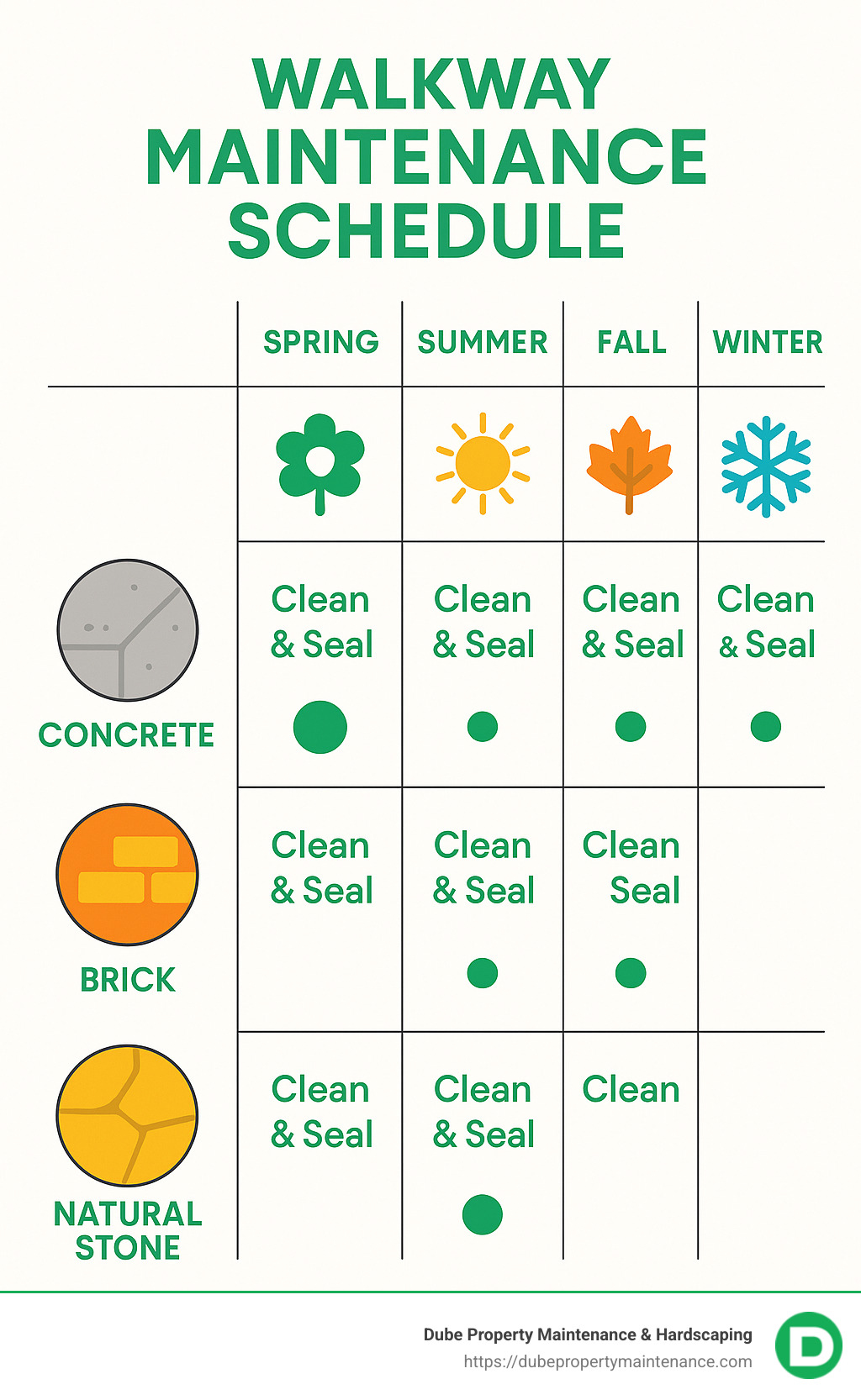
At Dube Property Maintenance & Hardscaping, we’ve developed maintenance programs specifically designed for New England’s unique climate challenges. Our seasonal service schedule includes:
One of our commercial clients in Burlington was spending nearly $15,000 annually on reactive repairs to their extensive walkway system. After implementing our preventive maintenance program, their repair costs dropped by approximately 40% while the appearance and safety of their walkways dramatically improved.
“The return on investment from professional maintenance is clear,” explains our lead technician. “When you factor in the extended lifespan of materials, reduced repair costs, and improved safety, professional care pays for itself many times over.”
For residential clients throughout Methuen and surrounding communities, our maintenance programs provide peace of mind. You’ll know your property is being cared for by experienced professionals who understand the unique challenges of New England weather patterns and how they affect different hardscape materials.
Whether you have a simple concrete walkway or an elaborate natural stone path system, professional maintenance ensures your walkways and steps will continue to improve your property’s beauty, safety, and value for years to come.
More info about walkway installation services
Walking around your property on a crisp spring morning, coffee in hand, is more than just a pleasant ritual—it’s a perfect opportunity to inspect your walkways and steps for winter damage. We recommend these formal inspections twice yearly: once in spring after the freeze-thaw cycles have ended, and again in fall before winter weather arrives.
Those dramatic New England storms we all experience? They warrant a quick visual check afterward too. Heavy rain, high winds, or flooding can cause unexpected damage that’s much easier to address early.
For our commercial clients with high-traffic areas, quarterly inspections make good business sense. During any inspection, pay attention to cracks, settling, loose materials, drainage issues, and those persistent weeds that somehow find every tiny crevice.
I’ve seen how regular inspections can extend hardscape lifespans by 30-50% simply by catching small problems before they become expensive headaches. This is especially true here in New England, where our weather can swing from scorching summers to below-zero winters.
Your walkways and steps will usually give you clear signals when they need attention. Think of these warning signs as your hardscape’s way of asking for help:
Structural concerns become evident when you notice cracks wider than ¼ inch (especially if they’re growing), uneven surfaces where sections have settled or heaved, or loose materials that rock when stepped on. These issues not only look unsightly but can create genuine tripping hazards.
Material deterioration shows up as crumbling mortar between bricks or stones, spalling (flaking) concrete surfaces, or fading/discoloration that suggests your sealer has failed. These are all signs that water is getting where it shouldn’t.
Water and vegetation issues like pooling water, excessive weed growth between pavers, or recurring ice buildup in winter indicate underlying problems that won’t resolve themselves. Pay special attention to edge restraint failure, which allows materials to spread outward and compromises the entire structure.
Addressing these issues promptly is remarkably cost-effective. A simple mortar joint repair might cost $200-400, while waiting until a complete rebuild is needed could run $3,000-9,000 or more depending on size and materials. As my grandfather used to say, “Fix the roof while the sun is shining”—sound advice for hardscape maintenance too!
There’s something satisfying about tackling home maintenance projects yourself—I completely understand the appeal. However, when it comes to walkways and steps, some tasks genuinely benefit from professional expertise.
Sealing applications require proper preparation and product selection to provide effective protection. I’ve seen well-intentioned homeowners apply the wrong sealer type, creating a slippery surface or trapping moisture that causes more damage than protection.
Structural repairs need to address underlying issues, not just surface symptoms. That settling paver might look like a simple fix, but if the base material is washing out underneath, simply resetting it becomes a temporary band-aid.
Pressure washing requires a delicate touch—too much pressure can etch concrete, erode mortar joints, or damage the surface of natural stone. I’ve witnessed the disappointment when homeowners realize they’ve permanently marked their beautiful bluestone walkway.
Complex materials like natural stone and specialty concrete finishes have specific care requirements. What works for concrete might damage travertine or limestone.
At Dube Property Maintenance & Hardscaping, we create flexible maintenance plans based on your specific needs. Some of our Methuen clients prefer comprehensive service packages, while others engage us for annual professional cleaning and sealing while handling routine sweeping and rinsing themselves.
I remember an Andover client who initially attempted DIY repairs on their brick walkway but called us when the results weren’t holding up. Our team not only fixed the immediate issues but identified and addressed an underlying drainage problem that had been causing recurring damage. Five years later, with just minimal maintenance, that walkway still looks beautiful and functions perfectly—exactly how your outdoor spaces should perform.

Your walkways and steps aren’t just functional passages—they’re the silent welcome committee of your home. When lovingly maintained, they create that perfect first impression while keeping family and visitors safe as they steer your property.
Throughout New England, our unique weather challenges make thoughtful maintenance particularly important. Those beautiful autumn leaves bring vibrant colors but can stain porous surfaces if left too long. Our famous winters test even the most durable materials with freeze-thaw cycles that can transform tiny cracks into significant problems by spring.
We’ve seen it countless times in our work across Methuen and beyond—the homes with the most inviting curb appeal almost always have well-maintained pathways. It’s not just about aesthetics either. A properly maintained walkway typically lasts decades longer than a neglected one, making regular care one of the smartest investments you can make in your property.
Understanding your materials is half the battle. That stamped concrete needs different winter protection than your neighbor’s bluestone. The brick path leading to your garden requires different cleaning approaches than the granite steps at your front door. When you work with these differences rather than against them, maintenance becomes simpler and more effective.
At Dube Property Maintenance & Hardscaping, we bring over twenty years of local experience to every property we touch. We’ve seen how our Massachusetts winters can be particularly tough on certain materials, and we’ve developed specialized approaches for each. Whether you’re in Andover, North Andover, Haverhill, or anywhere in our service area, we understand the specific challenges your hardscapes face.
Many of our clients begin with a professional assessment to understand exactly what their particular walkways and steps need. Some choose to handle regular cleaning themselves while bringing us in for annual sealing and repairs. Others prefer the peace of mind that comes with our comprehensive maintenance plans, knowing their pathways are being professionally cared for throughout the changing seasons.
Small issues rarely stay small for long. That hairline crack you barely notice today could become a tripping hazard by next season. The slightly uneven paver might seem minor until the first heavy rain shows it’s actually a drainage problem in disguise. Early intervention saves both money and headaches.
More info about walkway installation services
We’d love to help you create a maintenance plan that fits your specific needs and budget. Whether you have a historic brick walkway that needs gentle, specialized care or modern concrete steps requiring seasonal protection, our team brings the right expertise to every project. We take pride in helping homeowners throughout northeastern Massachusetts and southern New Hampshire enjoy beautiful, safe, and long-lasting hardscapes.
Your pathways tell a story about your home. With proper care, that story can be one of welcome, safety, and pride for many years to come. Reach out to Dube Property Maintenance & Hardscaping today—we’re ready to help you write that story.
