
Walkways and stairs connect the spaces in your home and landscape like chapters in a good book – they guide the story of your property while serving an essential purpose. When thoughtfully designed, these elements do more than just provide access; they create a journey through your outdoor space that’s both beautiful and safe.
Quick Guide to Walkways and Stairs:
| Element | Best Materials | Safety Considerations | Typical Costs* |
|---|---|---|---|
| Walkways | Concrete pavers, natural stone, brick, gravel | Non-slip surface, proper drainage, adequate width (min. 36″) | $8-75 per sq. ft. |
| Stairs | Concrete, natural stone, wood, composite | Consistent riser height (max 9.5″), handrails, proper lighting | $150-1,200 per step |
*Average cost ranges based on internet data; actual costs may vary significantly and do not represent pricing from Dube Property Maintenance & Hardscaping.
The numbers don’t lie – according to the National Safety Council, stairs rank as the second leading cause of unintended injuries in homes, resulting in approximately 12,000 deaths annually in the U.S. That’s why a well-designed walkway and stair system isn’t just about curb appeal – it’s a critical safety feature that protects your family and visitors.
Whether you’re dreaming of a welcoming front entrance path that makes neighbors slow down for a second look, or a practical backyard staircase that tames a sloping yard, this guide will walk you through:
Landscape designer Scott McLeod puts it perfectly: “When someone reports a stair hazard, your team will get notified right away. Once you investigate the report, you can implement a solution that either controls or eliminates the issue altogether.” This proactive thinking is exactly what makes the difference between ordinary paths and extraordinary ones.
Basic Walkways and Stairs glossary:
– landscape around steps
– patio to grass transition
– mulch and stepping stone walkway
The impact of well-designed walkways and stairs goes far deeper than just pretty pictures for your Instagram. Safety comes first – with over 20,000 stair-related injuries annually in the United States, proper design literally saves lives. Most accidents happen because of missing handrails, irregular step heights, or inconsistent dimensions. Did you know that even a quarter-inch difference in riser height – about the thickness of two quarters – can be enough to cause a trip and fall? Those tiny details matter enormously.
Your wallet will thank you too. Real estate experts consistently find that homes with attractive, well-maintained walkways can see up to a 20% boost in perceived value. The National Association of Realtors reports that an overwhelming 94% of top agents believe strong curb appeal translates directly to higher closing prices. That beautiful front path isn’t just a convenience – it’s an investment.
Beyond dollars and safety, walkways and stairs transform how you experience your property. They create natural flow between outdoor spaces, turning awkward slopes into graceful transitions. They guide visitors through your garden’s story, highlighting special features and creating those “pause and appreciate” moments that make a landscape memorable.
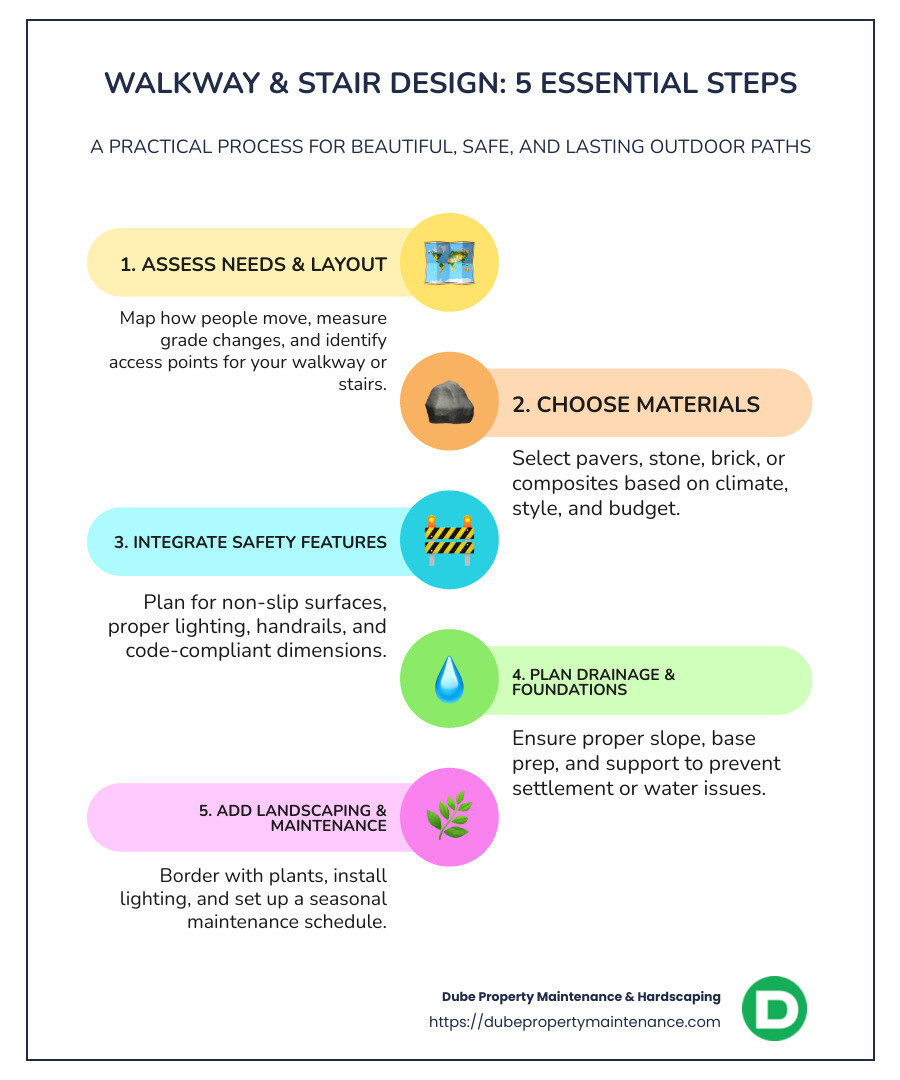
We’ve broken down this comprehensive guide into five practical sections to help you steer walkways and stairs with confidence:
Materials come first – we’ll explore everything from classic concrete and timeless natural stone to modern composites and sustainable options. Each material brings its own personality, durability, and maintenance needs to your project.
Next, we dive into Design principles that ensure your pathways complement your home’s architecture and landscape style. We’ll cover layout fundamentals, proportion guidelines, and visual tricks that make even the most functional paths feel like intentional design features.
Safety is non-negotiable, so we’ll walk through critical requirements, code compliance, and accessibility considerations. You’ll learn how to create paths that welcome everyone, from toddlers to grandparents.
Proper Maintenance extends the life of your investment, so we’ll share seasonal care routines, problem prevention, and repair techniques that keep your pathways looking their best year after year.
Finally, we’ll explore Landscaping Integration – creative ways to blend your hardscaping with plantings, lighting, and other landscape elements for a cohesive outdoor environment that feels like it grew naturally from your property.
Let’s start the journey to creating pathways that are as practical as they are beautiful – ones that truly complement your home and lifestyle.
The material you select for your walkways and stairs will significantly impact their appearance, durability, maintenance requirements, and cost. Here in New England, where we experience everything from summer heat to winter freeze-thaw cycles, material selection is particularly important.

When we sit down with homeowners in Methuen and surrounding areas, they often ask us which material is “best.” The truth is, there’s no one-size-fits-all answer – each option has its own personality and practical considerations.
Concrete pavers offer incredible versatility and have become our most-requested option. With their uniform sizes and interlocking design, they create stable surfaces that stand up to our New England winters. One of our Salem clients recently told us, “I love that my paver walkway still looks crisp after five winters – and when my kids dropped a basketball hoop on it, we only had to replace two pieces!” They’ll typically last 25-50 years with proper care, though you’ll need to refresh the joint sand occasionally.
Natural stone brings timeless beauty that’s hard to beat. Whether you choose the cool blues of bluestone, the warm tones of flagstone, or the durability of granite, natural stone makes a statement. It’s the longest-lasting option at 50+ years, though it does require a higher initial investment. Many of our Andover clients choose natural stone for front entrances where they want to make a strong first impression. Just be aware that some finishes can be slippery when wet – we recommend textured cuts for stairs.
Brick offers a classic, warm look that pairs beautifully with traditional New England homes. There’s something about a brick pathway that feels instantly established and welcoming. While brick can occasionally crack during freeze-thaw cycles (lasting about 20-30 years overall), many homeowners appreciate its character and how it ages gracefully. Just keep an eye out for moss development in shady spots, which can create slippery conditions.
For more casual pathways, gravel provides an affordable option with excellent drainage. The pleasant crunch underfoot adds sensory appeal to garden paths, though it’s not ideal for primary walkways that need snow removal. With periodic replenishing, gravel pathways can last indefinitely, though they do require edging to prevent migration.
Wood brings natural warmth to landscape designs, especially in rustic or woodland settings. Cedar and pressure-treated pine are common choices for steps and short walkways. While wood requires more maintenance (staining or sealing every 1-2 years) and has a shorter lifespan of 7-15 years, some homeowners prefer its natural feel and relatively easy DIY installation.
For environmentally conscious clients, recycled composites offer an eco-friendly alternative that resists rot and insects. These materials have come a long way in recent years, now offering more natural-looking options. They require minimal maintenance beyond occasional cleaning and typically last 20-30 years.
Understanding the potential costs of walkways and stairs helps you plan your project realistically. Based on publicly available data (not Dube Property Maintenance & Hardscaping pricing), here’s what homeowners might expect to invest:
For walkways, gravel starts at about $8-24 per square foot, while poured concrete runs $10-30. Brick pathways typically range from $15-45, with concrete pavers at $18-55. Natural stone sits at the premium end at $25-75 per square foot.
Stairs represent a more significant investment due to their complexity. Simple concrete steps might cost $150-450 per step, while wood typically runs $200-600. Brick steps average $250-750 each, with natural stone at $300-900. Custom designs with multiple materials or special features can reach $500-1,200 per step.
These ranges reflect internet averages and can vary significantly based on site conditions, material quality, and design complexity. A simple straight walkway costs less than a winding path with borders and inlays.
When we source materials for our Massachusetts and New Hampshire clients, we balance quality, aesthetics, and budget. We’ve developed relationships with trusted suppliers throughout New England who provide consistent, durable products.
For environmentally conscious homeowners (and we’re seeing more every year), we offer several sustainable options. Permeable pavers reduce water runoff while naturally filtering pollutants. Locally sourced stone minimizes transportation emissions. Recycled-content pavers and reclaimed materials give projects character while reducing environmental impact.
Most standard materials are readily available, though specialty items might have 2-4 week lead times during our busy season. Planning ahead helps ensure your preferred materials are available when you need them.
The secret to long-lasting walkways and stairs isn’t just the surface material—it’s what lies beneath. In New England’s challenging climate, proper base preparation makes the difference between a pathway that lasts decades and one that fails after a few seasons.
Our frost line runs deep—36-48 inches in most areas we serve. This means we need to pay special attention to base preparation. For walkways, we typically excavate 6-12 inches, depending on soil conditions. This depth allows us to install a properly compacted sub-base of processed gravel (usually 4-8 inches), followed by a precisely screeded 1-inch bedding layer of concrete sand.
Drainage is non-negotiable in our climate. We always build in a minimum 1-2% slope away from structures, and in problem areas, we install drainage solutions to prevent water accumulation. As one Methuen homeowner told us after we fixed her perpetually flooded walkway, “For years, that path was unusable after every rain. Now it stays dry even during downpours.”
Different soil types present unique challenges. Clay soils, common in parts of our service area, retain moisture and are particularly susceptible to frost heave, requiring deeper excavation and sometimes additional drainage measures. Sandy soils drain well but may need extra compaction to prevent settling. Loamy soils generally provide the best foundation but still require proper preparation.
Edge restraints are critical for preventing lateral movement of pavers and maintaining crisp borders between your walkway and lawn. Without proper edging, even the most beautiful installation will eventually spread and lose its definition.
A North Andover client recently shared: “The walkway Dube installed five years ago still looks perfect, while my neighbor’s DIY path is already falling apart. The difference is all in the preparation they put into the base.”
For a deeper dive into our installation process, visit our Paver Walkway Installation page, where we break down each step of our proven method.
When you create walkways and stairs that truly complement your property, magic happens. The best pathways feel like they’ve always belonged there, guiding visitors naturally while enhancing your home’s character. It’s not just about getting from point A to point B—it’s about creating an experience.

Your walkway’s width should match your home’s scale and expected foot traffic. For main entrances, we recommend at least 4 feet wide so two people can comfortably walk side-by-side. Secondary garden paths can be cozier at 2-3 feet wide.
The materials and design should echo your home’s architectural style. If you have a Colonial or Traditional home, brick or bluestone in running bond or herringbone patterns create a timeless look. For Contemporary homes, large-format pavers with clean lines work beautifully. Craftsman homes pair wonderfully with natural stone that has organic edges, while Cottage-style homes shine with irregular flagstone or circular brick patterns.
Color is just as important as material. If you have a red brick home, bluestone or gray pavers create a lovely contrast. Homes with earth tones look warm and inviting with sandstone or tan-toned pavers. And if your home is white or light-colored? You’ve hit the jackpot—almost any paver color will work!
The shape of your pathway also influences how people move through your space. Straight paths create formality and direct movement, perfect for front entrances. Curved paths slow movement and create visual interest, ideal for gardens. Stepping stones encourage mindful walking and create a casual, playful feel.
One of our Andover clients shared: “We wanted our front walkway to make a statement while still honoring our 1920s Colonial. The herringbone brick pattern with granite steps perfectly bridges traditional and timeless.” That’s exactly what thoughtful design achieves—beauty that respects your home’s heritage.
Creating a seamless flow between different levels requires careful attention to transitions. Whenever possible, use the same material for both walkways and stair treads. If you need to mix materials, ensure they complement each other in color and texture.
Transition zones are critical for safety and aesthetics. Include landing areas at the top and bottom of stairs (at least 36 inches deep is ideal). Consider widening sections where pathways change direction, and create natural gathering spaces where multiple paths intersect.
The right edging defines your pathways and ties different elements together. Stone edging works beautifully with both formal and informal designs. For a clean, modern look, metal edging creates crisp lines. Brick edging complements traditional homes, while concrete curbing offers durability with design flexibility.
Visual rhythm creates a sense of harmony along your pathway. This might mean regular spacing of lighting fixtures, alternating plant groupings, or consistent step heights. These repeated elements guide the eye and create a sense of order, even in naturalistic designs.
A Haverhill homeowner whose property we renovated noted, “Our sloped property needed both stairs and ramps. Dube designed a system where both elements share the same stone facing and lighting, making the transition between them nearly invisible.” That’s the power of thoughtful harmonizing—making necessary features feel intentional and beautiful.
Formal Axis Design creates impressive front entrances with straight, symmetrical walkways aligned with your front door. Flanking plantings of equal height and spacing improve the symmetry, while uniform stair risers with a defined landing create a stately approach. This style shines with Colonial, Federal, Georgian, and Greek Revival homes. In Winchester, we created a 5-foot wide bluestone walkway with a soldier course brick border and granite steps that perfectly framed the home’s classic facade.
Cottage Meander pathways bring charm and whimsy with their gently curving paths through garden areas. Irregular flagstone or brick in random patterns improve the casual feel, while wide, shallow steps double as impromptu seating spots. This design works beautifully with Craftsman, Cottage, and Cape Cod homes. For a Newburyport client, we created a meandering path that connects multiple outdoor “rooms,” making garden exploration a delight.
Modern Floating Treads offer minimalist drama with concrete or stone slabs that appear to hover with spaces between. Clean lines and consistent spacing create architectural interest, while under-lighting creates stunning nighttime effects. Contemporary and Mid-Century Modern homes are perfect matches for this style. A Burlington property we worked on features floating granite treads illuminated by LED strip lighting—it’s both functional and a major design statement.
Hillside Switchback pathways tame challenging slopes with zigzag designs. Retaining walls double as planting beds, while consistent stair sections with generous landings make navigation easy. This practical solution works for any home on a significant slope. In Tewksbury, we transformed an unusable hillside into an accessible landscape by combining steps and walkways in a rhythmic pattern that feels natural and intentional.
Multi-Level Terrace Connection designs create outdoor living at its finest with a series of platforms connected by short stair runs. Using consistent materials throughout all levels creates cohesion, while integrated planters and seating maximize functionality. This approach is perfect for split-level homes or properties with natural grade changes. For a North Andover family, we created three bluestone terraces connected by granite steps with built-in lighting, turning their sloped backyard into three distinct outdoor living spaces.
These designs can be custom to suit your specific property and personal style. At Dube Property Maintenance & Hardscaping, we love working with homeowners throughout Massachusetts and New Hampshire to create pathways that feel like they were meant to be part of your property all along. The right design doesn’t just connect spaces—it lifts your entire outdoor experience.
When it comes to Walkways and Stairs, safety isn’t just a recommendation—it’s essential. Stair falls rank as the second leading cause of unintended home injuries, with a sobering statistic of approximately 12,000 deaths annually in the U.S. The good news? Most of these accidents can be prevented through thoughtful design and adherence to building codes.
The difference between a hazardous stairway and a safe one often comes down to details that might seem minor but make a world of difference in everyday use.
For your Walkways and Stairs to be truly safe, consistency is key. OSHA guidelines specify that risers should be no taller than 9.5 inches with treads at least 9.5 inches deep. But here’s what many homeowners don’t realize—all risers and treads in a single flight must be uniform within ¼ inch of each other. Even slight variations can trip up our muscle memory, especially for older adults.
Handrails aren’t just helpful; they’re required on both sides of any stairway with four or more risers. These should sit between 30-38 inches high, measured from the leading edge of the tread. For stairs with open sides more than 30 inches above ground level, guardrails of at least 42 inches high protect against dangerous falls.

Visibility makes a tremendous difference in stair safety. The leading edge of each step should be clearly visible through color contrast or adequate lighting. This is especially important at dusk or dawn when depth perception becomes challenging.
For walkways, even surfaces are non-negotiable—any elevation change greater than ½ inch constitutes a trip hazard. Your primary walkways should measure at least 36 inches wide (48 inches for commercial applications), and proper drainage with a 1-2% slope away from structures prevents water accumulation and dangerous ice formation during our New England winters.
Beyond these basics, several additional features significantly improve safety:
Contrasting edges on steps dramatically improve visibility, while tactile warning strips at the top and bottom of stairs provide sensory alerts to elevation changes. Motion-sensor lighting ensures pathways remain illuminated when in use, even if someone forgets to switch on lights manually. For high-traffic areas, heated walkways and stairs prevent snow and ice accumulation, and homes with young children benefit from child-safe gates at the top of stairways leading from liftd decks or porches.
One of our Dracut clients shared a heartfelt testimonial: “After my mother had a fall, we had Dube redesign our front steps with proper handrails and contrasting stone on the edges of each step. The difference in safety is remarkable, especially at dusk.”
Truly great outdoor spaces welcome everyone, regardless of age or ability. Inclusive design isn’t just thoughtful—it’s forward-thinking.
For seniors, navigating outdoor spaces safely means incorporating lower risers (4-6 inches) paired with deeper treads (12-14 inches). Continuous handrails that extend beyond the top and bottom steps provide crucial support during transitions, while improved lighting and textured walking surfaces improve stability and confidence.
Children experience the world differently too. Consider adding secondary handrails at lower heights for smaller hands, along with closed risers to prevent little feet from slipping through. Rounded edges on all corners and visible markers at level changes help prevent injuries during play.
Wheelchair users benefit tremendously from thoughtful design elements like ADA-compliant ramps with a maximum slope of 1:12 (one inch of rise for every 12 inches of run). Level landings measuring at least 5×5 feet at the tops and bottoms of ramps provide necessary maneuvering space, while firm, stable surfaces prevent wheels from sinking into softer materials. Always maintain a minimum 36-inch clear width for pathways to accommodate wheelchairs comfortably.
Visually impaired users steer by consistency and texture. Predictable layouts with tactile changes at transitions and high-contrast colors at level changes provide crucial navigational cues. Some of our clients even incorporate audible elements like water features that serve as wayfinding landmarks.
While ADA standards remain mandatory for commercial properties, incorporating these principles into residential design creates more usable spaces for everyone—and potentially increases property value as our population ages. As the ABA Standards note, “By definition and ANSI 4.3.8 Changes in Level, a stair can never be part of an accessible route.” This means wherever stairs exist, an alternative accessible route must be provided for those who cannot use steps.
The material you choose for your walkways impacts both aesthetics and accessibility. For a deeper dive into material options and their suitability for different users, explore this helpful resource on Five Walkway Materials to Consider.
At Dube Property Maintenance & Hardscaping, we believe that beautiful outdoor spaces should be enjoyed by everyone. By incorporating these safety and accessibility features into your Walkways and Stairs design, you’ll create pathways that are not just stunning, but truly welcoming to all who visit your home.
Your beautiful walkways and stairs are an investment that deserves proper care to ensure they remain safe and attractive for years to come. Here in New England, where we experience everything from summer heat to winter freeze-thaw cycles, seasonal maintenance isn’t just recommended—it’s essential.
A well-maintained pathway doesn’t just look better—it’s significantly safer. As one of our Methuen clients told us, “I used to think my paver walkway would take care of itself. After following Dube’s maintenance plan for two years, I’m amazed at how much better it looks and how much more confident I feel walking on it, especially in winter.”
The changing seasons in Massachusetts and New Hampshire provide natural reminders for different maintenance tasks.
In spring, take time to assess winter damage. Look for cracks, heaving, or loose materials that developed during freeze-thaw cycles. This is the perfect time for a thorough cleaning to remove winter grime and salt residue. For paver walkways, spring is ideal for replacing joint sand that may have eroded. Many of our clients also choose spring for applying fresh sealant, though this is typically only needed every 2-3 years.
During summer months, focus on vegetation management. Even the most beautiful walkways and stairs can be undermined by weeds growing through joints or plants encroaching from the sides. A quick monthly check keeps these issues from becoming major problems. Summer is also when stains from barbecues, plant debris, or other outdoor activities are most common—address these promptly to prevent permanent discoloration.
As fall approaches, regular leaf removal becomes important to prevent slippery conditions and staining. This is also the time to check drainage systems before winter arrives. Make sure water has clear paths away from your walkways to prevent ice buildup. Fall is the last chance to seal any cracks before winter’s freeze can expand them into major issues.
Winter maintenance in New England is primarily about safe passage. Remove snow promptly but gently—plastic snow shovels are much kinder to pavers and natural stone than metal ones. When ice forms, use pet-friendly ice melt products sparingly, as harsh chemicals can damage certain materials. During winter thaws, take the opportunity to clear drainage paths of ice and debris.
Many homeowners enjoy maintaining their outdoor spaces, and several maintenance tasks are perfectly suited for DIY attention. Regular sweeping, hosing down surfaces, pulling the occasional weed, and applying moss treatments can all be handled without special expertise.
However, some maintenance is best left to professionals. Power washing, for example, seems straightforward but can cause significant damage when done incorrectly. The wrong pressure setting or nozzle can etch concrete, dislodge joint material, or even chip natural stone. Similarly, applying sealers requires proper surface preparation and technique to avoid bubbling, peeling, or an uneven finish.
For structural issues like heaved pavers or shifting stair treads, professional assessment can identify the underlying cause rather than just treating symptoms. A Tewksbury client shared, “I kept resetting the same section of pavers every spring until Dube identified a drainage issue causing the problem. Their permanent fix saved me years of frustration.”
If you choose to handle maintenance yourself, invest in the right tools: a soft-bristle broom, garden hose with adjustable nozzle, plastic snow shovel, proper weeding tools, and appropriate cleaners for your specific materials. Don’t forget safety gear like gloves, eye protection, and knee pads for those longer maintenance sessions.
Professional installation often comes with maintenance guidelines and sometimes warranty considerations. At Dube Property Maintenance & Hardscaping, we provide detailed care instructions with every installation and offer annual maintenance services throughout our service area.
Understanding where problems typically develop helps you focus your maintenance efforts and catch issues before they become safety hazards or expensive repairs.
For walkways, pay special attention to edge restraints. These often-overlooked components prevent the lateral spreading of pavers. When they fail, individual units can shift, creating uneven surfaces and widening joints. Similarly, drainage areas are critical inspection points—clogged or improper drainage leads to erosion and settling that can undermine even the most solid installation.
The joints between different materials (like where a concrete walkway meets brick steps) deserve close monitoring. Different materials expand and contract at different rates with temperature changes, potentially creating gaps over time. If your pathway runs near trees, watch for root activity that can lift and crack paving. Also check transition points where walkways meet other structures, as these junctions often experience the first signs of settling.
For stairs, handrail attachments should be regularly tested for stability. Even slight wobbling suggests fasteners are loosening and requires immediate attention. The nosing edges of steps take the most foot traffic and can wear down over time, creating both aesthetic and safety issues. In masonry stairs, mortar joints can crack and deteriorate, allowing water to penetrate and cause further damage during freeze-thaw cycles.
The landing-to-stair transition—particularly the first and last steps—deserves special scrutiny. These areas often experience the most settlement and are responsible for many stair-related accidents. As one North Andover homeowner observed, “The first step from our patio always seemed to catch visitors by surprise until Dube added a contrasting border and improved the lighting. Such a simple fix for a potentially dangerous situation.”
A proactive inspection focusing on these common failure points can prevent most serious issues from developing. For more detailed information on proper installation techniques that minimize future maintenance issues, visit our guide on How to Install a Paver Walkway.
With proper care, your walkways and stairs will continue to improve your property’s beauty, functionality, and safety for decades to come. The small investment in regular maintenance pays significant dividends in extended lifespan and continued enjoyment of your outdoor spaces.
Integrating your walkways and stairs with thoughtful landscaping and lighting transforms them from mere functional elements into captivating features that improve your entire property. In our years of creating outdoor spaces across Massachusetts and New Hampshire, we’ve seen how these finishing touches can make all the difference.

The plantings you choose can dramatically improve your pathways. Low-growing border plants like creeping thyme or sweet alyssum create soft, welcoming edges while staying neat and contained. One of our Andover clients combined these with fragrant herbs that release their scent when guests brush past them – an unexpected sensory delight that visitors always comment on.
Structural accents mark important transitions beautifully. A North Reading family used compact ornamental grasses to subtly indicate where their garden path curves, creating rhythm and movement through their landscape. “The grasses catch the evening light and sway gently in the breeze,” they told us. “It makes walking to our fire pit feel like an event rather than just crossing the yard.”
Lighting transforms your walkways and stairs after sunset, extending their usability while creating dramatic effects. Well-designed pathway lighting isn’t just beautiful – it’s a crucial safety feature. Path lights spaced 8-10 feet apart provide safe navigation without creating a runway effect, while step lights recessed into risers illuminate stairs without glare that can temporarily blind users.
A landscape architect we partner with in Lynnfield suggests thinking beyond basic lighting: “Consider downlighting from trees or structures for a moonlight effect that feels natural and gentle. For special landscape features along your path, uplighting creates drama and depth that flat lighting simply can’t achieve.”
Water and art elements can turn your pathway into a multi-sensory journey. Water features that parallel walkways create cooling effects in summer and pleasant sounds year-round. A Winchester client incorporated copper lanterns along their bluestone pathway that have developed a beautiful patina over time, complementing their mature copper beech trees perfectly. “The lanterns tell the story of our New England weather,” they shared. “Each storm and season adds character.”
The hardscaping industry continues to evolve with exciting innovations that improve both function and sustainability. For environmentally conscious homeowners, recycled glass pavers offer beauty with purpose. These stunning pavers contain up to 100% recycled material and can even be illuminated from below for a magical nighttime effect.
Permeable paving systems have become increasingly sophisticated, allowing water to infiltrate while maintaining solid, stable surfaces. This addresses runoff concerns while reducing puddles and ice formation – a particular benefit in our New England climate. As one Tewksbury client noted, “The permeable driveway and walkway system has eliminated the ice patches we used to battle every winter.”
Technology integration has revolutionized outdoor living spaces. Heating systems embedded in walkways and stairs have become game-changers for many of our clients. A Georgetown homeowner recently installed a heated bluestone walkway connecting their driveway to their front door. “It’s been transformative during winter,” they told us. “The system activates automatically when snow is detected, and we never have to shovel the path. Worth every penny for the safety and peace of mind.”
For those seeking subtle nighttime illumination, photoluminescent materials charge during daylight hours and gently glow after dark. These can be incorporated into step edges or pathway borders, providing just enough light to steer safely without disrupting the night sky or wildlife.
Structural innovations continue to expand design possibilities. Modular aluminum stairs offer lightweight, adjustable systems for challenging sites, while floating stair systems create dramatic visual effects. For those concerned about long-term durability, self-healing concrete contains compounds that automatically repair small cracks before they become problems.
The most exciting developments combine aesthetics with smart technology. Integrated LED systems built directly into paving materials can be programmed to change colors for different seasons or occasions. One Methuen family programs their pathway lights to glow their son’s team colors on game nights – a neighborhood conversation starter and source of family pride.
At Dube Property Maintenance & Hardscaping, we stay current with these innovations through ongoing education and industry partnerships. We can help you determine which options make sense for your specific property, climate, and lifestyle needs. The right combination of landscaping, lighting, and modern materials can transform your walkways and stairs from basic necessities into the highlight features of your outdoor living space.
When designing Walkways and Stairs, getting the right proportions isn’t just about following building codes—it’s about creating steps that feel natural to climb. The relationship between treads (where you place your foot) and risers (the vertical face) significantly impacts both safety and comfort.
For outdoor residential stairs here in New England, we’ve found the sweet spot to be:
Many of our clients are surprised to learn there’s actually a time-tested formula for comfortable stairs: 2 risers + 1 tread = 25-27 inches. This creates a natural walking rhythm that feels right to most adults.
“When we redesigned the terraced steps in our backyard, Dube suggested slightly lower risers than we initially planned,” shared one Methuen homeowner. “The 6.5-inch risers with 13-inch treads make the stairs feel almost effortless to climb, even when I’m carrying gardening supplies.”
For outdoor installations, we typically recommend slightly more generous dimensions than indoor stairs. People naturally move more cautiously outdoors—especially during our New England winters—so giving them a bit more foot space improves both confidence and safety.
Winter in Massachusetts and New Hampshire presents unique challenges for outdoor Walkways and Stairs. After years of helping homeowners steer these issues, we’ve developed several effective strategies to keep pathways safe during our challenging winters.
Material selection makes a tremendous difference in winter traction. Polished surfaces might look neat, but they become treacherous ice rinks at the first frost. Instead, we recommend textured options like thermal bluestone, which maintains some roughness even when wet. Many of our clients also love granite with a flamed finish—it provides excellent grip while still looking sophisticated.
Proper drainage is absolutely essential. Even the best materials become hazardous when ice forms, so we design all walkways with a slight slope (typically 1-2%) away from the house and create clear paths for melting snow to drain away. This seemingly small detail prevents the dangerous freeze-thaw-refreeze cycle that causes most winter falls.
“The heated walkway system was the best investment we made in our home renovation,” a North Andover client told us recently. “No more shoveling, no more ice, just clear, safe access all winter.” While heating elements represent an additional investment, they can be programmed to activate automatically when snow is detected, providing peace of mind for busy homeowners and families with elderly members.
Good lighting becomes even more critical in winter when darkness falls early. We often install fixtures slightly liftd from ground level to prevent them from being buried during heavy snowfalls. Solar options have improved dramatically in recent years, though hardwired systems still provide more reliable performance during our shorter winter days.
Finally, don’t underestimate the importance of proper snow management. We help clients designate specific areas for snow storage away from walkways during installation planning. This foresight prevents the common problem of plowed snow melting across pathways and refreezing overnight.
The question of permits for Walkways and Stairs projects often causes confusion for homeowners. Requirements vary significantly between towns in our Massachusetts and New Hampshire service area, but we can provide some general guidance based on our experience.
Most municipalities require permits when your project includes:
New stairs with more than 2-3 risers (the exact threshold varies by town)
Changes to drainage patterns, especially near property lines
Any modifications to public sidewalks or right-of-ways
Retaining walls over 3-4 feet tall associated with your walkway
Electrical work for pathway lighting (though low-voltage systems are often exempt)
Modifications to properties in designated historic districts
Simple projects that generally don’t require permits include like-for-like replacements that maintain the same dimensions, minor repairs to existing walkways, and basic gravel or stepping stone paths that don’t affect drainage patterns.
“I was completely overwhelmed by the permit requirements for our front entrance renovation,” shared a Haverhill client. “Dube handled everything—they knew exactly which forms to file and what supporting documents were needed. They even attended the building department meeting on my behalf.”
At Dube Property Maintenance & Hardscaping, we manage the entire permitting process for our clients as part of our comprehensive project management. We’ve built relationships with building departments throughout our service area and understand each town’s specific requirements. This allows us to gather the necessary documentation efficiently—including materials lists, measurements, and setback information—ensuring your project moves forward without unnecessary delays.
For the most accurate information about your specific project, we recommend either consulting your local building department directly or contacting us for a consultation. We’re happy to research the requirements for your town and provide guidance on the permitting process before you make any decisions about your project.
Creating beautiful and functional walkways and stairs is more than just an upgrade to your property—it’s an investment that transforms how you experience your outdoor spaces every day. Throughout this guide, we’ve explored everything from materials to maintenance, all aimed at helping you create pathways that are as practical as they are pleasing.
The most successful walkways and stairs projects find that sweet spot where several key elements come together in harmony. Safety always comes first—consistent dimensions, proper materials, adequate lighting, and sturdy handrails aren’t just code requirements, they’re the foundation of spaces where everyone from toddlers to grandparents can move confidently. As one of our Andover clients told us, “I never realized how stressful our old uneven steps were until they were replaced. Now I don’t hold my breath every time my mother visits.”
Your pathways should also tell a story that complements your home’s character. A meandering flagstone path might look charming leading to a cottage-style home but would feel out of place fronting a sleek contemporary residence. This design synergy creates visual harmony that makes your entire property feel thoughtfully planned rather than pieced together.
Here in New England, our material choices matter tremendously. That beautiful travertine that works perfectly in Arizona might crack after just one freeze-thaw cycle in Massachusetts. Selecting climate-appropriate materials—whether that’s classic brick, durable bluestone, or modern permeable pavers—ensures your investment stands up to our challenging weather patterns year after year.
Taking the long view with proper installation methods pays dividends. A walkway laid on inadequate base materials might save money initially but will likely require costly repairs within just a few seasons. As a Methuen homeowner recently shared, “The difference between our DIY pathway and the one Dube installed is night and day—especially after winter. Theirs still looks perfect while ours needed complete replacement after just three years.”
The finishing touches around your walkways and stairs are where your personality really shines through. Whether it’s copper path lights that develop a beautiful patina over time, native plantings that provide seasonal interest, or a small water feature that adds tranquil sounds to your journey, these details create moments of joy in everyday movement through your landscape.
At Dube Property Maintenance & Hardscaping, we bring over twenty years of New England hardscaping experience to every project. We understand the unique challenges of our region’s climate and soil conditions, and we’re committed to creating pathway systems that not only look beautiful on day one but continue to perform beautifully for decades to come.
From that welcoming front entrance that greets your guests to the garden path that winds through your backyard sanctuary, we approach each project with attention to both aesthetic details and structural integrity. Our comprehensive process includes everything from initial site analysis and material selection to professional installation and ongoing maintenance guidance.
Ready to transform your property with custom-designed walkways and stairs that perfectly suit your home and lifestyle? Visit our walkway installation services page or reach out for a consultation. Your perfect pathway is just a conversation away.

