
Paver wall systems are among the most popular and practical solutions for managing sloped yards, preventing erosion, and creating usable outdoor space. Here’s a quick look at the most common landscape block retaining wall options to help you compare:
| Block Type | Best For | Durability | Typical DIY Friendly? |
|---|---|---|---|
| Concrete interlocking blocks | Most residential walls | Very high | Yes, up to ~3 ft |
| Natural stone | Rustic or high-end look | Very high | Moderate |
| Brick | Traditional aesthetics | High | Moderate |
| Segmental retaining wall blocks | Structural, tiered walls | Excellent | Up to ~3 ft |
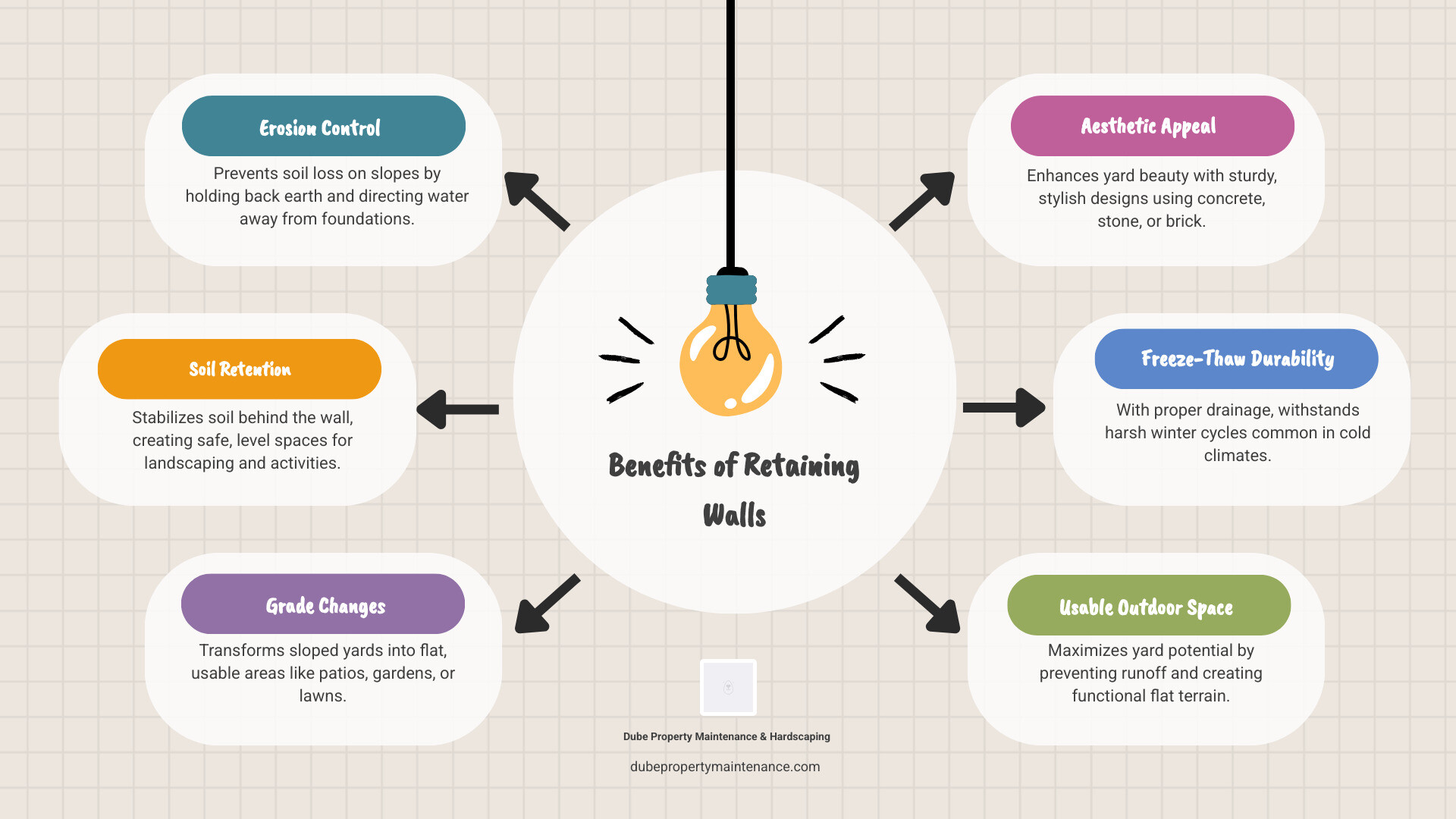
If you have a sloped yard in Massachusetts or southern New Hampshire, a retaining wall does more than look good. It holds back soil, controls water runoff, and turns an awkward grade change into flat, usable space — whether that’s a patio, garden bed, or lawn.
The challenge? Not all block options perform the same way. The wrong material — or a poorly built foundation — can lead to leaning, cracking, or even collapse. And in our region, freeze-thaw cycles make proper drainage and base prep even more critical than in warmer climates.
This guide compares the top landscape wall block options so you can make a confident decision before any digging starts.
Paver wall further reading:
When we talk about a paver wall, we are usually referring to a segmental retaining wall (SRW). These systems are composed of modular units that dry-stack together without the need for mortar. Because they are flexible, they handle the shifting soils of Massachusetts and New Hampshire much better than rigid poured concrete.
Choosing the right material involves balancing your home’s architecture with your budget and the wall’s structural requirements.
| Material | Durability | Maintenance | Average Cost (Material Only) |
|---|---|---|---|
| Concrete Blocks | Very High | Low | $ – $$ |
| Natural Stone | Exceptional | Low to Moderate | $$$ |
| Brick | High | Moderate | $$ |
Concrete blocks are the industry standard for a reason. Modern manufacturing allows for a variety of textures—from smooth, contemporary finishes to “tumbled” blocks that mimic aged stone. Many systems, like those from Segmental Retaining Walls providers, feature interlocking lips or pins that automatically create the necessary “batter” (backward lean) for stability. You can find more info about retaining wall blocks to see how these units simplify the installation process.
For a timeless, high-end look, natural stone is hard to beat. Whether you prefer the rustic charm of fieldstone or the clean lines of cut granite, natural stone offers a unique aesthetic where no two units are exactly alike. While beautiful, these walls often require more skill to assemble because the pieces aren’t uniform. Check out more info about stone retaining wall services to see how natural stone can be integrated into your landscape.
Brick provides a traditional, classic aesthetic that complements many historic homes in areas like Andover and Newburyport. However, building a true paver wall out of brick often involves a concrete block core with a brick veneer, as standard bricks aren’t heavy enough to act as a gravity wall on their own.
Before the first shovel hits the dirt, we have to handle the “invisible” parts of the project. A paver wall is essentially a vertical dam for soil; if it isn’t engineered correctly, gravity and water will eventually win.
This is the most critical first step. In Massachusetts and New Hampshire, you must call 811 at least a few days before you dig. They will coordinate with utility companies to mark gas, electric, and water lines. Trust us, hitting a gas line is a “surprise” that no housewarming party needs!
In many of our service areas, such as Methuen or Salem, NH, any wall over 4 feet in height typically requires a building permit and an engineer’s stamp. This is because taller walls face immense lateral earth pressure. The International Building Code (IBC) requires these structures to be designed with a safety factor of 1.5 against sliding or overturning. For a deeper dive into these requirements, you can reference Building Codes Illustrated: A Guide to Understanding the 2006 International Building Code.
A successful wall must resist the “sliding wedge” of soil behind it. Gravity walls rely on their sheer weight (usually being 50% to 60% as deep as they are tall), while reinforced walls use geogrid—a high-strength fabric—to tie the wall back into the soil.
Building a paver wall that lasts 50+ years isn’t about the blocks you see; it’s about the foundation you don’t.

When we design these structures, we use staggered joints (like a brick pattern) to ensure structural integrity. We also pay close attention to the “return” or corners of the wall, where the most stress occurs. You can find more info about building a retaining wall to understand these technical nuances.
How much does a paver wall cost? Based on general internet data, homeowners can expect to see a wide price range depending on height, material, and site accessibility.
Note: These are average market costs and do not reflect the specific pricing of Dube Property Maintenance & Hardscaping.
When calculating materials, we always recommend adding a 10% waste factor for cuts and broken units. This ensures you don’t run out of the same “dye lot” of blocks halfway through the project.
The biggest enemy of a paver wall is hydrostatic pressure. When soil gets wet, it becomes incredibly heavy. If there is no gravel backfill or drainage pipe, that water weight pushes against the back of the wall, causing it to bulge or lean. Foundation settling due to poor compaction is the second most common culprit. For those looking to stay within a budget while ensuring quality, we have more info about affordable retaining wall solutions.
While these walls are low-maintenance, they aren’t “no-maintenance.”
For most DIYers, we recommend staying under 2 to 3 feet. Anything higher involves significant weight and soil pressure that requires specialized equipment like plate compactors and specific engineering. Once you hit the 4-foot mark, most towns in our area require a permit and a professional design to ensure the wall doesn’t become a safety hazard.
The first course is the foundation. If it is off by even a fraction of an inch, that error will be magnified as you go higher. By burying the first course, you anchor the wall into the ground, preventing the bottom from sliding forward (kick-out) under the weight of the soil.
Even for a wall that is only 2 feet tall, we almost always recommend a drainage system. In the Merrimack Valley, our soil can be heavy with clay. During a heavy rainstorm or spring thaw, that soil holds water like a sponge. A perforated pipe and gravel backfill act as a “pressure relief valve” for your wall.
A well-built paver wall is a marriage of engineering and art. It transforms a difficult slope into a beautiful feature that adds value and functionality to your property. Whether you are in Methuen, MA, or Salem, NH, the key to a wall that lasts decades is a focus on what lies beneath the surface—proper base preparation, level footing, and excellent drainage.
At Dube Property Maintenance & Hardscaping, we specialize in creating durable, high-quality outdoor solutions for residential and commercial clients across the region. From the initial planning and permitting to the final capstone, our professional team ensures your wall is built to withstand the unique challenges of the New England climate.
Ready to reclaim your yard and stop erosion in its tracks? Contact us for professional retaining wall services today, and let’s build something that stands the test of time.
