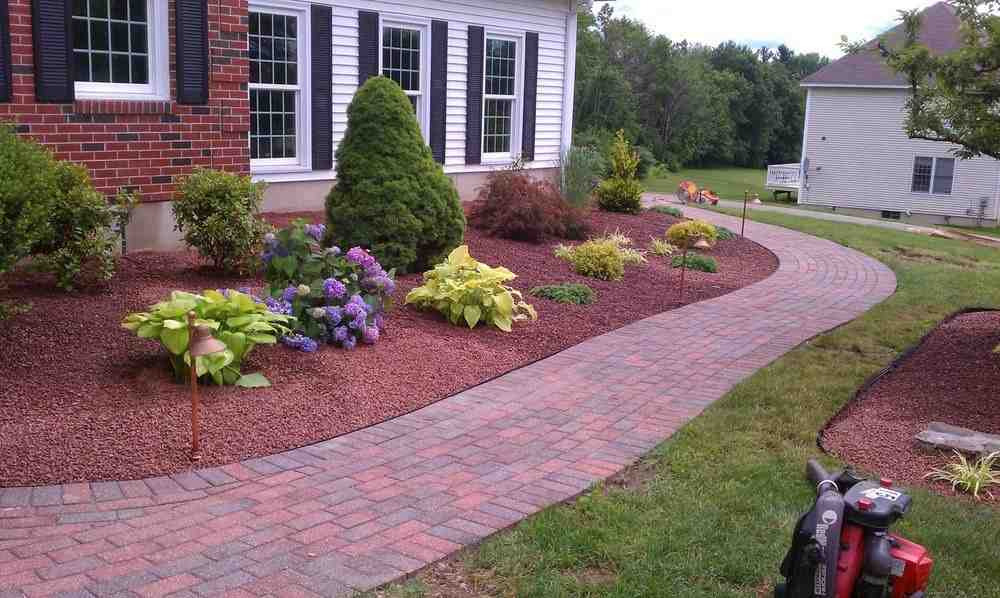
Paver and gravel walkway ideas range from simple DIY stepping stone paths to full hardscaped entries — and the right design can completely transform your home’s curb appeal.
Here are the most popular options at a glance:
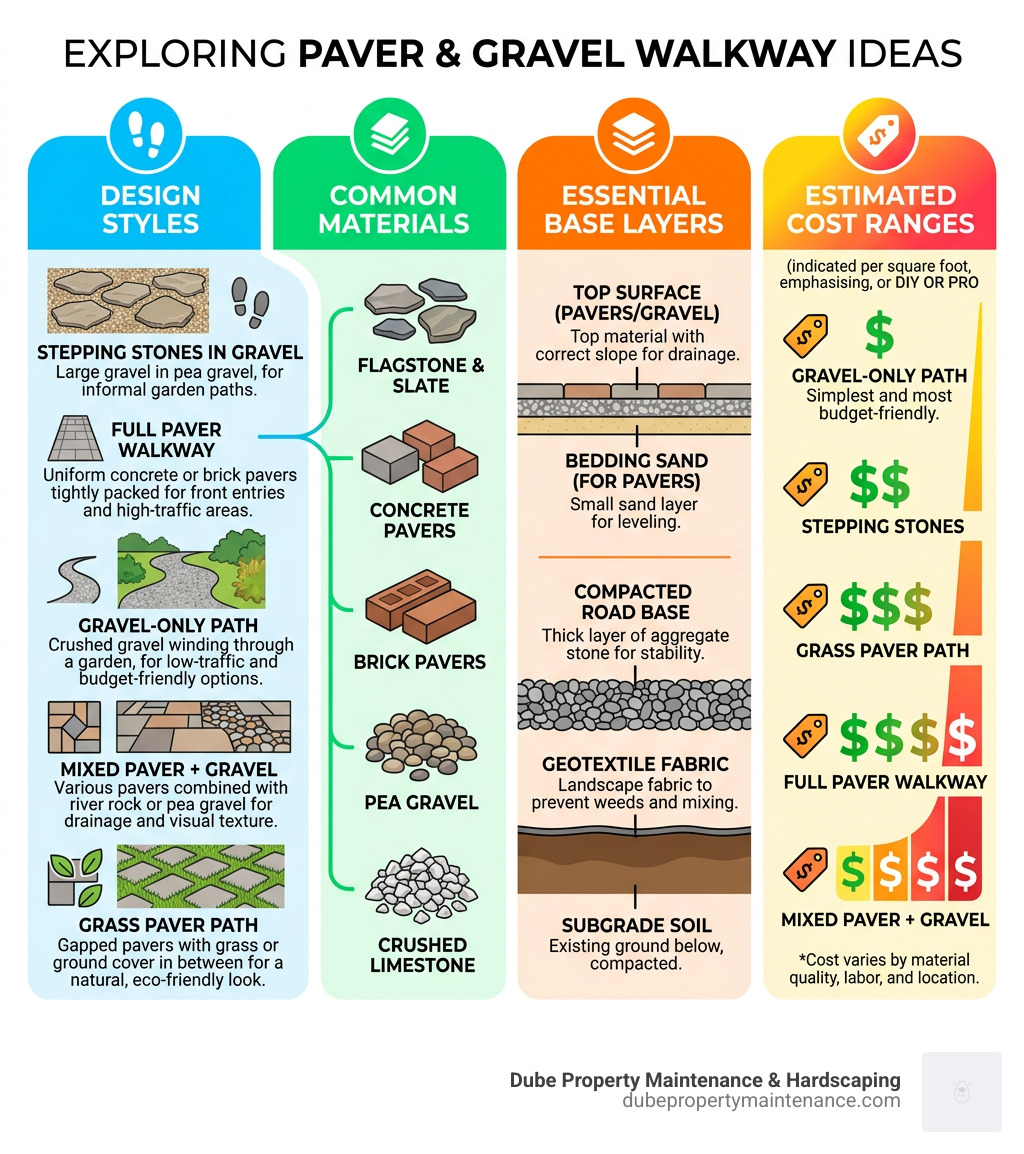
| Style | Best For | Materials |
|---|---|---|
| Stepping stones in gravel | Garden paths, informal areas | Flagstone, concrete, pea gravel |
| Full paver walkway | Front entries, high traffic | Brick, bluestone, porcelain, granite |
| Gravel-only path | Low-traffic, budget-friendly | Crushed limestone, pea gravel |
| Mixed paver + gravel | Drainage, visual texture | Any pavers + river rock or pea gravel |
| Grass paver path | Natural, eco-friendly look | Concrete pavers + turf or ground cover |
A great walkway does three things: guides foot traffic, handles water runoff, and looks good doing it. In New England — where freeze-thaw cycles, spring mud, and heavy rain are just part of life — the materials and base layers you choose matter as much as the design itself.
Whether you’re planning a weekend DIY project or exploring what a professional installation could look like, there’s a style and budget that fits your home.
Paver and gravel walkway ideas basics:
When we think about the perfect New England garden, we often picture stone walls, lush greenery, and paths that look like they’ve been there for a century. Achieving that “timeless” look usually involves playing with texture. One of our favorite paver and gravel walkway ideas is the classic stepping stone path nestled in a bed of pea gravel.
This design offers incredible visual texture. The crunch of the gravel underfoot provides a sensory experience, while the solid pavers offer a stable place to step. It’s a perfect middle ground between a formal paved sidewalk and a rugged woodland trail. For homeowners in Methuen, MA, or North Andover, this style works beautifully because it handles our heavy rainfall by allowing water to drain directly into the ground rather than pooling on top.
We often see inspiration from designers like @kirsten.diane on Instagram, who showcases how organic shapes can soften the lines of a house. By using a gravel and stepping stone walkway, you can create a path that meanders around your favorite flower beds or leads gracefully to a backyard fire pit.
If your home has a more modern or minimalist aesthetic, you might want to lean toward clean lines and high-contrast materials. We love using large-format porcelain pavers for this. Porcelain is incredibly dense and resistant to moisture, making it a champion against the New England freeze-thaw cycle.
Consider these 24×24 paver walkway ideas:
Designers like @ladylandscape on Instagram often use these sharp, geometric patterns to define outdoor “rooms,” turning a simple side yard into a sophisticated architectural feature.
For a more historical or “cottage core” feel, you can’t go wrong with reclaimed brick or natural bluestone. These materials carry a rustic charm that feels right at home in older neighborhoods in Andover or Haverhill.
Using brick walkway patterns pictures as a guide, you can see how a herringbone or basketweave pattern adds instant character. To keep it from feeling too rigid, we often edge the brick with natural river rock or large “creek stones.” This creates a soft transition into the surrounding landscape.
A bluestone stepping stone walkway is another staple of the Northeast. Bluestone is a type of sandstone known for its gorgeous blue-gray hues. When you surround these natural slabs with a fine-textured gravel, you get a path that looks like it was plucked straight from an English cottage garden.

In our region, a walkway is only as good as what’s underneath it. If you’ve ever seen a path that looks like a roller coaster after a few winters, it’s usually because the base wasn’t prepared for the ground shifting. When we install paver stone walkway projects, we focus heavily on drainage and compaction.
Ground preparation is the most labor-intensive part of the job, but it’s the most critical. You need to dig deep enough to accommodate several layers of stone and sand. For a standard garden path, we usually recommend a trench 4 to 6 inches deep. If the area is prone to “mini pools” during the rain, we might even suggest using crushed limestone instead of a standard road base to improve drainage.
Understanding the types of stone for pathways is also key. You want a base that packs down tight but still lets moisture through. Following a professional guide on how to install a paver walkway will save you hours of “re-doing” work down the road.
Not all gravel is created equal! If you plan on walking barefoot or in flip-flops, “pea gravel” (small, rounded stones) is much more comfortable than “crushed stone” (jagged, sharp edges). However, rounded stones tend to shift or “roll” more underfoot. To fix this, many homeowners embed pavers or flagstones into the gravel to provide a solid landing spot for every step.
A flagstone steps and walkway design is excellent for sloped yards. The weight of the large stones helps keep everything in place, while the surrounding gravel handles the runoff. There is significant scientific research on permeable pavement benefits showing that these types of walkways help recharge local groundwater and reduce the burden on storm drains—a win for your yard and the environment!
If you’re tackling this as a DIY project, here are the non-negotiables:
Base Depth Requirements
| Traffic Level | Recommended Base Depth | Best Material |
|---|---|---|
| Foot Traffic (Walkway) | 4 – 6 Inches | Crushed stone or limestone |
| Heavy Use (Driveway) | 8 – 12 Inches | Dense grade or #5 stone |
Budgeting for paver and gravel walkway ideas involves more than just the price of the stones. You have to account for delivery fees, tool rentals (like that plate compactor!), and base materials.
Disclaimer: The following costs are based on general internet data and are not the exact pricing of Dube Property Maintenance & Hardscaping. Actual project costs can vary significantly based on site conditions and material choices.
For a basic DIY stepping stone path, materials might cost around $6 to $15 per stone. A full professional installation for a front entry walkway typically ranges from $1,500 to $15,000+ depending on the square footage and the complexity of the design. Factors that drive up the cost include natural stone materials (like bluestone or granite), intricate patterns like herringbone, and the need for extensive grading or drainage work.
If you’re looking for a more detailed breakdown of what to expect in our local area, our walkway installers burlington ma guide offers great insights into the professional process.
Once your path is in, you want it to stay beautiful. In New England, winter is the biggest challenge.
For comfort, we recommend “pea gravel” (about 3/8-inch) or “1/4-inch minus” crushed stone. Pea gravel is smooth and rounded, making it easy on the feet, while 1/4-inch minus packs down more firmly for a more stable walking surface. Avoid large river rocks (2 inches or larger) for the main walking path, as they are difficult to balance on.
The two-pronged approach is best: first, use a heavy-duty landscape fabric during installation to block weeds from the soil. Second, keep the path clean! Debris like fallen leaves and dirt can break down into organic matter on top of your gravel, providing a perfect bed for weed seeds. A quick raking or blowing once a week goes a long way.
Absolutely. Concrete is an “impermeable” surface, meaning water has to run off the sides. If your yard isn’t graded perfectly, this leads to puddles and icy patches. Paver and gravel walkways are “permeable,” allowing water to soak through the joints or the stone and into the ground. This reduces runoff and is much better for the health of your surrounding plants.
Whether you are dreaming of a modern porcelain path or a rustic brick-and-gravel trail, the right paver and gravel walkway ideas can elevate your home’s outdoor space while solving practical drainage issues. From the initial excavation to the final sweep of polymeric sand, every step counts toward a walkway that will last for decades.
At Dube Property Maintenance & Hardscaping, we’ve spent years perfecting the art of the New England walkway. Based in Methuen, MA, our team provides expert hardscaping services across North Andover, Haverhill, and the surrounding areas. We understand the local soil, the local climate, and exactly what it takes to build a path that stands up to our toughest winters.
Ready to turn your garden path dreams into a reality? Contact us today to discuss your project and see how we can help you build a beautiful, durable entrance to your home.