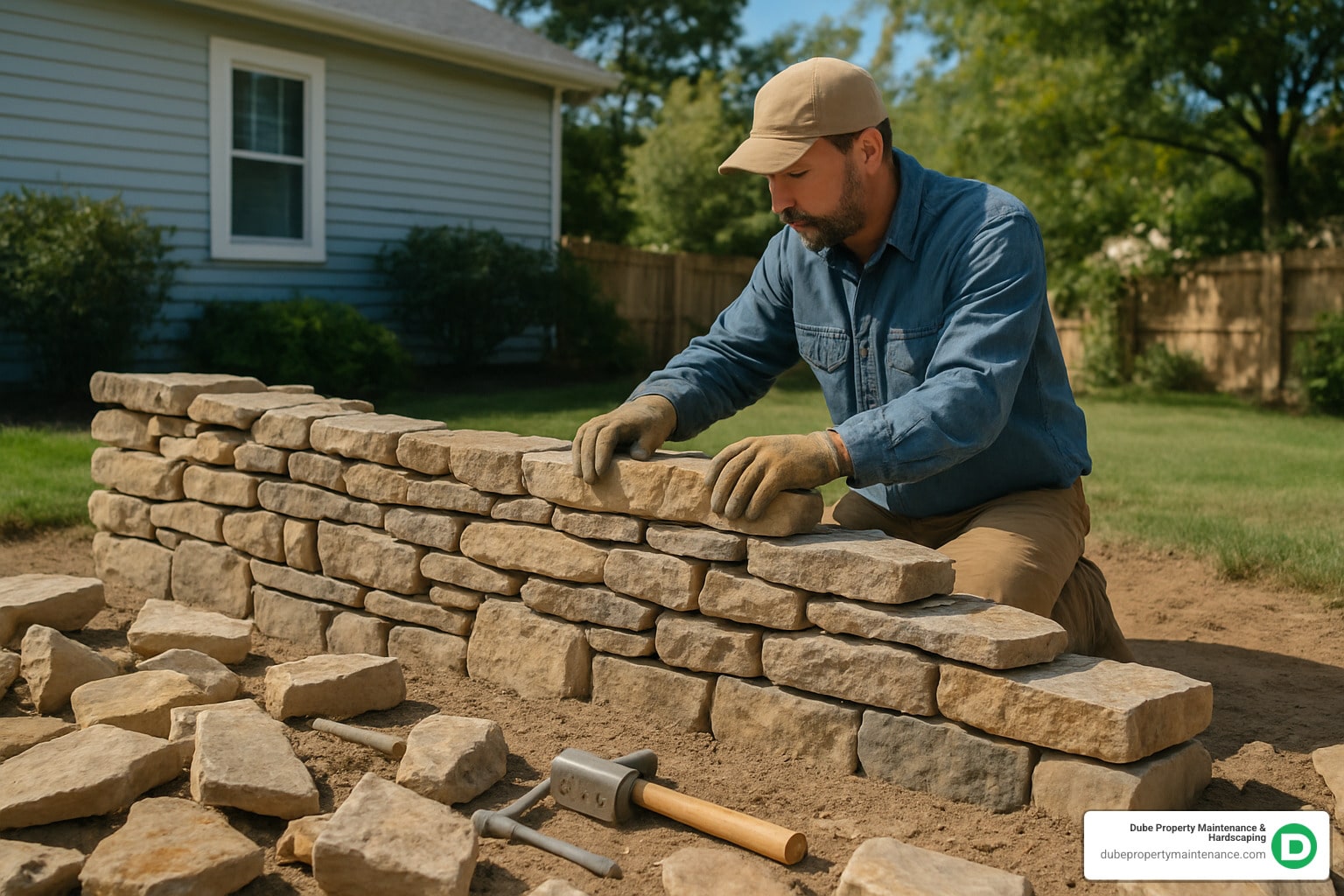

Stone wall builders near me can transform your property with structures that last decades, but choosing the wrong contractor leads to costly repairs and safety hazards.
Quick Answer for Stone Wall Builder Search:
– Certified Builders: Look for DSWA (Dry Stone Walling Association) certification levels
– Average Cost: $25-$150 per square foot (varies by material and complexity)
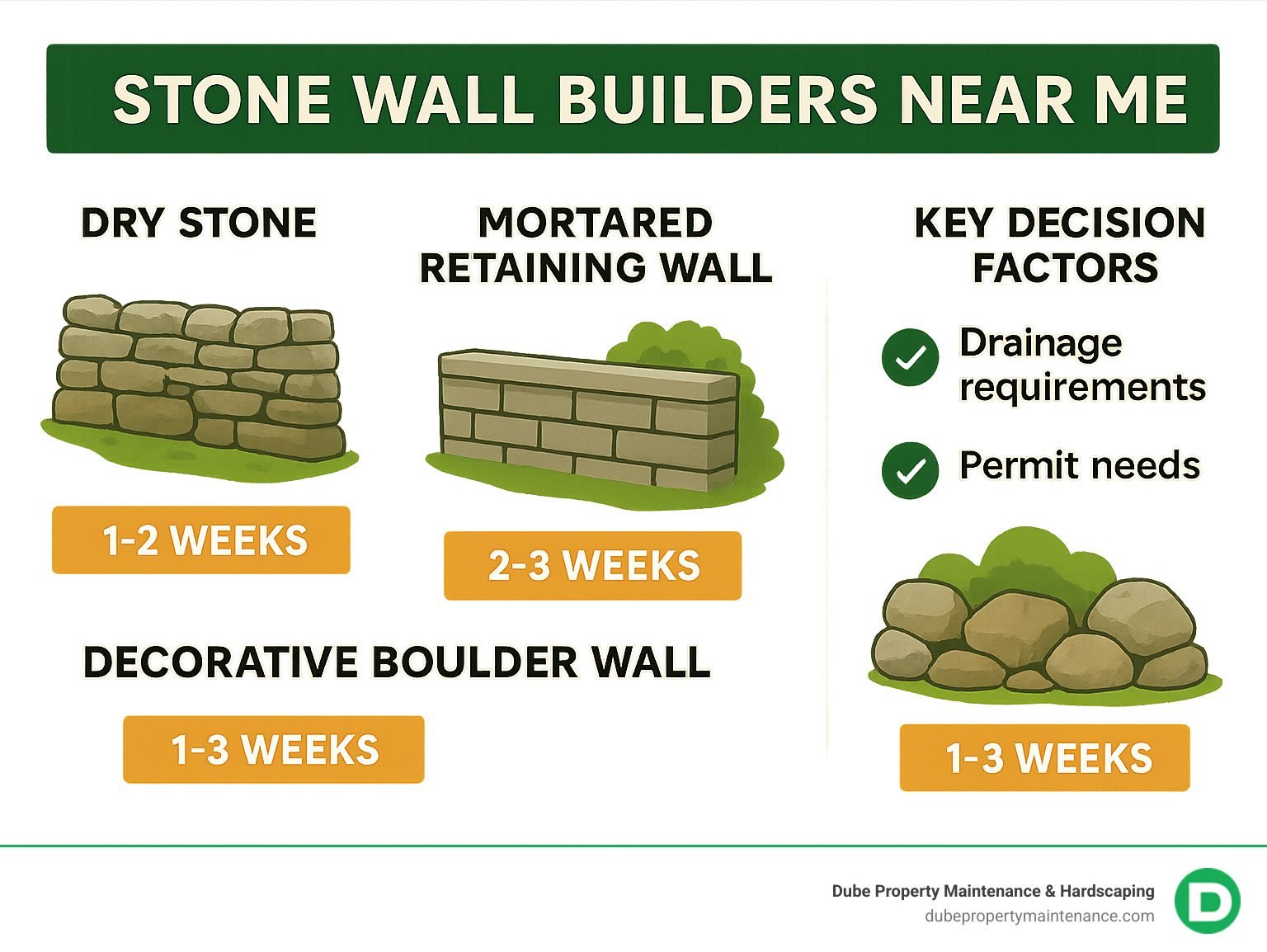
– Timeline: 1-3 weeks for typical residential walls
– Key Qualifications: Licensed, insured, portfolio of local work, references
Stone walls have stood for centuries when built properly. As one master stonemason puts it: “walls built centuries ago still stand because they were built properly the first time by skilled artisans.” But not all contractors understand the engineering behind proper drainage, footing depth, or stone selection.
The difference between a wall that lasts 100 years and one that fails in five often comes down to three factors: proper site preparation, quality materials, and skilled craftsmanship. In New England, where frost heave and soil conditions challenge even experienced builders, these factors become critical.
Whether you need a dry stone boundary wall, mortared retaining structure, or decorative garden feature, the right builder will assess your site conditions, recommend appropriate materials, and deliver work that improves both function and curb appeal.
Stone wall builders near me helpful reading:
– block wall builders near me
– gabion wall builders near me
– garden wall builders near me
When you’re searching for stone wall builders near me, understanding different wall styles helps you communicate your vision clearly and ensures you get exactly what your property needs.
Dry stone walls represent humanity’s oldest building tradition, with examples dating back over 5,000 years. These structures get their strength from careful stone positioning and natural friction rather than mortar. Master craftsmen select each stone individually, fitting them like puzzle pieces that get stronger over time as they settle.
The beauty of dry stone construction lies in its natural drainage. Water flows freely through gaps, preventing freeze-thaw damage that destroys many mortared walls in New England. They’re perfect for property boundaries, garden borders, and anywhere you want that timeless, organic look.
Mortared stone walls use cement-based mortar to create incredibly strong, permanent structures. These walls handle serious pressure, making them ideal for retaining applications and load-bearing situations. When you need maximum strength for steep slopes or heavy loads, mortared construction delivers the engineering power required.
The trade-off? Reduced drainage means your builder must install proper foundation work and drainage systems. Skip this step, and even beautiful mortared walls can fail within a few seasons.
Retaining walls deserve special attention because they hold back tons of soil and prevent erosion. Whether built with natural stone, engineered blocks, or massive boulders, these walls need proper drainage systems and engineered footings to succeed long-term.
A properly built retaining wall can last 50 to 100 years, but a poorly constructed one might fail in just a few seasons. The difference often comes down to foundation work and drainage systems hidden behind the stone face.
Decorative boulder walls create dramatic landscape features using stones that can weigh several tons each. These walls work beautifully for erosion control on steep slopes while providing that rugged, natural appearance that complements New England’s woodland settings.
Gabion walls offer wire mesh cages filled with stones that provide excellent drainage while creating interesting modern textures. They’re more affordable than traditional stone construction and surprisingly eco-friendly, often using recycled materials.
Stone pillars and columns serve as stunning entrance features, mailbox supports, or standalone decorative elements. Building them requires precise construction techniques, often combining both dry-laid and mortared methods for maximum stability.
When choosing materials, regional stone varieties make a huge difference in both appearance and cost. Granite from nearby quarries offers incredible durability in various colors. Fieldstone provides classic New England character, often sourced from property clearing projects. Limestone works beautifully for formal applications. Sandstone offers warm colors but requires careful selection to handle harsh freeze-thaw cycles.
More info about Stone Wall services

The difference between a stone wall that becomes a cherished landscape feature and one that becomes an expensive headache often comes down to matching materials and design to your specific site conditions.
Aesthetics should work harmoniously with your home’s architecture and existing landscape. A formal limestone wall might look stunning against a colonial home but feel out of place next to a rustic farmhouse. Consider how your chosen stone will weather over time – some develop attractive patina that adds character.
Soil conditions determine everything about your wall’s foundation requirements and drainage needs. Clay soils retain water and expand when frozen, creating tremendous pressure that can destroy even well-built walls. Sandy soils drain beautifully but may not provide adequate bearing capacity for heavy stone structures. Professional stone wall builders near me always test soil conditions before recommending wall types and foundation depths.
Drainage considerations become absolutely critical for any wall over 2 feet high. Water buildup behind walls creates hydrostatic pressure that can cause catastrophic failure. Proper drainage systems include geotextile fabric to prevent soil migration, crushed stone backfill for water movement, perforated drain pipes at the base, and weep holes in mortared walls.
Slope stability affects both wall design and construction methods. Gentle slopes may only require gravity walls that rely on their own weight for stability. Steep grades demand reinforced structures with deep footings and engineered drainage systems. Any wall over 4 feet typically requires structural plans and building permits.
Looking for stone wall builders near me can feel overwhelming, but a few quick checks narrow the field to true professionals.
Certifications tell the story. The Dry Stone Walling Association of Great Britain (and its North-American partner, The Stone Trust) offers four skill levels. While certificates aren’t mandatory, anyone who has earned one has proved they understand proper techniques.
Insurance and licensing are non-negotiable. Ask for proof of general liability coverage (minimum $1 million), workers’ compensation and a valid business license for your town.
Portfolios and references seal the deal. Look at projects similar to yours, then call at least two recent clients. A quick conversation about timelines, problem-solving and post-project performance tells you more than a slideshow ever will.
Price alone never tells the whole story. Make sure each bid lists:
Avoid contractors who demand large upfront payments or rush you to sign. Reliable stone wall builders near me stay busy because their work speaks for itself.
More info about Masonry Services
Planning your stone wall project means understanding both the construction timeline and financial investment involved. Most homeowners are surprised by how much preparation happens before the first stone gets placed.
Site preparation kicks off every project and usually takes one to two days. Your contractor will call utility companies to mark underground lines, then dig out the foundation area. Good builders also test the soil during this phase – clay soils that expand when wet require different foundation approaches than sandy, well-draining soils.
The foundation installation phase takes another one to three days depending on your wall’s size and complexity. This is where corners get cut by inexperienced builders, but it’s absolutely critical for long-term success. The excavation typically goes 6 to 18 inches below the frost line, followed by a crushed stone base that gets mechanically compacted. Mortared walls need concrete footings, while all walls benefit from perforated drain pipes installed at this stage.
Stone placement represents the most labor-intensive part of your project. Skilled masons can install 10 to 20 square feet per day for dry stone walls, or 15 to 25 square feet daily for mortared construction. Complex designs, difficult site access, or premium materials slow this pace considerably.
Cleanup and final details wrap up the project with backfilling, grading around the completed wall, and restoring any disturbed landscaping. Professional contractors include this in their base price rather than treating it as an expensive add-on.
Permit requirements vary significantly by location but generally apply to retaining walls over four feet high, walls within property setbacks, or structures that affect natural drainage patterns. Your contractor should handle permit applications and inspections as part of their service.
Understanding costs helps you budget realistically and compare quotes effectively. Based on industry research, expect these ranges for different wall types (note: these are average costs based on internet research and not actual costs for Dube Property Maintenance & Hardscaping):
Dry stone walls typically cost $25 to $75 per square foot, making them the most affordable option for property boundaries and garden features. Mortared stone walls range from $35 to $100 per square foot due to additional materials and foundation requirements. Retaining walls command $40 to $150 per square foot because they require engineered drainage systems and deeper foundations. Premium natural stone projects can reach $75 to $225 per square foot when using rare materials or complex designs.
| Wall Type | Material Cost | Labor Cost | Total Range |
|---|---|---|---|
| Dry Stone | $15-30/sq ft | $20-45/sq ft | $35-75/sq ft |
| Mortared Stone | $20-40/sq ft | $25-60/sq ft | $45-100/sq ft |
| Retaining (Engineered) | $25-50/sq ft | $30-100/sq ft | $55-150/sq ft |

Knowing what happens during each construction phase helps you monitor progress and catch potential problems before they become expensive fixes.
Survey and planning establishes your project’s foundation. Professional contractors verify property lines, call utility location services, and analyze how water currently flows across your site. They also plan equipment access routes, which becomes crucial when 20-ton stone deliveries arrive.
Excavation creates the foundation area through careful topsoil removal and stockpiling for later restoration. The excavation depth varies by wall type and local frost line requirements, but proper soil compaction and grade verification ensure your wall starts on solid ground.
Base layer installation provides the critical foundation that amateur builders often skimp on. This involves placing 6 to 12 inches of crushed stone, compacting it in three-inch lifts, and installing geotextile fabric to prevent soil migration. Getting this step right prevents most future wall failures.
Stone placement showcases skilled craftsmanship as masons select each stone for its optimal position. The first course must be perfectly level and aligned, with proper joint spacing and pattern development maintained throughout construction.
Backfill and drainage ensure your wall’s long-term stability through proper water management. This includes placing minimum 12 inches of crushed stone backfill behind the wall, installing perforated drain pipes, and using filter fabric to prevent soil from clogging the drainage system.
Capstone installation completes the structure with carefully selected top stones that resist weather damage. Whether mortared or dry-fit, this final course requires attention to alignment and appearance details that define the finished project’s quality.
Final inspection verifies structural integrity, tests drainage system function, and includes complete site cleanup and restoration. Quality contractors provide warranty documentation and maintenance instructions during this final walkthrough.
More info about Building a Retaining Wall
There’s something deeply satisfying about building something that will outlast you. Stone wall builders near me who understand traditional techniques create structures that can stand for 50 to 100 years or more, making stone walls one of the smartest landscape investments you can make.
The secret to this incredible longevity? It’s not just about stacking stones – it’s about understanding how water, frost, and time interact with your wall. Dry stone walls built using traditional methods regularly last 75 to 150+ years with basic maintenance. Some walls in New England date back to the 1700s and still define property boundaries today.
Mortared stone walls typically provide 50 to 100 years of service, though this depends heavily on mortar quality and drainage design. Engineered retaining walls fall somewhere in between at 50 to 75 years, assuming proper drainage installation.
As one master mason told us: “Water is the enemy of all masonry work. Control the water, and your wall will outlast your great-grandchildren.”
Seasonal inspection keeps small problems from becoming expensive repairs. Spring inspections reveal frost damage, loose stones, or drainage issues that developed over winter. Fall checkups focus on clearing debris from drainage areas and inspecting mortar joints before harsh weather arrives.
Most homeowners can handle basic maintenance themselves. Look for cracked or crumbling mortar joints, loose stones, water stains, or vegetation growing between stones. These signs indicate it’s time for professional attention.
Repointing – replacing deteriorated mortar – represents the most common maintenance need for mortared walls. Professional repointing averages $5 to $15 per square foot (note: these are average costs based on internet research and not actual costs for Dube Property Maintenance & Hardscaping), but it extends wall life by decades.
The question of sealing stone divides even experienced masons. Some recommend sealing sandstone or limestone in harsh climates, while traditionalists prefer letting stone “breathe” naturally. Your local conditions and stone type should guide this decision.
Today’s environmentally conscious homeowners increasingly choose eco-friendly options that reduce environmental impact while maintaining traditional beauty.
Native stone reuse makes perfect sense in New England, where centuries-old fieldstone walls crisscross the landscape. Many properties contain enough reclaimed stone for new projects, reducing costs while preserving local character.
Permeable gabion systems offer a modern twist on ancient techniques. These wire cages filled with local stone allow water infiltration while controlling erosion. They also create habitat for beneficial insects and small wildlife – your wall becomes part of the ecosystem rather than a barrier to it.
Low-carbon mortar alternatives include natural hydraulic lime mortars (the traditional European choice), recycled content mortars, and locally sourced sand and aggregate to reduce transportation impacts. These options often perform better than modern cement mortars in freeze-thaw cycles.
Sustainable construction practices extend beyond materials to include minimizing site disturbance, reusing excavated soil for other landscape areas, selecting locally quarried stone, and incorporating native plant installations around completed walls.
The best part about choosing sustainable options? They often improve wall performance while reducing environmental impact. Traditional lime mortars, for example, remain more flexible than cement mortars, reducing crack formation during freeze-thaw cycles.
More info about Retaining Walls

Look for at least 5 – 10 years of local experience, DSWA certification or equivalent training, plus active liability and workers’ comp insurance. A strong portfolio and recent references matter more than flashy marketing.
Prices swing widely with height, access and stone choice. Based on internet research (not Dube’s actual pricing), expect:
Complex designs or imported stone can push costs to $75 – 225 per sq ft—about triple the low-end average.
Most towns require a permit for retaining walls over 4 ft tall, anything in a setback, or projects that alter drainage. Decorative garden walls under 3 ft often escape permitting, but always confirm with your building department. Experienced contractors handle the paperwork so you don’t have to.
Finding qualified stone wall builders near me requires careful research, but the investment pays dividends in durability, beauty, and property value. The best builders combine traditional craftsmanship with modern engineering principles, creating structures that improve your landscape for generations.
Your stone wall project deserves more than just someone who can stack rocks. It needs one-stop outdoor experts who understand how walls integrate with your entire landscape vision. From proper drainage that prevents frost damage to stone selection that complements your home’s architecture, every detail matters when you’re investing in a structure designed to last decades.
At Dube Property Maintenance & Hardscaping, we’ve seen too many walls fail because contractors skipped the foundation work or ignored drainage requirements. That’s why we approach each project with the same commitment to quality – whether you need a simple dry stone garden border, an engineered retaining wall system, or restoration of historic stonework.
We’re not just contractors stacking stones. We’re outdoor specialists who serve communities throughout Massachusetts and New Hampshire, bringing decades of combined expertise to every project. Our comprehensive approach includes project consultation covering site evaluation, permit assistance, material sourcing, construction, and ongoing maintenance support.
The difference between a wall that lasts decades and one that fails prematurely often comes down to three things: proper planning, quality materials, and skilled installation. We never cut corners on foundation work, drainage systems, or construction techniques because we know you’re investing in long-term results, not just immediate curb appeal.
Ready to transform your outdoor spaces with professional stone wall construction? We offer free consultations where we’ll assess your site conditions, discuss design possibilities, and provide detailed project estimates. Our team will help you steer material choices, permit requirements, and timeline expectations so you can make informed decisions about your landscape investment.
Request an estimate today and find how the right stone wall can improve both the beauty and functionality of your property. From initial concept through final cleanup, we’re committed to delivering exceptional results that exceed your expectations.
More info about our stone wall services