
A stone driveway is not just a functional feature; it significantly enhances the curb appeal of your home. The visual impact it makes can set the tone for visitors and significantly boost your property value.
Quick Answers:
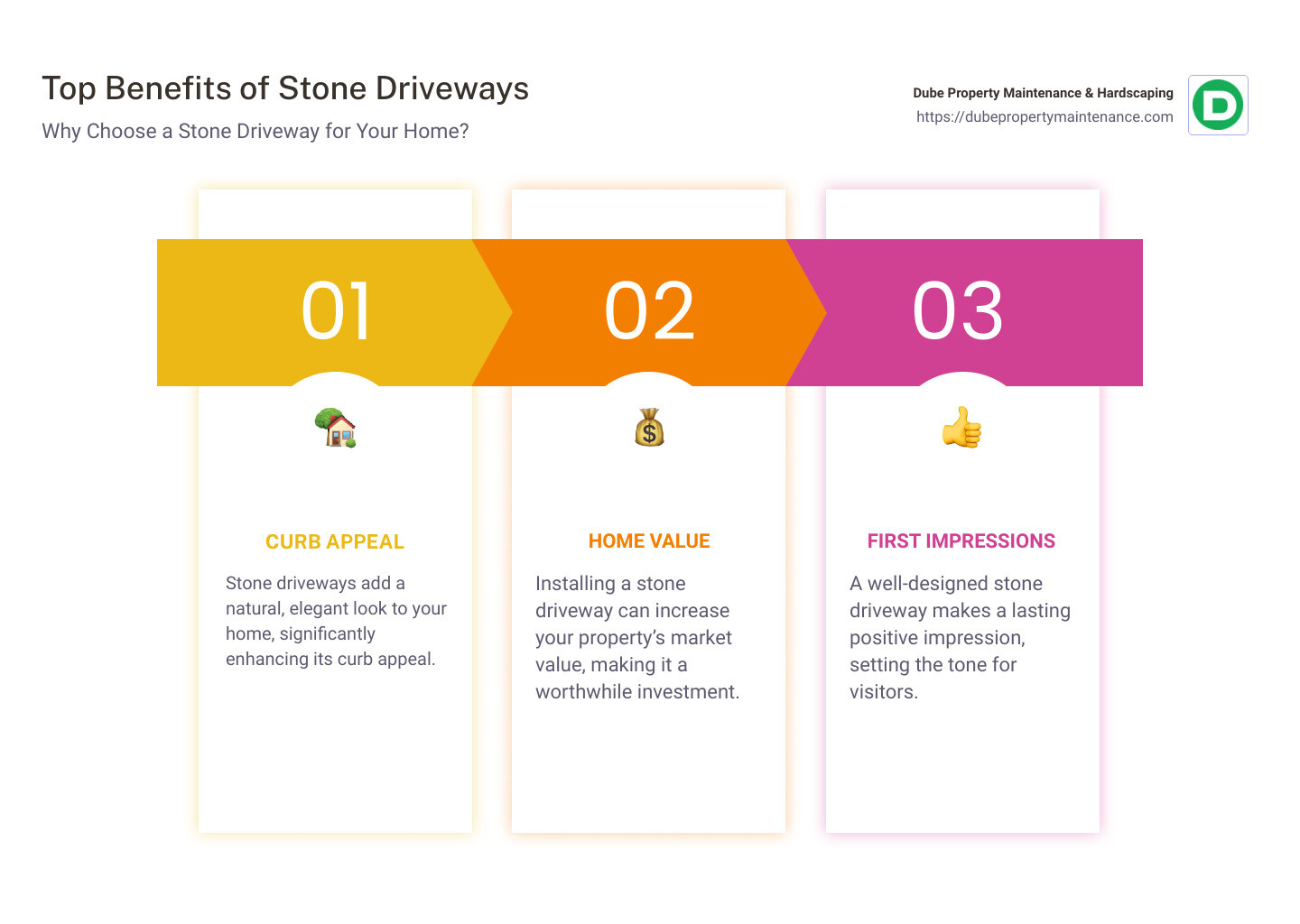
– Curb Appeal: Stone driveways add a natural, elegant look to your home.
– Home Value: Installing a stone driveway can increase your property’s market value.
– First Impressions: A well-designed stone driveway makes a lasting positive impression.
A beautifully crafted stone driveway stands out with its timeless appeal, instantly elevating the look of your home’s exterior. Whether you opt for gravel, cobblestone, or crushed rock, the myriad design possibilities allow for personalization that can match your style.
Investing in a stone driveway is about more than just aesthetics. It’s a practical choice that offers durability and low maintenance, making it a sound investment for any homeowner. By focusing on both form and function, you create an inviting entrance that welcomes guests and adds value over time.
A stone driveway can be a fantastic addition to your home. Let’s dive into the key aspects: the types of stone available, the installation process, and how to maintain your driveway.
When choosing a stone driveway, you have a few popular options:
Gravel: Gravel is made up of small, loose stones. It’s affordable and easy to install. However, it requires regular maintenance to keep it looking good.
Cobblestone: Cobblestones are large, rounded stones that create a classic, timeless look. They are durable but can be more expensive and time-consuming to install.
Crushed Rock: Crushed rock, like crushed bluestone, provides a stable and smooth driving surface. It locks together well, making it a practical choice for driveways.
Proper installation is crucial for a long-lasting stone driveway. Here are the steps involved:
Excavation: Begin by digging out the area where the driveway will be. Remove about 4-6 inches of topsoil. Make sure the ground is strong enough to support the driveway.
Grading: Grade the area to ensure water drains away from any structures. A slope of 1/4 inch per linear foot is ideal.
Compaction: Compact the soil using a tamper to create a firm base. If necessary, add fill material like sand or crushed concrete for extra stability.
Sub-Base Layer: Spread a 4-6 inch layer of 3-5 inch stones as your sub-base. Rake it smooth and compact it multiple times until it compresses to about 3 inches deep.
Top Layer: Add a 2-3 inch layer of 1-inch crushed stone or gravel. Compact it to create a smooth driving surface.
Edge Restraints: Install borders like plastic curbing or treated wood to keep the gravel contained.

Keeping your stone driveway in good condition requires regular maintenance:
Weeding: Use landscape fabric to prevent weeds from growing through the stones. Regularly check for and remove any weeds that do appear.
Raking: Use a heavy-duty rake to level the gravel and remove debris. This helps maintain a smooth surface.
Topping Off: Over time, the gravel may settle or spread. Add more gravel as needed to fill in any low spots or ruts.
Dust Control: Spray magnesium chloride dust control aggregate to minimize dust. Occasionally hosing down the driveway can also help settle the dust.
Snow Management: In snowy conditions, allow about an inch of snow to accumulate for traction. Avoid using snowplows, which can displace gravel and create potholes.
By following these steps and tips, you’ll ensure your stone driveway remains an attractive and functional part of your home for years to come.
When budgeting for a stone driveway, initial costs can vary widely based on the type of stone you choose. Gravel is the most budget-friendly option, ranging from $1 to $4 per square foot. On the other hand, cobblestones and stone pavers are more expensive, costing between $15 to $70 per square foot.
While cobblestones and stone pavers have a higher upfront cost, they are a long-term investment. Cobblestones, for instance, can last for centuries, making them a sustainable and durable option. Stone driveways also tend to increase a home’s resale value, adding a classic and grand appeal that many buyers find attractive.
When considering other materials, weigh the pros and cons of each:
Stone driveways provide a unique blend of aesthetics, durability, and low maintenance. Gravel and crushed stone driveways offer a natural look and excellent permeability, reducing the risk of flooding. Stone pavers and cobblestones, although more costly, offer exceptional durability and can significantly boost curb appeal.
A well-maintained stone driveway can last for decades. Cobblestones and stone pavers are particularly durable, often outlasting other materials like asphalt and concrete. While gravel driveways may require more frequent maintenance, such as regrading and topping off, their low initial cost and ease of installation make them an attractive option.
Investing in a stone driveway is not just about immediate curb appeal. It’s about long-term value. Stone driveways require minimal upkeep compared to asphalt and concrete, which can crack and degrade over time. This makes stone driveways a cost-effective choice in the long run.
By carefully considering your budget, desired aesthetic, and long-term goals, you can choose the perfect stone driveway that not only elevates your home’s curb appeal but also proves to be a wise investment.
A stone driveway can be a stunning feature that adds elegance and charm to your home’s exterior. Let’s explore some popular layouts and how you can enhance your driveway with landscaping.
When it comes to designing your stone driveway, the layout is crucial. Here are some popular patterns and customization ideas:
Landscaping can elevate the aesthetic appeal of your stone driveway. Here are some ideas:
By combining different layouts and landscaping elements, you can create a stone driveway that is both functional and visually appealing.
Natural Look: Stone driveways offer a timeless and elegant appearance that blends seamlessly with natural surroundings. The variety of stone types, textures, and colors means you can achieve a unique look that complements your home.
Permeability: Unlike asphalt or concrete, stone driveways can be permeable, allowing rainwater to seep through and replenish groundwater. This reduces runoff and helps prevent erosion.
Customization: With stone, you have endless design possibilities. You can mix different types of stones, create intricate patterns, or add borders that match your landscape. This level of customization is hard to achieve with other materials.
Functionality: Stone driveways are not just about looks. They are also highly functional. Properly installed stone driveways provide a stable surface for vehicles and can handle heavy loads without cracking.
Cost: One of the main drawbacks of stone driveways is the initial cost. Natural stone pavers are among the most expensive driveway materials. The high cost isn’t just for the materials; labor for installation and ongoing maintenance can also be pricey.
Maintenance: Stone driveways require regular upkeep. Natural stone pavers need resealing every few years, and gravel or loose stones need to be raked and topped off frequently. Dust control and weeding are also ongoing tasks.
Erosion: Gravel and loose stone driveways are susceptible to erosion. Heavy rain can wash away stones, creating bare spots and ruts that need to be refilled and leveled.
Weather Impact: Stone driveways can be affected by extreme weather. Freeze-thaw cycles can cause natural stone to crack, and gravel can become muddy or dusty, depending on the season.
By weighing these pros and cons, you can decide if a stone driveway is the right choice for your home. Next, we’ll address some frequently asked questions to help you make an informed decision.
The time it takes to install a stone driveway depends on the type of stone and the complexity of the design. Generally, it can take anywhere from a few days to a couple of weeks.
When it comes to durability, not all stones are created equal. Here are some of the best options:
Maintaining a stone driveway involves regular upkeep to ensure it remains functional and attractive. Here are some tips:
By following these tips, you can ensure your stone driveway remains durable and visually appealing for years to come.
Next, let’s delve into some design ideas to elevate your home’s curb appeal.
Choosing a stone driveway offers numerous long-term benefits that make it a worthy investment for any homeowner. Here’s why:
At Dube Property Maintenance & Hardscaping, we specialize in creating beautiful, durable stone driveways that elevate your home’s curb appeal. Our team of experts will work with you to design and install a driveway that meets your needs and complements your property.
We take pride in our attention to detail and commitment to customer satisfaction. From the initial consultation to the final installation, we ensure every step is done with precision and care.
Ready to transform your driveway? Contact us today for a free estimate and let us help you create a stunning stone driveway that will last for years to come.
