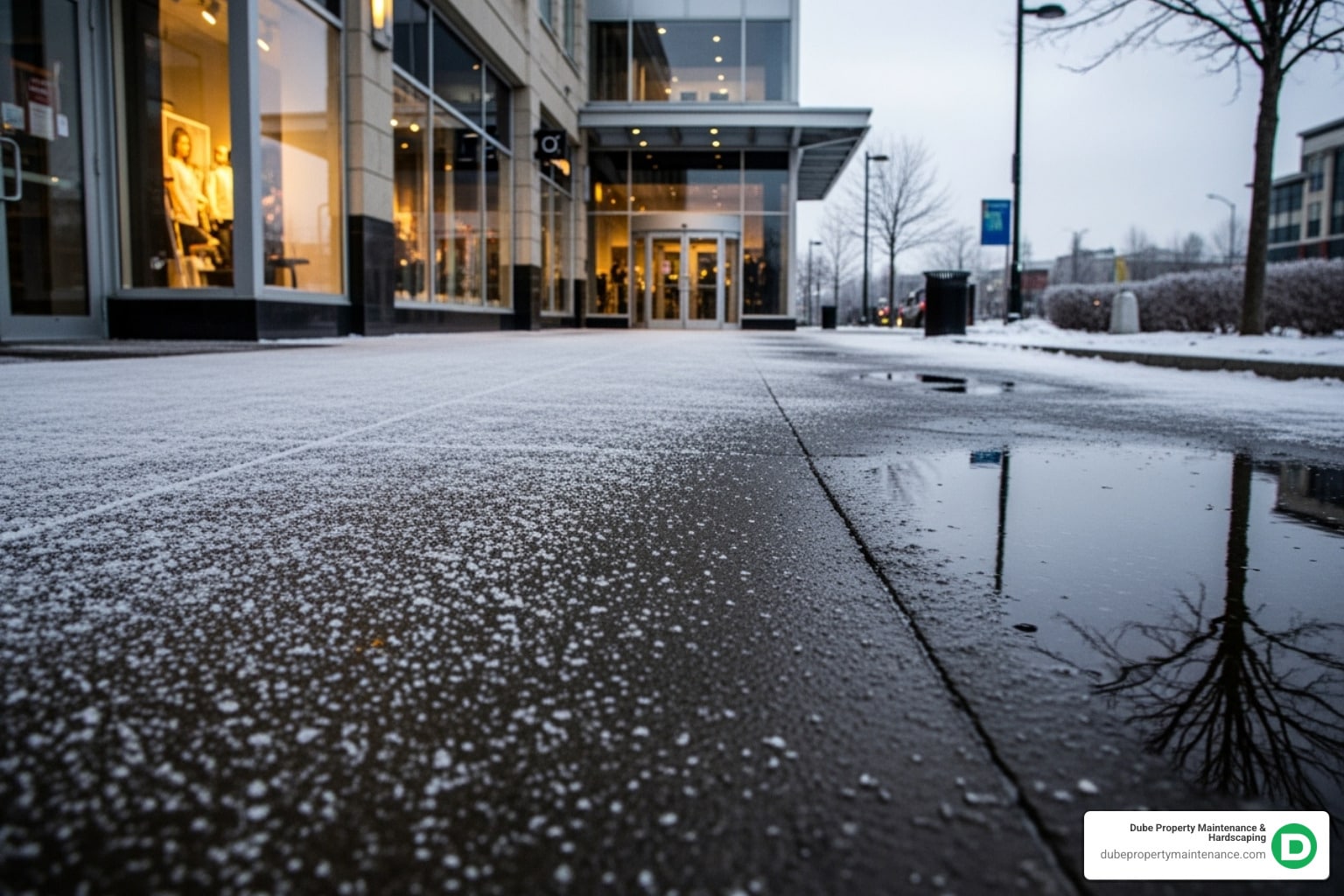

A snow salting service is a professional solution that applies de-icing agents to prevent ice formation and melt existing snow and ice on walkways, driveways, and parking lots. Here’s what you need to know:
Key Components of Snow Salting Services:
In Massachusetts and New Hampshire, professional ice management can be the difference between a safe property and a liability nightmare. As one industry expert noted, “Snow removal crews may not be able to start removing snow on residential streets for 24 to 36 hours after it stops, depending on snow amount” – making proactive salting even more critical.
Professional snow salting involves strategic weather monitoring, material selection, and precise timing. Understanding how these services work helps business owners and homeowners protect their properties and ensure safety.
For commercial properties, the stakes are high. Many municipalities require clearing sidewalks within 12 hours of snowfall (for 2 cm or less), and non-compliance can lead to serious legal and financial consequences.

Winter brings hazardous conditions for property owners. Investing in a professional snow salting service is critical for safety, legal compliance, and business operations. With over two decades of combined experience, our team is dedicated to keeping your property safe and accessible, no matter the weather.
A key reason to hire a professional snow salting service is to mitigate legal risks. In Massachusetts and New Hampshire, premises liability laws hold property owners responsible for injuries caused by unsafe conditions, such as slips and falls on ice.
Slip-and-fall lawsuits are costly and can damage your reputation. Local ordinances often require property owners to clear sidewalks quickly (e.g., within 12 hours for 2 cm of snow). Non-compliance can result in fines and weaken your defense in a lawsuit.
A reliable snow salting service provides protection through documented service visits. Using GPS tracking and mobile apps, they record the date, time, and location of each service. This documentation serves as proof of maintenance, significantly reduces your litigation risk and demonstrates compliance with Minimum Maintenance Standards. Understanding your snow removal contracts is key to protecting your business.
Beyond legalities, professional salting is about safety. Slippery surfaces are a top cause of winter injuries. A professional snow salting service prevents ice formation and melts existing hazards, creating safe walkways, parking lots, and entrances for employees, customers, and visitors.

For businesses, safety ensures business continuity. Ice and snow can force closures, leading to lost sales and productivity. Inaccessible entrances or parking lots demonstrate how crucial effective ice management is for keeping operations running.
Professional services offer 24/7 availability and emergency response. Unlike municipal plowing, which can be delayed, a dedicated commercial service responds within hours. This ensures your business remains accessible, protecting your bottom line and reputation.
While vital for safety, de-icing salts have environmental impacts. Improperly used rock salt (sodium chloride) can create runoff that harms local waterways and vegetation.
Salt can also corrode concrete, asphalt, and metal, leading to costly repairs. Using proper application rates (10-40g per square meter) and the right materials is essential to ensure effectiveness without causing damage.
A professional snow salting service understands these factors. Trained technicians apply various de-icing agents correctly, including pet-friendly and less corrosive options. We are committed to eco-friendly snow management, balancing safety with environmental responsibility.
A comprehensive snow salting service is more than just spreading salt; it’s a planned approach to ice management. It’s designed to keep your property safe and functional by proactively preventing hazards and reacting swiftly to storms. Our goal is a stress-free winter with clear, safe surfaces.
A robust snow salting service package includes specialized applications custom to your property and the weather. It’s a strategic toolkit for ice:
Our services cover every crucial corner of your property, from expert parking lot snow removal to precise commercial sidewalk snow plowing. We ensure every inch is addressed with care and precision.
While everyone appreciates a safer property, certain organizations need a professional snow salting service to ensure smooth operations, safety, and liability management.

A professional snow salting service is a strategic game against winter weather. Top providers anticipate storms and execute with precision, which separates them from amateurs.
Effective ice management depends on timing and technique. Professionals constantly monitor incoming weather patterns.
This precision is vital. Too little salt is ineffective; too much wastes money and damages property and the environment. For more details about the equipment that makes this precision possible, check out our guide on commercial snow removal equipment: what you need to know.
Choosing the right de-icing material is critical for safety. Here are the options in a professional’s arsenal:
| Material | Primary Chemical | Effective Temperature Range | Pros | Cons |
|---|---|---|---|---|
| Sodium Chloride | NaCl | Down to 15-20°F | Most common, cost-effective, widely available | Corrosive to concrete/metal, harmful to plants/pets in high concentrations, less effective at very low temperatures |
| Calcium Chloride | CaCl2 | Down to -25°F | Melts faster, effective at much lower temperatures, absorbs moisture (less dust) | More expensive than rock salt, can be slippery if over-applied, corrosive to metals |
| Magnesium Chloride | MgCl2 | Down to -10°F | Less corrosive than NaCl, better for plants/pets, effective at lower temperatures than rock salt | More expensive than rock salt, can leave a residue, less effective at extremely low temperatures than Calcium Chloride |
| Liquid De-icers | Brine blends | Varies by blend | Fast-acting, even coverage, ideal for anti-icing, less material waste, environmentally friendly blends available | Requires specialized equipment, not ideal for heavy snow/ice accumulation, can refreeze if not applied correctly |
| Eco-friendly Alternatives | Various | Varies by blend | Safer for pets, plants, and concrete; often biodegradable | More expensive, may be less effective at very low temperatures, can be harder to find |
| Sand for Traction | Silica | Any temperature | Provides immediate grip, non-chemical, inexpensive | Does not melt ice, messy, can clog drains, needs to be cleaned up, can be tracked indoors |
The choice of material depends on temperature, property type, environmental concerns, and budget. A professional snow salting service will evaluate these factors to recommend the best approach for your property.
Choosing the right snow salting service is a crucial decision for your property’s safety and your budget. Understanding cost factors and contractor qualifications will help you make an informed choice.
The cost of a professional snow salting service is influenced by several variables:
Pricing Disclaimer: The following are average costs based on general internet data and are not actual costs for Dube Property Maintenance & Hardscaping. Prices can vary significantly based on your specific location, property needs, and the contractor you choose.
Based on industry averages, a single visit can range from $75 to over $300, depending on the area’s size and complexity. Full-season packages often offer better value for guaranteed service.
When hiring a snow salting service, look for these key qualifications:
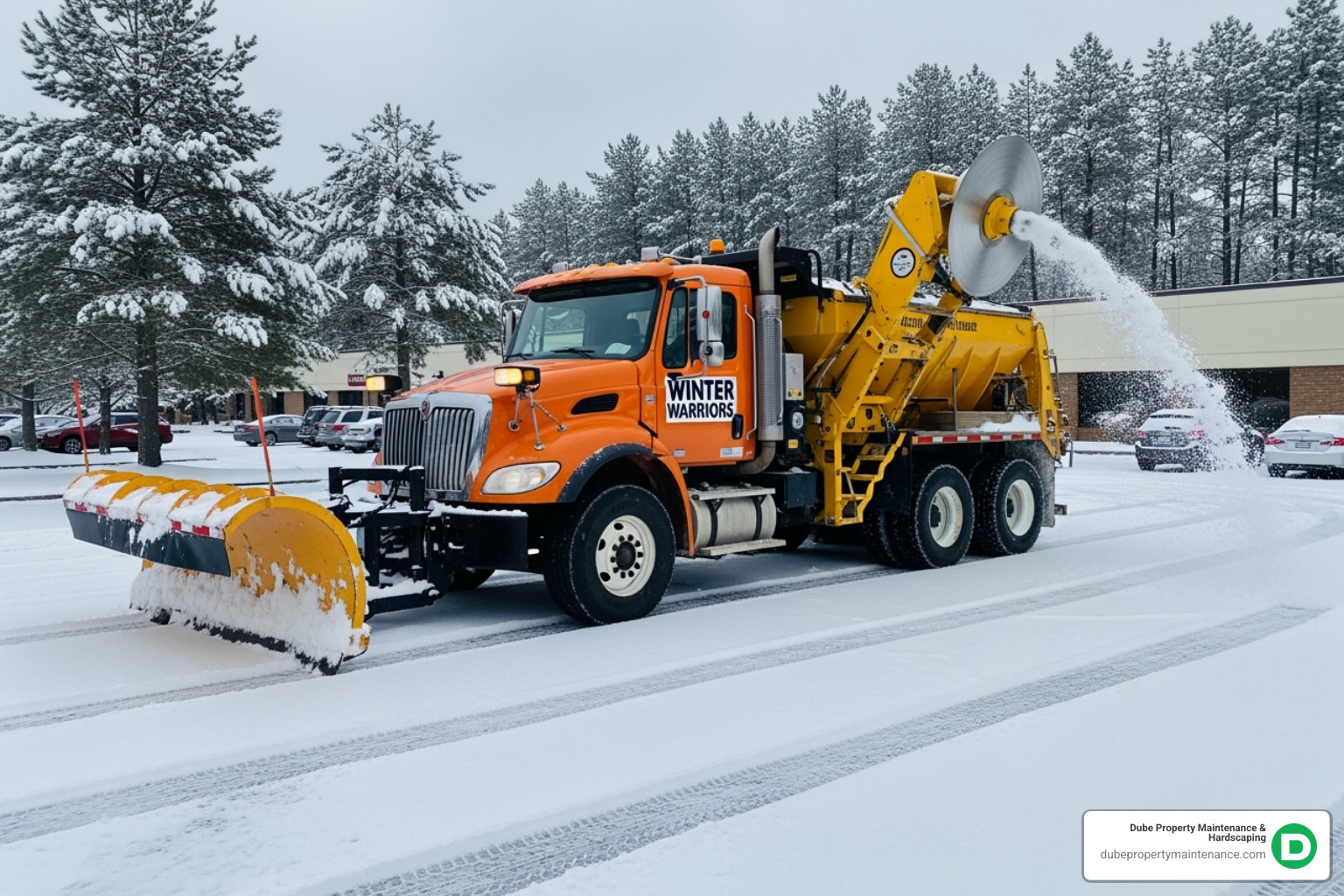
Choosing a professional like Dube Property Maintenance & Hardscaping means partnering with a dedicated team with the expertise and equipment to keep your property safe all winter.
It’s natural to have questions about keeping your property safe in winter. Here are common questions about snow salting service and our expert answers.
Yes, traditional rock salt (sodium chloride) can damage concrete and landscaping if used improperly. For concrete, the freeze-thaw cycles accelerated by salt can cause surface damage like pitting or spalling. For landscaping, excess salt in the soil can dehydrate plant roots, causing “salt burn” and browning.
A professional snow salting service mitigates these risks. We use proper application rates (10g to 40g per square meter), offer less corrosive alternative de-icers like calcium or magnesium chloride, and use strategic application to protect sensitive vegetation. Our goal is to balance safety with minimal environmental impact.
The best approach involves both. Salting before a storm (anti-icing or pre-treatment) is highly effective. Applying a liquid brine creates a barrier that prevents ice from bonding to the pavement, making snow removal easier and preventing black ice.
Salting after plowing (reactive de-icing) is also crucial. It melts any remaining packed snow or ice patches left behind. A smart strategy combines both pre-treatment and post-plowing applications for maximum safety.
This is an important distinction, as they work in different ways.
Salting is a de-icing process. Salt and other chemicals actively melt ice and snow by lowering the freezing point of water, creating a brine that turns ice into slush.
Sanding provides traction. As an abrasive, sand does not melt ice but creates immediate grip on slippery surfaces for vehicles and pedestrians.
Professionals choose between them based on conditions. Sand is often used in extremely low temperatures when salt is less effective or when immediate grip is needed. A professional service knows when to use each for optimal safety.
Winter brings significant challenges for property owners. A professional snow salting service is a crucial investment in safety, legal protection, and business continuity. From preventing slip-and-fall lawsuits to ensuring your business remains accessible during storms, strategic de-icing is a key part of smart winter property management.
Expert contractors use weather monitoring, select the right materials, and apply them with precision. This proactive approach creates a safe environment, protecting your bottom line and safeguarding the well-being of everyone on your property, giving you peace of mind.
If you’re in the Methuen, MA area, or anywhere across our service regions in Massachusetts and New Hampshire, and you’re looking for comprehensive and reliable winter maintenance, the professional team at Dube Property Maintenance & Hardscaping is here to help. With our experience and top-notch equipment, we’re dedicated to keeping your property safe and clear all winter long. We’re committed to providing high-quality outdoor solutions with a professional team you can truly trust.
Ready to make winter worry-free? Get a quote for your commercial plowing service today and experience the difference a professionally managed winter property makes.