
A rock and stepping stone walkway is a practical and beautiful addition to any yard. It protects your lawn from foot traffic, adds visual interest, and provides stable footing in wet conditions. A well-designed walkway can significantly improve curb appeal while requiring minimal maintenance.
Quick Guide to Building a Walkway:
Average DIY cost: $6-$15 per stone | Professional installation: $100-$300+ per project
For homeowners in Andover, Haverhill, Methuen, North Andover, and Salem, NH, building a walkway requires accounting for New England’s freeze-thaw cycles. The right installation technique is the difference between a path that lasts for decades and one that cracks after the first winter.
The beauty of a rock and stepping stone walkway is its versatility. You can choose from natural flagstone for a rustic look, concrete pavers for uniformity, or mix materials for a custom design. Professional installation ensures proper drainage and long-term stability—critical factors in our climate. But with the right guidance, many homeowners can tackle this project themselves.
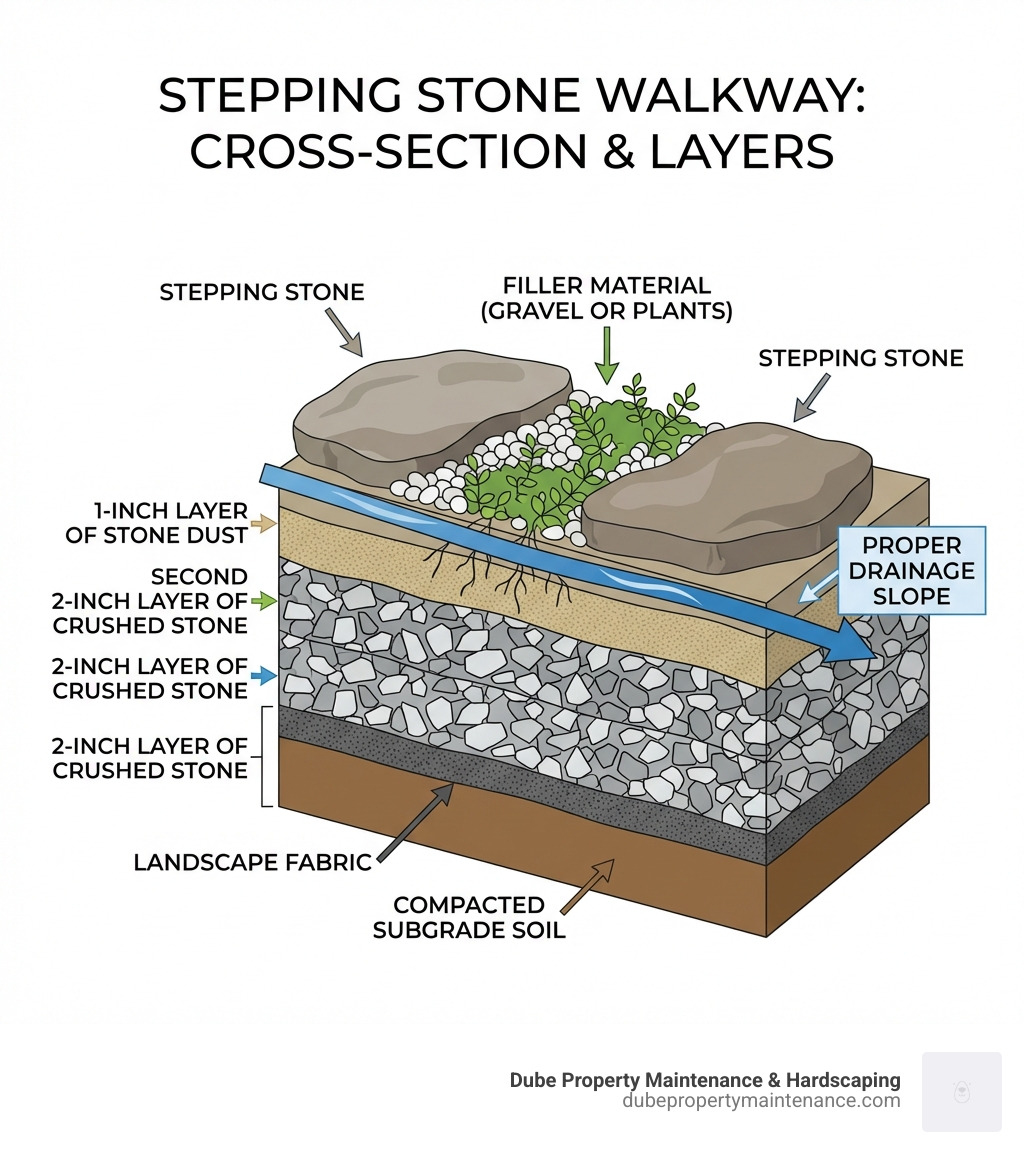
Rock and stepping stone walkway terminology:
Before you dig, a solid plan is the bedrock of a beautiful and long-lasting rock and stepping stone walkway. This phase turns dreams into blueprints, ensuring every step is intentional and suited for the New England climate.

First, consider your walkway’s purpose. A formal entrance often uses straight lines, while a garden path may be more informal and winding. To visualize your path, lay out a garden hose or rope on the ground to experiment with curves and flow.
A comfortable path for one person is about 36 inches wide; for two people, aim for 48 inches. For our Methuen, MA, and Salem, NH neighbors, always consider drainage. Water needs to run off away from your home, so we recommend a slight pitch of about 1/4 inch per foot of stone. This detail is vital for preventing water damage during our wet springs and snowy winters.
The materials for your rock and stepping stone walkway dictate its look and durability. In New England, we need materials that withstand harsh weather.
Here are some popular options:
When selecting stones, prioritize durability and choose ones that are at least 1.5 to 2 inches thick to prevent cracking. A textured surface will be less slippery when wet. For filler materials between stones, consider pea gravel, stone dust, mulch, or low-growing ground covers.
Having the right tools makes the job easier and safer. Here’s what you’ll need:
Having these tools and wearing the appropriate safety gear will ensure your project is successful and safe. For more comprehensive hardscaping solutions, explore our hardscaping services. If you’re looking for professional assistance with any landscaping project, you can always find a professional landscaper through industry associations.
Now that we’ve covered planning, it’s time to start building your rock and stepping stone walkway. This section guides you through the physical installation, from ground prep to laying the stones.

Proper ground preparation is critical for a stable walkway, especially in Massachusetts and New Hampshire where frost heave is a concern.
The base layers provide stability and drainage, preventing stones from shifting.
This is where your rock and stepping stone walkway takes shape.
Once your stones are laid, it’s time for the final touches that transform a path into a captivating landscape feature and improve the safety and ambiance of your rock and stepping stone walkway.
Filling the gaps between stones prevents weeds, stabilizes the stones, and provides a finished look.
Integrating plants softens the hard lines of the stone and connects the walkway with your garden.
Lighting adds safety and transforms your walkway at night.
Proper lighting prevents trips and adds sophistication, extending the enjoyment of your outdoor space after sunset. For other hardscaping elements that benefit from lighting, visit our outdoor stairs page.
A well-installed rock and stepping stone walkway is an investment that adds beauty and functionality to your property for years to come. Understanding the maintenance requirements, cost considerations, and when to call in the professionals is key to maximizing that investment. Our expertise in landscaping and hardscaping ensures your walkway stands the test of time, blending seamlessly with the natural beauty and architectural style of your home.
The cost of installing a rock and stepping stone walkway can vary widely based on several factors, including the type of stone, the length and width of the path, complexity of the design, and whether you choose DIY or professional installation.
Please note: The following costs are average estimates based on internet data and are not the actual costs of Dube Property Maintenance & Hardscaping. Prices can vary significantly based on specific project details, material choices, and current market conditions.
For materials alone, a DIY project might cost $6 to $15 per stone. Natural stone, such as bluestone or granite, will typically fall on the higher end of this range, while basic concrete pavers will be more economical. The total material cost can range from $100 for a simple path to several hundred dollars. Stone itself can range from $5–$15 per square foot, and stone dust costs about $50 per cubic yard.
If you opt for professional installation, which we recommend for longevity, the cost per stone (including both labor and materials) can range from $25 per stone up to $75 or more per stone. A full professional job could range from $300 to well over $1,000, depending on the design and site preparation required.
Factors that influence the final price include material choice, design complexity, site access, and terrain.
A well-built rock and stepping stone walkway requires minimal maintenance, but consistent care will ensure its longevity and pristine appearance.
For more extensive repairs or if you’re considering other stone features, our masonry services can provide expert solutions.
Deciding whether to DIY your rock and stepping stone walkway or hire a professional depends on your skill, time, and the project’s complexity. A simple path can be a satisfying DIY project, but intricate designs, natural stone, or challenging terrain are often best left to experts.
The process is physically demanding, requiring digging, moving heavy materials, and lifting stones. It also requires specific tools like a plate compactor, which may need to be rented.
This is where Dube Property Maintenance & Hardscaping excels. Our professional team brings expertise in ensuring proper drainage and a stable base that accounts for our New England freeze-thaw cycles. We have the expertise and equipment to handle complex designs safely and efficiently, guaranteeing a beautiful, durable, and safe walkway for decades. While DIY can save money on simple paths, professional installation provides peace of mind and a superior, long-lasting result.
A thoughtfully designed and properly installed rock and stepping stone walkway is more than just a path; it’s a significant improvement to your property’s beauty and functionality. We’ve explored the benefits, from protecting your lawn and guiding foot traffic to adding visual interest and defining outdoor spaces. We’ve also walked through the meticulous steps involved, from careful planning and ground preparation to building a stable base and expertly laying your chosen stones.
Remember the crucial finishing touches—filling gaps, installing edging, integrating complementary plantings, and adding landscape lighting—all contribute to a cohesive and inviting outdoor area. For homeowners in Methuen, Haverhill, and surrounding areas of Massachusetts and Southern New Hampshire, understanding the impact of our unique climate, especially the freeze-thaw cycles, on walkway construction is paramount.
Whether you choose to start on this project yourself or entrust it to skilled professionals, a well-built walkway is a long-term investment that significantly improves your property’s curb appeal and usability. For those seeking the assurance of a durable, beautiful result that stands the test of time, Dube Property Maintenance & Hardscaping is here to help. Our professional team specializes in high-quality, comprehensive outdoor solutions, ensuring your rock and stepping stone walkway is perfectly crafted to your vision and built to last.
Contact us for a professional walkway installation consultation and let us transform your outdoor space.
