
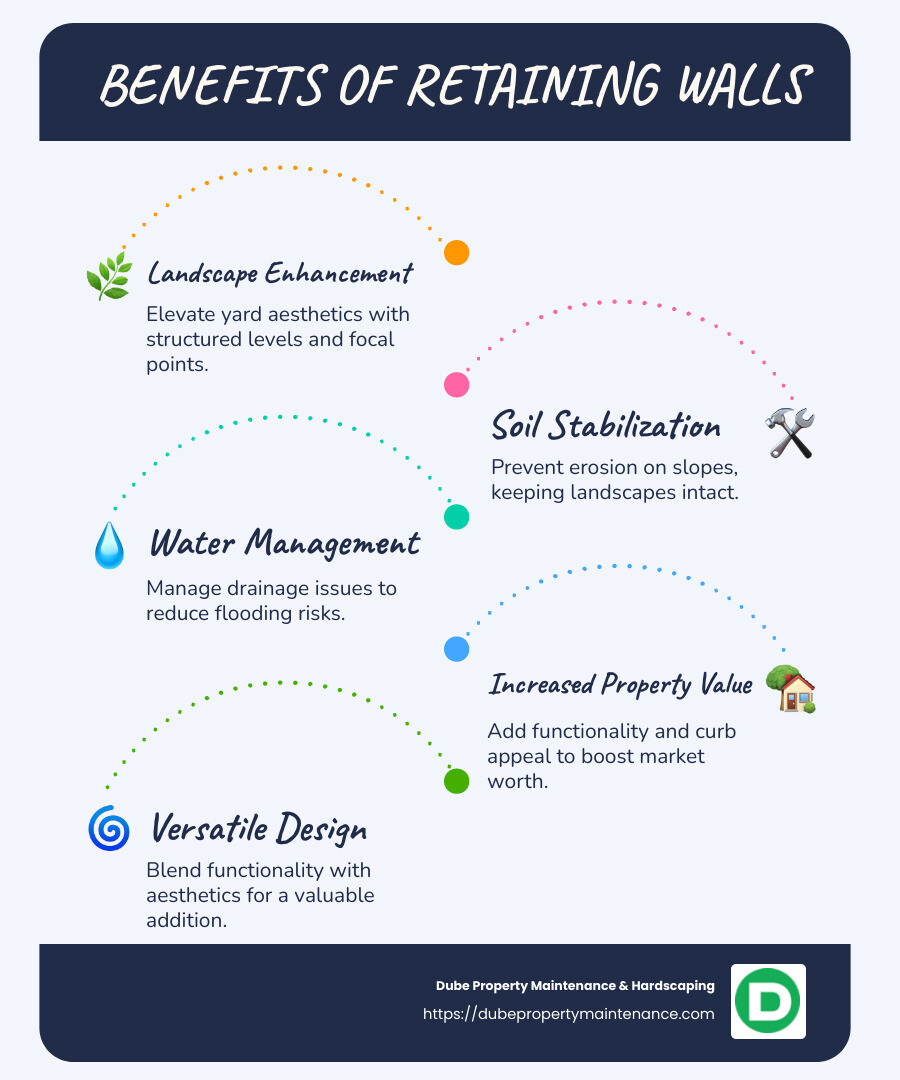
Retaining walls are more than just practical structures in landscaping; they are an essential element for changing and stabilizing outdoor spaces. If you’re looking to improve the beauty and functionality of your landscape, while also addressing soil stabilization and erosion concerns, retaining walls might be your solution. Here’s a quick overview of their benefits:
Whether you’re battling a steep slope, managing water flow, or looking to add dimension to your garden, retaining walls offer a versatile solution. They blend functionality with aesthetics, making them a valuable addition to any homeowner’s landscape.
Basic retaining walls terms:
– how to build a landscape block retaining wall
– interlocking retaining wall blocks
– landscape retaining wall ideas
When it comes to retaining walls, there are several types to consider, each with its unique benefits and applications. Let’s explore the main types: Gravity, Cantilevered, Sheet Piling, Anchored, and Bored Pile walls.
Gravity walls rely on their own weight to hold back soil. They are typically constructed from heavy materials like stone or concrete. These walls are straightforward and don’t require additional reinforcement, making them a popular choice for smaller projects. Stone and concrete are common materials due to their durability and aesthetic appeal.

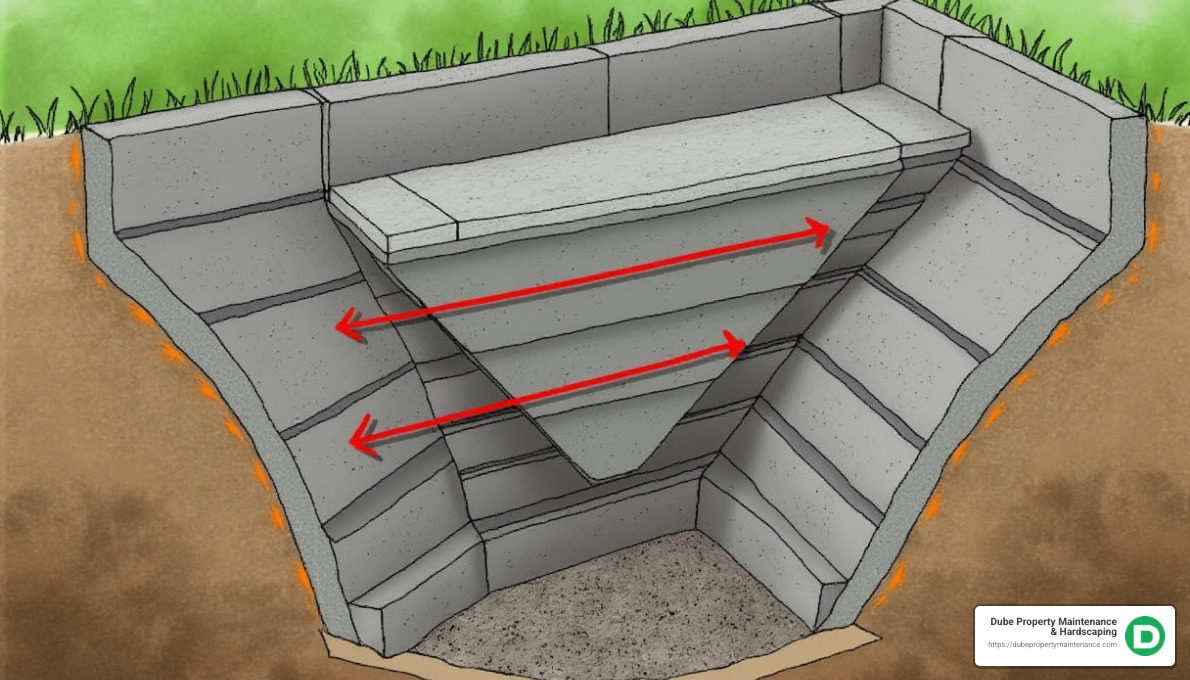
Cantilevered walls are made from reinforced concrete or masonry. They take on an inverted “T” shape, which helps distribute the load more efficiently. This design uses less material than traditional gravity walls. Sometimes, cantilevered walls are supported by buttresses or counterforts for added strength. These walls are ideal for areas with high load requirements, offering a balance between material use and structural integrity.
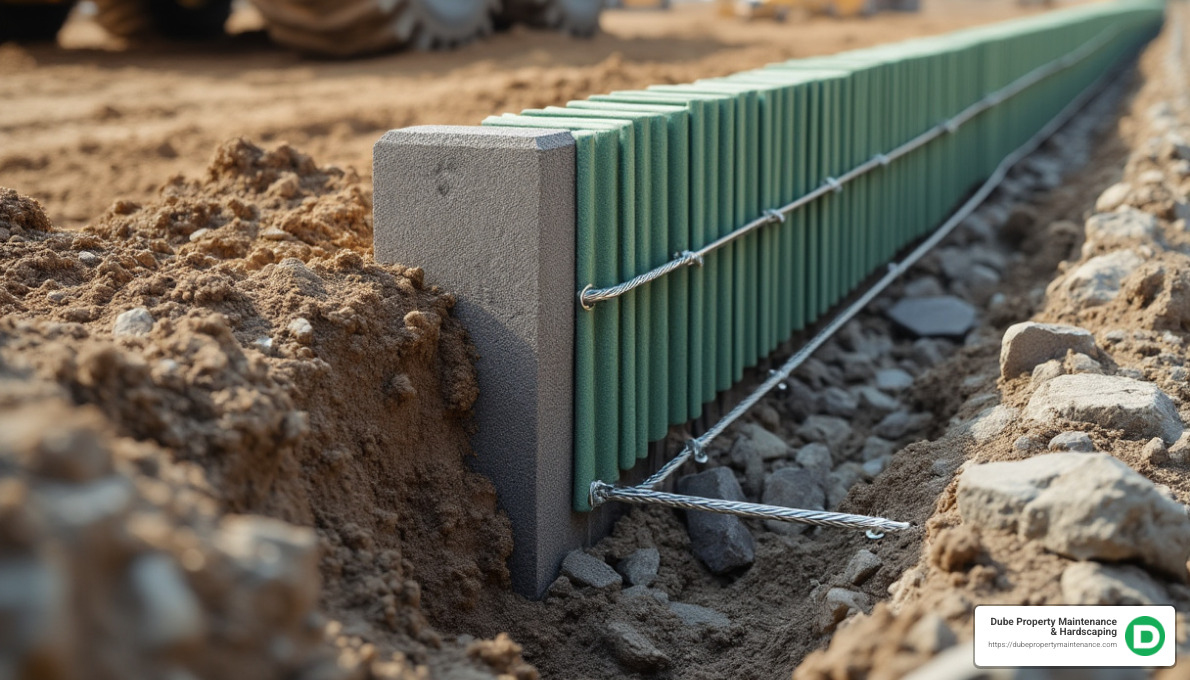
Sheet piling walls are perfect for tight spaces and soft soil conditions. Made from materials like steel, vinyl, or aluminum, these walls are driven into the ground. They often need tie-back anchors for additional support. Sheet piling is a go-to solution for urban areas where space is limited and noise from construction should be minimized.

Anchored walls can be constructed in various styles, adding extra strength with cables or other stays anchored in the rock or soil behind them. This method is technically complex but highly effective where high loads are expected. Anchors are usually driven into the material and expanded at the end, often with pressurized concrete forming a bulb in the soil. This makes anchored walls suitable for both slender walls and those requiring additional reinforcement.
Bored pile retaining walls are constructed by drilling and filling holes with concrete. These walls often include earth anchors and reinforcing beams. They are ideal for projects where noise and vibration from traditional pile driving are concerns. This technique allows for deep foundations and is often used in challenging soil conditions.
Each type of retaining wall has its own set of advantages, depending on the specific needs of your landscape. Whether you prioritize aesthetics, strength, or cost, there’s a retaining wall solution that fits your requirements.
Installing retaining walls offers numerous benefits that go beyond just holding back soil. They provide essential solutions for both functional and aesthetic needs in your garden or yard.
One of the primary benefits of retaining walls is their ability to control soil erosion. By holding soil in place, these walls prevent it from washing away during heavy rains. This is especially important for properties on slopes or those with loose soil. Without a retaining wall, your landscape could suffer significant damage over time due to erosion.
Retaining walls also play a crucial role in managing water flow. They can help redirect water away from your home, reducing the risk of flooding. By acting as barriers, these walls ensure that water drains properly and doesn’t pool in areas where it could cause damage. This makes them a valuable addition to properties in areas prone to heavy rainfall.
Beyond their practical benefits, retaining walls can significantly improve the look of your landscape. They can create distinct levels and add structure to your garden, making it more visually appealing. You can use them to create terraces for planting, which adds depth and character to your outdoor space. With a variety of materials like natural stone, concrete, and wood, you can choose a style that complements your home’s architecture.
Investing in retaining walls can also increase your property’s value. A well-designed and properly installed wall not only improves curb appeal but also adds functionality. Potential buyers often see retaining walls as a sign of quality landscaping, which can make your home more attractive on the market. Plus, the added protection against erosion and flooding is a practical benefit that many buyers appreciate.
In summary, retaining walls offer a blend of utility and beauty, making them an excellent choice for enhancing your landscape. From controlling erosion and preventing floods to boosting aesthetic appeal and property value, these structures provide a wide range of benefits for homeowners.
Selecting the right material for your retaining wall is crucial. It affects not just the wall’s appearance, but also its durability and cost. Here’s a breakdown of popular materials you might consider.
Granite and Limestone
Granite and limestone are top choices if durability is your priority. These natural stones are highly resistant to weathering and can withstand heavy loads. Granite, in particular, is known for its strength and longevity, making it ideal for long-lasting structures. Limestone, while slightly softer, offers a classic look with its light, neutral tones.
Natural Stone
Natural stone retaining walls provide a timeless and rustic appearance. They blend seamlessly with the environment and are incredibly durable. While they can be more expensive, their ability to withstand the elements makes them a worthwhile investment.
Poured Concrete
For those looking for a budget-friendly option, poured concrete is a great choice. It offers a clean, modern look and can be poured into any shape, allowing for flexibility in design. Concrete is also known for its strength and can last for decades if properly maintained. It is one of the most cost-effective materials, especially if you’re considering a DIY project.
Pressure-Treated Pine
If you’re considering a wooden retaining wall, pressure-treated pine is an economical option. While wood may not last as long as stone or concrete, treating it helps resist rot and insects, extending its lifespan. That wood can be affected by moisture, so proper drainage is essential to prevent decay.
Sandstone
Sandstone is another affordable natural stone option. It offers a warm, earthy look and is relatively easy to work with. However, it is softer than granite and limestone, which means it might wear down faster in harsh conditions.
In conclusion, choosing the right material for your retaining wall depends on your specific needs, budget, and aesthetic preferences. Whether you prioritize durability with granite or limestone or opt for cost-effectiveness with concrete or pressure-treated pine, each material offers unique benefits that can improve your landscape.
When it comes to constructing retaining walls, understanding the right building techniques and considerations is key to ensuring stability and longevity. Let’s explore some essential aspects of building these structures.
Foundation Preparation
A strong foundation is crucial for any retaining wall. Start by digging a trench that is deep enough to accommodate the base material and the first layer of blocks. This trench should be level to prevent shifting over time.
Soil Nailing
Soil nailing involves reinforcing the soil behind the wall with steel bars or nails. This technique helps stabilize the slope and is often used in areas with loose or unstable soil.
Mechanical Stabilization
Mechanical stabilization involves using layers of geosynthetics, like geogrids, to reinforce the soil. These materials are placed between the layers of backfill to improve the wall’s strength and stability.
Geocell Systems
Geocell systems use a three-dimensional honeycomb structure filled with soil or gravel. This method improves load distribution and stability, making it ideal for steep slopes.
Proper Drainage
Drainage is critical to prevent water buildup behind the wall, which can lead to failure. Incorporate a drainage pipe and gravel backfill to allow water to escape easily.
Local Building Codes
Before starting your project, check local building codes and regulations. Some areas may require permits or have specific guidelines for wall height and materials.
DIY vs. Professional Installation
While DIY installation can save money, it’s important to know your limits. Complex projects or walls over a certain height might require professional expertise to ensure safety and compliance with local codes.
Drainage Systems
A well-designed drainage system reduces hydrostatic pressure on the wall. Consider using perforated pipes and gravel layers to facilitate water movement away from the wall.
Earth Pressures
Understanding earth pressures is vital for wall stability. The wall must be designed to withstand lateral earth pressures, which can vary based on soil type and moisture content.
Safety Factors
Incorporating safety factors into your design ensures the wall can handle unexpected loads or conditions. This includes considering factors like additional weight from vehicles or structures near the wall.
By focusing on these building techniques and considerations, you can create a retaining wall that not only improves your garden’s aesthetics but also stands the test of time.
The cheapest type of retaining wall is typically made from poured concrete. Poured concrete walls are cost-effective due to their long lifespan and relatively quick installation process compared to other materials. If you choose to pour the concrete yourself, the savings can be significant. However, ensure proper drainage and structural support to avoid future problems.
There are several types of retaining walls, each suited for different situations:
The easiest retaining wall to build is typically a gravity wall using interlocking blocks. These blocks come with a lip or flange that makes stacking straightforward, requiring minimal tools and expertise. They are ideal for DIY projects, especially for walls under four feet in height. Remember to check local building codes and consider professional help for larger projects to ensure safety and stability.
Changing your landscape with retaining walls can be a game-changer for your outdoor space. Not only do these structures provide essential support and prevent soil erosion, but they also add a touch of elegance and functionality to your garden. Whether you’re looking to create a multi-level garden, improve your property’s aesthetics, or simply prevent flooding, retaining walls offer a versatile solution.
At Dube Property Maintenance & Hardscaping, we understand the importance of combining stability with beauty. Our team of experts is dedicated to helping you choose the right type and material for your retaining wall, ensuring it meets your specific needs and complements your home’s architecture. With years of experience in Methuen, MA, and surrounding areas, we pride ourselves on delivering high-quality, comprehensive outdoor solutions.
By investing in a retaining wall, you not only protect your landscape investment but also increase your property’s value. Our professional team is here to guide you through every step, from design to installation, ensuring your retaining wall is both functional and visually appealing.
Ready to transform your outdoor space? Contact us today to learn how we can help you create the garden of your dreams with expertly installed retaining walls.
