

Finding the right retaining wall installation near me starts with understanding what these structures can do for your property. Whether you’re dealing with a sloped yard, erosion, or simply want more usable outdoor space, a well-built retaining wall offers both functional and aesthetic solutions.
Quick Answer for “Retaining Wall Installation Near Me”:
A retaining wall is a structure designed to hold back soil and prevent erosion. But it’s much more than that. These walls can transform unusable sloped areas into flat, accessible spaces perfect for patios, gardens, or entertaining.
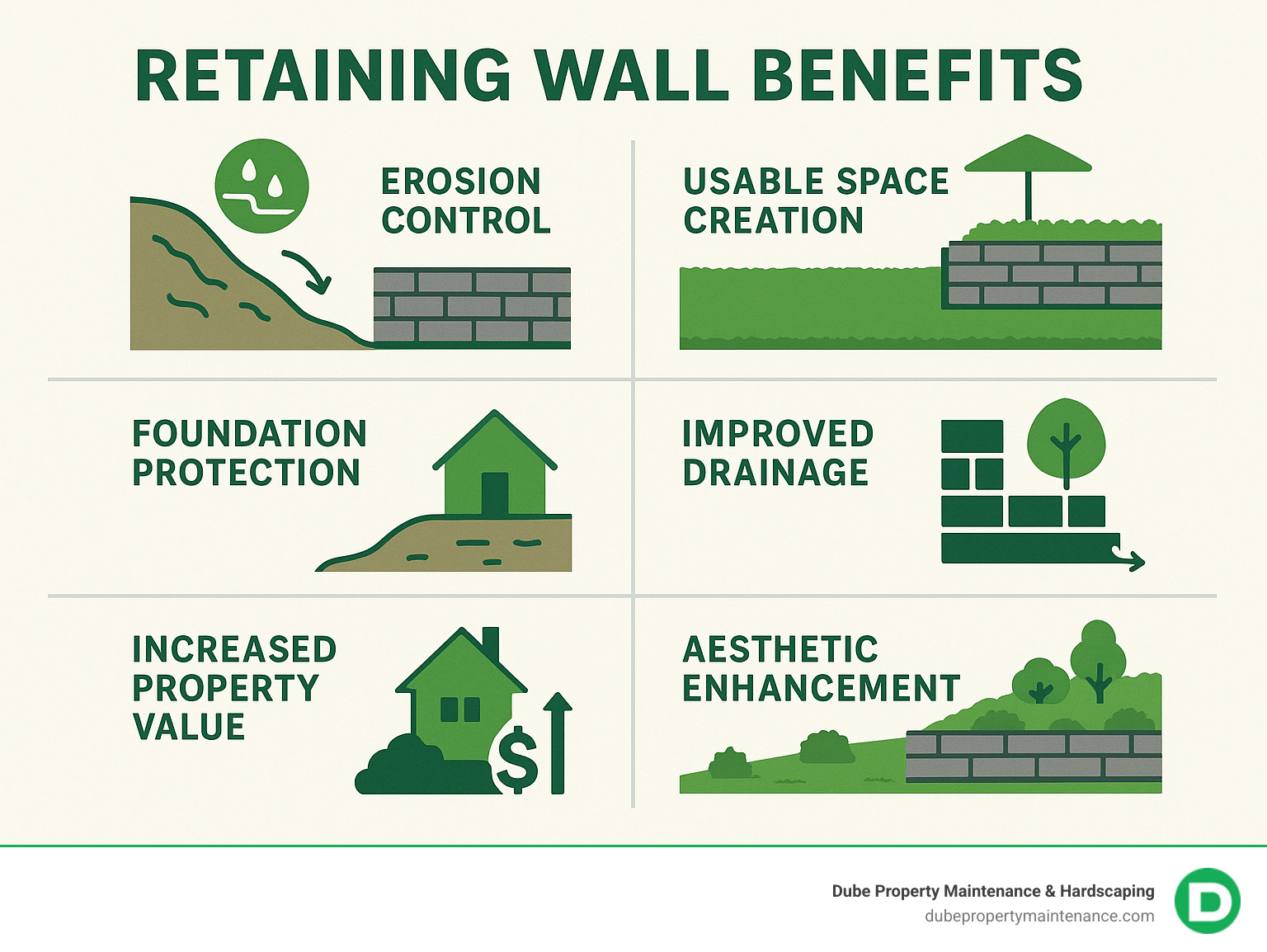
The benefits go beyond soil retention. A properly designed retaining wall can:
This dual nature—both highly functional and decorative—makes retaining walls one of the most valuable hardscaping investments you can make, as they prevent erosion, create usable space, and add visual appeal to your landscape.
However, not all retaining walls are created equal. A standard 4-foot tall, 15-foot long wall may need to support up to 20 tons of soil pressure. This is why choosing the right materials, proper installation techniques, and qualified contractors is critical for long-term success.
Quick retaining wall installation near me terms:
At its core, a retaining wall is a workhorse designed to make your property more stable and usable. Its main job is soil retention. On a sloped property, rain can wash away valuable topsoil, creating ruts and undermining your landscape’s stability. A retaining wall acts as a strong barrier, holding soil in place and managing runoff effectively.
Beyond preventing erosion, retaining walls create level ground where none existed. Imagine turning a steep hillside into a flat, inviting space for a new patio or a vibrant garden. They provide structural support for these new areas, ensuring they remain stable. This is especially crucial if your home is near a slope, as retaining walls can protect your foundation from damage caused by shifting soil and moisture.
While functional, retaining walls are also powerful design elements that can dramatically improve your property’s curb appeal. With a variety of materials and designs, they can become a focal point in your landscape.
They can be used to create neat raised garden beds, adding depth and visual interest. They can also double as built-in seating walls around a fire pit or patio, blending function with a cozy atmosphere. By defining distinct outdoor spaces, they bring structure and order to your yard. Whether you’re aiming for a rustic charm or a sleek, modern look, a well-designed retaining wall is a statement piece. For more inspiration, check out our ideas for Front Yard Retaining Wall Landscape Ideas.
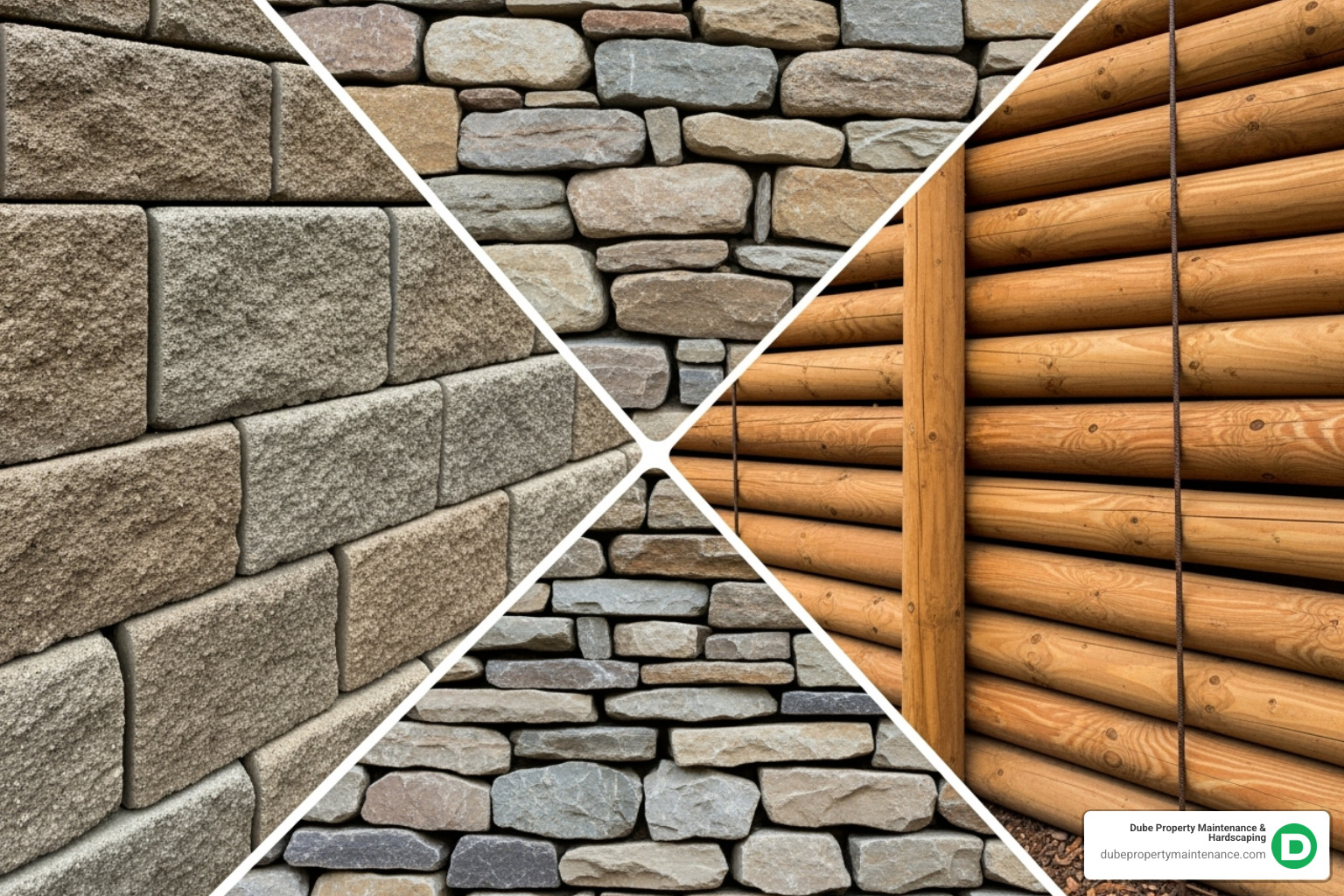
Choosing the right materials for your retaining wall installation near me is a critical decision. The material you select will determine your wall’s appearance, longevity, and overall cost. Your retaining wall will work 24/7 for decades, so balancing durability, aesthetics, installation complexity, and cost is key.
Let’s walk through your material options, each with its own strengths.
Concrete blocks are the reliable workhorses of retaining walls. Versatile and available in many styles, they often feature interlocking systems for a straightforward, solid installation. They offer excellent durability with low maintenance. For more details, check out Interlocking Retaining Wall Blocks.
Natural stone is the aristocrat of wall materials. Whether fieldstone or cut stone, you’re investing in timeless character and durability that can last for generations. Installation is more labor-intensive, but the result is a wall that looks like it’s always been part of your landscape. Learn more at Stone Retaining Wall.
Poured concrete offers the ultimate in strength and design flexibility. It can be formed into any shape and provides incredible structural integrity, making it ideal for modern homes and complex landscapes. However, it typically requires professional installation.
Timber and wood walls bring rustic charm and are often more budget-friendly. They’re popular for smaller, decorative walls and DIY projects. The main drawback is a shorter lifespan than stone or concrete due to susceptibility to rot and insects.
Gabion walls are wire mesh cages filled with rocks or broken concrete. They offer excellent drainage and a unique, industrial-chic aesthetic that works well in modern landscapes. The fill material can often be sourced locally, helping to manage costs.
Brick walls provide classic, timeless appeal. They’re a perfect choice if you want your retaining wall to complement existing brick features on your home. With proper construction, brick walls are durable and require minimal maintenance. For more information, visit Brick Retaining Walls.
Here’s how these materials stack up:
| Material | Average Cost (per sq ft installed)* | Lifespan | Best Use |
|---|---|---|---|
| Concrete Block | $16 – $48 | 50-100+ years | Versatile, strong, wide design options, good for most applications |
| Natural Stone | $25 – $75 | 50-200+ years | Premium aesthetic, maximum durability, high-end landscapes |
| Wood/Timber | $10 – $40 | 15-40 years | Budget-friendly, rustic appeal, smaller or decorative walls |
| Poured Concrete | $16 – $48 | 50-100+ years | Strongest, modern aesthetic, highly customizable, complex designs |
| Gabion | $10 – $40 | 50-100+ years | Unique look, good drainage, cost-effective for large projects |
| Brickwork | $20 – $60 | 50-100+ years | Classic aesthetic, blends with existing brick homes, durable |
*Disclaimer: The prices above are national averages based on publicly available data and are for informational purposes only. They do not represent a quote from Dube Property Maintenance & Hardscaping. Actual costs will vary based on your specific project’s size, complexity, site conditions, and material choices.
Disclaimer: The following prices are national averages based on publicly available data and are for informational purposes only. They do not represent a quote from Dube Property Maintenance & Hardscaping. Actual costs will vary based on your specific project.
Costs for retaining wall installation near me can vary significantly. On average, expect to pay $20 to $50 per square foot, but premium materials and complex designs can push costs to $150 per square foot or more.
Most homeowners spend between $3,000 and $17,000, with the national average around $5,700. Several factors impact your final cost:
To get a rough estimate, try our Retaining Wall Block Calculator. These are ballpark figures; a professional consultation will provide the most accurate quote.

When you’re ready to find a contractor for your retaining wall installation near me, choosing the right one is paramount. Retaining wall construction is both an art and a science, requiring an understanding of soil mechanics, drainage, and local building codes. Hiring a professional with local expertise is essential for quality work that meets safety standards.
When searching for Hardscaping Companies Near Me, focus on contractors who specialize in retaining walls. The difference in expertise can be significant, especially with challenging soil or drainage conditions.
For small decorative walls under 4 feet that aren’t holding back significant soil, a DIY approach might work. Think low garden borders or seating walls that are more about aesthetics than structural integrity.
However, the stakes are high for functional walls. A standard 4-foot tall, 15-foot long retaining wall must withstand approximately 20 tons of soil pressure. This immense force is why most retaining walls require professional installation.
The risks of improper DIY installation are significant. Wall failure can occur from poor foundations or underestimating soil pressure. Improper drainage is another common mistake; trapped water creates hydrostatic pressure that can cause even well-built walls to fail. There are also safety hazards involved in excavation and handling heavy materials.
Professional contractors understand these challenges. They know how to calculate soil pressure, design proper foundations, and install effective drainage systems. They also have the specialized equipment for safe excavation. For more guidance, see our article on Building a Retaining Wall.
Don’t forget permitting requirements. Many municipalities require permits for walls over a certain height (often 3 or 4 feet). Check with your local municipality for permit requirements to understand what’s needed. A qualified contractor will handle this for you.
Finding the right contractor starts with vetting them properly. Experience is crucial—look for contractors with a long history of building retaining walls and a portfolio of completed projects.
Licensing and insurance are non-negotiable. A license shows they meet professional standards, while insurance protects you from liability.
Online reviews and testimonials offer valuable insights. Look for consistent positive feedback on workmanship, communication, and timeliness.
Ask to see their portfolio of past work. Photos of completed projects help you assess their craftsmanship and design skills.
Local building code knowledge is vital. Contractors familiar with your area’s requirements ensure your wall is compliant and passes inspections.
Finally, insist on detailed quotes from multiple contractors. These should outline materials, labor, timeline, and other services to help you compare options and avoid surprise costs. When searching for Retaining Wall Builders Near Me, use these criteria to narrow your choices.
Before signing a contract, ask these questions to gauge a contractor’s professionalism and expertise:
The answers will tell you what you need to know about their commitment to quality. A well-built retaining wall is an investment that should serve your property for decades.
Planning a retaining wall installation near me brings up many questions. Here are straightforward answers to the most common ones to help you make informed decisions.
A retaining wall’s lifespan depends on two things: the material used and the quality of the installation. With proper construction, you can expect impressive longevity.
The secret to a long-lasting wall is getting the fundamentals right: a solid foundation, proper drainage with geotextile fabric and crushed stone backfill, and correct compaction. When these elements are done correctly, your wall becomes a permanent landscape feature. Regular maintenance is minimal for well-built walls, but you can find tips in our Hardscape Maintenance Service guide.
Building on a slope requires expert execution. You’re working against gravity and managing significant soil forces that can reach 20 tons of pressure for a standard wall.
Given these complexities, we strongly recommend professional installation for any retaining wall on a sloped yard.
Most companies specializing in retaining wall installation near me offer comprehensive hardscaping and landscape services to ensure your wall integrates seamlessly with your entire outdoor space.
Choosing a full-service contractor ensures your project becomes part of a harmonious landscape design, maximizing both function and visual appeal.

A retaining wall installation near me is one of the smartest investments you can make in your property. It’s not just about holding back dirt—it’s about changing your entire outdoor living experience by solving problems like erosion while creating beautiful, functional spaces for your family.
The choice of material truly matters. Natural stone offers unparalleled longevity, with some walls lasting 50 to 200 years, while concrete blocks provide versatility and durability at an accessible price point. Each material brings its own character to your landscape.
However, professional installation is absolutely critical. A typical wall needs to handle 20 tons of soil pressure, and the complexities of proper drainage, foundation work, and engineering requirements demand expertise. This isn’t a project where “close enough” works—it either lasts for decades or it fails.
At Dube Property Maintenance & Hardscaping, we’ve seen how the right retaining wall can completely transform a property, turning landscape challenges into features that add both beauty and value. Our team brings over two decades of experience to every project, whether you’re in Methuen, MA, or anywhere across Massachusetts and New Hampshire.
We understand that your retaining wall is about creating the outdoor space you’ve always envisioned. For expert guidance and a full range of hardscaping solutions, explore our landscape retaining wall services. Let’s work together to build a lasting foundation for your landscape dreams.
