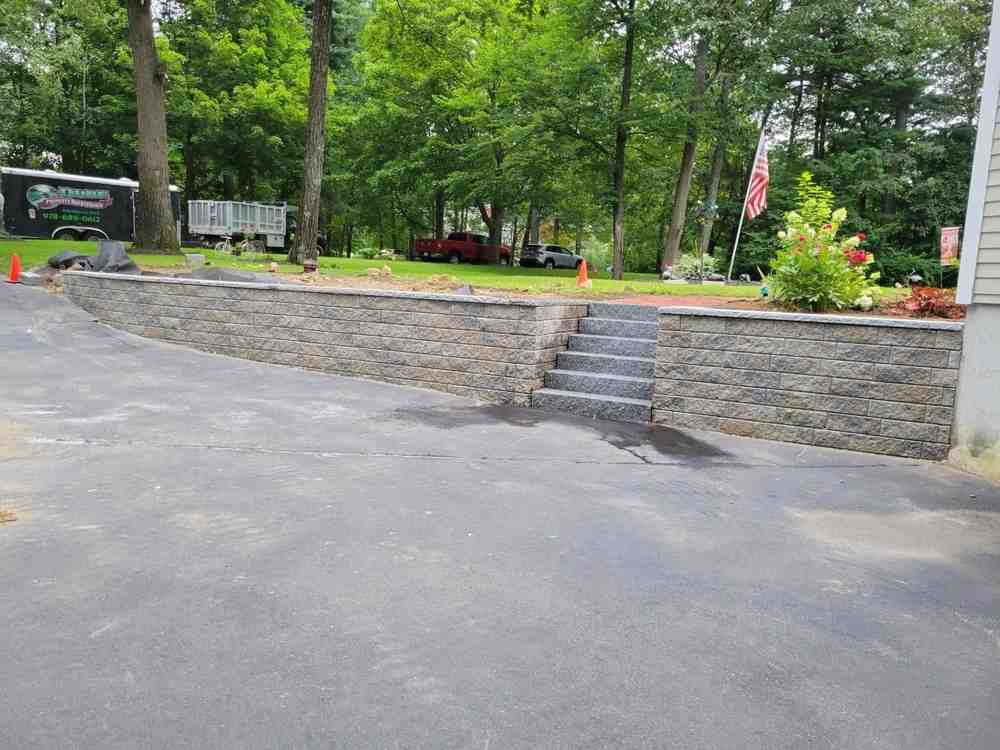
Retaining wall block colors can transform an ordinary slope into a stunning landscape feature that complements your home and increases property value. Whether you’re planning a functional retaining wall or a decorative garden border, the color you choose affects everything from curb appeal to how your outdoor space feels.
Most Popular Retaining Wall Block Colors:
The right color choice depends on several factors: your home’s exterior colors, existing landscape features, the amount of sunlight your wall receives, and your personal style preferences. Major manufacturers like Allan Block, Belgard, Unilock, and Versa-Lok offer dozens of options ranging from classic grays to rich earth-tone blends.
According to research from leading block manufacturers, homeowners in New England often gravitate toward neutral tones like gray, charcoal, and natural blends. These colors work well with the region’s traditional architecture and provide flexibility as landscaping evolves over time.
In Massachusetts and southern New Hampshire, where homes range from colonial to contemporary, choosing a retaining wall color that harmonizes with your property’s style creates a cohesive outdoor living space. Dark colors like charcoal absorb heat and can make walls feel more prominent, while lighter tans and creams reflect light and recede visually into the landscape.
Retaining wall block colors vocab explained:
This section explores the most common color families for manufactured retaining wall blocks, helping you visualize the options for your project. When we help clients in places like Andover, MA, or Salem, NH, select their retaining wall blocks, we see a clear preference for certain palettes that offer both aesthetic appeal and practical benefits.
Grays and charcoals are undeniably among the most popular choices for retaining wall block colors, and for good reason. These cool, sophisticated tones offer incredible versatility, effortlessly blending with various architectural styles from classic New England homes to sleek, contemporary designs. They provide a clean, modern aesthetic that allows the vibrant colors of your landscaping to truly pop.
For instance, Allan Block Classic offers shades like Grey, Silverado, and Charcoal, which can create a striking contrast with lush green foliage or complement modern hardscaping elements. Versa-Lok’s Classic Gray is another excellent option for a timeless, understated look. Palumbo Block also provides options such as Furnace Gray, Dover Gray, Pewter, and Granite, allowing for subtle variations in tone that can add depth to your wall. Westbrook Block, a supplier for Allan Block, offers Granite and Smoke, further expanding the grey palette.
These colors are particularly effective in creating clearly defined spaces and can make a retaining wall feel both substantial and neat. Whether you’re building a structural wall or a garden border, gray and charcoal blocks offer a foundation of enduring style.

If you’re aiming for a softer, more integrated look that harmonizes with the natural environment, earth tones are an ideal choice for retaining wall block colors. Tans, browns, and beiges evoke a sense of warmth and timelessness, making them perfect for properties seeking a rustic charm or a traditional, inviting atmosphere. These colors blend seamlessly with natural wood, existing stone features, and the varied hues of a New England autumn.
Many manufacturers offer a rich selection of earth-toned blocks. Allan Block’s Rocky Mountain Blend, for example, combines several warm shades to mimic natural stone. Versa-Lok provides an extensive range, including Classic Merlot, Classic Mojave, Classic Serpentine, Classic Shasta, Classic Sierra, and Classic Tan, along with weathered variations like Weathered Merlot and Weathered Sierra, which offer a more aged, organic appearance. Palumbo Block’s offerings include Rich Cream, Valley Chestnut, Brown, Honeycomb, Cappuccino, Sand Dune, Cobble Brown, Butternut, Buff, and Hickory, giving homeowners in Methuen, MA, or Pelham, NH, a wide array of options to match their landscape. Westbrook Block carries Bronze, Brownstone, Natural, and Siena, which are all excellent for achieving a natural, inviting feel. Belgard also highlights “natural color blends” in their product lines, emphasizing this popular aesthetic. These warm tones can make your outdoor space feel more grounded and connected to its surroundings.
While less common than neutrals and earth tones, red and terracotta retaining wall block colors can make a bold and beautiful statement in your landscape. These vibrant hues infuse a sense of warmth, energy, and a touch of the exotic, reminiscent of Southwestern or Mediterranean styles. They are an excellent choice if you want your retaining wall to be a focal point, drawing the eye and adding a unique character to your property.
Palumbo Block, for instance, offers Terracotta, Hearth Red (P-378), and Cottage Red (P-37) options. These colors can be particularly striking when combined with specific plant palettes or architectural elements, creating a dynamic and inviting outdoor space. While they require careful consideration to ensure they complement, rather than clash with, your home and existing landscape, the impact of a well-chosen red or terracotta retaining wall can be truly stunning.
The magic of blended retaining wall block colors lies in their ability to mimic the natural variations found in real stone. These blocks incorporate multiple hues within a single unit or mix different colored blocks to create a variegated, multi-tonal effect. This approach offers several advantages, providing a more dynamic and less uniform appearance than solid colors.
Blended colors add significant depth and texture to your retaining wall, making it feel more organic and visually interesting. They are also incredibly practical; the inherent variations in color can help to camouflage dirt, dust, and minor imperfections, keeping your wall looking pristine for longer. Manufacturers like Allan Block with their Rocky Mountain Blend, Versa-Lok with its “Weathered” series, and Belgard with its “natural color blends” and “multi-tonal blends” all leverage this technology. Unilock’s Enduracolour blocks, for example, are known for their natural sandy appearance with unique color and texture achieved through a specific process, offering a sophisticated blended look.
The beauty of blended options is that they accept the subtle shifts in color that occur in nature. This can soften the lines of a constructed wall and help it integrate more harmoniously into your landscape. The way color variations within a single block or across multiple blocks impact the final look is profound, creating a unique mix of tones that evolves with the light throughout the day. We often recommend these blends for clients in areas like Lowell, MA, or Windham, NH, who desire a natural stone aesthetic without the higher cost and installation complexity of natural stone.
More info about our Stone Retaining Wall services

Selecting the right color involves more than just personal preference. Here are key factors to consider for a cohesive and lasting design. When we work with homeowners in communities like North Andover, MA, or Litchfield, NH, we emphasize a holistic approach to ensure their retaining wall improves their entire property.
Your home’s exterior acts as the largest backdrop for your retaining wall, so its color scheme should be a primary consideration. Think about the color of your siding, brick, stone veneer, trim, and even your roofing materials. The goal is to create a unified look that feels intentional and harmonious.
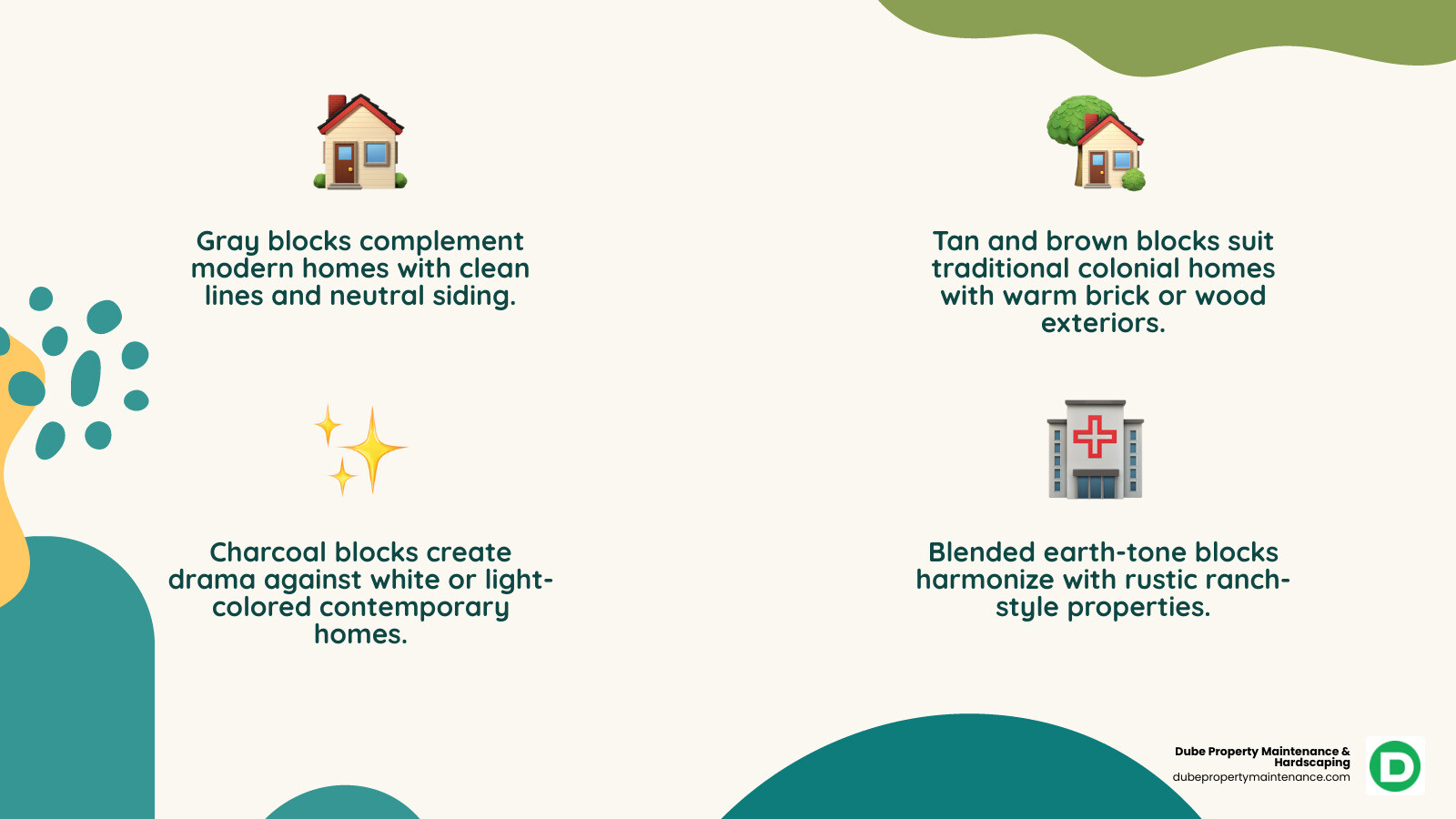
You can choose to match your retaining wall blocks closely to a dominant color on your home, or you can opt for a complementary color that provides a pleasing contrast. For example, a home with light-colored siding might benefit from a darker charcoal or blended earth-tone wall to add depth and grounding. Conversely, a dark brick home might be beautifully accented by a lighter tan or buff retaining wall. The infographic in our introduction provides a great visual guide on how different retaining wall colors can complement various home exterior styles. We often discuss these choices with our clients to find the perfect balance between distinction and integration.
More info about our Custom Retaining Walls
Beyond your home, the overall style of your landscape plays a crucial role in color selection. Do you have a modern, minimalist garden, a rustic cottage design, a formal traditional layout, or a wild, naturalistic setting? Each style lends itself to different retaining wall block colors.
For a modern landscape with clean lines and geometric shapes, sleek grays, charcoals, or even deep blacks can reinforce the contemporary aesthetic. If your garden is rustic or naturalistic, warm earth tones like tans, browns, and multi-tonal blends will feel more at home, mimicking the organic colors of the natural world. Traditional gardens often benefit from classic grays or subtle buff tones that provide a refined backdrop without overpowering the plantings.
Consider your existing pavers, patios, and other hardscape elements. Ideally, your retaining wall color should either match or complement these features to create a cohesive outdoor living space. Don’t forget your plant palette! The greens of foliage, the bright hues of flowers, and the changing colors of deciduous shrubs in New England can all influence how your retaining wall color is perceived. A well-chosen wall color will improve your plants, making them stand out even more.
Explore our Landscape Retaining Wall services
While color is paramount, the texture of your retaining wall blocks profoundly influences how that color appears and the overall character of the wall. Texture creates light and shadow, adding depth and dimension that a flat, smooth surface simply cannot achieve.
Consider the difference between a split-face block, a smooth-face block, and a tumbled or weathered finish.
Redi-Rock, for example, offers various textures like Ledgestone, Cobblestone, Limestone, and Kingstone, each designed to evoke a specific natural stone look and feel. Allan Block also provides options like a smooth fluid finish or a molded face. Belgard’s textures emulate tumbled stone, stacked stone, chiseled stone, or quarried stone. The interplay of light on these textures can subtly alter the perceived hue and saturation of the retaining wall block colors, making your choice even more critical.
The unique climate and varying light conditions in Massachusetts and southern New Hampshire have a significant impact on how retaining wall block colors appear and perform. What looks perfect in a showroom might look different under the bright midday sun or in the soft glow of evening light.
Understanding these dynamics helps us guide clients in towns like Burlington, MA, or Nashua, NH, to make informed decisions that ensure their retaining wall looks its best in all seasons and at all times of day. For more insights on landscape design and how environmental factors influence material choices, we often consult resources from landscape experts.
Learn more from landscape experts
Both manufactured concrete blocks and natural stone offer beautiful but different color characteristics for your retaining wall. Understanding these differences is key to choosing the right material for your project, whether it’s in Lawrence, MA, or Derry, NH.
Manufactured concrete retaining wall blocks offer a vast and consistent range of retaining wall block colors. The primary advantage here is predictability and uniformity. When you select a color, you can expect that color to be consistent across all the blocks you receive, ensuring a cohesive look for your entire wall.
Thanks to advanced manufacturing processes, these blocks come in a wide array of options, from solid, vibrant hues to sophisticated blended colors that mimic natural stone. This blended color technology allows for multi-tonal blocks that integrate various pigments, creating a nuanced and rich appearance that can rival natural stone.
Beyond color, concrete blocks are engineered for durability, offering excellent structural integrity and resistance to New England’s freeze-thaw cycles. They are also generally more cost-effective than natural stone and come in uniform shapes, which can simplify installation and reduce labor costs. This makes them a popular choice for many homeowners and commercial clients in our service areas.
More info about Concrete Retaining Wall Blocks
Natural stone offers a timeless elegance and unparalleled authenticity that many find irresistible. The color characteristics of natural stone are entirely unique, with each piece boasting its own variations, veining, and mineral deposits. No two stones are exactly alike, which results in a retaining wall with a one-of-a-kind pattern and an organic, rugged beauty.
While natural stone offers incredible aesthetic appeal, it also comes with a higher investment due to the material cost and often more complex installation methods, as stones are typically irregular in shape and size. The color palette is dictated by what nature provides, which can be both a charm and a limitation, depending on your specific design vision. However, for those seeking the ultimate in natural beauty and willing to invest, a natural stone retaining wall is a truly spectacular feature.
| Feature | Manufactured Concrete Blocks | Natural Stone |
|---|---|---|
| Color Variety | Wide range of consistent, predictable colors; custom blends | Limited to natural availability; unique, organic hues |
| Color Consistency | High; uniform across all units | Low; each stone has unique variations |
| Texture Options | Can mimic various natural stone textures (split, tumbled) | Authentic, inherent natural textures |
| Installation Complexity | Generally simpler due to uniform size and shape | More complex due to irregular sizes and shapes |
| Cost | Generally more cost-effective | Higher material and installation costs |
Go beyond a single color and explore creative ways to use retaining wall blocks to make your hardscape project stand out. As hardscaping experts serving communities like Wilmington, MA, and Auburn, NH, we’ve seen how innovative design can transform a simple wall into a landscape masterpiece.
The world of retaining wall block colors is constantly evolving, with new trends emerging that reflect contemporary design preferences. While classic neutrals remain popular, we’re seeing a growing interest in more dramatic and sophisticated palettes.
These trends allow for greater creativity and personalization, helping our clients in places like Tewksbury, MA, and Londonderry, NH, achieve truly unique outdoor spaces.
See more Retaining Wall Ideas
One of the most effective ways to lift the design of your retaining wall and add visual interest is through the strategic use of caps and accents. These elements provide an opportunity to introduce contrasting retaining wall block colors or textures, framing your wall and tying it into the broader landscape design.
By thoughtfully choosing your cap stones and any accent blocks, you can add an extra layer of design sophistication to your retaining wall, ensuring it’s not just functional but also a beautiful feature in your landscape.
More info about Block Retaining Wall construction
Choosing the right retaining wall block colors is a critical step in creating a beautiful and cohesive landscape. By considering your home’s style, existing landscape, and lighting, you can select a color that improves your property’s curb appeal for years to come. For a professional finish that ensures both beauty and structural integrity, partnering with an experienced hardscaping contractor is essential. Dube Property Maintenance & Hardscaping provides expert retaining wall installation services throughout the Merrimack Valley, including towns like Andover, North Andover, and Methuen, MA. Our team can help you select the perfect materials and build a wall that stands the test of time. Ready to transform your landscape? Contact us to discuss your retaining wall project.