
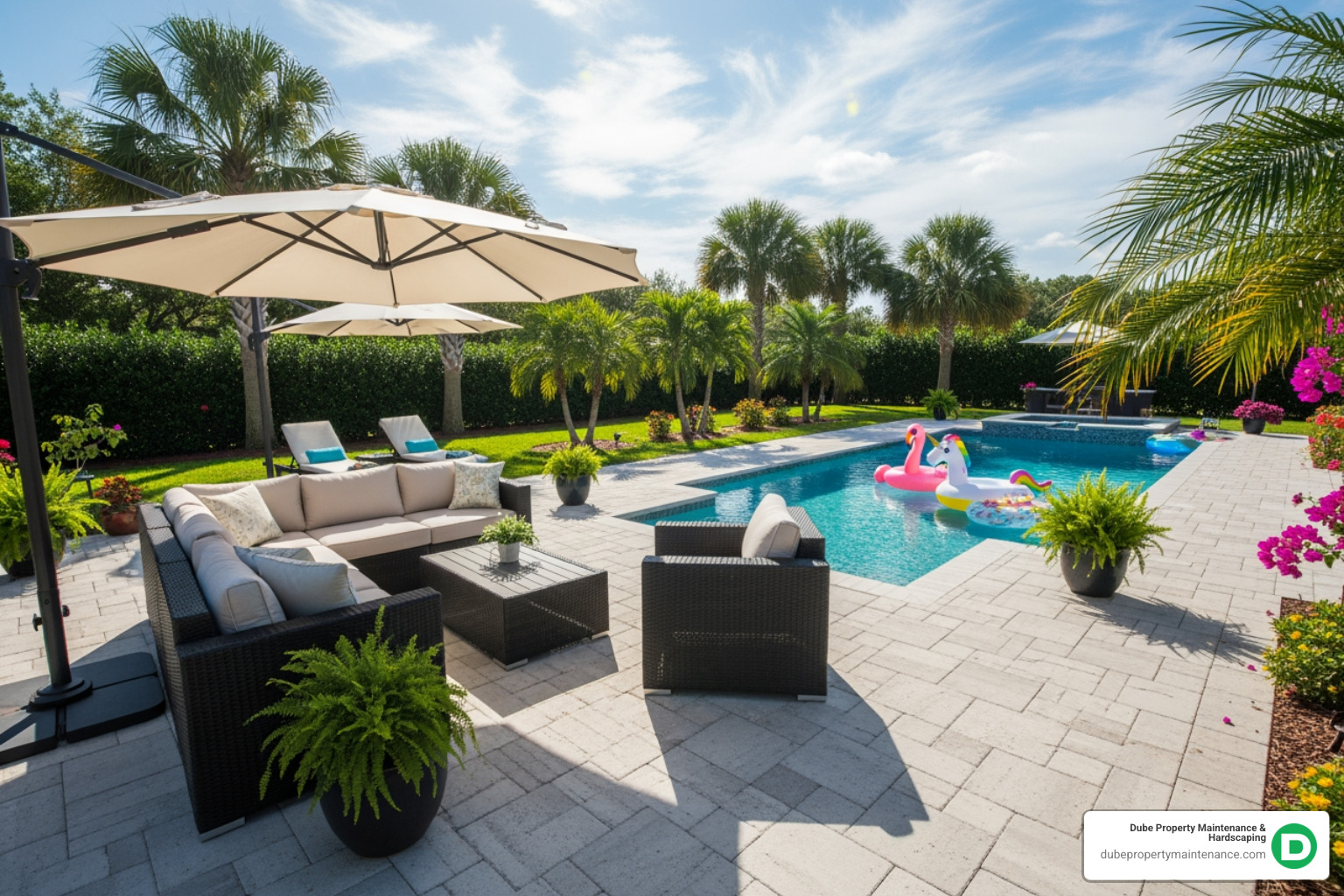
Pool Patio Pavers are individual interlocking units—made from concrete, natural stone, or brick—that create a durable, safe, and beautiful surface around your inground pool. For homeowners in Methuen, North Andover, Haverhill, and throughout Massachusetts and southern New Hampshire, selecting the right pavers means balancing durability against harsh New England winters, safety for wet feet, and aesthetic appeal that improves your entire backyard.
Quick Answer: What Makes Pool Patio Pavers the Best Choice?
Nothing compares to the experience of relaxing poolside on a warm afternoon—but that experience depends heavily on what’s under your feet. Your pool patio isn’t just a border around the water. It’s where you lounge, entertain, walk barefoot, and create memories with family and friends. The wrong material can crack after one winter, become scorching hot in summer sun, or turn dangerously slippery when wet.
According to industry experts who’ve installed over 1,000 pools, pavers consistently outperform poured concrete, stamped concrete, and other alternatives in New England’s challenging climate. They allow water to drain naturally between joints, reducing puddles. They distribute weight evenly to prevent cracking. And when one paver gets damaged—from a dropped grill or shifting ground—you can replace just that single stone instead of jackhammering and re-pouring an entire section.
This guide breaks down the top 10 types of pool patio pavers available today, comparing their performance in Massachusetts and New Hampshire conditions, their safety features, maintenance needs, and long-term value.

Common Pool Patio Pavers vocab:
When we talk about creating the ultimate poolside retreat in places like Andover, Chelmsford, or Salem, NH, the choice of material for your deck is paramount. While options like poured concrete or travertine have their place, Pool Patio Pavers stand out for their blend of durability, safety, and aesthetic versatility, especially when facing the unique climate challenges of New England.
Consider this: pavers can handle up to 8,000 PSI, which is twice the strength of typical poured concrete (which usually comes in at 4,000 PSI). This incredible strength means they’re built to last, resisting the wear and tear of active pool areas. Their interlocking design allows for natural expansion and contraction, making them incredibly resilient against the freeze-thaw cycles that are a hallmark of our Massachusetts and New Hampshire winters. Unlike rigid concrete slabs that can crack and heave, pavers flex with the ground, maintaining their integrity.
Safety is another non-negotiable for a pool deck, and pavers deliver. Many feature textured surfaces that offer excellent traction even when wet, significantly reducing the risk of slips and falls. Plus, choosing lighter-colored pavers can make a huge difference in comfort, as they absorb less heat from the sun, keeping the surface cooler underfoot on those scorching summer days.
And let’s not forget the long-term benefits. If a paver ever gets damaged—perhaps from a dropped grill or a particularly enthusiastic cannonball—it can be individually replaced. This is a game-changer compared to concrete, where a crack often means an expensive, disruptive repair job for an entire section. This ease of repair translates to lower long-term maintenance costs and a consistently beautiful look.
Finally, pavers offer unparalleled design flexibility. With an endless array of colors, shapes, and patterns, you can truly customize your pool deck to reflect your personal style and complement your home’s architecture. This aesthetic appeal, combined with their practical benefits, significantly contributes to your property’s curb appeal and overall value.
Here’s a quick comparison of common pool deck materials:
| Feature | Pavers | Poured Concrete | Travertine |
|---|---|---|---|
| Cost | $$$ (Higher upfront) | $ (Lower upfront) | $$$$ (Premium) |
| Durability | High (8,000 PSI) | Medium (4,000 PSI) | High |
| Freeze-Thaw | Excellent (flexible) | Poor (prone to cracking) | Good (if dense) |
| Slip-Resistance | Good (textured options) | Varies (can be slippery) | Good (naturally porous) |
| Heat Retention | Low (light colors) | Medium-High | Low |
| Repairs | Easy (individual replace) | Difficult (re-pour) | Moderate (individual replace, matching difficult) |
| Maintenance | Moderate (sealing, sand) | Low (cracking repair) | High (sealing, cleaning) |
The secret to a paver pool deck’s longevity and reliability lies in its ingenious design. The interlocking system of pavers distributes weight across a wider area, making them incredibly strong. This is particularly beneficial in areas like Groton or Tyngsborough, where ground movement from frost heave is a common concern. This flexibility means pavers are much less likely to crack or crumble under stress compared to a solid slab of concrete. They are truly built to last, enduring years of pool parties and harsh weather without showing their age.
For safety, especially around a wet environment, textured surfaces are key. Many Pool Patio Pavers come with a natural texture or a subtle cobble pattern that provides excellent grip, even when bare feet are splashing around. This superior wet traction is a critical feature that helps prevent accidental slips. Furthermore, choosing lighter-toned pavers for your deck helps keep the surface cooler under the hot summer sun, providing a more comfortable experience for everyone. This is a thoughtful design choice for pool decks in sunny Marlborough or Hudson.
Beyond the physical benefits, pavers are also formulated to resist common pool chemicals like chlorine and salt, which can otherwise degrade surfaces over time. This chemical resistance ensures your investment remains beautiful and structurally sound for years to come.
One of the most exciting aspects of choosing Pool Patio Pavers is the sheer breadth of design possibilities. Forget the one-size-fits-all look of poured concrete. With pavers, your pool deck becomes a canvas. You can select from an incredible palette of colors, ranging from cool grays and earthy browns to warm tans and vibrant reds, allowing you to perfectly complement your home’s exterior in towns like Carlisle or Concord.
The shapes and patterns are equally diverse. Whether you envision a classic running bond, an intricate herringbone, a charming basketweave, or a broad rectangular grid, pavers can bring your vision to life. You can even incorporate contrasting borders to define spaces or create unique accents, adding a truly custom touch. This level of customization allows us to design a pool deck that serves as a seamless extension of your home’s architecture and your personal style.
This blend of high-end aesthetics and practical benefits significantly increases your property’s value. A beautifully designed and professionally installed paver pool deck creates a luxurious, cohesive outdoor living space that is highly attractive to potential buyers, offering a strong return on your investment. To explore more about how we can improve your outdoor spaces, visit our page on hardscape design services.
Choosing the right type of Pool Patio Pavers is an exciting step in creating your dream backyard oasis. Each material offers a unique set of characteristics, and understanding their pros and cons is key to making the best decision for your home in areas like Acton, Littleton, or Westford. We’ve seen how different materials perform under the varied conditions of Massachusetts and New Hampshire.

Concrete pavers are perhaps the most popular choice for pool decks, and for good reason. They are incredibly versatile and offer an excellent balance of cost-effectiveness and durability. Made from dense, high-strength concrete, these pavers are engineered to withstand heavy use and the elements. Their interlocking design is a major advantage, allowing them to flex and resist cracking through our region’s intense freeze-thaw cycles.
You’ll find an astonishing variety of concrete pavers in terms of styles, textures, and colors. From traditional brick-like appearances to modern large-format slabs, there’s a concrete paver to match any aesthetic. They can emulate natural stone, cobblestone, or contemporary designs, providing endless creative possibilities. While generally more affordable than natural stone, they still deliver superior performance compared to poured concrete. Concrete pavers can also be sealed to protect against stains and improve their longevity, making them a smart choice for any homeowner looking for a robust and beautiful pool deck. For more information on creating the perfect patio, check out our patio installation services.
For those seeking a truly luxurious and distinctive look, natural stone pavers like travertine and bluestone are an exquisite choice.
Travertine is particularly trendy for pool decks in warmer climates, but its benefits extend to our region too. It naturally stays cool underfoot, which is a huge comfort on hot summer days in Framingham or Natick. Its porous nature also aids in drainage, preventing puddles. Travertine offers a refined, natural feel with beautiful, subtle variations in color and texture.
Bluestone, a favorite in New England, provides a sophisticated and enduring aesthetic. Its deep blue-gray hues are classic and pair wonderfully with traditional and contemporary homes alike. Both travertine and bluestone offer exceptional natural beauty that is hard to replicate. However, they typically come with a higher upfront cost than concrete pavers and may require more diligent sealing to protect their natural surfaces from pool chemicals and our weather.

Brick pavers evoke a sense of classic charm and timeless elegance, perfect for homes in historic areas like Concord or Lexington. They bring a warm, inviting aesthetic that complements nearly any architectural style. Known for their excellent color retention, brick pavers will maintain their rich hues for years, resisting fading from sun exposure.
While incredibly durable, it’s important to choose brick pavers with a textured surface for a pool deck, as smooth brick can become slippery when wet. Their smaller size allows for intricate patterns and designs, adding a bespoke feel to your poolside area. If you appreciate traditional craftsmanship and enduring beauty, brick pavers might be the perfect fit for your pool deck. Learn more about our detailed work on our masonry services page.
In an age where environmental consciousness is growing, permeable pavers offer an intelligent and eco-friendly solution for your pool patio, particularly valuable in areas like Sudbury or Stow where managing stormwater runoff is important. These innovative pavers are designed with wider joints or internal structures that allow water to seep directly into the ground beneath, rather than running off into storm drains.
This excellent drainage capability significantly reduces puddles around your pool, enhancing safety and comfort. It also helps replenish groundwater and lessens the burden on local drainage systems, which is especially beneficial during heavy rainfall. As an added bonus for our New England climate, permeable pavers can help prevent ice buildup in winter by allowing moisture to drain away, rather than freezing on the surface. For more in-depth information on the benefits and science behind permeable pavement, we recommend this authoritative resource from the Interlocking Concrete Pavement Institute: authoritative information on permeable pavement. As with all paver installations, proper base preparation is absolutely critical to the performance of permeable pavers.
A beautiful Pool Patio Pavers deck is only as good as its foundation and design. Here at Dube Property Maintenance & Hardscaping, we understand that proper installation and thoughtful design are crucial for the longevity, safety, and aesthetic appeal of your poolside retreat. This is especially true given the unique geological and climatic conditions in our Massachusetts and southern New Hampshire service areas.
The most important step in any paver installation, particularly around an inground pool, is meticulous base preparation. Without a solid foundation, even the highest quality pavers can shift, settle, or become uneven over time. For areas around pools, especially in regions with freeze-thaw cycles like ours, we recommend an excavation depth of 9-11 inches. This allows for a robust base of 6-8 inches of compacted processed gravel. This deep, compacted gravel base is the unsung hero, providing stability and excellent drainage.
Next, a precise 1/2-inch layer of leveling sand is spread. This sand bed provides the final, perfectly smooth surface upon which the pavers are laid. A proper slope for drainage is also non-negotiable; we ensure the paver surface gently slopes away from the pool edge, typically at a rate of 1-2% or about 3/16 inch per foot, to prevent water from pooling and to direct runoff effectively. Finally, edge restraints—made from durable PVC, aluminum, concrete, or pressure-treated wood—are installed around the perimeter. These restraints are vital, preventing the pavers from shifting outwards and maintaining the integrity of your design. For projects involving changes in elevation or creating distinct areas, our expertise in retaining walls can be invaluable.
Design goes beyond just the pavers themselves; it extends to every detail that shapes your pool area. Pool coping, the material that caps the edge of your pool, is a prime example. Options like bullnose coping offer a smooth, rounded edge that’s comfortable to the touch and safe for swimmers. Cantilevered coping creates a seamless transition from the pool edge to the deck, while natural stone coping can provide a rustic or neat finish. The coping should integrate seamlessly with your chosen pavers for a cohesive look.
The laying patterns you choose for your Pool Patio Pavers can dramatically alter the perception of space and add visual interest. Popular options include the classic running bond, which offers a clean and simple look; the basketweave, which adds texture and a more traditional feel; and the herringbone pattern, known for its strength and intricate appeal. We can also explore broad rectangular grids or mixed-size random layouts for a more contemporary or natural aesthetic.
Color selection plays a significant role in both aesthetics and comfort. Lighter-toned pavers will absorb less heat, keeping your deck cooler on those hot summer days in Salem, MA, or Manchester, NH. Blended hues can also be a practical choice, as they cleverly hide minor scuffs and stains. And don’t forget the power of contrasting borders! These can beautifully frame your pool, define different activity zones, or hide any necessary edge cuts for a polished finish.
Investing in a Pool Patio Pavers deck is a significant decision for your property in Reading, Bedford, or Nashua, NH. It’s crucial to look beyond the initial price tag and consider the long-term value, maintenance requirements, and ease of repair. While pavers might have a higher upfront cost compared to some alternatives, their durability and low maintenance often translate to substantial savings and increased enjoyment over their lifespan.
It’s true that the initial investment for a paver pool deck can be higher than, say, a standard brushed concrete slab. Paver materials themselves vary in cost, and the installation process is labor-intensive, requiring specialized skills and meticulous base preparation. However, this upfront cost is often offset by the superior longevity and reduced repair expenses that pavers offer.
Note: All price ranges are based on internet averages and do not reflect Dube Property Maintenance & Hardscaping’s actual pricing. Expect a wide range, with the high end at least 3× the average price.
For example, a standard concrete paver might cost anywhere from $3 to $15 per square foot, while natural stone options like bluestone or travertine could range from $10 to $50 per square foot. Installation costs, including excavation, base preparation, and laying, can add another $10 to $30 per square foot. So, for a 500 sq ft pool deck, you might be looking at a material cost of $1,500 to $25,000 and an overall installed cost from $6,500 to $40,000 or more, depending on the paver type, complexity of the design, and site conditions.
But here’s the kicker: pavers are built to last, often coming with lifetime guarantees from manufacturers. Their ability to withstand our New England freeze-thaw cycles without cracking—unlike rigid concrete that often needs costly repairs or replacement after just 10-15 years—means your paver deck will maintain its beauty and functionality for decades. This longevity, coupled with the increased property value and curb appeal, means Pool Patio Pavers offer a strong return on investment.
Maintaining your paver pool deck is surprisingly straightforward, especially compared to the headaches a cracked concrete slab can cause. Routine cleaning involves a simple sweep with a stiff broom, and occasional washing with a soap and water solution will keep your patio looking fresh. We advise against harsh wire brushes, as they can damage the paver surface.
A key maintenance step is periodically refilling the joints with polymeric sand. This special sand hardens when wet, locking the pavers together, preventing weed growth, and deterring ant infestations. For added protection and to improve the color of your pavers, we often recommend applying a sealant every 3-5 years. This helps prevent stains from spilled drinks or pool chemicals and protects against the elements. Many modern pavers also come with integral stain resistance technology, making cleanup even easier.
The true beauty of pavers shines when repairs are needed. If an individual paver is damaged—perhaps from a heavy impact or a particularly stubborn stain—it can be easily removed and replaced without disturbing the surrounding patio. This simple, cost-effective repair process means your pool deck can always look its best, without the need for disruptive and expensive overhauls.
Choosing Pool Patio Pavers for your inground pool deck is more than just a material selection; it’s an investment in the beauty, safety, and longevity of your outdoor living space. From their unparalleled durability and superior performance in New England’s challenging climate to their inherent safety features and endless aesthetic possibilities, pavers consistently prove to be the superior choice for homeowners in Massachusetts and southern New Hampshire.
We’ve explored how pavers offer remarkable strength, resisting cracking and shifting even through harsh freeze-thaw cycles. Their textured surfaces provide crucial slip resistance, while lighter colors ensure a cooler, more comfortable deck under the summer sun. And with the ability to replace individual pavers, maintenance and repairs are simple and cost-effective, protecting your investment for decades.
At Dube Property Maintenance & Hardscaping, we pride ourselves on providing high-quality, comprehensive outdoor solutions with a professional team. Our expertise in hardscaping and landscape installation throughout Methuen, Andover, North Andover, and beyond ensures that your Pool Patio Pavers deck will not only meet but exceed your expectations. We understand the local climate and soil conditions, allowing us to design and install a pool deck that is both stunning and built to last.
Ready to transform your poolside area into the neat, durable, and safe retreat you’ve always dreamed of? Let us help you steer the options and create a personalized solution that perfectly complements your home and lifestyle. Contact us for your hardscaping project today, and let’s bring your vision to life!
