
Pavers with grass in between designs blend nature with structure, offering homeowners a unique solution for enhancing their outdoor spaces. These designs are not only visually appealing but also environmentally friendly. By allowing grass or other greenery to grow between the pavers, this approach promotes natural water infiltration and reduces stormwater runoff, making it a truly eco-friendly choice.
Incorporating pavers with grass in between designs is perfect for those seeking a sustainable and attractive outdoor space that blends seamlessly with nature. This option is ideal for homeowners in Methuen, MA, and surrounding areas looking to combat harsh winters with efficient water management while maintaining a lush landscape.
Terms related to pavers with grass in between designs:
– paver sidewalk ideas
– paver stone walkway ideas
– interlocking concrete pavers
Using pavers with grass in between designs is more than just a visual upgrade. It offers several practical benefits, especially for those who care about the environment and the functionality of their outdoor spaces.
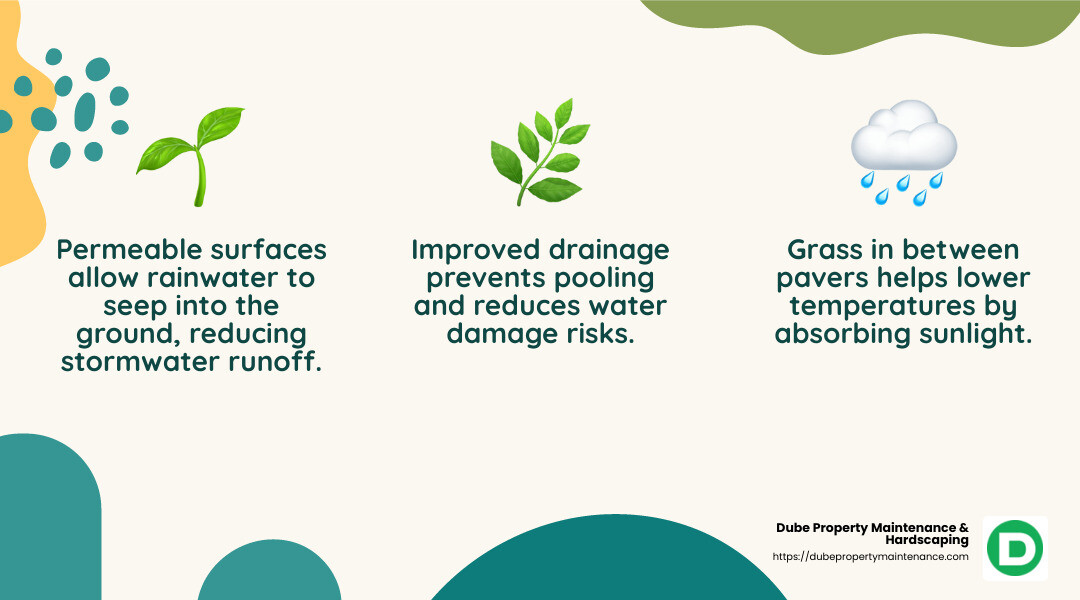
One of the standout features of this design is its eco-friendliness. By allowing grass to grow between the pavers, you create a permeable surface. This permeability lets rainwater seep into the ground rather than running off into storm drains. This natural water infiltration helps maintain the local water table and reduces strain on municipal stormwater systems.
Additionally, the greenery between the pavers contributes to reducing the urban heat island effect. The grass absorbs sunlight, providing a cooler surface compared to traditional concrete or asphalt.
Pavers with grass in between designs offer excellent drainage capabilities. The gaps filled with grass or other greenery allow water to pass through easily. This feature is particularly beneficial in areas prone to heavy rainfall or flooding. It prevents pooling and reduces the risk of water damage to your property.
These designs are also effective in controlling erosion. The grass roots help bind the soil, preventing it from being washed away during rainstorms. This is especially useful on slopes or embankments where erosion is a common problem. Turfstone pavers, with their open grid design, are particularly suited for such applications, providing both structural support and soil stabilization.
By incorporating pavers with grass in between, you not only improve your property’s aesthetics but also contribute to a more sustainable and resilient landscape. This approach is ideal for homeowners in areas like Andover, MA, and surrounding regions, where balancing beauty with environmental responsibility is a priority.
When it comes to creating pavers with grass in between designs, the possibilities are as varied as they are beautiful. Let’s explore some of the most popular options that blend functionality with stunning visual appeal.
Turfstone pavers are a top choice for those looking to integrate grass into their paving projects. These unique concrete pavers feature a 40% open grid design, which allows grass or moss to grow through the spaces. This not only maintains a lush, green appearance but also ensures effective drainage and soil stabilization. Turfstone is perfect for driveways, parking areas, and even pedestrian pathways where you want to maintain a natural look without sacrificing durability.
The open grid design of pavers like Turfstone provides a striking balance between hardscape and landscape. This design allows for creative freedom, enabling homeowners to experiment with different types of greenery. Whether you choose to plant grass, moss, or even small ground covers, the open spaces create a dynamic pattern that changes with the seasons. This design is not only visually appealing but also practical, as it supports water infiltration and reduces erosion.
Incorporating patterns into your pavers with grass in between designs can lift your outdoor space from ordinary to extraordinary. Consider using different shapes and sizes of pavers to create patterns such as basketweave, circular, or even random arrangements. These patterns add texture and visual interest, making your outdoor area more inviting and unique.
For those who love a more artistic touch, mosaic patterns using small pavers can form intricate designs or images, adding a personalized flair to your landscape. By combining different materials like natural stone or colored concrete, you can further improve the aesthetic appeal of your yard.
By choosing the right paver design, you can transform your outdoor space into a stunning and sustainable landscape. Whether you opt for Turfstone pavers or experiment with open grid designs and creative patterns, the result will be a beautiful and environmentally friendly addition to your home.
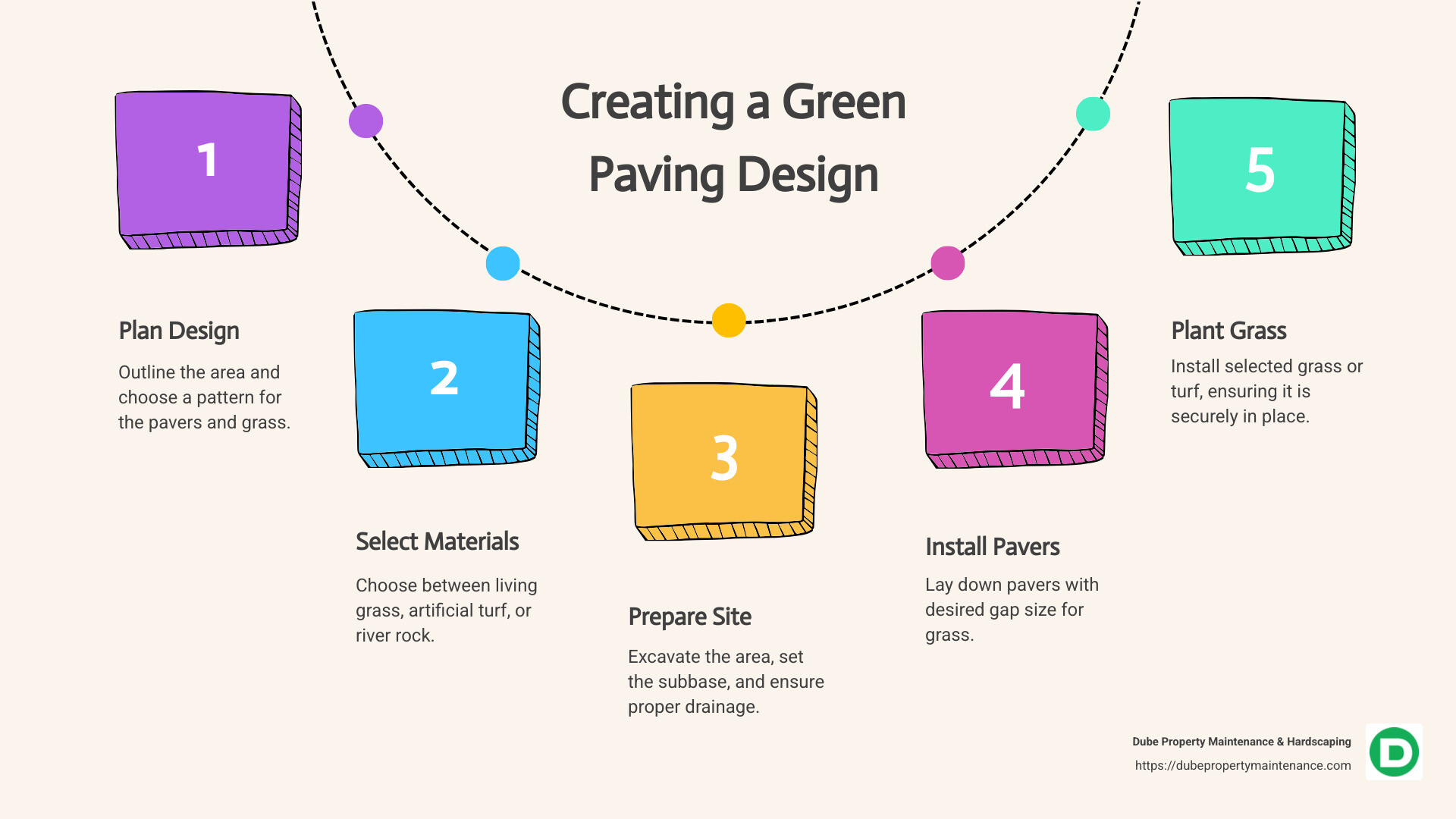
Creating a yard with pavers with grass in between designs is a rewarding project that combines aesthetics with functionality. Here’s a straightforward guide to getting it done right.
If you’re starting with a solid concrete slab, you’ll need to make cutouts for your pavers. This isn’t a simple DIY task, so hiring a professional is advisable. The process involves:

Once your concrete is prepped, it’s time to lay the turf. Here’s how:
A well-prepared subbase is key to the longevity of your installation. Here’s a quick rundown:
By following these steps, you can achieve a beautiful and functional outdoor space that combines the durability of pavers with the lush appeal of grass. Whether you’re using artificial turf or living grass, the right installation technique will ensure your yard remains stunning and sustainable for years to come.
Choosing the right materials is crucial for creating stunning pavers with grass in between designs. Let’s explore some top options: artificial turf, river rock, and living grass.
Artificial turf is a popular choice for those seeking low-maintenance beauty.
Installation Tip: Ensure the turf has good drainage capabilities to prevent water pooling around the pavers.
River rock provides a natural, rustic look that complements many paver designs.
Installation Tip: Use a weed barrier underneath to prevent unwanted growth and keep the rocks in place.
For those who prefer a natural touch, living grass is the way to go.
Installation Tip: Regular maintenance is key. This includes watering, mowing, and occasional fertilizing to keep the grass healthy and lush.
By selecting the right materials, you can create a beautiful and functional outdoor space that suits your lifestyle and aesthetic preferences. Whether you opt for the low-maintenance charm of artificial turf, the natural elegance of river rock, or the organic feel of living grass, each choice offers unique benefits to improve your yard.
Absolutely! Incorporating grass between pavers adds a natural and inviting touch to your outdoor spaces. It improves the aesthetic appeal while offering environmental benefits like improved air quality and reduced heat.
Maintaining pavers with grass is straightforward with a few simple steps:
The gap size between pavers can significantly impact both style and function.
By considering these factors, you can choose the perfect gap size to match your design vision and practical needs.
Changing your outdoor space with pavers with grass in between designs is a fantastic way to combine beauty with functionality. At Dube Property Maintenance & Hardscaping, we are passionate about creating outdoor environments that not only improve the aesthetic of your property but also provide sustainable and practical benefits.
Our professional team is dedicated to delivering comprehensive outdoor solutions custom to your specific needs. Whether you’re looking to install pavers with a lush grass interspersed, or you need guidance on the best materials and maintenance practices, we’ve got you covered.
With our extensive experience and commitment to quality, we ensure that every project we undertake is executed with precision and care. Our goal is to transform your yard into a stunning and functional space that you can enjoy for years to come.
Ready to lift your outdoor living area? Explore our walkway installation services and let us help you bring your vision to life. Our team is here to provide you with the expertise and support you need to make your dream outdoor space a reality.
