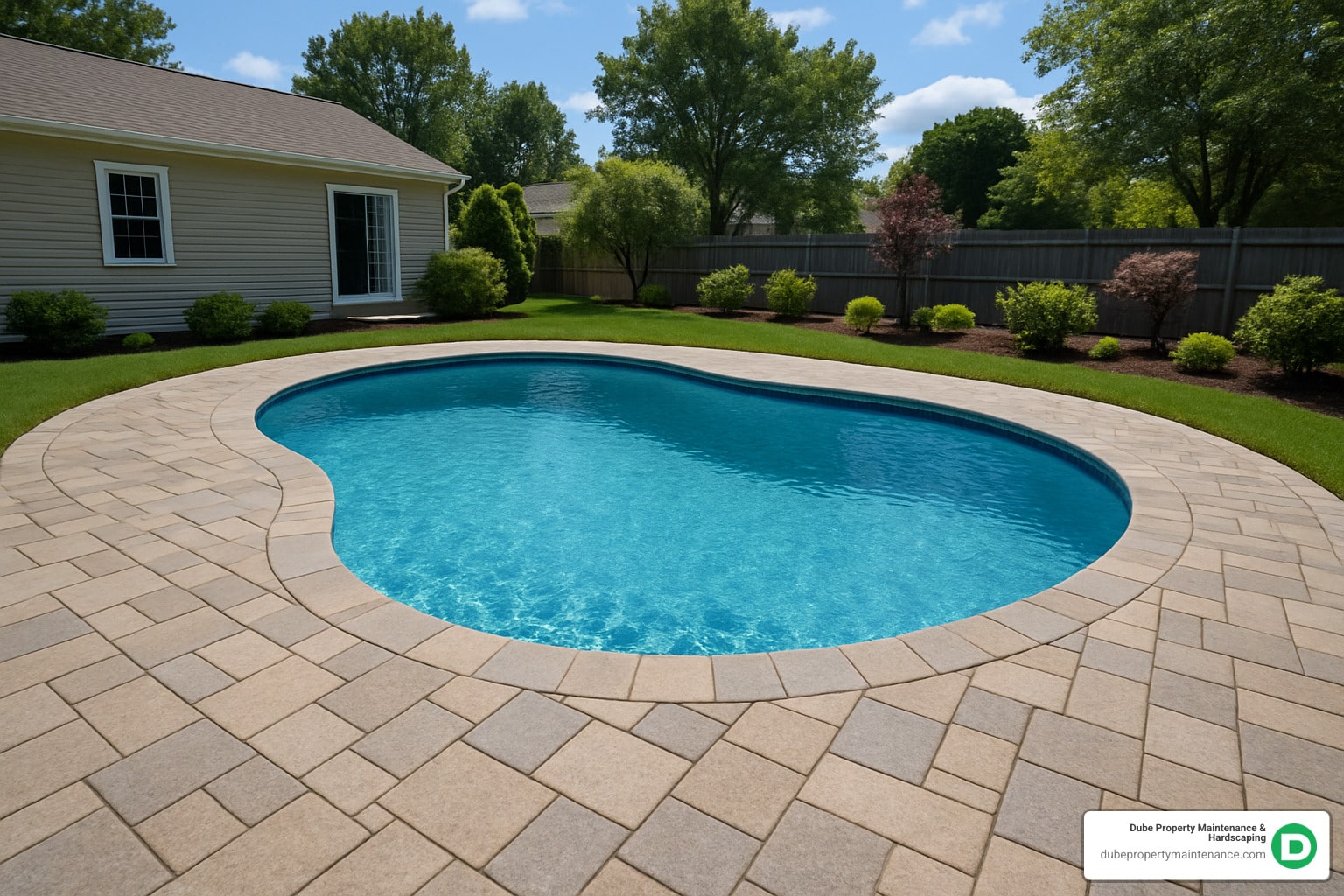

Pavers around inground pool offer homeowners a durable, slip-resistant alternative to traditional concrete decking. But with installation costs running $16-$24 per square foot compared to concrete’s $6-$10 per square foot, many pool owners wonder if the extra expense is justified.
Quick Answer: Key Pros and Cons of Pool Deck Pavers
Advantages:
– Superior strength – Handle 8,000 PSI vs concrete’s 3,500 PSI
– Easy spot repairs – Replace individual pavers instead of entire sections
– Better slip resistance – Textured surfaces and joint lines provide traction
– Design flexibility – Hundreds of colors, patterns, and materials available
Disadvantages:
– Higher upfront cost – Roughly 2-3x more expensive than poured concrete
– Ongoing maintenance – Weeds, moss, and sand joint refills required
– Heat retention – Dark pavers can become uncomfortably hot in summer
– Potential settling – Poor base preparation can cause wobbling over time
Whether you’re planning a new pool installation or replacing an aging concrete deck, understanding these trade-offs helps you make the right choice for your Methuen area home.
Note: Cost ranges mentioned are internet averages and not actual pricing for Dube Property Maintenance & Hardscaping services.


Picture this: you’re hosting a summer barbecue, and Uncle Bob accidentally drops his cast iron grill grate right onto your pool deck. If you have pavers around inground pool, you might need to replace one stone. If you have concrete? Well, let’s just say Uncle Bob might not get invited back next year.
The numbers tell a compelling story about why pavers outperform traditional concrete. While concrete typically handles around 3,500 PSI of pressure, pavers can withstand an impressive 8,000 PSI. That’s more than double the strength, which means your deck can handle everything from heavy outdoor furniture to enthusiastic cannonball landings.
What makes pavers even more appealing is their factory-cured strength. Unlike concrete that cures onsite, pavers are manufactured under controlled conditions. Every single stone meets the same high standards before it reaches your backyard.
The real genius of pavers lies in their modular design. When something goes wrong with concrete, you’re looking at jackhammering and patching. With pavers, you simply pop out the damaged piece and slide in a new one.
More info about Pool Deck Paving
Low cracking potential keeps your deck looking pristine year after year. Individual pavers can shift slightly with ground movement, preventing spider web cracks that plague concrete slabs.
Spot replacement capability means you’re never stuck with a patchy-looking repair job. One damaged paver gets swapped out, and your deck looks like new again.
Freeze-thaw flexibility is crucial in New England’s harsh climate. While concrete slabs crack under frost pressure, pavers simply move a bit and settle back into place.
Design versatility opens up creative possibilities you can’t get with plain concrete. Herringbone patterns, contrasting borders, and custom color combinations turn your pool area into a true outdoor living space.
ROI uplift makes financial sense too. Since pavers typically represent only about 20% of your total pool project cost, choosing premium materials won’t break your budget but will significantly boost your home’s value.
Safety edge coping provides smooth, non-abrasive transitions from deck to water.
Eco-permeable options help manage stormwater naturally while reducing runoff.
Safety isn’t just about preventing slips—though pavers excel there too. The non-skid textures and natural joint lines create multiple traction points that work even when wet. Unlike smooth concrete that can develop slick spots over time, paver surfaces maintain their grip.
Light-colored pavers solve another common pool deck problem: scorching hot surfaces. On a blazing 95°F day, light pavers stay around 91-93°F in direct sun. Compare that to dark surfaces that can hit temperatures hot enough to fry an egg.
Scientific research on slip resistance shows that textured surfaces with adequate drainage significantly reduce accident risk around pools—exactly what properly installed pavers deliver.
Let’s be honest—if pavers around inground pool installations were perfect, everyone would choose them. While we love working with pavers and believe they’re often the best choice, we’d be doing you a disservice if we didn’t discuss the real challenges you might face.
The biggest hurdle for most homeowners is the initial investment. When you’re already spending tens of thousands on a pool, adding another $8,000-$15,000 for a quality paver deck can feel overwhelming. That sticker shock is real, and we understand why many families opt for concrete initially.
But cost isn’t the only consideration. Pavers require more hands-on maintenance than concrete. You’ll need to top up joint sand every few years, pull the occasional weed, and possibly deal with moss in shaded areas.
Settling issues can also occur if the installation isn’t done properly. When pavers start wobbling underfoot or develop uneven spots, it’s usually because corners were cut during the base preparation phase.
More info about Best Pavers for Pool Deck
Surface temperature becomes a real issue with darker paver colors. We’ve measured charcoal and dark brown pavers reaching temperatures that make barefoot walking uncomfortable on hot summer days. Light colors help significantly, but even they can get warm in direct sunlight.
Polymeric sand upkeep is probably the maintenance task that surprises new paver owners most. This specialized sand hardens when activated with water, creating a solid barrier against weeds and insects. But it doesn’t last forever—expect to refresh it every 3-5 years.
Under-compaction issues are the nightmare scenario for paver installations. When the crushed stone base isn’t properly compacted in layers, pavers can settle unevenly over time. This creates trip hazards and that dreaded “spongy” feeling when you walk across certain areas.
Thin base preparation is the most common shortcut that backfires. The proper base requires 8-10 inches of compacted crushed stone, built up in layers. Skipping this step to save time or money almost always leads to settling problems within a few years.
Poor drainage planning causes water to pool on the deck surface instead of flowing away from the pool area. Without proper slope—at least 1/8 inch per foot—you’ll deal with standing water and potential ice damage.
Wrong joint sand might seem like a minor detail, but regular sand allows weeds to take root and pavers to shift more easily. Polymeric sand costs more upfront but prevents most of these issues.
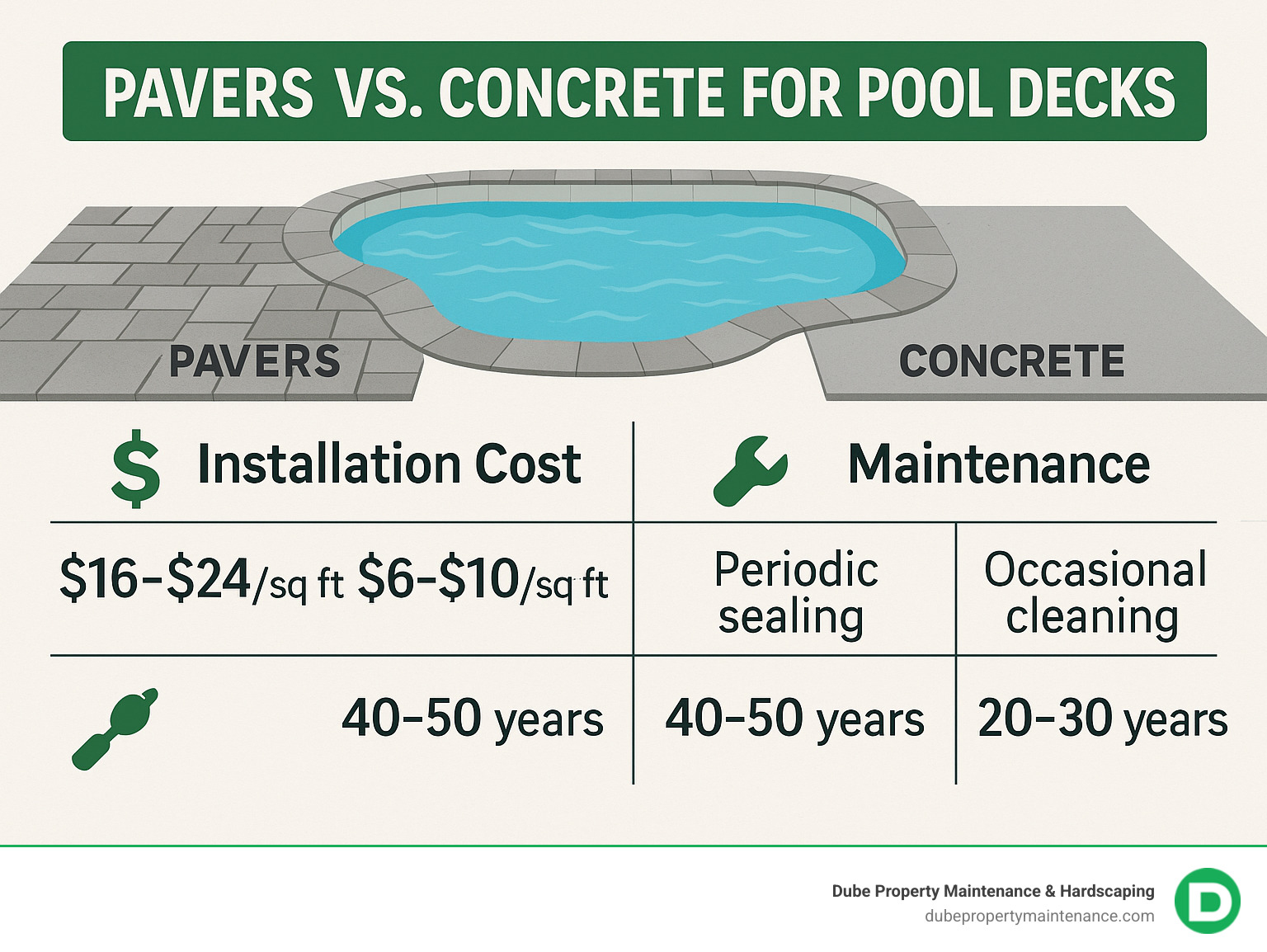
Let’s be honest—the cost difference between pavers around inground pool installations and concrete is significant. When homeowners see that pavers typically run $16-$24 per square foot compared to concrete’s $6-$10 per square foot, many wonder if the extra expense makes sense.
These cost ranges are internet averages and not actual pricing for Dube Property Maintenance & Hardscaping services.
But here’s where the story gets interesting. While concrete wins on upfront cost, pavers often prove their worth over time through superior durability and easier maintenance. Pavers can handle about 8,000 PSI of pressure compared to concrete’s 3,500 PSI.
The lifespan difference is equally compelling. Quality pavers can last 50+ years with proper care, while concrete typically needs replacement after 25-30 years.
| Factor | Pavers | Concrete |
|---|---|---|
| Installation Cost | $16-$24/sq ft* | $6-$10/sq ft* |
| Compressive Strength | 8,000 PSI | 3,500 PSI |
| Lifespan | 50+ years | 25-30 years |
| Repair Method | Individual replacement | Section cutting/patching |
| Slip Resistance | Excellent (textured + joints) | Good (with proper finish) |
| Design Options | Unlimited patterns/colors | Limited to stamping/coloring |
| Maintenance | Joint sand, sealing | Crack repair, resealing |
*Internet averages, not Dube Property Maintenance & Hardscaping pricing
The repair story is where pavers really shine. When concrete cracks (and it will), you’re looking at cutting out sections and patching—work that rarely matches the original surface perfectly. With pavers, you simply pop out the damaged piece and drop in a new one.
When we sit down with clients to crunch the real numbers, the long-term picture often surprises them. Yes, pavers cost more upfront, but they can actually save money over decades of ownership.
Spot repair savings add up quickly. Replacing a few damaged pavers might cost $200-$300, while cutting out and patching a concrete section can run $800-$1,200.
Labor costs favor pavers too. Most paver repairs are straightforward—lift the old stone, level the base, drop in the new one. Concrete repairs require specialized cutting equipment and skilled patching techniques.
Chemical resilience matters around pools. Both materials handle chlorine and salt water well, but pavers’ modular nature makes them easier to replace if chemical damage occurs.
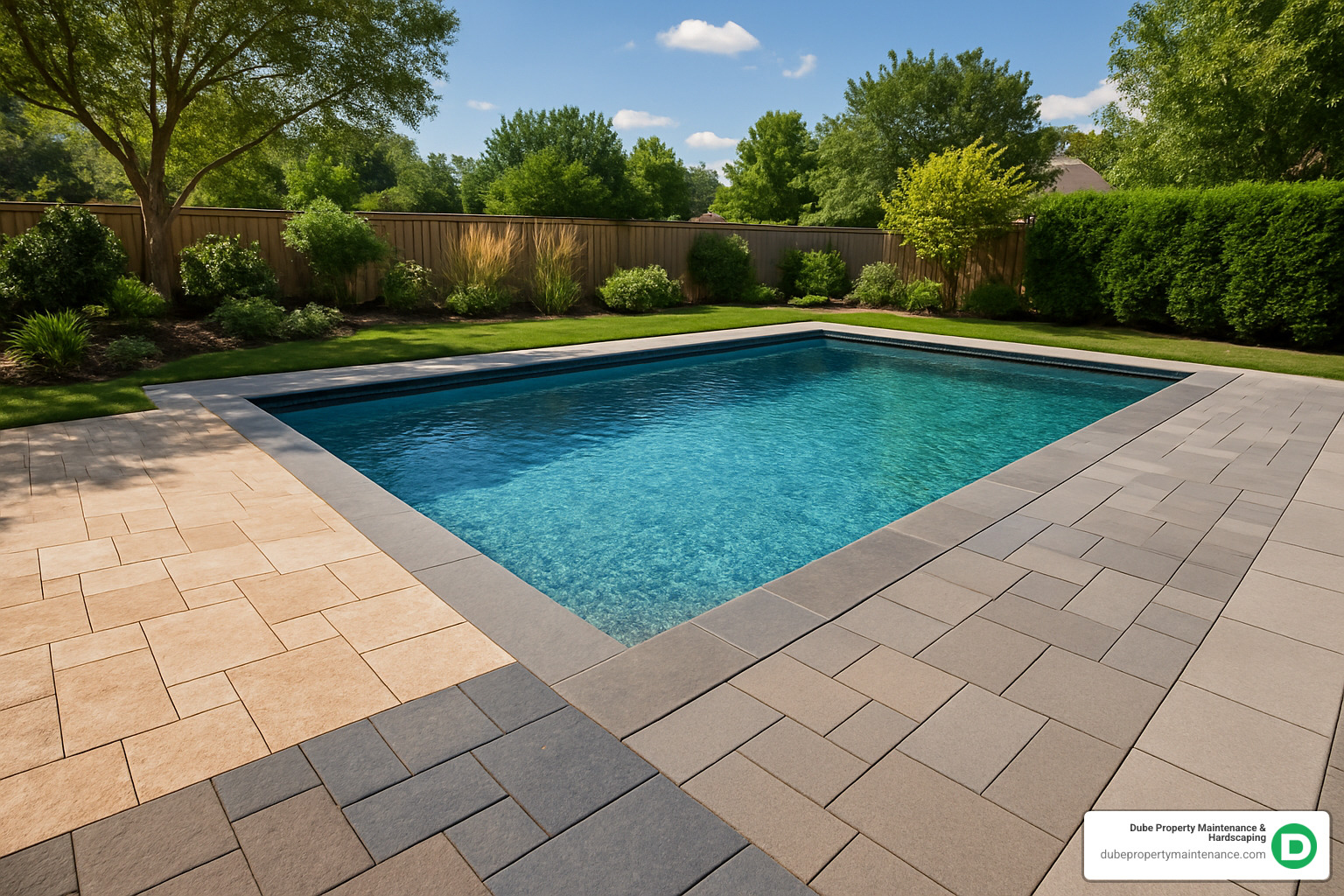
Choosing the right material for your pavers around inground pool can feel overwhelming with so many options available. Each material has distinct characteristics that make the decision easier once you understand what matters most for your specific situation.
Travertine remains a favorite for pool decks, and for good reason. This natural limestone stays remarkably cool underfoot even on scorching summer days. The natural texture provides excellent slip resistance, though the porous surface does require sealing every few years. Internet pricing averages range from $5-$25 per square foot for materials, with premium grades reaching $75 per square foot.
Bluestone offers that classic New England look that complements traditional architecture beautifully. This dense, durable stone provides natural slip resistance and handles our harsh winters without complaint. Material costs typically range from $15-$30 per square foot, with premium selections reaching $90 per square foot.
For budget-conscious homeowners, concrete pavers deliver impressive value at $5-$15 per square foot for materials, with high-end options reaching $45 per square foot. Quality concrete pavers can mimic natural stone convincingly while offering consistent performance.
Porcelain pavers represent the premium end of the market, typically ranging from $15-$40 per square foot for materials, with luxury options reaching $120 per square foot. They offer consistent color that won’t fade, low maintenance requirements, and excellent durability.
Brick pavers bring timeless charm to pool areas, with material costs ranging from $8-$50 per square foot, and specialty handmade bricks reaching $150 per square foot.
Note: Price ranges mentioned are internet averages and not actual pricing for Dube Property Maintenance & Hardscaping services.
More info about Travertine Pavers Pool Deck
Living in Massachusetts and New Hampshire means your pavers need to handle freeze-thaw cycles without cracking or shifting. Travertine and quality concrete pavers excel in these conditions.
If you have a saltwater pool, choose materials with warranties against salt damage. Porcelain and properly sealed natural stone typically handle saltwater exposure better than unsealed materials.
For those dealing with intense summer heat, light-colored materials are your friend. Travertine naturally stays cool, while light-colored concrete pavers also perform well when temperatures soar.
The design possibilities with pavers around inground pool installations are where creativity really shines. Herringbone patterns create classic visual interest while providing excellent structural stability—the interlocking design actually makes the entire surface stronger.
Contrasting borders can transform an ordinary pool deck into something special. Using different colored or sized pavers to define pool edges creates visual boundaries and adds sophisticated detail.
For evening entertainment, LED inlays between pavers create dramatic nighttime illumination. These lighting strips can highlight pathways, define seating areas, or simply add ambiance for evening swims.
Getting pavers around inground pool installed correctly is like building a house—everything depends on the foundation. We’ve seen too many beautiful paver installations fail within a few years because someone cut corners on the base preparation.
The installation process starts with proper excavation—digging out the area to accommodate both the base materials and the pavers themselves. We typically excavate 10-12 inches below the finished grade, which might seem like a lot of digging, but this depth is crucial for long-term stability.
Next comes the crushed stone base, which is arguably the most important part of the entire project. We install 8-10 inches of compacted crushed stone in 3-4 inch lifts. Each lift gets thoroughly compacted before adding the next layer.
Slope management is critical around pools. We create a minimum 1/8 inch per foot slope away from both the pool and your house. This ensures water flows where it should go instead of pooling on your deck.
The finishing touches make all the difference. Polymeric sand fills the joints between pavers, hardening when activated with water to prevent weed growth and provide stability. A proper sealing schedule—starting with an initial application after installation, then every 3-5 years—protects your investment and keeps colors vibrant.
More info about Installing Pavers Around Swimming Pool
A typical paver installation around your pool follows a methodical sequence that takes 3-7 days depending on the project size and complexity.
We start by excavating all existing materials and digging to the proper depth. Then comes compacting the base layers—installing and thoroughly compacting each lift of crushed stone base material.
Laying the bedding sand comes next—a precise 1-inch layer that gets screeded perfectly level. Then we set the pavers according to your chosen pattern, taking care to maintain consistent joint spacing.
Edge restraints get installed around the perimeter to prevent lateral movement over time. Vibratory compaction uses a plate compactor to seat each paver firmly into the bedding sand. We follow this with joint filling—sweeping polymeric sand into all joints and activating it according to manufacturer specifications.
The beauty of quality paver installations is that they’re surprisingly low-maintenance when you stay on top of a few key tasks.
Weed prevention starts with proper installation—good base prep and quality polymeric sand prevent most weed issues before they start. Stain cleanup is easiest when you act fast. Clean spills immediately, especially around pool areas where sunscreen, food, and drinks are common.
Resealing every 3-5 years maintains that protective barrier that preserves color and resists staining. The exact frequency depends on foot traffic and weather exposure, but staying consistent with this schedule keeps your pavers looking their best for decades.
When homeowners invest in pavers around inground pool installations, they’re not just improving their outdoor living space—they’re making a strategic investment in their property’s future value. The right paver deck can transform an ordinary backyard into a resort-like retreat that catches buyers’ attention and justifies premium pricing.
The visual impact is immediate and lasting. Where concrete might look utilitarian, quality pavers suggest thoughtful design and premium materials throughout the property. This luxury perception extends beyond the pool area, influencing how potential buyers view the entire home’s quality.
Real estate professionals consistently note that homes with quality hardscaping compete more effectively in higher price brackets. While exact returns vary by market conditions and installation quality, well-executed paver projects typically recover 70-80% of their investment in added home value.
Professional appraisers look beyond surface beauty when evaluating hardscaping improvements. They consider the quality of materials, installation craftsmanship, and how the improvements integrate with the property’s overall character.
Paver installations signal attention to detail that appraisers associate with well-maintained properties. The safety advantages of slip-resistant surfaces also factor into valuations, particularly for family-oriented neighborhoods where pool safety is a primary concern.
The durability factor influences long-term value retention as well. Appraisers recognize that quality paver installations maintain their appearance and function for decades with proper care, while concrete often shows significant wear within 10-15 years.
Finding the right contractor for your pavers around inground pool project requires more than comparing quotes. The lowest bid often leads to the highest long-term costs when shortcuts compromise the installation quality.
Start with insurance and bonding verification. Any contractor working around your pool and home should carry current liability insurance and worker’s compensation coverage. Don’t just take their word—ask to see certificates and verify coverage directly with their insurance company.
Portfolio reviews reveal more than pretty pictures. Look for projects completed 3-5 years ago and ask about long-term performance. Quality contractors are proud to show how their work ages and will often provide references from past clients.
The drainage plan separates experienced pool deck installers from general contractors. Pool areas present unique challenges with water management, and contractors should demonstrate clear understanding of proper grading, base preparation, and integration with existing drainage systems.
Written warranties protect your investment beyond completion day. Material warranties should be clearly separated from workmanship guarantees, with specific terms for different types of potential issues.
At Dube Property Maintenance & Hardscaping, we understand that choosing a contractor involves trusting someone with a significant investment in your property’s future. Our comprehensive approach addresses every aspect of paver installation, from initial design through long-term maintenance support, ensuring your pool deck improvement delivers lasting value and enjoyment.
This is honestly the question we hear most often, and we get it—nobody wants to spend more than necessary. But here’s the thing: pavers around inground pool installations usually end up being a smart financial decision, even with that initial sticker shock.
While pavers cost 2-3 times more upfront than concrete, you’re essentially buying insurance against future headaches. When concrete cracks (and it will), you’re looking at cutting out entire sections and trying to match the color and texture. With pavers, you just pop out the damaged piece and drop in a new one.
The strength difference is impressive too. Quality pavers handle around 8,000 PSI compared to concrete’s 3,500 PSI. In New England, where we get brutal freeze-thaw cycles, that extra strength really matters.
Here’s where proper installation makes all the difference. Pavers around inground pool areas that are installed correctly should stay put for decades. The secret is in that foundation—we’re talking about 8-10 inches of properly compacted crushed stone.
Most shifting problems we see come from contractors who cut corners on base preparation. Poor compaction or skimping on depth will come back to haunt you within a few years.
Nobody wants to do the hot-foot dance around their own pool! Travertine is hands-down the coolest option for bare feet. Its natural cellular structure and light color work together to keep surface temperatures manageable even on scorching summer days.
On a typical 95°F day, light-colored travertine usually measures about 5-10 degrees cooler than darker materials. Color trumps material type in most situations—a light cream or beige paver will stay significantly cooler than a dark charcoal one, regardless of material.
Making the decision about pavers around inground pool doesn’t have to feel overwhelming. After walking through all the pros and cons, costs and benefits, most homeowners find the choice becomes clearer when they focus on what matters most to their family.
Yes, pavers cost more upfront—sometimes double or triple what you’d spend on concrete. But families who invest in quality pavers rarely regret the decision. The superior slip resistance keeps kids safer during poolside activities. The cooler surface temperatures mean no more hopping across scorching concrete on bare feet. And when that inevitable stain or crack happens, you’re looking at replacing a few stones instead of jackhammering entire sections.
The maintenance isn’t as scary as it sounds either. You’ll need to top off the joint sand every few years and maybe pull a few weeds. But compare that to watching concrete crack and trying to find a repair patch that actually matches the original color.
Climate matters here in New England. Our freeze-thaw cycles are brutal on rigid concrete slabs, but pavers handle the seasonal ground movement like champs. Each stone can shift slightly without creating the spider web cracks that plague concrete decks after harsh winters.
From a design standpoint, there’s simply no comparison. Concrete gives you concrete—maybe with some stamping or coloring. Pavers give you travertine, bluestone, brick, porcelain, and dozens of patterns to choose from.
The home value boost is real too. When potential buyers see quality hardscaping, they immediately assume the rest of the property has been maintained to the same standard.
At Dube Property Maintenance & Hardscaping, we’ve guided hundreds of families through this exact decision. The ones who choose pavers consistently tell us years later that it was one of their best home improvement investments.
Whether you’re building your dream pool or finally replacing that cracked concrete eyesore, we’re here to help you steer the options. Our team handles everything from initial design through long-term maintenance planning, so you can focus on enjoying your backyard oasis.
More info about Pool Deck Paving
Ready to see what’s possible for your pool area? Give us a call to discuss your vision and get a detailed assessment of your project. We serve homeowners throughout Massachusetts and southern New Hampshire, bringing decades of hardscaping experience to every installation.