Why Paver Walkway Installation Transforms Your Property
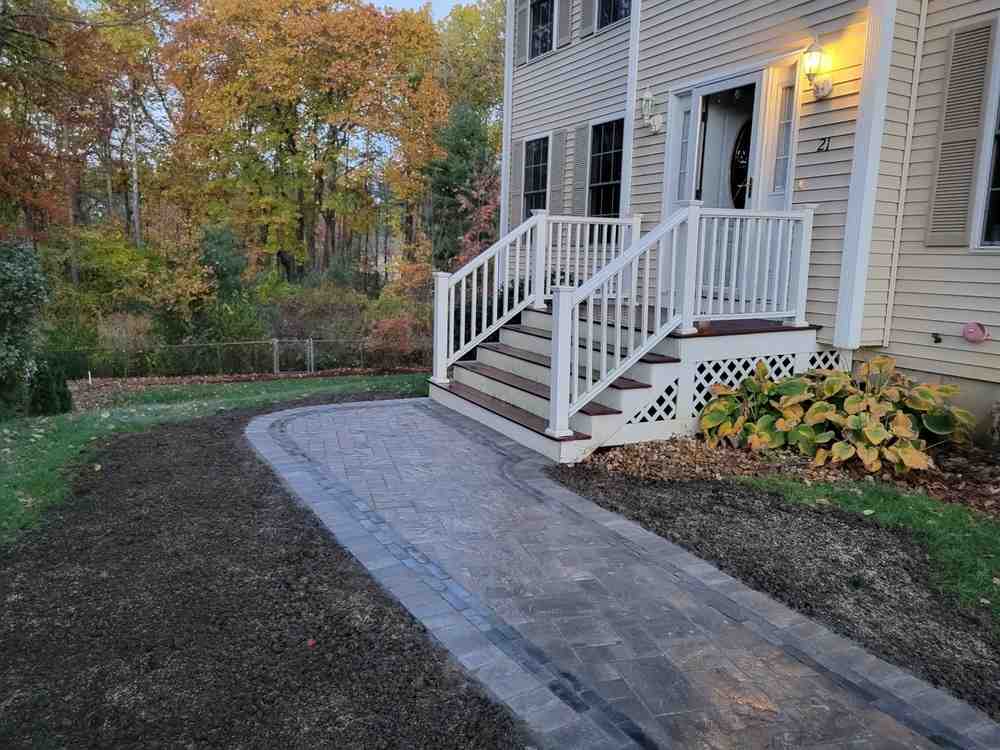
Paver Walkway Installation is a proven way to boost your home’s curb appeal, increase property value, and create a durable, beautiful path that can last 50 to 100 years. Whether you’re connecting your driveway to your front door or designing a garden path through your landscape, a professionally installed paver walkway combines function with timeless aesthetic appeal.
Quick Overview: What Makes a Successful Paver Walkway?
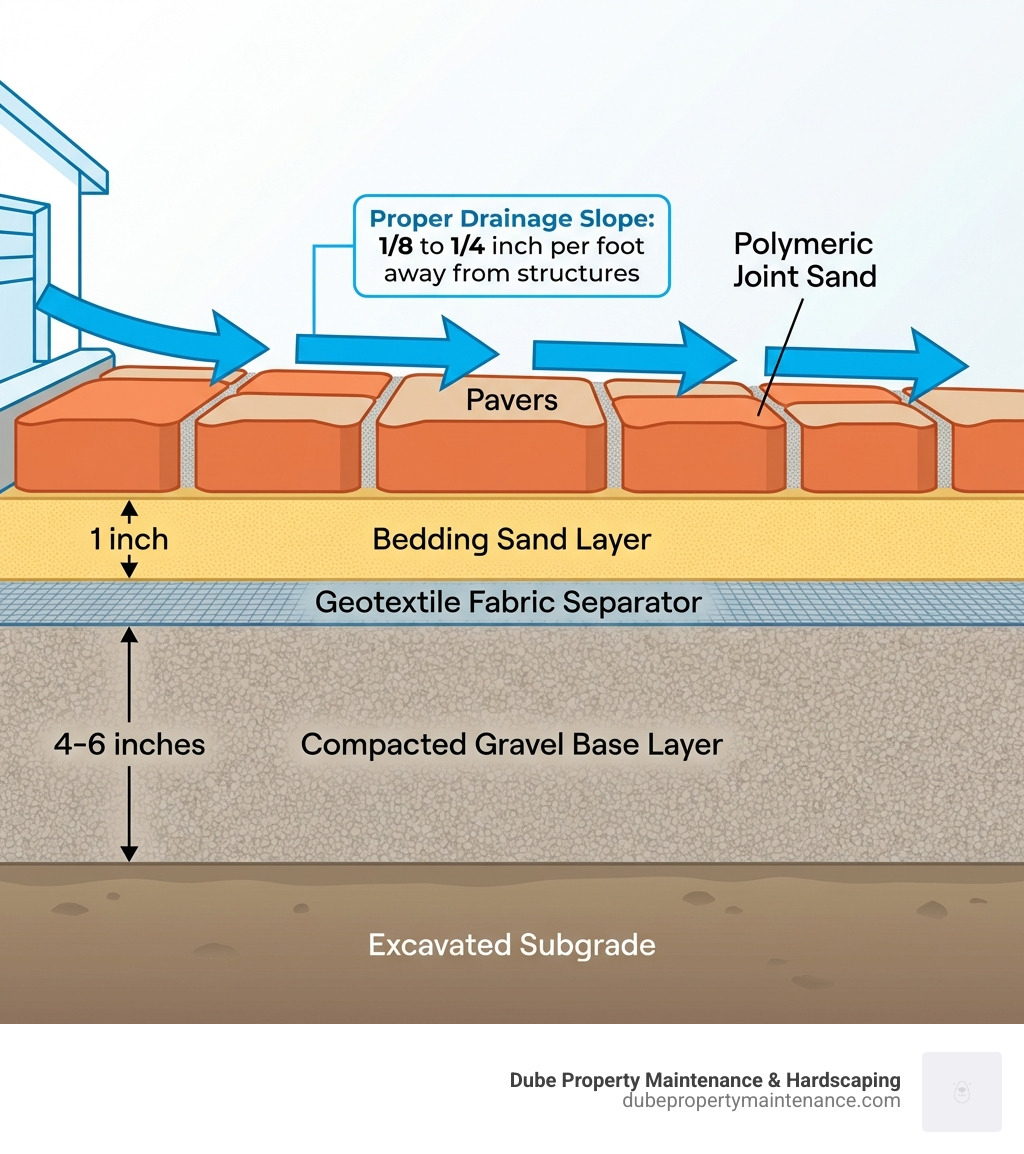
Proper base preparation – 4-6 inches of compacted gravel plus 1 inch of bedding sand
Correct drainage slope – 1/8 to 1/4 inch per foot away from structures
Quality materials – Concrete, clay brick, or natural stone pavers
Professional installation – Edge restraints, polymeric joint sand, and proper compaction
Average cost – Varies widely from under $1,500 to over $7,500, with costs detailed further in this guide ($9-$20+ per square foot)
A paver walkway isn’t just about placing stones on the ground. It’s a system of layers working together to create a stable, long-lasting surface. The success of your walkway depends heavily on what you can’t see—the properly excavated and compacted base underneath.
According to research from multiple installation guides, 80% of a successful paver project is in the base preparation. Without a solid foundation, even the most beautiful pavers will sink, shift, or develop uneven spots over time.
For homeowners in Andover, Haverhill, North Andover, and surrounding Massachusetts towns, understanding the installation process helps you make informed decisions about materials, design, and whether to tackle the project yourself or hire professionals.
In this guide, we’ll walk you through every step of paver walkway installation—from initial planning and choosing materials to the final compaction and sealing. You’ll learn what separates a walkway that lasts decades from one that needs repairs in just a few years.
Before we even think about digging, the first and most exciting step in any paver walkway installation is planning and design. This is where your vision comes to life! A well-thought-out plan ensures not only a beautiful outcome but also a functional and long-lasting one.
When considering the layout, think about the primary use of your walkway. If it’s meant for two people to walk side-by-side comfortably, we recommend a width of 48 inches. A standard walkway is typically 36 inches wide. For accessibility, especially if you need to accommodate wheelchairs, a pathway must be at least 36 inches wide, with a 60-inch-wide turnaround area for easy maneuvering.
Next, let’s talk patterns! Pavers offer incredible versatility. Traditional paver patterns like jack-on-jack or running bond are classic choices and relatively straightforward to install. For those looking for a bit more flair, advanced paver patterns such as herringbone or pinwheel can create stunning visual interest, though they do require more precise cutting and planning. Stamped pavers can also give you a decorative stone-like appearance with easier installation.
To lay out your design, we’ll use simple tools like stakes and string, or even a garden hose to visualize curves, before marking the path with spray paint. A critical aspect of planning is ensuring proper drainage. Your walkway should have a gentle slope, typically 1/8 to 1/4 inch per foot, directing water away from your home’s foundation and other structures. This prevents pooling and potential water damage down the line.
Choosing Your Paver Material
The type of paver you select significantly impacts the look, feel, durability, and cost of your walkway. Let’s explore the most common options available for paver walkway installation:
Concrete Pavers: These are the most popular choice due to their versatility in color, shape, and size, as well as their affordability. They are durable, easy to repair, and readily available. Concrete brick pavers typically cost between $8 and $15 per square foot, including installation.
Clay Brick Pavers: Offering a classic, timeless aesthetic, clay brick pavers are known for their rich, natural colors. They are very strong and durable, though they can fade over time if not sealed. Installation costs usually range from $10 to $20 per square foot.
Natural Stone Pavers: For a truly unique and luxurious look, natural stone options like flagstone, slate, or bluestone are excellent. Each piece is distinct, providing an organic, high-end finish. They are incredibly durable but come at a higher price point, typically $12 to $50 per square foot, including installation. Slate pavers specifically range from $11 to $20 per square foot. Natural stone can be laid unevenly for a rustic, natural style.
Permeable Pavers: While often a specific type of concrete paver, permeable pavers deserve a special mention. They are designed with larger joints or internal voids that allow rainwater to filter through to the ground below, reducing stormwater runoff and replenishing groundwater. They require a specific base system to function effectively but are an excellent choice for eco-conscious homeowners.
Low to moderate; sealing recommended to retain color, easy repair
Natural Stone Pavers
$12 – $50
High; extremely long-lasting, unique aesthetic
Low to moderate; occasional cleaning, can be more challenging to cut
Key Design Elements for Your Paver Walkway Installation
Beyond the paver material itself, several design elements can lift your walkway from merely functional to a true landscape feature. We consider how the walkway integrates with your existing landscape, whether it’s a straight shot to the front door or a winding path through a garden. Curves require more pavers and cuts, which means a bit more work, but the aesthetic payoff can be significant.
Adding contrasting borders or accents can define the walkway’s edges and add visual interest. Imagine a dark border around a lighter main paver, or a unique pattern at the entrance. We can also plan for integrated landscape lighting, which not only improves safety at night but also highlights the beauty of your paver walkway. For a comprehensive approach to your outdoor spaces, consider our full range of hardscaping services.
Navigating Local Regulations in Massachusetts
Before any digging begins for your paver walkway installation, it’s crucial to understand and comply with local regulations. In Massachusetts towns such as Methuen, Andover, North Andover, Lawrence, Haverhill, Lowell, Dracut, Tewksbury, and others in our service area, building codes and permit requirements can vary.
We always advise checking with your local municipal planning or building department for specific guidelines. Some larger projects, or those that alter drainage patterns, might require a permit. Permits for walkway installation can cost anywhere from $200 to $1,000. Additionally, if your property is part of a Homeowners Association (HOA), there might be specific aesthetic or material requirements you need to adhere to.
Perhaps the most important step before any excavation is to call 811. This free service helps you identify and mark buried utility lines, preventing costly and dangerous accidents. We always prioritize safety and compliance in all our projects.
Understanding Paver Walkway Costs
We know that understanding the financial investment is a key part of planning your paver walkway installation. The costs we discuss here are average estimates based on internet data and may not reflect the exact pricing structure of Dube Property Maintenance & Hardscaping. Actual costs can vary significantly depending on specific project details, materials chosen, and site conditions. We always provide detailed, transparent quotes for our clients.
The average cost of a paver walkway is around $2,480, with prices typically ranging from $1,430 to $7,500. However, for complex designs, high-end materials, or extensive site preparation, a paver walkway can cost well over this range. On a per-square-foot basis, including installation, prices generally range between $9 and $20, but can be higher depending on the factors below.
Several factors influence the overall price tag:
Materials: As discussed, concrete pavers are generally the most economical, while natural stone pavers tend to be at the higher end of the spectrum. The type of paver you choose will have a significant impact.
Project Size and Complexity: A larger walkway naturally requires more materials and labor. Similarly, intricate patterns like herringbone or pinwheel, or designs with many curves, require more cutting and skilled labor, increasing costs. A simple, smaller walkway might cost around $1,400, while a complex, large project with high-end materials can be much more.
Labor: Labor is a significant component of the total cost and varies based on the project’s size, complexity, and regional factors. The time required for proper excavation, base preparation, and paver laying directly impacts this cost.
Prep Work: This is often an underestimated cost. If the site requires extensive grading (which can cost between 8 cents and $2 per square foot) or removal of old concrete or debris (30 to 50 cents per square foot), these costs will add up. The ground needs to be compacted and perfectly prepared, which takes time and specialized equipment.
Decorative Additions: Features like custom borders, integrated steps, or landscape lighting will add to the overall cost but significantly improve the aesthetic appeal and functionality.
Permits: As mentioned, permits can range from $200 to $1,000 depending on your local municipality.
When considering a paver walkway installation, many homeowners wonder whether to tackle it themselves or hire a professional. While a DIY approach might seem like a way to save money, it often comes with significant challenges and potential hidden costs.
DIY Challenges:
Equipment Rental: You’ll need specialized tools like a plate compactor, wet saw for cutting pavers, and potentially excavation equipment. Renting these can add up. For example, the total cost for DIY equipment and materials for a 35’ x 4’ walkway is estimated at around $2,978. When you factor in the risk of costly errors, the intense physical labor, and the lack of a professional guarantee, the value of hiring an expert becomes clear.
Physical Labor: Excavation, moving tons of gravel and sand, and laying pavers is incredibly strenuous work. It’s not a weekend project for the faint of heart!
Risk of Errors: Without proper experience, it’s easy to make mistakes in grading, base compaction, or paver alignment. These errors can lead to uneven surfaces, drainage issues, and premature failure of the walkway.
Time Commitment: A proper paver walkway installation is a multi-day, labor-intensive project, even for experienced DIYers.
The Value of Professional Expertise:
Hiring a professional team like ours brings numerous benefits that often outweigh the perceived savings of DIY:
Efficiency and Experience: We have the expertise, the right tools, and the trained crew to complete the project efficiently and correctly the first time.
Proper Tools and Equipment: We own and operate all the necessary equipment, from excavators to plate compactors, ensuring each step is performed to industry standards.
Structural Guarantee: A professional installation typically comes with a guarantee, giving you peace of mind that your investment is protected. We stand behind our work 100%.
Long-Term Cost Savings: While the upfront cost might be higher, a professionally installed paver walkway is built to last, preventing costly repairs or even a complete redo that can result from improper DIY installation. Pavers installed correctly can last 50 to 100 years, making them a worthwhile long-term investment.
The differences in cost and effort between a DIY paver walkway and professional installation often boil down to long-term value and peace of mind. For a durable, beautiful walkway that improves your property for decades, professional installation is often the smarter choice.
The Step-by-Step Paver Walkway Installation Process
At Dube Property Maintenance & Hardscaping, we follow a meticulous, multi-step process to ensure every paver walkway installation is built to last. This systematic approach guarantees durability, proper drainage, and a stunning aesthetic.
Site Preparation: Excavation and Base Construction
This is arguably the most critical phase, as we mentioned earlier, 80% of a successful paver project is in the base preparation. Cutting corners here leads to future headaches.
Call 811: Before any digging, we always ensure buried utility lines are marked. Safety first!
Layout and Mark: We precisely mark the walkway’s path, considering its width (standard 36-48 inches, or 36 inches for wheelchair access with a 60-inch turnaround) and any curves.
Excavation: The depth of excavation is crucial. It needs to accommodate the combined thickness of your pavers, the bedding sand, and the gravel base. For example, if you have 2-inch thick pavers, 1.5 inches of bedding sand, and a 4-inch gravel base, you’ll need to excavate approximately 7.5 inches deep. For well-draining soil, 7 inches deep might suffice, but for poorly-draining soil conditions, we often go 9 inches deep to ensure adequate drainage. We excavate 6 inches wider on all sides than the finished project size to ensure proper edge restraint installation.
Grading for Proper Slope: We carefully grade the excavated area to achieve the recommended slope of 1/8 to 1/4 inch per foot away from any structures. This ensures proper water runoff and prevents pooling.
Soil Compaction: The subgrade (the excavated soil beneath everything) must be thoroughly compacted with a plate compactor to prevent future settling.
Geotextile Fabric Installation: We then lay a high-quality geotextile fabric (also known as landscape fabric) across the entire excavated area. This fabric is essential for several reasons: it keeps the gravel base from mixing with the subgrade, stabilizes the soil, helps prevent weeds from growing up through the base, and improves overall drainage. We overlap edges by 4-6 inches.
Building a Compacted Gravel Base: We spread and compact the gravel base in layers, typically 2-inch “lifts.” For residential walkways, we often use Recycled Concrete Aggregate (RCA) or 3/4-inch minus aggregate with fines. A 4 to 6-inch thick gravel base is standard, compacted thoroughly with a plate compactor after each lift. We ensure the entire base is compacted properly, not just the top layer. You can test if the base is adequately compacted if a steel spike cannot be driven into it with anything less than a 3-pound sledgehammer.
Here’s a list of essential tools and materials we use for a professional paver walkway installation:
Measuring tape & marking paint
Shovel & square-edge spade
Plate compactor (or hand tamper for small areas)
Wheelbarrow & metal rake
Level or 4-foot straight board
Rubber mallet
String lines & stakes
Geotextile landscape fabric
Paver base material (crushed rock, RCA)
Bedding sand (masonry sand or concrete sand)
Pavers (concrete, clay brick, or natural stone)
Polymeric joint sand
Edge restraints & spikes
Circular saw or tub saw with a diamond blade (for cutting pavers)
Safety glasses and gloves
Laying Pavers and Finishing Touches
With the base carefully prepared, we move on to the visible, beautiful part of your paver walkway installation:
Spreading and Screeding the Bedding Sand Layer: We spread a uniform layer of bedding sand (masonry or concrete sand) over the compacted gravel base. This layer is typically 1 to 1.5 inches thick. To achieve a perfectly level (or gently sloped) surface, we use screed pipes (1-inch diameter PVC pipes or rebar) as guides, pulling a straight 2×4 across them to “screed” the sand down to a precise 1-inch thickness. This creates a smooth, consistent bed for the pavers.
Installing Durable Edge Restraints: Before laying all the pavers, we install edge restraints around the perimeter of the walkway. These are crucial for longevity, preventing the pavers from shifting, spreading, or separating over time due to weather and foot traffic. Edge restraints can be plastic, pre-cast concrete, metal, or wood, secured with spikes according to manufacturer instructions.
Laying Pavers: We begin laying pavers from a fixed, straight edge, such as against your house foundation or driveway, working our way outwards. We ensure consistent joint spacing and follow the chosen pattern. We frequently stretch guidelines across the walk (every 10 pavers or so) to maintain alignment.
Making Precise Cuts: For edges, curves, or intricate patterns, pavers often need to be cut. We use a circular saw or tub saw with a diamond blade, always wearing eye protection, to make precise, clean cuts.
Compacting the Pavers: Once the pavers are laid, we gently compact them into the sand bedding using a plate compactor. This “sets” them firmly into the sand, ensuring they are stable and level.
Applying and Compacting Polymeric Joint Sand: The final step involves sweeping fine-grained joint sand (often polymeric sand) over the entire surface. Polymeric sand contains polymers that, when activated with water, harden to create a durable, flexible bond between the pavers. This significantly helps lock pavers in place, prevents weed growth, deters insects, and resists erosion. We sweep the sand into all the gaps, compact the surface again with the plate compactor to vibrate the sand deep into the joints, and then sweep in more sand until the joints are completely full. Finally, for polymeric sand, we lightly spray the surface with water multiple times to activate the polymers, allowing it to cure overnight.
Advanced Features and Long-Term Care
A well-designed paver walkway can be more than just a path; it can be an integral part of your property’s overall hardscape and landscape design.
Integrating Steps and Other Hardscapes
Sometimes your property’s grade requires more than just a gentle slope. This is where integrating steps into your paver walkway installation becomes essential. We can seamlessly design and build steps that flow naturally with your walkway. The process involves:
Measuring Grade Change: We accurately measure the vertical elevation change to determine the number and height of steps needed. Typically, every 6-7 inches of vertical difference requires one riser for a step.
Excavating a Terrace: A flat, stable terrace is excavated for each step, ensuring a solid foundation.
Riser Construction: Risers, the vertical face of each step, are constructed using treated lumber, concrete blocks, or even matching pavers, set level and square at the downhill edge.
Base and Paver Layers: The base material, bedding sand, and pavers are then installed on the uphill side, continuing the walkway’s layers.
Your paver walkway can also beautifully transition into other hardscaped areas. We specialize in creating seamless connections to your patio installation, extending your outdoor living space. Furthermore, for properties with sloping terrain, complementing your walkway with retaining walls can create terraced garden beds, manage erosion, and add architectural interest.
Maintaining Your Paver Walkway for Decades
One of the great advantages of a high-quality paver walkway installation is its longevity. With proper maintenance, your walkway can last anywhere from 50 to 100 years. Here are our best practices for ensuring its enduring beauty and structural integrity:
Routine Cleaning and Sweeping: Regularly sweep your walkway to remove debris, leaves, and dirt. This prevents organic matter from breaking down and promoting weed growth in the joints. For general cleaning, a mild detergent and a stiff brush work wonders.
Weed Prevention and Removal: While polymeric sand significantly reduces weed growth, some stubborn weeds might still appear. For prevention, ensure your joint sand is always full. For removal, pull them by hand or use an eco-friendly weed killer. Avoid harsh chemicals that could stain your pavers.
Topping Up Joint Sand: Over time, some joint sand may wash away or settle. Periodically inspect your joints and sweep in new sand, especially if you notice wider gaps. For polymeric sand, reapplication might be needed every few years, depending on wear and tear.
The Benefits of Sealing Pavers: We recommend sealing your pavers every few years. A high-quality paver sealant offers several benefits: it improves the paver’s color (often giving a “wet look”), protects against staining, inhibits vegetation growth in the joints, and further stabilizes the joint sand.
Best Practices for Snow and Ice Removal in New England Winters: For our clients in Massachusetts and Southern New Hampshire, winter maintenance is key.
Use plastic-bladed snow shovels to avoid scratching pavers.
If using a snow blower, raise the blades slightly to prevent damage.
Avoid using sharp objects like ice picks or metal shovels to chip away ice, as this can easily damage the paver surface.
Opt for calcium chloride-based de-icers, which are generally safer for pavers than rock salt.
Frequently Asked Questions about Paver Walkways
How long do paver walkways last?
With professional paver walkway installation and diligent maintenance, these durable surfaces can last an impressive 50 to 100 years. This far exceeds the lifespan of many other walkway materials like asphalt or poured concrete, making them a wise long-term investment for your property.
How do you prevent weeds from growing between pavers?
Preventing weeds is a multi-faceted approach crucial during installation and throughout the walkway’s life. A professionally installed base with a high-quality geotextile fabric creates a strong barrier from below. Tightly fitted pavers minimize joint gaps. Most importantly, the use of high-quality polymeric sand, which hardens when wet, is incredibly effective at locking pavers together and creating a solid, weed-resistant joint. Regular sweeping also helps prevent organic material from accumulating in the joints, which could otherwise provide a fertile ground for seeds.
Can a paver walkway be repaired easily?
Yes, this is one of the significant advantages of choosing pavers! Unlike a cracked concrete slab that requires extensive demolition and re-pouring, individual pavers can be easily lifted, re-leveled, or replaced without disturbing the entire walkway. This makes repairs simple, quick, and highly cost-effective, ensuring your walkway can maintain its pristine condition for decades.
Your Partner for a Lasting Paver Walkway
As we’ve explored, a successful paver walkway installation is a complex process that demands meticulous planning, precise execution, and quality materials. The beauty, durability, and easy repairability of pavers make them an outstanding investment for any homeowner looking to improve their property.
The secret to a walkway that stands the test of time, resisting shifting, settling, and drainage issues, lies squarely in its foundation. A solid, properly compacted base is not just important; it’s absolutely critical for longevity.
For homeowners in Methuen, Andover, North Andover, Lawrence, Haverhill, Lowell, Dracut, Tewksbury, and surrounding Massachusetts towns, as well as Salem, NH, a professional installation is key to a walkway that lasts. At Dube Property Maintenance & Hardscaping, we pride ourselves on providing expert design and installation services. Our experienced team ensures every layer, from the subgrade to the polymeric sand, is installed to the highest standards, giving you a beautiful, functional, and durable walkway you’ll enjoy for generations.
For 25+ years Dube Property Maintenance & Hardscaping has provided top-rated residential and commercial landscape design, installations, hardscaping, irrigation systems and commercial snow and ice management. Our hardscaping division proudly serves the Merrimack Valley, Middlesex and Essex County and Southern, NH regions, transforming outdoor spaces into stunning works of art.