

Paver Walkway Ideas offer homeowners numerous ways to create stunning pathways that boost curb appeal and property value while providing durable, low-maintenance access.
Top Paver Walkway Design Options:
A well-designed walkway transforms your home’s exterior, increases property value, and solves practical problems like muddy paths and poor drainage.
For Methuen homeowners, paver walkways offer superior durability against harsh winters compared to concrete. They resist freeze-thaw damage, provide better traction, and individual pavers are easily replaced, unlike concrete slabs that require full replacement when cracked.
With a wide selection of shapes, sizes, and colors—from eco-friendly permeable options to classic brick patterns—you can create a unique pathway that matches your home’s character and handles New England’s challenging climate.

Creating the perfect paver walkway starts with careful planning. The decisions you make now will determine if your walkway is a beautiful, lasting feature or a future headache. Your design must match your home’s style, handle New England weather, fit your budget, and serve your family’s needs.
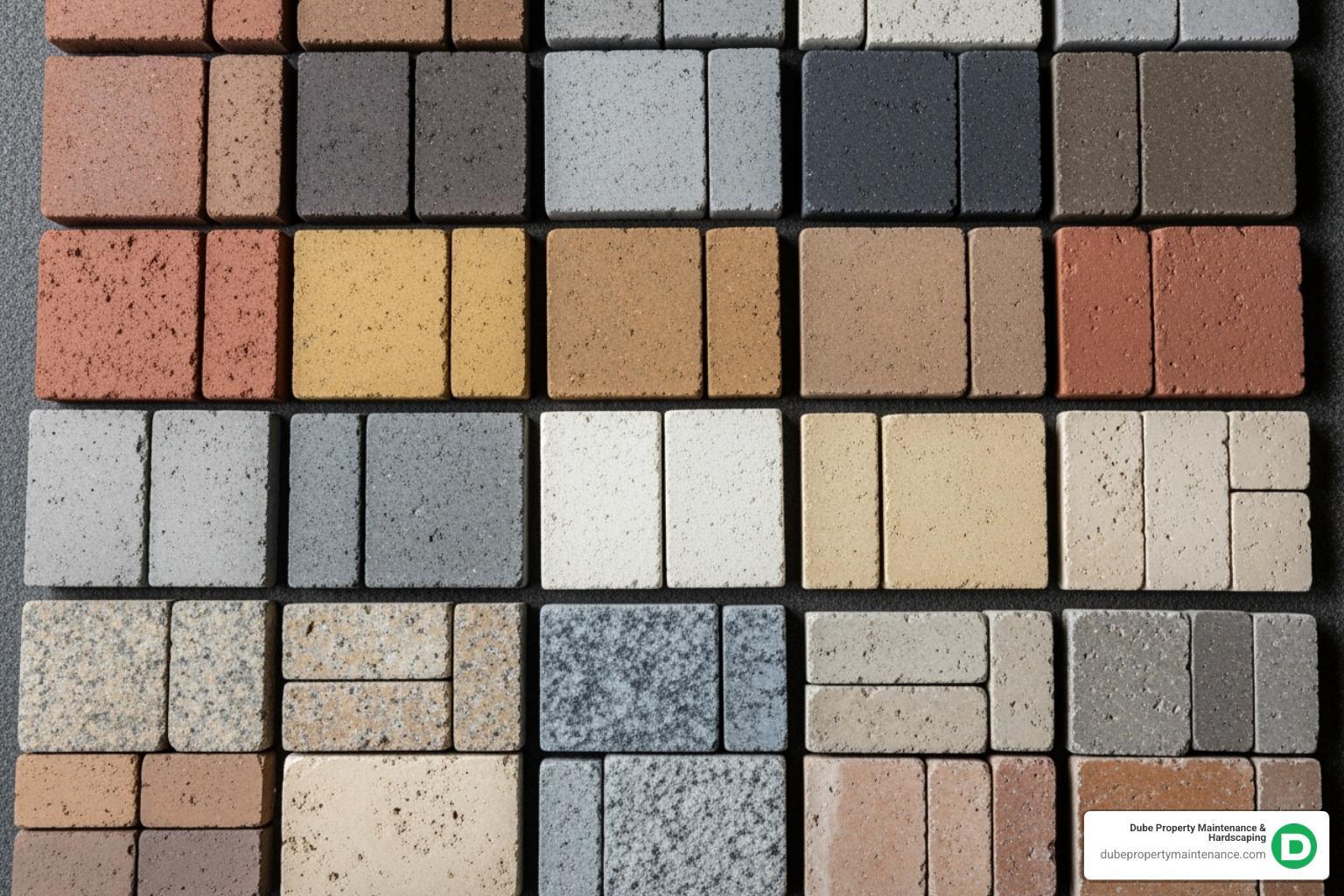
Your paver choice sets the tone for your project. Each material has unique benefits.
Concrete pavers are versatile and affordable, available in endless colors, shapes, and sizes that can mimic brick or stone. They handle Methuen’s freeze-thaw cycles well.
Brick pavers offer timeless appeal with warm, earthy tones. They are perfect for colonial and traditional homes, aging gracefully over time.
For pure elegance, natural stone pavers like granite or bluestone are best. While costlier, their durability and stunning appearance can significantly boost property value.
Flagstone‘s flat, irregular pieces create organic, meandering pathways. Gaps can be filled with sand, gravel, or low-growing plants for a living walkway.
Cobblestone pavers are incredibly durable and create old-world charm, though their rounded texture can be uneven to walk on.
Permeable pavers are an eco-friendly choice that allows rainwater to filter into the ground. This reduces runoff and helps with drainage issues.
For a deeper dive into each material’s pros and cons, check out our comprehensive guide on Choosing the Perfect Pavers: Materials and Styles.
Your walkway should complement your home’s architecture and withstand local weather.
Modern homes pair well with large format concrete pavers in grays or charcoals. Clean lines and geometric patterns create a minimalist aesthetic.
Rustic cottages benefit from materials with character like natural stone, weathered brick, or textured concrete pavers in earth tones. Curved paths improve the cozy feel.
Traditional architecture pairs beautifully with classic brick or natural stone. Herringbone or basketweave patterns add timeless visual interest.
In our climate, pavers must handle freeze-thaw cycles. Choose materials with low water absorption, like dense natural stone or high-quality concrete pavers.
Proper drainage planning, including slope and base preparation, is vital for heavy rainfall and snowmelt. Also consider color harmony with seasonal landscapes and paver texture for safety; textured surfaces offer better grip than smooth ones, which can be slippery.
A functional walkway is as important as a beautiful one. Smart design considers daily use.
Walkway width impacts comfort. A 36-inch width is adequate for single-file traffic, but 48-inch walkways allow two people to walk comfortably side-by-side and feel more welcoming for main entrances.
For wheelchair accessibility, a minimum width of 36 inches is required, with 60-inch turnaround areas. Gentle slopes and smooth transitions are essential for safety.
The shape of your walkway affects aesthetics and function. Straight paths offer a formal, direct route suitable for modern and traditional homes. Meandering curves create a relaxed, organic feel, perfect for garden settings and navigating landscape features. If curved walkways appeal to you, our guide on How to Install a Curved Paver Walkway provides detailed installation tips.
Understanding costs helps you decide on materials, size, and whether to DIY or hire a pro.
DIY installation saves money on labor but requires time, effort, and tool rentals. Professional installation costs more but offers expertise, efficiency, and warranties for a longer-lasting, better-looking result. Please remember that all costs mentioned here are average estimates based on internet data and not actual costs for Dube Property Maintenance & Hardscaping.
Professional cost ranges typically run from $10 to $30+ per square foot, varying with materials and design complexity. Basic concrete pavers are on the lower end, while intricate natural stone patterns cost significantly more.
To calculate material cost, measure your walkway’s square footage. Order 10-15% extra pavers, base gravel, sand, and edge restraints to account for cuts and waste.
For DIY projects, budget for tool rentals like a plate compactor and paver saw, which can add several hundred dollars to the cost.
For detailed cost breakdowns and money-saving tips, explore our Paver Walkway Installation Cost guide.
Now that we’ve covered planning, let’s explore some brilliant paver walkway ideas to transform your outdoor space. These concepts go beyond basic functionality, creating pathways that are integral design elements.

Accept sustainable landscaping with permeable pavers. They allow rainwater to filter into the ground, reducing stormwater runoff, recharging groundwater, and minimizing puddles and erosion. This creates a healthier local ecosystem. They can even be designed with grass growing between them for a lush, green pathway.
We can help you explore Pavers with Grass in Between Designs to achieve this natural, eco-conscious look.
For a sleek, contemporary look, use large format pavers. Their oversized shape creates a minimalist feel with clean lines and a sense of space. Lay them with tight joints for a seamless surface or space them apart with gravel for a modern stepping-stone effect. This style is a bold choice that pairs perfectly with modern architecture.
Explore more on Innovative Large Square Pavers Walkway Next to Driveway: Combining Cement and Gravel for visual inspiration.
For rustic charm, choose cobblestone and flagstone. Cobblestone’s small, rounded shapes offer a textured, historical feel. Flagstone’s flat, irregular pieces create an organic pathway that blends with natural landscapes. These materials provide a natural charm that manufactured pavers can’t replicate, perfect for creating an old-world garden look.
For more inspiration on using natural stone, check out our ideas for Flagstone Steps and Walkway.
The laying pattern adds significant visual interest. Classic patterns like herringbone and basket weave have a timeless appeal that can lift any walkway.
These patterns can transform a simple pathway into a work of art. See examples in our Brick Walkway Patterns Pictures gallery.
A well-defined border completes the look of your paver walkway and provides structural integrity, preventing pavers from shifting.
These details add a polished look. Our experts in Masonry Steps and Walkways can help you design custom borders.
Integrated walkway lighting provides both safety and ambiance. Well-placed lights ensure safe passage after dark and dramatically improve the aesthetic of your walkway and landscape.
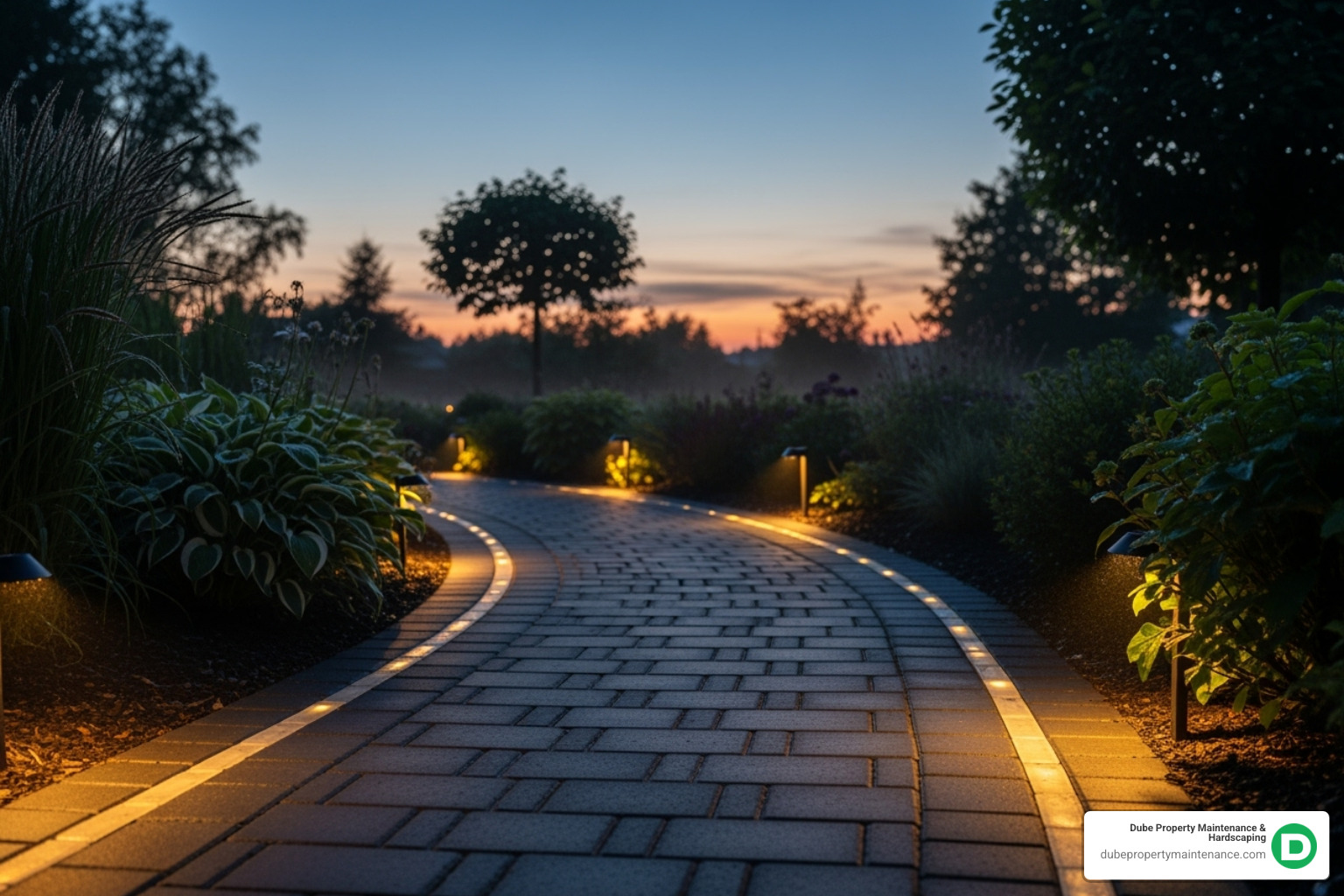
Incorporating ambient lighting can significantly lift your outdoor space. For more inspiration, refer to this Guide to ambient lighting.
A DIY paver walkway project can be incredibly satisfying, but success depends on a solid foundation. While professional installation guarantees durability, a well-built DIY path can also improve your home’s aesthetics and value. The beauty of your walkway is only as good as the base beneath it.
Gathering the right tools and materials will make the project go smoothly.
Tools: You’ll need a shovel, rake, plate compactor (a must-have rental), a 4-6 foot level, rubber mallet, and a paver saw with a diamond blade. Also gather string line, stakes, a wheelbarrow, and safety gear (gloves, glasses, ear protection).
Materials: You will need your chosen pavers, a crushed stone or gravel base, bedding sand, edge restraints, and polymeric jointing sand to fill the gaps and lock pavers in place.
Follow these 7 steps carefully to build a professional-quality paver walkway.
Step 1: Site Preparation and Layout. Before digging, call 811 to have utilities marked. Outline your walkway with stakes and string, planning for a slight drainage slope away from your house.
Step 2: Excavation. Dig about 8 inches deep to accommodate your base, sand, and pavers. Excavate 6 inches wider on each side for stability and to secure edge restraints.
Step 3: Base Installation and Compaction. Spread the gravel base material in 2-3 inch layers, compacting each layer thoroughly with a plate compactor. Proper compaction is crucial to prevent future settling. For more detailed guidance, see our guide on Base for Pavers.
Step 4: Sand Bedding Layer. Spread a 1-inch layer of bedding sand over the compacted base. Use screed bars and a straight board to create a smooth, level surface. Do not compact this sand layer.
Step 5: Laying Pavers. Start at an edge and work across, placing pavers snugly together with consistent gaps for jointing sand. Save any necessary cuts for the end.
Step 6: Installing Edge Restraints. Install edge restraints along the perimeter, securing them with long spikes driven into the compacted base. These are critical for preventing pavers from shifting.
Step 7: Applying Jointing Sand. Sweep polymeric sand into the joints. Vibrate the pavers with a plate compactor (using a protective pad) to settle the sand, then sweep more sand in until joints are full. Remove all excess sand from the paver surfaces before lightly misting with water to prevent a permanent haze.
Knowing what to watch for will keep your project on track.
Improper base compaction is the most common mistake. Rushing this step leads to uneven settling, dips, and humps. Compact the base thoroughly.
Incorrect drainage slope will cause water to pool. Ensure a slope of at least a quarter-inch per foot away from structures.
Skipping edge restraints will cause pavers to shift and spread apart over time, ruining the walkway. They are essential for structural integrity.
Polymeric sand haze, a stubborn white film, occurs if you wet the sand while it’s on the paver surface. Thoroughly sweep the surface clean before misting.
Laying pavers directly on dirt is a recipe for failure. Without a proper base, the walkway will shift, sink, and become uneven in a short time.
For comprehensive guidance on avoiding these pitfalls, our detailed guide on How to Install a Paver Walkway provides step-by-step instructions.
Planning a paver walkway project raises many questions. As experts helping Methuen homeowners, we’ve compiled answers to the most common concerns to help you make confident decisions.
Paver walkways are low-maintenance. A little regular care will keep them looking great for decades.
While technically possible, laying pavers directly on dirt is not recommended. It’s like building a house without a foundation; problems are inevitable, and the long-term results are disappointing and costly to repair.
A stable base is critical, especially with New England’s freeze-thaw cycles. Without a proper foundation of compacted gravel and bedding sand, your walkway will fail quickly. Common issues include shifting, sinking, and uneven surfaces because soil compacts unevenly and holds moisture. This “cost-saving” measure often leads to a complete, more expensive reinstallation down the road.
Permeable pavers are popular because they are eco-friendly and solve practical problems for homeowners, especially in Massachusetts with its heavy rain and snow.
Best of all, you don’t sacrifice durability or beauty for these benefits; permeable pavers are as attractive and long-lasting as traditional options.
The right paver walkway ideas can transform your home’s exterior, boosting curb appeal and providing durable, low-maintenance access. We’ve explored many options, from eco-friendly permeable pavers to neat natural stone and intricate patterns.
Paver walkways offer remarkable design flexibility to complement any architectural style, from modern minimalism to rustic charm. Essential planning, like matching materials to your home’s style and New England’s climate, is crucial for a long-lasting, beautiful walkway.
The durability of properly installed paver walkways is a key advantage. Unlike concrete, individual pavers can be easily replaced if damaged, making them ideal for handling our region’s freeze-thaw cycles.
Whether you’re tackling a DIY project or seeking professional help, success depends on meticulous planning and proper installation. Avoiding common mistakes like improper base compaction will ensure your walkway remains beautiful and functional for years to come.
For homeowners in the Methuen, MA area and surrounding regions like Andover, Lawrence, Chelmsford, and Salem, NH, professional installation provides peace of mind with expert craftsmanship. At Dube Property Maintenance & Hardscaping, we specialize in creating high-quality, custom outdoor solutions.
Ready to transform your home’s entrance with the perfect paver walkway? Explore more Paver Walkway Ideas on our website, or reach out to discuss how we can bring your dream pathway to life. Your home’s most welcoming first impression is just a walkway away!
