
Paver steps offer both beauty and function to your home, seamlessly blending into the landscape while providing safe access. They’re perfect for enhancing curb appeal and can make any garden or outdoor space more inviting.
Whether you’re aiming to boost your home’s aesthetic or create functional outdoor steps, installing paver steps with Dube Property Maintenance & Hardscaping ensures a job well done. They provide meticulous planning, enduring materials, and skilled craftsmanship for results that look great and last long. Get ready to transform your outdoor space into something truly remarkable with this straightforward yet sophisticated improvement.
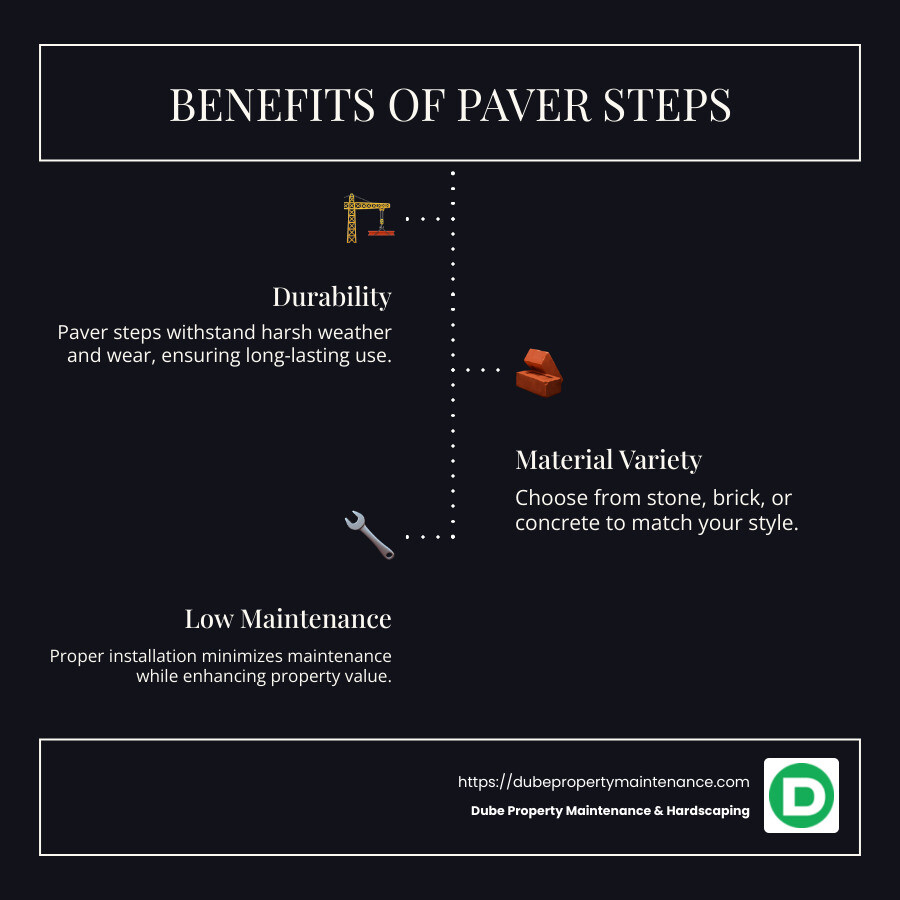
When designing paver steps, you want them to look great and work well. This involves picking the right materials and planning how they will fit into your landscape.
Selecting the right material for your paver steps is crucial. It’s like picking the perfect shoes—not only should they look good, but they also need to be durable and fit well.
When choosing materials, consider how each fits with your home’s style and the surrounding landscape. The right choice will improve both the beauty and functionality of your steps.
Planning the layout of your paver steps is like drawing a roadmap for success. It involves careful measurements and thoughtful design to ensure everything fits perfectly.
A well-thought-out design not only improves the appearance of your outdoor space but also ensures that your paver steps are safe and functional. With the right materials and careful planning, you can create steps that are both beautiful and practical.
Next, we’ll dive into building a solid foundation for your paver steps, ensuring they stay put through rain or shine.
Creating a solid foundation for your paver steps is like building a house on stable ground. It’s essential for durability and longevity. Let’s dive into the details that make a strong base.
Think of the base as the backbone of your paver steps. Without it, you risk shifting, sinking, or even collapsing steps. A well-prepared base ensures your steps remain stable and even, no matter the weather.
The step grade is like setting the angle for success. It determines how your steps will handle water and wear over time.
A well-set grade not only ensures functionality but also improves the appearance of your steps. It’s all about precision and planning.
By focusing on a solid base and proper grading, your paver steps will be ready to withstand the elements and remain beautiful for years to come.
Next, we’ll explore the step-by-step installation process, guiding you through laying the gravel base and setting the first blocks.
Building paver steps is like crafting a masterpiece. Each step requires careful attention and precision. Let’s break down the installation process into manageable parts.
By following these steps, you’ll create paver steps that are both durable and stylish. Each layer, from the gravel base to the final paver, plays a vital role in the overall stability and appearance of your steps. Up next, we’ll explore the finishing touches and maintenance tips to keep your steps looking pristine.
Once your paver steps are in place, it’s time to add those little extras that make a big difference in curb appeal. Start with edging. Edging not only keeps your pavers in place but also gives a clean, finished look. You can use metal, plastic, or stone edging based on your preference and the overall design.
Consider adding lighting to your steps. This not only improves safety at night but also adds a touch of elegance. Solar lights are a popular choice for their ease of installation and energy efficiency.
Plant integration is another way to improve the beauty of your paver steps. Choose plants that complement your landscape and can thrive in the available sunlight. Groundcovers or low-growing shrubs can soften the edges and add a splash of color.
To ensure your paver steps remain in top condition, regular maintenance is key. Start by sealing the pavers. Sealant acts as a protective barrier against the elements, preventing stains and fading from UV rays. Reapply sealant every couple of years to maintain its effectiveness.
Regular cleaning is essential. Sweep your steps frequently to remove dirt and debris. For deeper cleaning, a gentle pressure wash can restore their original look. Be cautious not to use excessive pressure, which can damage the surface.
Over time, the sand in the joints may wash out. Re-sanding the joints with polymeric sand helps keep the pavers locked in place and prevents weed growth. Simply sweep the sand into the joints and mist with water to activate its binding properties.
Lastly, inspect your steps for any signs of shifting or damage. Addressing minor issues promptly can prevent more extensive repairs down the line. With these maintenance tips, your paver steps will remain durable and stylish for years to come.
Absolutely! Paver steps are a fantastic choice for adding both functionality and style to your outdoor space. They can be crafted from various materials like stone, concrete, or brick. Each material offers its own unique look and benefits. Stone pavers, for instance, provide a timeless and neat appearance, while concrete pavers offer versatility in color and shape.
Laying paver steps involves several key steps to ensure durability and safety:
By following these steps, you can create sturdy and attractive paver steps.
The height of paver steps is crucial for both comfort and safety. The standard height for risers (the vertical part of the step) is typically between 4 to 7 inches. However, for most outdoor stairs, a riser height of about 6 inches is common. This height is comfortable for most people to step up and down.
When planning your paver steps, consider the total rise (the height from the bottom to the top of the staircase) and divide it by the desired riser height to determine the number of steps needed. Ensure each step is consistent in height to avoid tripping hazards.
Additionally, make sure to integrate a landing if your staircase is long. A landing provides a resting place and can improve the overall design of your steps.
Creating paver steps is not just about adding functionality to your outdoor space; it’s about enhancing its style and durability. When done right, these steps can last for years, providing a safe and attractive passageway for you and your guests.
Durability is key. By following best practices in installation—such as laying a solid gravel base and ensuring proper compaction—you can prevent common issues like shifting and sinking. Proper drainage management further ensures that your steps withstand the test of time, even in our challenging New England weather.
Style is equally important. With a variety of materials like stone, concrete, and brick to choose from, you can tailor the look of your steps to match your home’s aesthetic. Whether you prefer the classic elegance of stone or the modern versatility of concrete, the right choice can significantly lift your curb appeal.
At Dube Property Maintenance & Hardscaping, we specialize in crafting paver steps that combine both durability and style. Our professional team is dedicated to providing high-quality outdoor solutions custom to your specific needs. Whether you’re in Methuen, MA, or any of our other service areas, we are here to help you transform your outdoor space into something truly special.
Ready to improve your landscape with stunning paver steps? Contact us today for a consultation and let us bring your vision to life.
