Why a Paver Fire Pit Transforms Your Outdoor Space
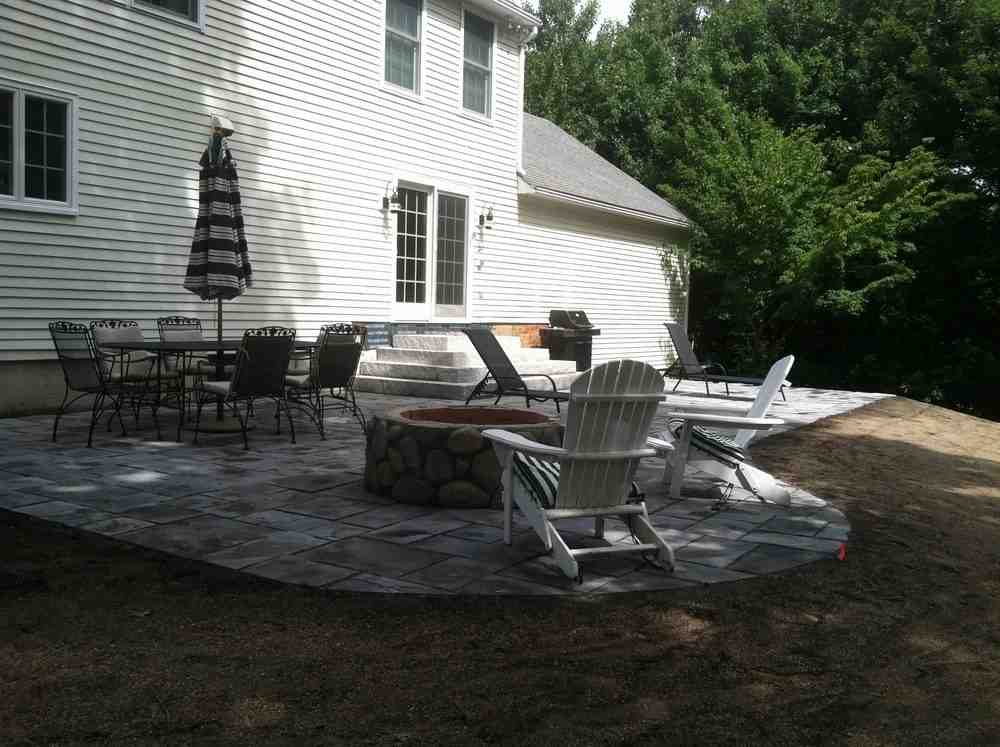
A paver firepit is a permanent outdoor fire feature built with concrete or stone pavers. Typically 3-4 feet wide and 12-14 inches tall, it creates a natural gathering spot that extends your outdoor living season. As one designer notes, fire pits help “create a welcoming ambience, especially when paired with a cozy chair, relaxing music and enjoyed with family and friends.”
Quick Overview: Building a Paver Fire Pit
Location: Place 10-25 feet from structures on level ground.
Materials: Wall blocks, gravel base, construction adhesive, metal insert.
Process: Excavate 7-10 inches, add a gravel base, and stack 3-4 rows of pavers.
Timeline: Complete in 1 day, plus 2-7 days for adhesive to cure.
Cost: DIY builds average $200-$700 based on internet data.
Building your own paver fire pit is an accessible weekend project that creates a stunning backyard centerpiece and adds value to your home. Whether you’re roasting marshmallows or enjoying quiet conversation, a well-built fire pit becomes the heart of your outdoor space.
This guide walks you through every step, from selecting the perfect location and fuel source to laying the final capstone and adding finishing touches that make your fire pit uniquely yours.
Before you start digging, thoughtful planning is key to a successful paver firepit. Making smart decisions now about design, safety, and fuel type ensures your fire pit is both beautiful and compliant with local rules in Massachusetts and New Hampshire.
Benefits of a Backyard Fire Pit
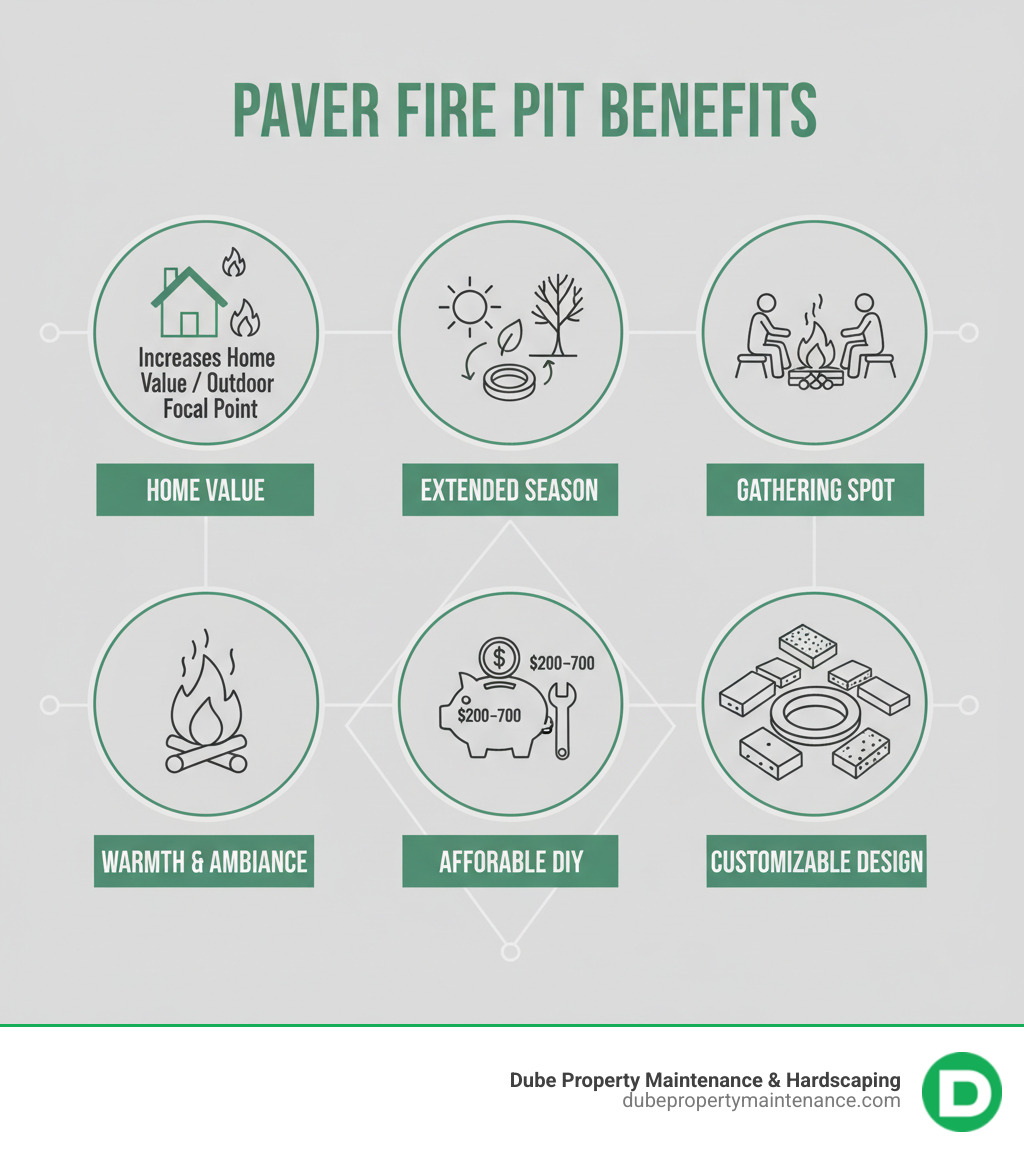
A fire pit offers more than just a flame to watch. It becomes an outdoor centerpiece, creating a cozy environment that naturally draws people together for conversation and making memories. A well-built fire pit can also increase your home value, as outdoor living spaces are highly sought-after. Practically, it provides warmth that extended outdoor seasons, turning your backyard into a year-round gathering place for family and friends.
Choosing the Right Location
Location is critical for safety. Follow these guidelines:
Safety Distance: Position your paver firepit at least 10-25 feet from your house, shed, or other structures. Also, keep it clear of overhanging tree branches and at least 10 feet from property boundaries.
Local Ordinances: Before you dig, check with your local municipality and HOA for any open flame regulations or placement rules.
Level Ground: A flat, stable surface is non-negotiable for a safe and sturdy fire pit.
Wind Direction: Observe prevailing winds in your yard to position the pit where smoke is least likely to blow toward your home or seating areas.
Clear Space: Maintain a 6-foot clear space around the pit, free of flammable materials. It’s also wise to check with your homeowner’s insurance agent to ensure you’re covered.
Wood vs. Gas: Choosing Your Fuel Source
Your fuel choice shapes your fire pit experience. Both wood-burning and gas have distinct advantages.
Wood-Burning: Offers the classic crackle, woodsmoke aroma, and higher heat output. It’s more affordable to build but requires managing smoke, cleaning ash, and storing dry firewood.
Gas (Propane or Natural): Provides ultimate convenience with push-button ignition, no smoke, and minimal maintenance. It’s cleaner and often necessary in areas with burn bans. The main drawback is a higher upfront cost, especially if a professional is needed to install a natural gas line.
This is where you make the fire pit your own. Most DIY fire pits are 3-4 feet across and 12-14 inches high.
Shape: Circular designs create a classic campfire feel and are best built with tapered, trapezoidal blocks for a snug fit. Square fire pits offer a more contemporary look and use standard rectangular blocks.
Materials: Pavers come in various styles, from concrete blocks to natural stone veneers, allowing you to match your landscape.
Coping: The capstones on the top layer provide a polished, finished look and a smooth edge for resting feet or drinks.
Add-ons: Consider a built-in circular seat wall for integrated seating that frames the fire pit and improves both function and style.
For designs beyond a standard DIY project, our team can help. Explore our hardscaping services to see what’s possible.
Gathering Your Materials and Tools
With your plan in place, it’s time to gather your supplies. Having everything on hand before you begin makes the construction process much smoother.
Essential Tools You’ll Need
Most of these tools may already be in your garage:
Shovel
Tamper (manual or powered)
Long and short level
Rubber mallet
Tape measure
Caulk gun
Safety glasses and gloves
Wheelbarrow
Garden hose with spray nozzle
The Materials That Make It Happen
These components form the structure of your paver firepit:
Wall Blocks/Pavers: Choose fire-proof blocks rated for hardscaping. Use trapezoidal blocks for round pits and rectangular blocks for square ones.
Capstones/Coping: These flat stones create the finished top layer, providing a smooth, polished edge.
Construction Adhesive: Use an outdoor-rated adhesive to secure each layer of blocks. This is essential for structural integrity.
Gravel/Paver Base: Crushed gravel (like ¾ inch crushed stone) forms the stable, draining foundation for your fire pit.
Metal Insert or Fire Brick: A metal ring is highly recommended to protect your pavers from intense heat and prolong the life of your fire pit. For gas pits, you’ll need a burner and pan kit. You can learn about different burner options for gas conversions to find one that fits your design.
How to Build Your Paver Firepit: A Step-by-Step Guide
Now for the fun part—building your paver firepit. Follow these steps carefully for a durable, beautiful result.
Step 1: Prepare the Site and Foundation
A solid foundation is the secret to a long-lasting fire pit. Do not skip these steps.
Mark Your Footprint: Use spray paint or a garden hose to outline the shape of your fire pit on the ground.
Excavate: Dig out the entire area to a depth of 7 to 10 inches.
Compact the Soil: Use a hand tamper to thoroughly compact the exposed dirt base, removing air pockets.
Add Gravel Base: Fill the hole with 5 to 7 inches of crushed gravel. Spread it evenly and use your tamper to compact it in layers. Use a level to ensure the entire base is perfectly flat.
Step 2: Lay the First Course of Pavers
This first layer is critical for a stable structure.
Place the Blocks: Arrange your first course of wall blocks directly on the compacted gravel base, fitting them snugly together.
Level Everything: Use your level on every single block. Tap blocks gently with a rubber mallet to adjust them until the entire ring is perfectly level. A level first course ensures the rest of your walls will be straight.
Step 3: Build the Walls
Now you’ll build upwards, watching your paver firepit take shape.
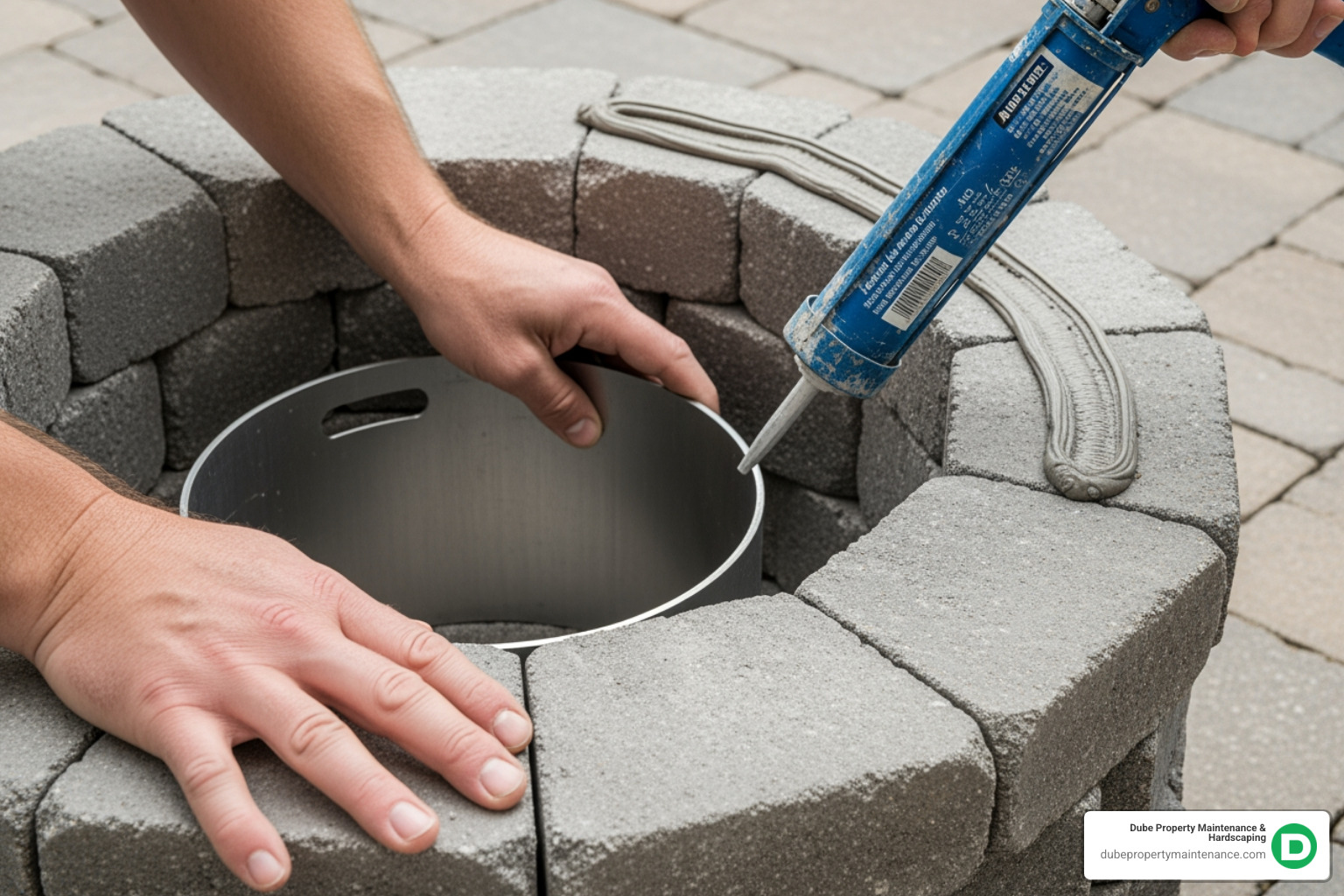
Apply Adhesive: Using a caulk gun, apply a generous bead of construction adhesive to the top of the first course of blocks.
Stagger the Joints: Place the second course of blocks on top, making sure to offset the vertical joints from the layer below. This staggered pattern is crucial for wall strength.
Repeat: Continue applying adhesive and stacking layers, staggering the joints each time. Most fire pits are 3 to 4 rows high. Check for level and plumb (vertical straightness) as you go.
Step 4: Add Finishing Touches
These final steps add protection and a polished look.
Install Insert: Place your metal fire ring insert inside the paver walls. This protects the blocks from direct heat damage. For a gas pit, this is when you’ll install the burner pan system. Find burner options at Warming Trends CrossFire Technology.
Add Capstones: Apply adhesive to the top of the final wall layer and carefully place your capstones or coping stones. Ensure they are level and evenly spaced.
Let it Cure: Allow the construction adhesive to fully cure before using your fire pit. This can take 2 to 7 days, depending on the product and weather. Check the manufacturer’s instructions. This waiting period is essential for safety and durability.
DIY From Scratch vs. Paver Fire Pit Kits
When building your paver firepit, you can either source all materials yourself or buy a pre-packaged kit. Both are great options with different trade-offs.
Building from scratch offers complete creative freedom over shape, size, and materials. It can be more cost-effective if you source materials wisely, but it requires more planning, measuring, and construction knowledge.
Paver fire pit kits are designed for easier assembly. They include pre-cut blocks that fit together perfectly, a metal insert, and clear instructions. This is a faster, more straightforward approach, but you are limited to the kit’s specific design.
Here’s a quick comparison:
Factor
DIY From Scratch
Paver Fire Pit Kit
Cost
Potentially lower material cost, around $200-$700 based on internet data, but requires more labor
Mid-range cost with all components included, typically $300-$900 based on internet data
Customization
Unlimited design, material, and size options
Limited to kit design, though still allows some personalization
Difficulty
Requires more skill, planning, and precise execution
Easier assembly with pre-cut parts and clear instructions
Time
Longer planning and construction time, often 2-3 days
Faster to complete, usually 1-2 days
Note: These are average costs based on internet data and not actual costs for Dube Property Maintenance and Hardscaping.
If a DIY project isn’t for you, or you’re envisioning a more complex design integrated with a patio and seating walls, professional installation is the best route. Explore our hardscaping services for custom projects to see how our expert team can bring your vision to life in Massachusetts and New Hampshire.
Safety, Maintenance, and Enjoying Your New Fire Pit
Congratulations on your new paver firepit! Now it’s time to enjoy it safely. Following proper safety and maintenance practices will protect your investment and keep everyone safe for years to come.
Essential Safety Practices for Using Your Fire Pit
Fire demands respect. Follow these rules every time:
Never leave a fire unattended, especially with children or pets nearby.
Keep a water source nearby, such as a fire extinguisher, a bucket of water, or a garden hose.
Check wind conditions. Avoid lighting a fire on very windy days, as sparks can travel.
Extinguish the fire completely when you are done. Douse the embers with water until they are cool to the touch.
Maintain a 6-foot clear space around the pit, free of flammable items like leaves, furniture, or firewood.
How to Maintain Your Paver Firepit
Regular care keeps your paver firepit looking great and functioning properly.
Clean Out Ash: For wood pits, wait until the ash is completely cool (at least 24 hours), then scoop it out to improve airflow for your next fire.
Wash Pavers: Periodically wash the pavers with a mild soap and water solution to remove soot and dirt. Rinse thoroughly.
Check for Damage: Regularly inspect the pavers for cracks and ensure the capstones are secure.
Seal the Pavers: Consider applying a paver sealant every few years to protect against weather, staining, and heat.
Use a Cover: When not in use, a durable fire pit cover will protect your pit from rain, snow, and debris.
We get a lot of questions about paver firepit projects from homeowners in Massachusetts and New Hampshire. Here are answers to some of the most common ones.
Is it cheaper to build your own paver fire pit?
Yes, a DIY build is generally more affordable than hiring a professional. Based on internet data, materials for a basic paver firepit can cost between $200 and $700. More complex designs with premium materials or a gas line can increase costs significantly. When you hire a professional, you are paying for expert design, skilled labor, and high-grade materials that ensure a durable, code-compliant result.
Important note: These are average costs based on internet data and not actual costs for Dube Property Maintenance and Hardscaping.
Do I need to use a metal insert in my paver fire pit?
While not technically required, we highly recommend using a metal insert or fire ring. It acts as a crucial barrier, protecting your paver blocks from the intense, direct heat of the fire. This simple addition prevents pavers from cracking or deteriorating prematurely and helps maintain the structural integrity of your fire pit for years to come.
What kind of pavers are safe for a fire pit?
Safety and durability are paramount when choosing materials.
Safe Materials: For the exterior walls, use solid concrete pavers, concrete blocks, or natural stone. These are designed for outdoor hardscaping and can withstand the heat.
Interior Lining: For extra protection, line the inside with fire-rated bricks (firebrick), which are made to endure extremely high temperatures.
DANGEROUS Materials: Never use porous rocks like river rocks or gravel inside the fire pit. They can trap moisture, which turns to steam when heated, causing the rocks to explode and send sharp fragments flying. Stick to dense, fire-rated materials for any surface exposed to flames.
Conclusion
Building your own paver firepit is a rewarding project that creates a beautiful backyard focal point. By following this guide, you can construct a durable fire feature that will serve as a genuine gathering place for friends and family, extending your outdoor season and creating lasting memories.
We’ve covered the importance of a solid foundation, careful construction, and crucial safety practices. Whether you choose a simple DIY kit or a custom-built design, the result is a space for relaxation and connection.
However, we understand that a DIY project isn’t for everyone. Perhaps you envision a more complex outdoor living area with an integrated fire feature, seating walls, and a matching patio. Or maybe you simply prefer to leave the work to experienced professionals.
At Dube Property Maintenance & Hardscaping, creating stunning outdoor living spaces is what we do. Our team serves communities throughout Massachusetts and New Hampshire, handling everything from design and permitting to sourcing premium materials and expert installation. We have the expertise to avoid common pitfalls and build a custom fire pit that seamlessly integrates with your landscape and is built to last.
Whether you build it yourself or work with our team, you’re investing in a space where life happens. Explore our custom outdoor fire pit services to see how we can help create the backyard of your dreams.
For 25+ years Dube Property Maintenance & Hardscaping has provided top-rated residential and commercial landscape design, installations, hardscaping, irrigation systems and commercial snow and ice management. Our hardscaping division proudly serves the Merrimack Valley, Middlesex and Essex County and Southern, NH regions, transforming outdoor spaces into stunning works of art.