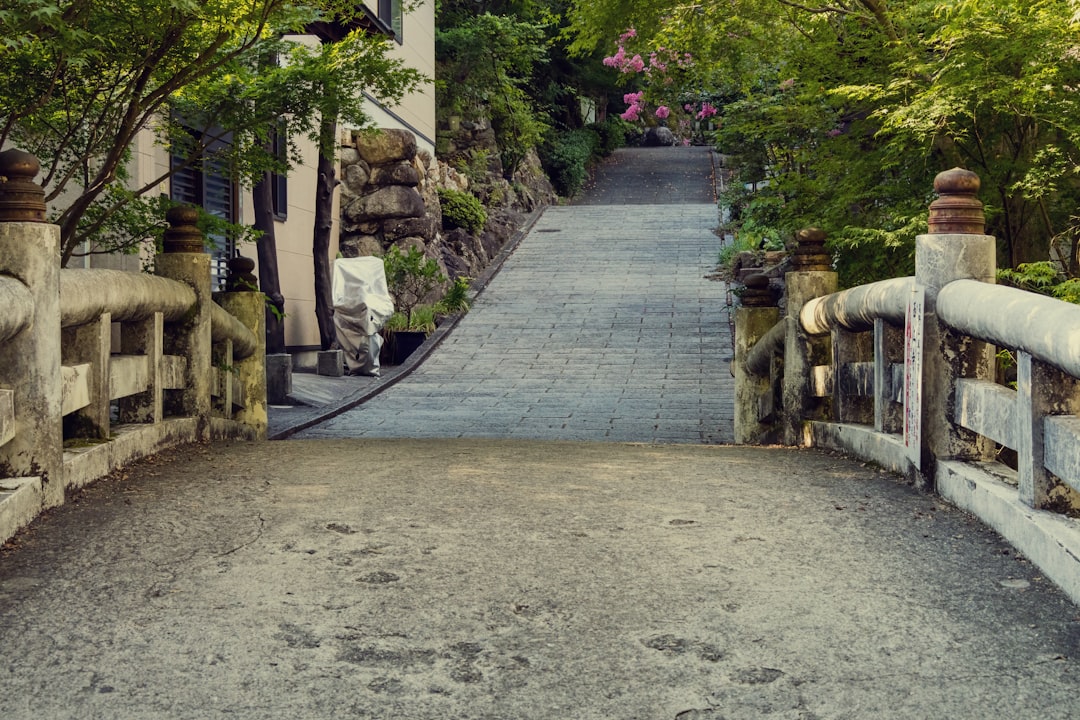

Paver designs for walkways offer endless possibilities to create stunning paths that welcome guests and boost your home’s curb appeal. From classic brick patterns to modern geometric layouts, the right paver walkway increases property value while providing a durable, low-maintenance solution.
Popular paver walkway designs include:
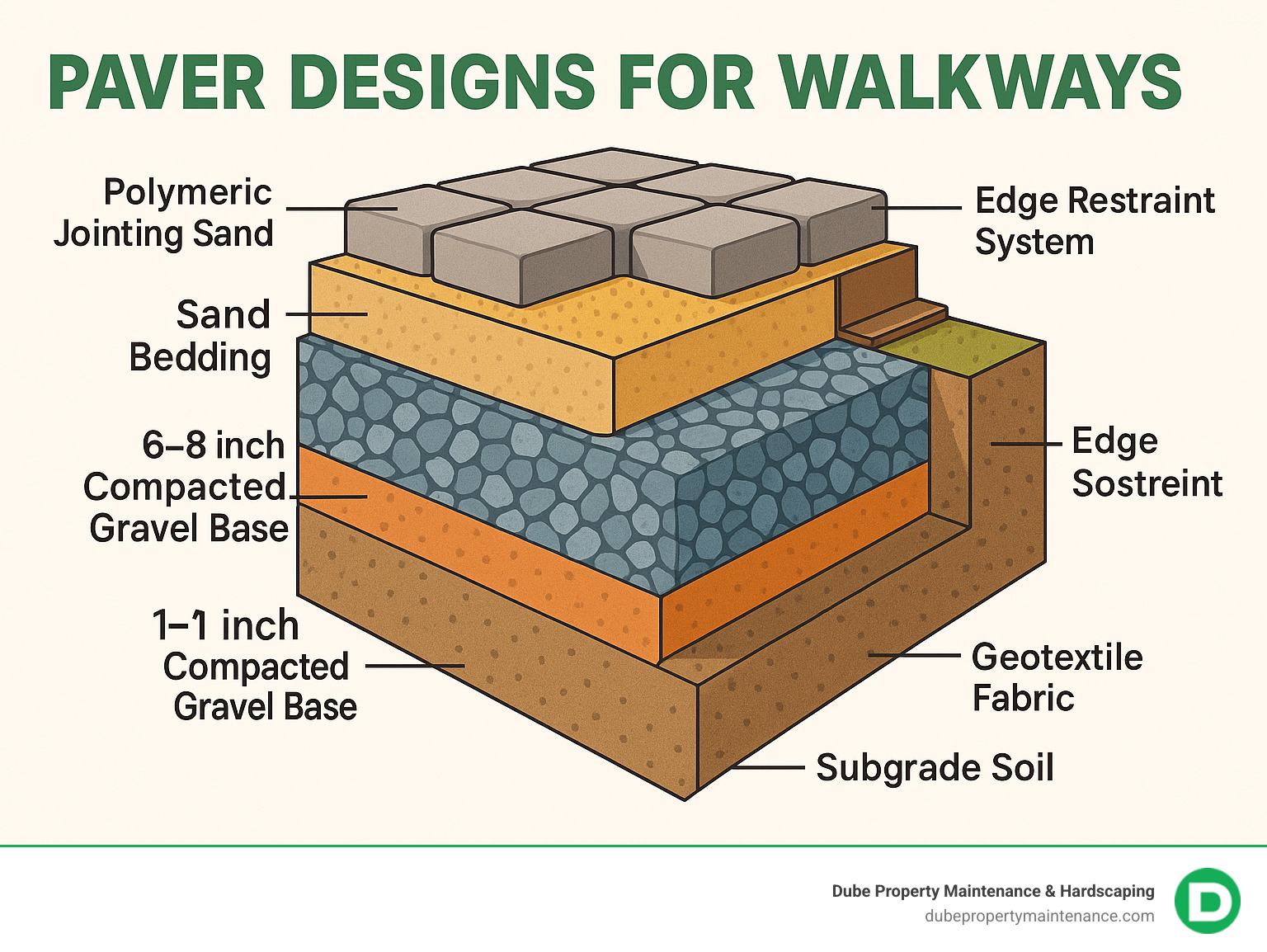
From cobblestone charm to sleek concrete, you can choose materials and patterns that perfectly complement your home’s architecture. A well-designed paver walkway creates an inviting entrance, manages water drainage, and can incorporate lighting for safety and ambiance. With proper installation—including a 6-8 inch compacted base and a 1/4-inch per foot slope—your walkway will withstand New England’s freeze-thaw cycles. Standard widths range from 36 inches for basic access to 48 inches for comfortable two-person walking.
Creating a stunning walkway starts with careful planning. The decisions you make now about materials, layout, and drainage will determine your walkway’s long-term success and beauty, saving you time and money down the road.

Selecting the right paver material is crucial for aesthetics, budget, and lifestyle. Each material brings a unique character to your paver designs for walkways.
When choosing colors and textures, consider how they complement your home. Matching existing elements creates harmony, while contrasting borders add visual pop.
| Material Type | Durability | Cost (Average) | Style | Maintenance |
|---|---|---|---|---|
| Concrete | High | $3-$10 per sq ft | Versatile, Modern to Traditional | Low |
| Brick | High | $4-$12 per sq ft | Classic, Rustic, Old-World | Low |
| Natural Stone | Very High | $10-$30+ per sq ft | Organic, Luxurious, Rustic | Moderate |
Proper dimensions are key for function and comfort. A 36-inch width is standard for single-file walking, but a 48-inch width allows two people to walk comfortably side-by-side. For ADA accessibility, a minimum of 36 inches is required, often with wider areas for turning.
To calculate square footage, use stakes and string to outline your path, then measure the length and width. Always order about 10% extra material for cuts and mistakes. Most importantly, ensure proper drainage by creating a slope of 1/4 inch per foot that directs water away from your home’s foundation. For complex drainage issues, systems like underground drains or retaining wall services may be necessary.
Having the right tools makes the project manageable. Many specialized items, like a plate compactor, can be rented.
Proper preparation with quality tools and materials is the key to a successful installation.
Paver designs for walkways are a powerful tool for enhancing curb appeal and increasing home value. A thoughtfully designed walkway transforms a simple path into a captivating journey that reflects your personal style and sets the tone for your entire home.
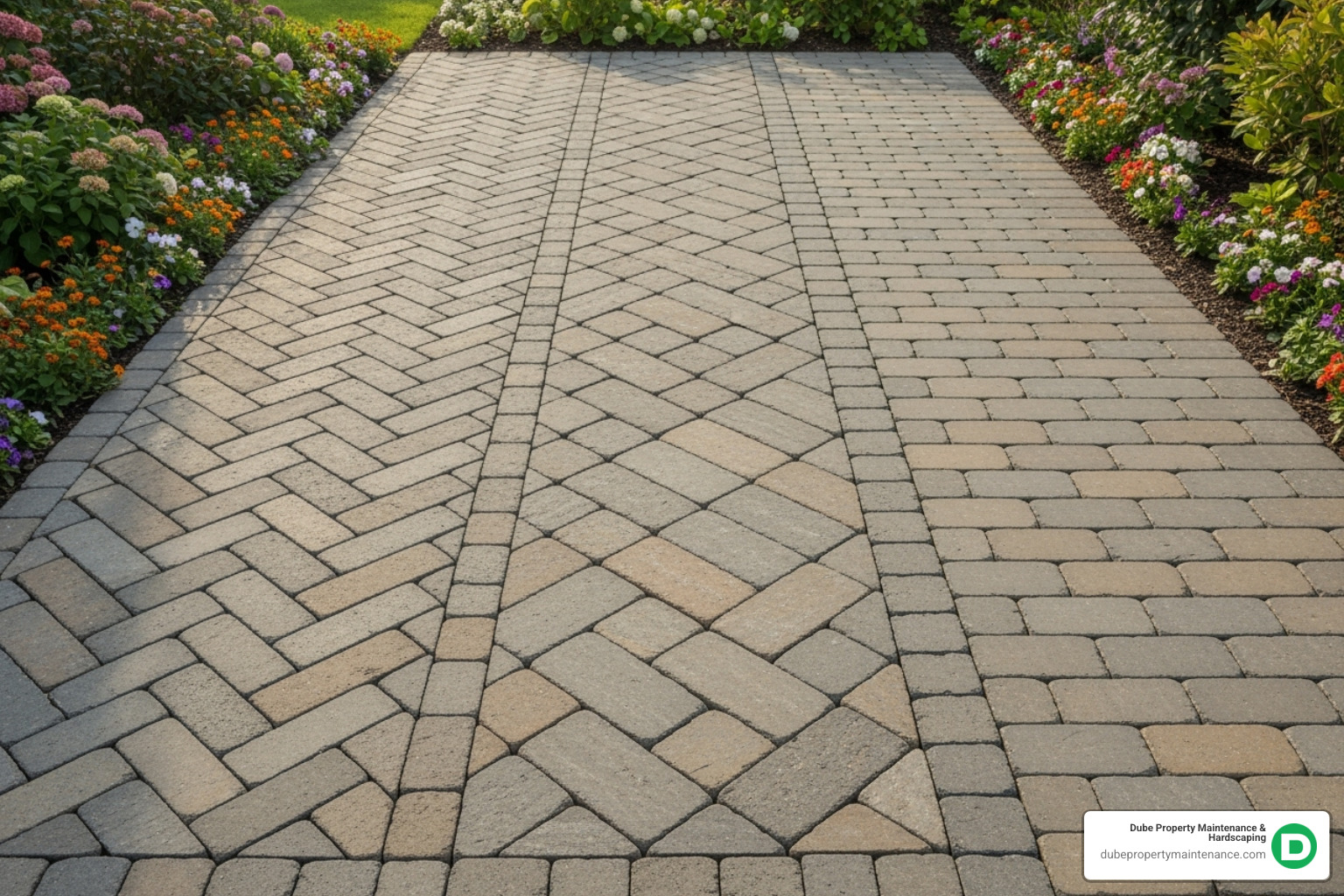
These patterns bring a sense of history and sophistication to any home.
Contemporary designs push creative boundaries with sleek lines and innovative materials.
A well-designed walkway makes a powerful first impression and can significantly increase your home’s value.
Whether you’re planning a DIY project or want to understand the professional process, this guide covers the essential steps for creating a durable and beautiful paver walkway.

This is the most critical stage for ensuring your walkway’s longevity. Start by marking the area with stakes and string. Excavate about 9-10 inches deep to accommodate the base, sand, and pavers. In New England’s climate, a 6-12 inch sub-base is essential to prevent frost heaves.
After digging, compact the subgrade soil with a plate compactor. Lay down geotextile fabric to separate the soil from the gravel base and prevent weed growth. Add the crushed gravel base in 2-inch layers, compacting each one thoroughly while maintaining the planned 1/4-inch per foot slope for drainage. For those seeking a simpler method, paver base panels are a lightweight alternative, though a traditional gravel base offers maximum durability. Our walkway installation services handle this entire process for you.
With the foundation set, spread a 1-inch sand bedding layer over the compacted gravel. Use PVC pipes or 2x4s as screed rails to level the sand perfectly. Start laying pavers from a hard edge, like your house, to ensure a stable reference point. Place each paver firmly onto the sand, leaving a small gap (about 1/4 inch) between them.
Use a rubber mallet to gently tap each paver into place, and pull pavers from multiple pallets to ensure a natural color blend. Constantly check that the pavers are level with each other and that you’re maintaining the overall slope for drainage.
Install paver restraints along the perimeter, securing them with spikes driven into the ground to prevent the walkway from shifting. Use a paver saw with a concrete blade to cut pavers for curves and edges. Always wear safety gear when cutting.
The final step is to sweep polymeric jointing sand into all the gaps. This special sand contains binders that harden when wet. After sweeping, run a plate compactor (with a protective mat) over the surface to settle the sand into the joints. Lightly mist the walkway with water to activate the sand, being careful to first remove any excess sand from the paver surfaces to prevent a permanent white haze. Allow the walkway to cure for 24 hours before use.
A beautiful paver walkway is a long-term investment, and like any investment, it thrives with proper care. Understanding maintenance, avoiding common pitfalls, and exploring advanced options like permeable pavers will ensure your walkway remains a stunning asset for decades.

Paver designs for walkways are low-maintenance, but consistent care is key.
Learning from these common errors can save you significant time and money.
Permeable pavers are an innovative, eco-friendly solution for modern hardscaping. They allow rainwater to pass through the surface into the ground below, which helps with stormwater management by reducing runoff and erosion. This process naturally filters pollutants and helps recharge local groundwater supplies, a crucial benefit in many regions. Many municipalities now encourage or require permeable surfaces to reduce strain on public storm drains, making them ideal for certain climates and regulations. Explore our hardscaping services for more on these and other environmentally responsible options.
Here are answers to some of the most common questions we receive from homeowners about paver designs for walkways.
The cost of a paver walkway depends on several factors, including material choice, project size, and design complexity. A simple running bond pattern with concrete pavers will be more economical than an intricate herringbone design with natural stone.
Please note: prices mentioned are national averages for informational purposes and do not reflect the pricing of Dube Property Maintenance & Hardscaping. For an accurate quote, please contact us directly.
National average costs for paver walkways can range from $10 to $40+ per square foot, depending on materials and complexity. A basic concrete paver walkway might fall on the lower end of this range, while elaborate natural stone designs with professional installation could reach the higher end or beyond. The best way to get an accurate price is to request a personalized estimate.
While it seems like a shortcut, we almost always advise against this. Laying pavers over concrete can cause several problems:
For a long-lasting result, it’s best to remove the old concrete to allow for proper base preparation and drainage.
A properly installed paver walkway is a fantastic long-term investment. With quality materials and professional installation, a paver walkway can last 20 to 50+ years. The key to this impressive lifespan is the foundation. A robust, well-compacted base ensures the walkway can withstand heavy foot traffic and harsh weather for decades. With minimal maintenance, your paver walkway will likely outlast many other home improvements.
We’ve explored how paver designs for walkways can dramatically improve your home, from planning and installation to creative design ideas. The key takeaways are the incredible design versatility, exceptional durability, and the significant increase in home value that a well-built paver walkway provides.
With proper installation, your walkway will withstand New England’s challenging climate for 20 to 50+ years, making it a smart investment that combines beauty and function. It’s more than just a path; it’s an upgrade to your home’s curb appeal and your daily enjoyment.
If you’re ready to transform your property with a stunning paver walkway or other hardscaping project, we’re here to help. For professional design and installation in the Methuen, MA area, trust the experts at Dube Property Maintenance & Hardscaping to bring your vision to life.
Contact us today for a consultation on your hardscaping project!