Why Your Front Walkway Matters More Than You Think
A path to front door is far more than just a functional necessity—it’s the very first impression your home makes on every visitor, guest, and passerby. This essential feature sets the tone for your entire property and plays a surprising role in your home’s perceived value and curb appeal.
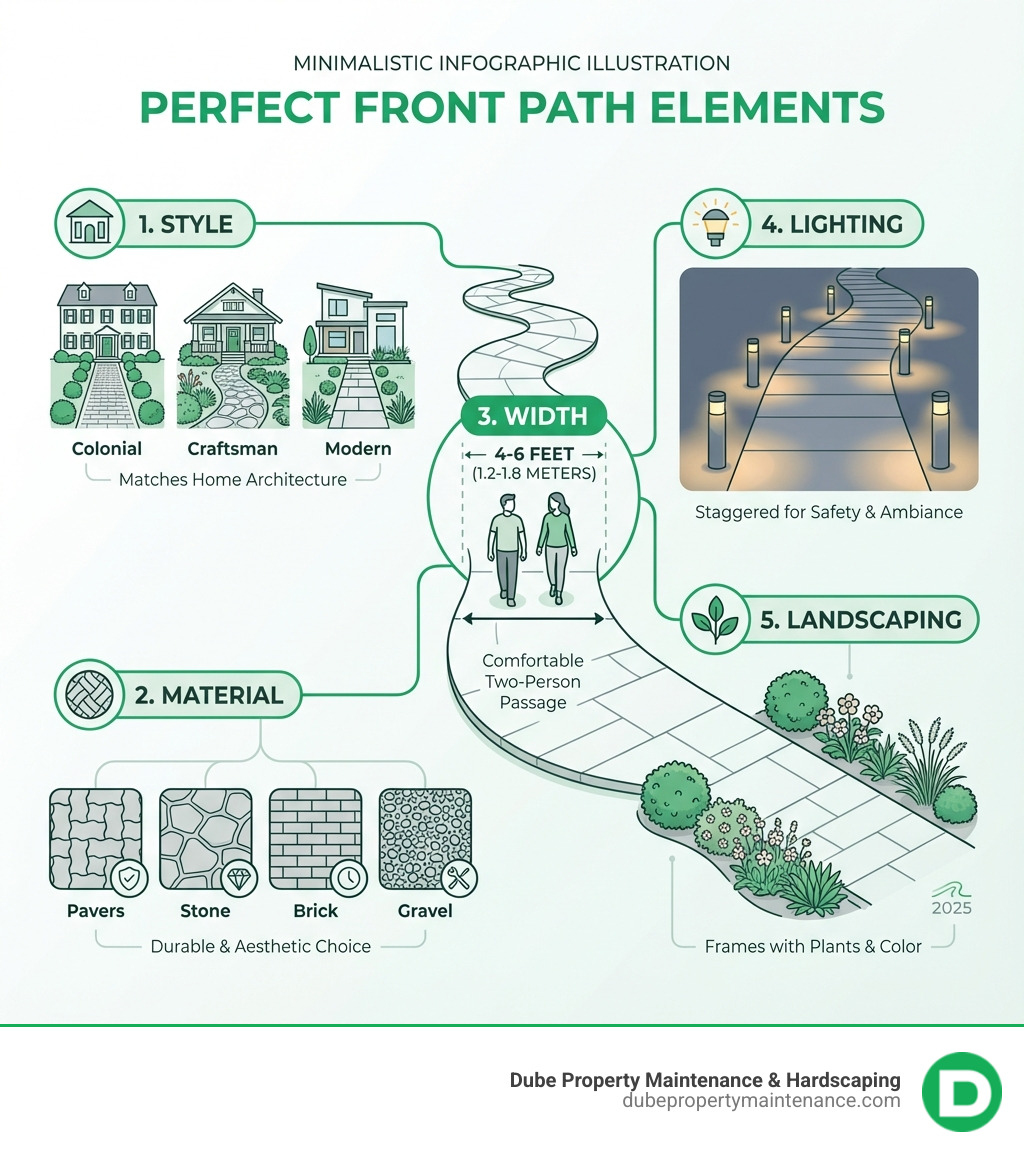
Quick Answer: Key Elements of a Perfect Front Walkway
Style – Match your home’s architecture (Colonial, Craftsman, Modern)
Material – Choose durable options like pavers, natural stone, or brick
Width – Plan for 4-6 feet to allow comfortable two-person passage
Lighting – Install staggered path lights for safety and ambiance
Landscaping – Frame with low-growing plants and seasonal color
Nothing creates curb appeal faster than a well-designed front path. Research shows that your walkway influences not just how others see your home, but how you feel every time you arrive. It’s the journey that transforms your property from just another house on the street into your welcoming sanctuary.
The stakes are higher than you might think. A poorly designed or deteriorating walkway can actually detract from your property value, while a thoughtfully crafted path can provide a strong return on investment. Whether you’re considering smooth pavers, classic brick, neat natural stone, or rustic gravel, each material choice brings its own blend of aesthetics, maintenance requirements, and cost implications.
For homeowners in the Methuen, MA area and throughout Massachusetts and southern New Hampshire, the harsh winter conditions add another layer of consideration. Your path needs to withstand freeze-thaw cycles, look beautiful year-round, and remain safe even during challenging weather.
When we envision the perfect path to front door, we think about more than just a way to get from point A to point B. We’re crafting an experience, a sense of arrival that blends functionality with beauty. The primary design considerations revolve around integrating the walkway seamlessly with your home’s architecture and existing landscape, creating a welcoming journey for everyone who approaches. Planning your path carefully ensures it meets both aesthetic and practical needs. For more detailed information on designing and installing your walkway, explore our walkway installation services.
Matching Your Path to Your Home’s Architectural Style
Your home’s architectural style should be the guiding star for your front path design. The walkway should feel like a natural extension of your house, not an afterthought.
For Colonial or Georgian homes, which often prioritize symmetry and formality, a straight, well-defined path with classic materials like brick or bluestone can reinforce this traditional elegance. Neat hedges or boxwood borders often complement these styles.
Craftsman bungalows often benefit from more natural, organic materials and designs. A path of natural stone or pavers with subtle curves, flanked by native plants and ornamental grasses, can beautifully echo the home’s handcrafted appeal.
Modern and contemporary houses thrive on clean lines, minimalist design, and often functionality. Large-format concrete pavers, gravel paths with sleek metal edging, or even stepping stones interspersed with crushed rock can create a striking, streamlined look. The goal is to create cohesion between the outdoor space and the indoor aesthetic, often with a focus on bold shapes and textures.
The right design speaks to your home’s character, creating a harmonious and aesthetically pleasing whole. For even more inspiration and practical advice on front path design, we recommend checking out Hardscaping 101: Front Paths.
Straight, Curved, or Meandering? The Shape of Your Walkway
The shape of your walkway dramatically influences the feel of your front yard. Each style offers a different experience:
Straight paths are the most direct and formal. They clearly guide visitors straight to the front door, offering a sense of purpose and efficiency. This works well for homes with a formal aesthetic or limited space.
Curved paths offer more visual interest and can soften the landscape. They invite a slower pace, allowing visitors to appreciate the surrounding garden. A gentle curve can lead the eye through the yard, creating a more engaging approach. As one expert opinion suggests, curves often offer more visual interest than a straight path and can accent the garden around it.
Meandering paths are ideal for larger yards or informal garden styles. They evoke a sense of findy, winding through plantings and creating a journey rather than just a passage. However, it’s crucial that even a meandering path clearly indicates its destination to avoid confusion.
The best shape for your path to front door depends on your home’s style, the size of your yard, and the overall ambiance you wish to create.
How Wide Should a Front Path Be?
When it comes to walkway width, comfort and practicality are paramount. Ideally, a front path should be no less than 4 feet wide at its narrowest and no wider than 6 feet.
A 4-foot width is generally considered the minimum for comfortable passage, allowing two people to walk abreast without feeling cramped. This is a good standard for most residential properties.
Paths as wide as 6 feet can give the entry a more substantive and grand feeling, but this width should be in proportion with the home’s entrance and overall scale. A path that is too wide for a small home can feel overwhelming.
Ensuring ample width also accommodates practical needs, such as moving furniture, strollers, or even two people chatting side-by-side.
Solid Path vs. Stepping Stones
The choice between a solid path and stepping stones depends heavily on functionality and desired aesthetic.
Solid paths (made of pavers, concrete, or continuous stone) offer superior practicality. They are easier to walk on, especially for those with mobility challenges, and are much more convenient for moving wheeled items like garbage cans, strollers, or even a wheelbarrow for gardening tasks. For the busy homeowner, a solid surface can prevent those annoying moments of dragging items across uneven terrain.
Stepping stones, on the other hand, can lend a more informal, natural, or whimsical feel to a garden. They are excellent for making a small yard look more spacious by allowing grass or low groundcover to grow between the stones. However, proper installation is critical. To avoid tripping hazards, stepping stones should be set no more than 6 inches apart, ensuring a comfortable stride. Gaps can be filled with grass, mulch, or pea gravel for aesthetic appeal and stability.
For the main path to front door, especially in our New England climate where ice and snow can be a factor, a solid, even surface is often preferred for safety and ease of maintenance.
Choosing the Right Materials for Your Path to the Front Door
Selecting the right material for your front path is a crucial decision, impacting not only the look of your property but also its longevity, maintenance needs, and overall cost. In Massachusetts and southern New Hampshire, we must also consider materials that can withstand our challenging freeze-thaw cycles.
Material
Cost (Average internet data, not Dube PM actual costs)
Durability
Maintenance
Aesthetics
Concrete Pavers
$$ – $$$
Very high; withstands heavy loads and freeze-thaw.
Low to moderate; occasional cleaning, sand replenishment, weed control.
Versatile; wide range of colors, shapes, textures (modern to rustic).
Natural Stone
$$$ – $$$$
Extremely high; very long-lasting, weather-resistant.
Low; mortar-set requires little, naturally set may need leveling.
Neat, timeless; unique colors and textures (bluestone, granite, flagstone).
Brick
$$ – $$$
High; durable, especially when mortar-set.
Low to moderate; occasional cleaning, sand replenishment, weed control.
Classic, traditional; warm tones, various patterns (herringbone, basketweave).
Gravel/Decomposed Granite
$ – $$
Moderate; can shift, needs replenishment.
High; needs raking, weeding, replenishment every 8-10 years, edging.
Rustic, informal; natural look, can be permeable.
Classic and Durable: Pavers and Brick
When durability and versatility are top priorities, especially in areas like Haverhill, MA, concrete pavers and brick are excellent choices for your path to front door.
Concrete pavers come in an incredible variety of colors, shapes, and textures, allowing for immense design flexibility. Whether you want the timeworn look of a rustic path or the sleek, large-format slabs for a modern aesthetic, there’s a paver for it. Interlocking pavers, in particular, offer exceptional stability and resistance to shifting, making them highly durable against our New England weather. They are also relatively low maintenance, typically requiring occasional cleaning and sand replenishment between joints.
Brick offers a timeless and traditional appeal. Its warm, earthy tones and ability to be laid in various patterns (like herringbone or basketweave) can add classic charm to any home. Like pavers, brick is highly durable and can withstand significant foot traffic and weather extremes when properly installed.
Both materials provide a solid, even surface that is safe and easy to steer. Our team specializes in masonry services, ensuring your brick or paver walkway is built to last.
Timeless Elegance: Natural Stone Options
For a truly unique and enduring path to front door, natural stone offers unparalleled elegance and durability. Options like flagstone, bluestone, granite, and fieldstone are popular choices throughout Massachusetts and southern New Hampshire due to their inherent beauty and resilience against the elements.
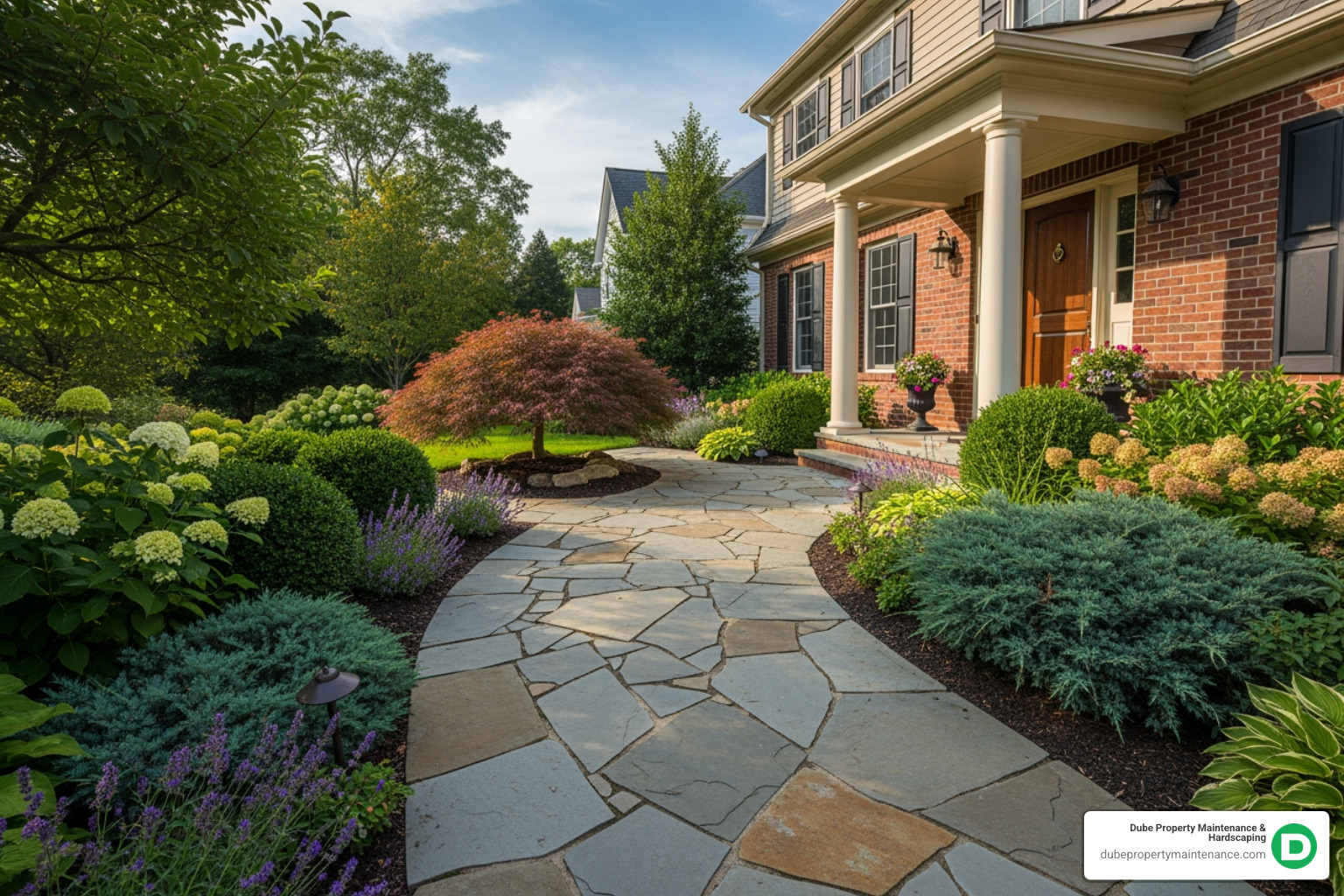
Flagstone and Bluestone are particularly favored for their rich colors and natural, irregular shapes, creating a beautiful, organic look. They can be set in mortar for a solid, low-maintenance surface or naturally set in sand or gravel for a more rustic feel.
Granite is incredibly hard and dense, making it exceptionally durable and resistant to wear, staining, and harsh weather. Reclaimed granite, for instance, offers a unique character.
Fieldstone provides a rugged, natural aesthetic, often used in conjunction with other hardscape elements to unify a design.
Mortar-set natural stone, while a higher initial investment, often requires little to no maintenance if the stones are thick enough, making it a wise long-term choice. Many natural stones also offer naturally non-slip textures, enhancing safety. Our expertise in hardscaping services allows us to craft stunning and functional natural stone walkways that lift your property.
Budget-Friendly and Rustic Choices
If you’re looking for a more economical or informal approach to your path to front door, materials like decomposed granite and gravel can be excellent options, particularly for secondary paths or in certain landscape styles.
Decomposed granite (DG) is essentially finely crushed granite. It compacts well, creating a semi-solid surface that still has a natural, earthy look. It’s inexpensive and offers good drainage.
Gravel paths are another cost-effective choice, providing a rustic and casual feel. They are easy to install and blend well with naturalistic garden designs.
However, it’s important to understand their limitations for a main entry path. Both gravel and DG are prone to shifting and can be tracked indoors, which can be an annoyance. They also require more frequent maintenance, needing to be replenished every eight to ten years. Proper edging is essential to keep these materials contained and prevent them from spreading into garden beds or lawns. For a primary path to front door, we often recommend a more stable material to ensure ease of passage and reduce indoor tracking.
Enhancing Your Walkway with Landscaping and Lighting
A well-designed path to front door doesn’t end with the hardscape. The surrounding landscaping and integrated lighting are crucial for creating a truly inviting and functional entrance. These elements work together to improve curb appeal, ensure safety, and establish a cohesive aesthetic.
Designing a Safe and Inviting Path to Your Front Door with Lighting
Lighting transforms your front path from a daytime feature into a nighttime guide, ensuring both safety and ambiance. Thoughtful lighting design is essential:
Avoid the “Runway” Effect: Instead of placing lights in a straight, uniform line, stagger them on alternating sides of the path. This creates a more natural, inviting glow and avoids the harsh, airport-runway look.
Low-Voltage LED Lighting: This is our preferred choice for efficiency and longevity. LEDs offer bright, clear light with minimal energy consumption and a long lifespan, perfect for the long nights in places like Andover, MA.
Solar Path Lights: These offer an affordable and flexible option, easy to install without needing extensive wiring. While they provide less intense light, they can be great for general ambiance.
Highlight Key Features: Use uplighting to showcase mature trees, architectural features of your home, or significant plantings along the path. This adds depth and visual interest.
Illuminate Steps and Changes in Elevation: This is critical for safety. Ensure all steps, ramps, and changes in grade are clearly lit to prevent trips and falls. Wall-mounted lights or recessed step lights work wonderfully here.
Strategic lighting not only guides visitors but also improves the beauty of your home and landscape after dusk, creating a warm and welcoming impression.
Framing Your Path with Plants and Greenery
The right plantings can soften the hard edges of your walkway, integrating it beautifully into your garden and creating a lush, inviting feel.
Softening Hardscape Edges: Use low-growing perennials, groundcovers, or ornamental grasses to spill gently over the path’s borders. This creates a natural transition between the hard material and the surrounding landscape. Creeping thyme, for example, not only looks lovely but releases a pleasant fragrance when stepped on.
Boxwood Borders: For a more formal or traditional look, neatly trimmed boxwood hedges can delineate the path with classic elegance, providing structure and year-round greenery.
Ornamental Grasses: These add texture, movement, and a modern touch. They are often low maintenance and provide visual interest even in winter.
Seasonal Color and Interest: Incorporate plants that offer seasonal blooms or foliage changes. This ensures your path to front door remains vibrant and engaging throughout the year, from spring blossoms to fall foliage.
Our landscaping services can help you choose the perfect plants for your specific climate and path design, ensuring beauty and sustainability.
Integrating Hardscape Elements
Beyond the path itself, integrating other hardscape elements can add dimension, structure, and focal points to your front entrance.
Low Retaining Walls: If your yard has a slope, low retaining walls are not just functional for managing grade changes; they also add architectural interest and define planting beds along your path. Learn more about our retaining wall solutions.
Stone Pillars: Marking the beginning or end of your path with stately stone pillars can create a grand entrance and reinforce the architectural style of your home.
Integrating with Outdoor Stairs: If your path to front door involves steps, ensuring these are cohesive in material and design with your walkway is crucial. Steps should be well-built, safe, and visually appealing. We offer comprehensive outdoor stairs services to ensure a seamless transition.
These elements, when thoughtfully designed, lift the entire approach to your home, making it feel more intentional and luxurious.
Frequently Asked Questions about Front Walkways
How do I maintain my new front path?
Maintenance varies significantly depending on the material you choose for your path to front door:
Pavers and Natural Stone: These durable materials often benefit from regular sweeping to remove debris. We recommend occasional pressure washing to keep them looking fresh and clean. Sealing can also be applied to help prevent stains, inhibit weed growth in joints, and protect against the elements.
Brick: Similar to pavers, brick paths require sweeping and occasional cleaning. Mortar joints may need repair over time, and sand-set bricks might need sand replenishment.
Gravel and Decomposed Granite: These materials require the most ongoing attention. They need regular raking to keep the surface even and to prevent migration. Weeding is also a frequent task, and the material itself will need to be replenished every eight to ten years as it compacts and disperses.
Regardless of material, promptly addressing any issues like loose stones or cracks can prevent larger, more costly repairs down the line.
Can a new walkway increase my property value?
Absolutely! A well-designed and properly installed path to front door can significantly boost your property’s value. Curb appeal is a major factor in a home’s perceived value, and the walkway is central to that first impression. It signals to potential buyers or visitors that the home is well-cared for and inviting. Investments in landscaping and hardscaping, like a beautiful front path, are often cited as providing a strong return on investment, sometimes as high as 100% or more, by enhancing both aesthetics and functionality.
What’s the best material for a walkway in a New England climate?
For the demanding New England climate, characterized by harsh winters, heavy snow, and freeze-thaw cycles, choosing durable materials for your path to front door is paramount.
Granite: Known for its extreme hardness and density, granite is an excellent choice. It withstands heavy use, resists salt and ice, and maintains its beauty for decades.
Bluestone: This natural stone is also very durable and a popular choice for its beautiful color variations. When properly installed, it handles freeze-thaw cycles well.
High-Quality Concrete Pavers: Modern concrete pavers are engineered to be incredibly strong and resistant to cracking and shifting due to frost heave. Their interlocking design provides stability, and many are designed specifically for cold climates.
Brick (Mortar-Set): While individual bricks can be susceptible to some freeze-thaw damage if not high-quality, mortar-set brick paths generally hold up very well in New England when installed correctly on a proper base.
The key to longevity for any material in our region is proper installation. A deep, well-compacted base with adequate drainage is essential to prevent shifting and cracking caused by the ground freezing and thawing. Our team has extensive experience selecting and installing materials that thrive in the Massachusetts and southern New Hampshire environment.
Conclusion: Paving the Way to a Warmer Welcome
The path to front door is more than just a functional element; it’s a vital component of your home’s identity, influencing curb appeal, safety, and even your daily mood. We’ve explored the critical design considerations, from matching architectural styles and choosing the right shape to selecting durable materials like pavers, natural stone, and brick that can withstand our New England weather. We’ve also highlighted how thoughtful landscaping and strategic lighting can transform a simple walkway into a captivating journey.
A great front path improves not just your home’s appearance, but also the quality of your daily life, making every arrival a warmer welcome. It significantly impacts first impressions and can notably increase your property’s perceived value. If you’re looking to improve your home’s entrance in Methuen, Andover, Haverhill, Lowell, Salem, NH, or any of our service areas across Massachusetts and southern New Hampshire, trust the experts at Dube Property Maintenance & Hardscaping. Our professional team is ready to bring your vision to life with high-quality, comprehensive outdoor solutions.
For 25+ years Dube Property Maintenance & Hardscaping has provided top-rated residential and commercial landscape design, installations, hardscaping, irrigation systems and commercial snow and ice management. Our hardscaping division proudly serves the Merrimack Valley, Middlesex and Essex County and Southern, NH regions, transforming outdoor spaces into stunning works of art.