

Looking for an outdoor kitchen with pizza oven solution? Here’s a quick overview of your best options:
An outdoor kitchen with pizza oven transforms your backyard into the ultimate entertainment space, combining the joy of open-air cooking with the unmistakable flavor of wood-fired pizza. According to real estate experts, these installations can increase your home’s value by up to 130% of your initial investment, making them as financially savvy as they are delicious.
The centerpiece of these outdoor culinary havens is often the pizza oven, capable of reaching temperatures up to 800°F and cooking a perfect Neapolitan-style pizza in just 90 seconds. But today’s outdoor kitchens go beyond just pizza – over 60% of owners also use their ovens to cook bread, roast vegetables, and prepare fish with that distinctive smoky flavor.
Whether you’re envisioning a Tuscan-inspired stone masterpiece with a wood-fired brick oven or a sleek, modern stainless steel setup with a gas-powered unit, the options are as varied as the pizzas you’ll create. The right choice depends on your space, budget, and how you plan to entertain.
“Wood-fired ovens produce the best flavor,” note outdoor cooking enthusiasts, with wood-fired models preferred by 70% of outdoor kitchen owners. However, gas and hybrid models offer convenience and speed that make weeknight pizza parties a reality.
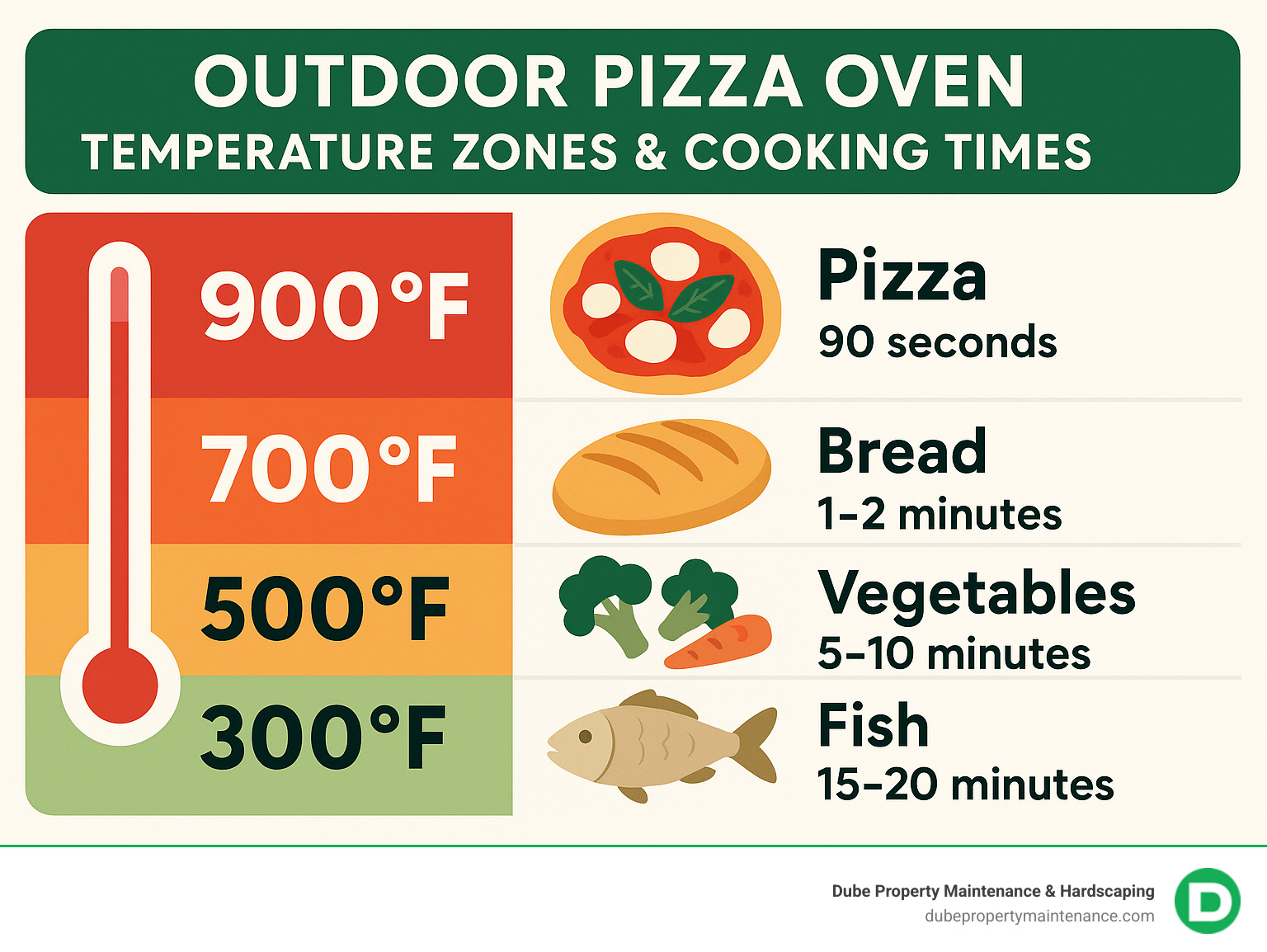
Common outdoor kitchen with pizza oven vocab:
Nothing transforms a backyard quite like an outdoor kitchen with pizza oven. At Dube Property Maintenance & Hardscaping, we’ve helped countless Massachusetts homeowners create outdoor cooking spaces that become the heart of family gatherings and neighborhood get-togethers.
Let’s explore the most impressive options we’ve installed throughout Methuen and surrounding communities – from budget-friendly weekend projects to showstopping custom installations.

When you want the flexibility to rearrange your outdoor space or aren’t quite ready for a permanent installation, modular units deliver professional-grade cooking with plug-and-play convenience.
These sleek, stainless steel kitchens combine practicality with performance. Most feature 304-grade stainless steel construction that stands up beautifully to New England’s challenging weather patterns. We love installing units with built-in storage cabinets that keep wood, tools, and accessories organized and protected from the elements.
The real game-changer with these modular kitchens? Many come equipped with caster wheels that let you reposition your cooking station seasonally – maybe closer to the house during cooler months or under a shade tree during summer. This mobility particularly appeals to our clients in Methuen and North Andover who entertain differently throughout the year.
Prices for quality modular units typically range from $1,300 to $15,000, making them an accessible entry point for many homeowners. If you’re considering one of these versatile options, check out Support for modular ovens for maintenance tips and cooking techniques.

For the ultimate outdoor entertaining statement, nothing compares to a custom masonry kitchen with an integrated pizza oven. These architectural showpieces become permanent features of your landscape, blending natural stone with modern functionality.
Our Winchester and Andover clients particularly love designs featuring New England fieldstone or granite countertops that connect their outdoor kitchens to the regional landscape. The Tuscan-inspired aesthetics of these installations create an old-world charm that transforms ordinary backyard gatherings into memorable experiences.
Smart design elements like integrated wood storage boxes keep fuel dry and accessible, while proper masonry construction ensures these ovens retain heat beautifully – perfect for cooking multiple pizzas during larger gatherings.
“It’s like having our favorite restaurant right in the backyard,” one Boxford client told us after we completed their stone kitchen. “The kids invite friends over for make-your-own pizza nights, and my husband has become obsessed with perfecting his dough recipe.”
These custom installations typically range from $10,000 to $80,000 based on internet averages (not Dube pricing), depending on size, materials, and features. Learn more about these stunning permanent installations on our Outdoor Fireplace and Pizza Oven page.
Not ready for a full outdoor kitchen? Freestanding countertop pizza ovens provide impressive cooking capabilities without the commitment of a permanent installation. These versatile units have become increasingly popular with our clients in Salem and Windham who have existing patios but want to up their outdoor cooking game.
The beauty of these portable stations lies in their flexibility and quick heat-up times. Most reach cooking temperatures in 15-30 minutes, making impromptu pizza nights entirely possible even on weeknights. Many of our clients appreciate the gas hookup options that provide consistent heat without the need to manage a wood fire.
These units work beautifully on existing patio tables or dedicated carts, making them ideal for smaller spaces or renters who can’t install permanent features. With prices typically ranging from $500 to $5,000, they represent an accessible entry point for serious pizza enthusiasts.
New England weather demands outdoor kitchens that can handle everything from summer heat to winter snow. All-weather steel suites with integrated pizza ovens offer remarkable durability for year-round cooking.
These galvanized steel kitchens undergo rigorous wind testing and snow-load rating to ensure they’ll stand up to whatever Mother Nature throws their way. Most feature powder-coated finishes that resist rust and corrosion without requiring the seasonal maintenance of other materials.
Our coastal clients in Newburyport particularly appreciate these weather-resistant options, as salt air quickly deteriorates lesser materials. While these specialized units typically range from $5,000 to $30,000 based on internet averages (not Dube pricing), they represent a true investment in year-round outdoor living.
For hands-on homeowners, DIY pizza oven kits offer an appealing blend of affordability and personalization. These weekend projects typically use modular blocks that stack together to create a base structure, which can then be finished with various materials to match your home’s exterior.
The hybrid fuel options available in many of these kits allow for versatility in cooking styles – wood for traditional pizza flavor or gas for convenience when time is tight. Best of all, these systems are expandable by design, letting you start with a basic setup and add features as your budget allows.
“There’s something incredibly satisfying about building your own outdoor kitchen,” shared a Tewksbury client who completed his project over two weekends. “My neighbors keep asking for my ‘secret’ pizza recipe, but honestly, it’s all about that wood-fired flavor from the oven.”
These DIY options typically range from $2,000 to $10,000, making them the most budget-friendly entry point into outdoor kitchens with pizza ovens. For professional guidance on your outdoor cooking project, visit our Outdoor Kitchen page.
Dreaming of pizza nights under the stars? Before you fire up that first pie, let’s talk about what really matters when creating your perfect outdoor kitchen with pizza oven. After helping hundreds of Massachusetts and New Hampshire families build their dream outdoor cooking spaces, we’ve learned what makes the difference between a good investment and a great one.
The dance of dough-tossing and topping-adding requires thoughtful choreography! Start by measuring your available area with a critical eye. You’ll need at least 3 ft of clearance around any cooking zone—trust me, nobody wants singed eyebrows while checking on their margherita.
Think about your cooking workflow too. We’ve found that positioning your prep area, pizza oven, and serving space in a logical sequence makes the difference between stressed hosting and effortless entertaining. Many of our Methuen and North Andover clients have fallen in love with L-shaped layouts, especially with the outdoor kitchen with pizza oven tucked into the corner. This design creates a natural workflow while maximizing every inch of counter space.
For smaller yards or townhomes, don’t worry! A straight-line layout against an existing fence or wall can work beautifully. Just remember to consider how close (or far) you’ll be from your indoor kitchen—those forgotten ingredients mean more steps when you’re in the middle of entertaining!
The great pizza debate isn’t just pepperoni versus mushroom—it’s also about what powers your oven. Each fuel option brings its own flavor to the table:
| Fuel Type | Pros | Cons | Best For |
|---|---|---|---|
| Wood-Fired | Authentic flavor, highest heat (800 °F+), traditional experience | Longer heat-up (60 + min), requires skill, more cleanup | Pizza purists, weekend entertainers |
| Gas-Powered | Quick heat-up (15-30 min), precise temperature control, clean burning | Less authentic flavor, requires gas line or propane tank | Weeknight cooking, beginners |
| Hybrid | Flexibility to use wood or gas, compromise of convenience and flavor | Higher cost, more complex installation | Serious entertainers who cook frequently |
| Electric | Easiest installation, no ventilation needed, indoor/outdoor versatility | Lower maximum temperatures, less authentic results | Small spaces, balconies, convenience-focused users |
As one of our master masons loves to say, “Gas might get you cooking faster, but there’s a reason Italian grandmothers didn’t use propane.” That smoky, wood-fired character is impossible to replicate, though many of our busy professional clients appreciate the convenience of gas for weeknight pizza making. Your lifestyle should guide this choice as much as your taste preferences.
New England weather can be, well, temperamental (to put it kindly). Your outdoor kitchen with pizza oven needs to stand up to everything from summer heat waves to nor’easters.
304-grade stainless steel shrugs off coastal salt air and rain, making it perfect for clients near the shore. For a more traditional look, natural stone like granite and bluestone not only creates that timeless aesthetic but also handles temperature extremes without complaint. We’ve installed thermal bluestone countertops (2 in thick) that have weathered decades of hot pans and winter freezes without a single crack.
For the oven itself, traditional masonry construction with firebrick interiors offers the best heat retention and that authentic Old-World look. Modern families often appreciate the clean lines of concrete elements, which we can form into virtually any shape while maintaining durability.
Wood elements add warmth and natural beauty, but be honest with yourself about maintenance—those beautiful cedar details will need regular care to stay gorgeous through our harsh seasons.
The secret to perfect pizza? Consistent, blazing heat—and keeping it where you want it.
Quality ovens feature double-walled construction with professional-grade insulation between layers. This might seem like an invisible feature, but you’ll notice it with every pizza. Better insulation means less fuel consumption and more consistent cooking temperatures.
The dome shape isn’t just traditional—it’s functional engineering. A properly constructed dome reflects heat evenly onto your cooking surface, eliminating hot spots that can burn one edge while leaving another undercooked. We arrange firebrick in herringbone patterns for our custom installations, creating superior heat retention that lets you cook multiple pizzas without temperature drops—perfect for when the neighborhood kids all want different toppings!
Pay attention to door design and chimney placement too. These seemingly small details dramatically affect how well your oven draws air and manages smoke. Nothing ruins a backyard pizza party faster than guests dodging smoke clouds with every opened door.
Living in New England means embracing all four seasons—sometimes in the same week! Your outdoor kitchen should be ready for anything Mother Nature throws its way.
Consider adding overhead coverage like a pergola or partial roof. This simple addition extends your cooking season dramatically, letting you enjoy your outdoor kitchen with pizza oven even during light rain or snow. Strategic wind protection through careful placement or partial walls keeps flames steady and guests comfortable.
Don’t overlook drainage planning—proper slopes prevent water from pooling around cooking areas, which is particularly important for winter thaw cycles that can damage foundations. For die-hard outdoor cooks, adding infrared heaters to your covered area can make even January pizza nights possible (yes, we’ve had clients who use their outdoor kitchens year-round!).
For comprehensive guidance custom to your property, visit our Outdoor Kitchen Plans page. We’ll help you steer every decision from fuel type to final finishes, ensuring your investment brings joy for years to come.
Creating the perfect outdoor kitchen with pizza oven isn’t just about functionality—it’s about designing a space that reflects your personal style while maximizing enjoyment. After installing hundreds of outdoor kitchens across Massachusetts and New Hampshire, we’ve gathered some of our clients’ favorite designs that beautifully balance form and function.
There’s something inherently inviting about an L-shaped kitchen with the pizza oven nestled in the corner. This smart layout creates a natural focal point where the magic happens, while maximizing counter space on both sides for prepping and serving.
One of our Andover clients smiles every time he entertains in his corner-placed setup. “I can prepare the dough, top the pizzas, and slide them into the oven without turning my back on my guests,” he tells us. His granite countertops provide ample space for everyone to gather around, watching as he works his pizza magic. We tucked a convenient wood storage area beneath the oven, eliminating those frantic mid-cooking wood searches that used to interrupt his flow.

For homeowners seeking a more integrated look, in-wall pizza ovens transform a functional cooking appliance into an architectural statement. By building the oven directly into a wall or masonry structure, the result is a clean, purposeful design that often becomes the centerpiece of the entire outdoor living space.
“We love this rustic, house-style design,” beamed our Winchester clients after we completed their in-wall pizza oven. The natural stone facade, traditional arched opening, and custom copper hood created a stunning focal point visible from both their patio and through the large sliding doors into their home. Positioned at eye level, the oven allows for easy monitoring of those bubbling pizzas without uncomfortable bending or stretching.
For homes blessed with swimming pools, positioning an outdoor kitchen with pizza oven nearby creates a comprehensive entertainment zone that flows naturally between activities.
A Boxford family particularly loves how their raised stone kitchen with pizza oven overlooks their pool area. “I can keep an eye on the kids swimming while I’m prepping dinner,” the homeowner explains. The thoughtful design includes a small bar area where damp swimmers can grab a quick snack without dripping through the main dining space. The durable bluestone flooring we installed provides secure footing even when wet, addressing a key safety concern.
New England weather can be unpredictable, but adding overhead protection dramatically extends the usability of your outdoor kitchen with pizza oven beyond just perfect summer days.
“What good is a beautiful outdoor kitchen if you can only use it when the weather cooperates?” asks one of our landscape architects. In Newburyport, we constructed a cedar pergola over a complete outdoor kitchen, incorporating retractable canvas panels for additional weather protection. The overhead structure not only shields from sun and light rain but creates a natural place for integrated lighting, ceiling fans, and even outdoor heaters that extend the cooking season well into fall.
The pergola’s posts help define the kitchen space within the larger landscape, creating a room-like feel without walls. For many clients, these structures become home to climbing plants like wisteria or grape vines, adding natural shade and a touch of Mediterranean charm that pairs perfectly with wood-fired cooking.
Today’s homeowners often seek to blend traditional cooking methods with contemporary aesthetics, creating spaces that honor the ancient art of wood-fired cooking while embracing modern design sensibilities.
In Salem, we recently paired a traditional dome-shaped brick oven with sleek stainless steel counters and minimalist cabinetry. The contrast between the warm, rustic cooking element and the clean, contemporary surroundings created a striking visual statement that perfectly complemented the home’s modern architecture. Integrated LED lighting beneath the counters adds a subtle glow for evening entertaining, while the clean lines keep the space feeling uncluttered and sophisticated.
“It’s like having a time machine in our backyard,” jokes the homeowner. “Thousand-year-old cooking technology surrounded by twenty-first century design.”
For more design inspiration that can be customized to your specific needs and preferences, visit our Outdoor Kitchen Ideas page.
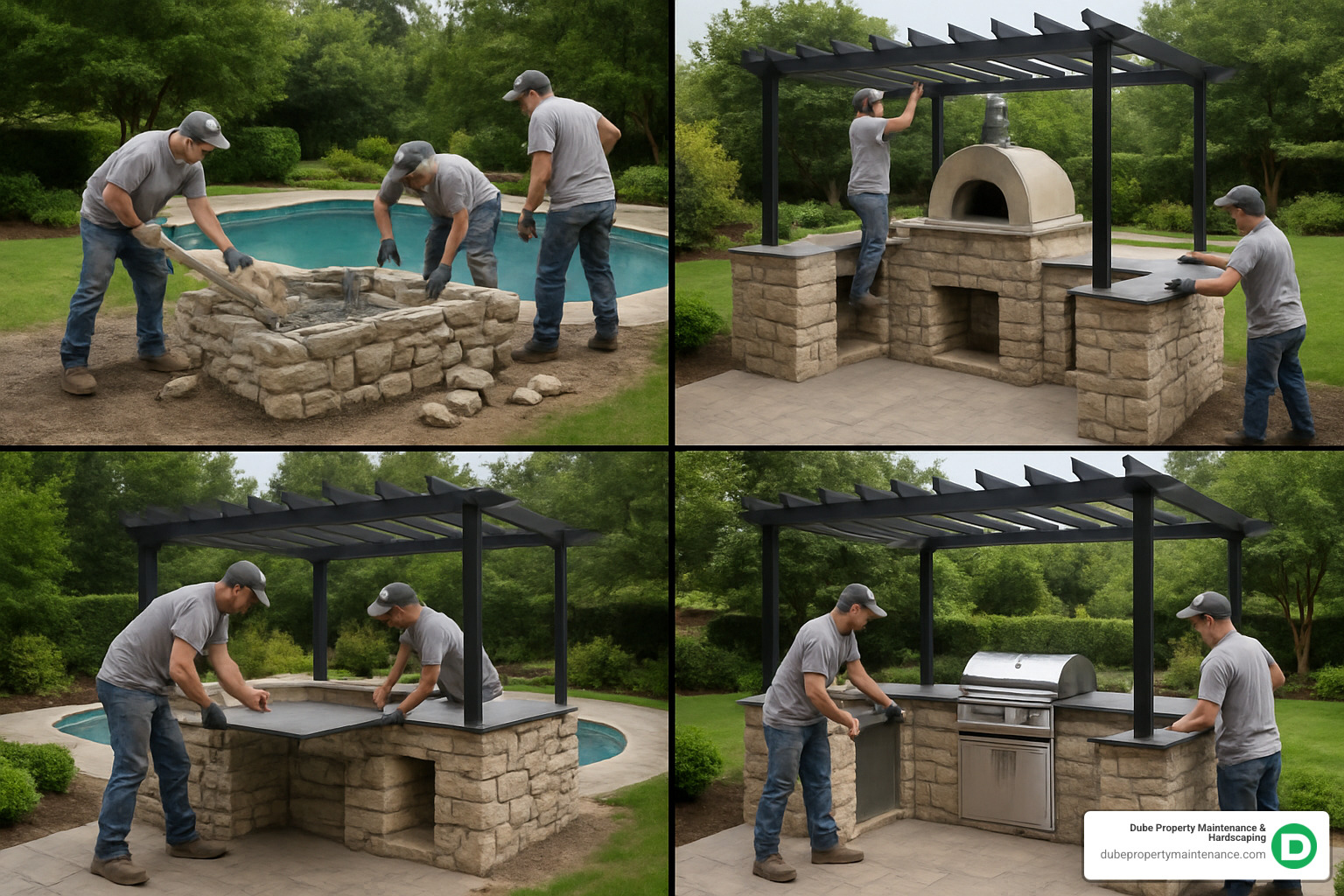
Understanding the investment required for an outdoor kitchen with pizza oven helps set realistic expectations and ensures you get the most value from your project. Based on our experience installing outdoor kitchens throughout Massachusetts and New Hampshire, here’s what you should know about costs and the installation process:
The cost range for outdoor kitchens with pizza ovens is quite broad, reflecting the wide variety of options available:
Note: These figures represent average costs based on internet data and not actual costs for Dube Property Maintenance and Hardscaping.
Key factors affecting your budget include:
One Andover client shared, “We started with a budget of $20,000 but quickly realized that adding a louvered pergola would extend our usable season significantly. The additional $15,000 was well worth it for year-round enjoyment.”
Understanding the timeline helps plan your project for maximum enjoyment:
Note: Weather conditions in New England can significantly impact outdoor construction timelines. Starting a project in October might extend completion by several months due to winter conditions.
For a smooth installation process, we recommend planning at least 3-6 months ahead of when you hope to start using your outdoor kitchen. This allows ample time for design refinement, material sourcing, and addressing any unexpected challenges.
Before breaking ground on your dream outdoor kitchen with pizza oven, several regulatory considerations must be addressed:
Our team at Dube Property Maintenance & Hardscaping handles the entire permitting process for our clients, navigating the specific requirements of each town we serve. This removes a significant burden from homeowners and ensures all installations meet or exceed local codes.
While DIY kits offer cost savings, professional installation provides significant advantages:
“There’s something special about cooking in an oven you built with your own hands,” shared a client in Haverhill who completed a weekend build. However, for most homeowners, the complexity of integrating multiple systems makes professional installation the preferred choice.
For more information about our professional installation services, visit our Installing an Outdoor Kitchen page.
Beyond the immediate enjoyment, an outdoor kitchen with pizza oven represents a sound investment:
A North Andover real estate agent recently told us, “Homes with well-designed outdoor kitchens are selling faster and at premium prices. Buyers see them as ready-made entertainment spaces that justify a higher purchase price.”
Your outdoor kitchen with pizza oven is more than just a cooking space—it’s an investment in your home and lifestyle. Here in New England, our four distinct seasons mean your outdoor kitchen needs special attention to stay beautiful and functional year after year. At Dube Property Maintenance & Hardscaping, we’ve helped countless Massachusetts homeowners keep their outdoor kitchens in top condition through blizzards, heat waves, and everything in between.
The key to longevity is following a seasonal rhythm with your maintenance routine. Think of it as giving your outdoor kitchen the care it deserves after all the delicious meals it helps you create.
When spring arrives in April, it’s time for the big awakening. Remove those winter covers and give everything a thorough inspection. “The freeze-thaw cycles we get in New England can be tough on outdoor structures,” explains one of our maintenance specialists. “We recommend checking all mortar joints and sealants after winter.”
Clean all surfaces with appropriate cleaners—gentle soap for stainless steel, stone-specific products for natural stone. This is also the perfect time to test gas connections using the soapy water method (bubbles indicate leaks) and ensure your chimney hasn’t become home to any critters during the winter months.
Summer maintenance is more about regular upkeep between those weekend pizza parties. Empty ash from wood-fired ovens weekly—a task many homeowners in Andover and North Andover tell us they actually find oddly satisfying. Keep your wood stored in a dry location, and make it a habit to wipe down stainless steel surfaces after cooking sessions to prevent grease buildup.
Fall is preparation time. “Think of it as tucking your outdoor kitchen in for a long winter’s nap,” says one of our Methuen clients who follows our winterization protocol religiously. Deep clean all appliances, shut off and drain water lines if you have them, and apply protective wax to stainless steel surfaces. This is also the time for a thorough chimney cleaning to remove creosote buildup—a safety essential for wood-fired ovens.
When winter arrives, quality covers become your best friends. Custom-fitted covers protect appliances from snow and ice, while regular checks ensure no water is infiltrating your structure. For clients with gas lines, maintaining minimal heat can prevent freezing and potential damage.
Different materials in your outdoor kitchen with pizza oven require specific attention. Your beautiful stainless steel appliances will maintain their luster if you clean with the grain using mild soap and water. Apply a stainless steel polish monthly during the cooking season, and never use abrasive cleaners that can scratch the surface. Before winter, a protective wax application provides an extra barrier against the elements.
Natural stone and masonry elements need annual sealing to prevent staining and water infiltration. “Granite countertops look gorgeous in outdoor kitchens, but they’re still porous materials,” notes our stone specialist. “Annual sealing is non-negotiable in our climate.” Clean spills immediately, especially acidic substances like tomato sauce or wine that can etch the surface, and avoid pressure washing which can damage mortar joints.
For wood elements like pergolas or cabinet doors, annual application of sealant or stain keeps them protected. Regular inspections for water damage or insect activity can catch problems before they become serious. One Winchester client told us, “I check my cedar pergola every spring and fall—it takes 30 minutes twice a year but has kept it looking new for five years now.”
The heart of your outdoor kitchen—your pizza oven—needs special attention. For wood-fired ovens, complete ash removal after each use (once cooled) prevents moisture absorption that can damage the interior. Quarterly inspections of firebrick can catch small cracks before they expand, and seasonal chimney cleaning prevents dangerous creosote buildup.
“The key to a happy wood-fired oven is proper firing and cooling cycles,” explains our masonry expert who has built dozens of custom ovens across Massachusetts. “Thermal shock from extreme temperature changes can crack even the best-built ovens.” Store dry hardwood under cover near your oven for convenience, but not too close for safety reasons.
Gas-powered ovens require different care: monthly checks of connections, regular cleaning of burners, and annual professional service to ensure everything is working safely and efficiently. Temperature gauge accuracy is worth verifying occasionally—an inexpensive oven thermometer can help you spot calibration issues.
Safety around your outdoor kitchen with pizza oven isn’t just about protecting your investment—it’s about protecting your family and home. Maintain a minimum 10-foot clearance from combustible structures, and if your kitchen is under a roof or pergola, install carbon monoxide and smoke detectors nearby.
Keep a fire extinguisher rated for grease fires within easy reach, and establish clear rules for children around hot surfaces. “We created a chalk line on our patio that the kids know not to cross when the pizza oven is fired up,” shares a family in Andover with three young children. “It’s become second nature to them.”
Never leave fires unattended, allow your oven to cool completely before covering, and store ash in a metal container away from structures—a safety step many homeowners overlook. Having proper tools for handling hot items readily available prevents improvised solutions that can lead to accidents.
Living in Massachusetts means preparing your outdoor kitchen for everything from nor’easters to summer heat waves. Proper drainage around your kitchen area prevents water pooling that can damage foundations and lead to settling. Consider retractable awnings or louvered pergolas for flexible weather protection—a feature increasingly popular among our clients in Lynnfield and Winchester.
“My louvered pergola was the best addition to my outdoor kitchen,” says one Methuen homeowner. “I can open it on beautiful days and close it when rain threatens, extending our outdoor cooking season by months.”
Ensure adequate snow load capacity for any overhead structures—a critical consideration after some of the record-breaking winters we’ve experienced. Wind breaks in exposed locations can protect flames and make cooking more comfortable, while heating elements extend your season well into fall and early spring.
For more information about ready-to-install options that include these maintenance-friendly features, visit our Ready-to-Install Outdoor Kitchen page.
With proper care and maintenance, your outdoor kitchen with pizza oven will provide decades of enjoyment, becoming the backdrop for countless family memories and the envy of your neighborhood. As one satisfied client in North Andover put it, “Our outdoor kitchen isn’t just where we cook—it’s where we live during the good weather months, and with proper care, those months keep getting longer every year.”
When investing in an outdoor kitchen with pizza oven, choosing the right materials can mean the difference between a space that looks beautiful for decades and one that needs replacement after just a few New England winters.
In our experience installing outdoor kitchens throughout Massachusetts, the most durable materials providing 20+ years of service with proper maintenance include 304 or 316 grade stainless steel (with 316 being essential for coastal properties in places like Newburyport), granite countertops (when sealed annually), thermal bluestone, properly installed brick with quality mortar, and natural stone veneer over concrete block structures.
“The initial investment in premium materials pays dividends over time,” explains our head mason. “We’ve revisited outdoor kitchens we built 15 years ago with granite and quality stainless steel, and they still look fantastic with minimal maintenance. Less expensive materials often need replacement within 5-7 years in our climate.”
For moderate durability (10-15 years), well-sealed concrete, properly maintained cedar, freeze-resistant ceramic tile, and powder-coated metals can be suitable options, especially for homeowners with more modest budgets or those planning to move within a decade.
The freeze-thaw cycles, humidity, and temperature swings we experience in Massachusetts make material selection particularly crucial. What works in California or Florida often fails prematurely here, which is why we always recommend investing in materials specifically suited to our regional climate.
The fuel you select for your pizza oven dramatically impacts everything from flavor to convenience, and we’ve found most homeowners fall into one of three camps based on their priorities.
Wood-fired ovens deliver that authentic, smoky flavor that pizza purists crave. The distinctive char and subtle wood notes simply can’t be replicated any other way. However, they require patience (60+ minutes to reach cooking temperature), proper wood storage, and more hands-on management. They’re perfect for weekend warriors who enjoy the ritual of building and tending a fire as much as the cooking itself.
For busy families in communities like Burlington or Winchester, gas-powered ovens offer best convenience. They heat up in just 15-30 minutes, provide precise temperature control, and require minimal cleanup. While they sacrifice some of that distinctive wood-fired character, they make up for it by enabling spontaneous Tuesday night pizza parties that wouldn’t happen with a more demanding oven.
“After installing dozens of pizza ovens across Massachusetts and New Hampshire, we’ve found that clients who prioritize authentic flavor and have the time to manage a fire gravitate toward wood-fired ovens,” notes our outdoor kitchen specialist. “Those who value convenience and spontaneous cooking sessions typically prefer gas models.”
Many of our clients ultimately choose hybrid models that offer the best of both worlds—wood-fired capability for weekend entertaining when time allows, and gas convenience for impromptu weeknight cooking. While these versatile units come with a higher price tag and more complex installation, they provide maximum flexibility for varying cooking situations.
Creating a functional outdoor kitchen with pizza oven requires careful space planning—too small and it becomes frustrating to use, too large and it can feel disconnected and wasteful.
For safe operation, your pizza oven needs at least 3 feet of clearance from any combustible materials. Your counter depth should be 24-30 inches for comfortable food preparation, with a minimum of 6 feet of counter length (ideally split between prep and serving areas). For guest seating, allow 24 inches width per person at a bar counter and 24-30 inches per person at a dining table.
“The most common mistake we see is underestimating the space needed for comfortable food preparation and guest circulation,” explains our design team. “A cramped outdoor kitchen quickly becomes frustrating to use.”
The layout you choose significantly impacts your space requirements. An L-shaped design (our most popular configuration) needs a minimum 10’×10′ footprint, while a straight-line design can work in as little as 4’×12′. Island designs require at least 6’×8′, and comprehensive U-shaped kitchens need approximately 12’×12′.
Remember to include 36-48 inches of circulation space between components so multiple cooks can work comfortably without bumping into each other. For smaller yards in towns like Salem or Windham, we often recommend compact L-shaped designs with the pizza oven positioned in the corner and bar seating along one side—this maximizes functionality in areas as small as 100 square feet while still providing adequate prep and serving space.
One of our Andover clients recently incorporated a 20-person cherry picnic table adjacent to their new outdoor kitchen, creating the perfect setting for their large family gatherings. Whatever your entertaining style, we recommend planning for slightly more space than you think you’ll need—outdoor cooking tends to draw a crowd!
An outdoor kitchen with pizza oven transforms your backyard into something truly special – it’s not just a place to cook, but a gathering spot where memories are made and shared. Whether you’re hosting weekend pizza parties or neat dinner gatherings under the stars, these outdoor spaces change how you enjoy your home.
What makes these outdoor kitchens truly work in our New England climate is the perfect balance of durability, functionality, beauty, and value. Your outdoor kitchen needs to stand up to our harsh winters and hot summers while looking great and working perfectly for your unique entertaining style.
The joy of sliding a perfectly blistered pizza from your outdoor oven and sharing it with laughing friends and family creates moments that delivery or indoor cooking simply can’t match. There’s something almost magical about the combination of fresh air, fire, and food that brings people together.
At Dube Property Maintenance & Hardscaping, we’ve been helping homeowners throughout Massachusetts and New Hampshire turn their pizza-party dreams into reality for years. Our team takes pride in creating outdoor kitchens that feel like natural extensions of your home and landscape.
We handle everything from the initial design conversations through material selection, construction, and those important finishing touches that make the space uniquely yours. Having worked in communities from Methuen to Winchester and Salem to Windham, we understand the local building requirements, weather considerations, and neighborhood aesthetics that influence a successful project.
Your outdoor kitchen should be as unique as your home. Some clients want the rustic charm of a Tuscan-inspired stone oven, while others prefer the sleek lines of a modern stainless steel setup. Whatever your vision, we bring the expertise to make it happen – on time and built to last through years of New England weather.
Ready to explore how an outdoor kitchen with pizza oven could transform your backyard? Visit our Modern Outdoor Fireplace page for more inspiration or reach out to schedule a conversation. Your perfect outdoor pizza paradise might be closer than you think!
