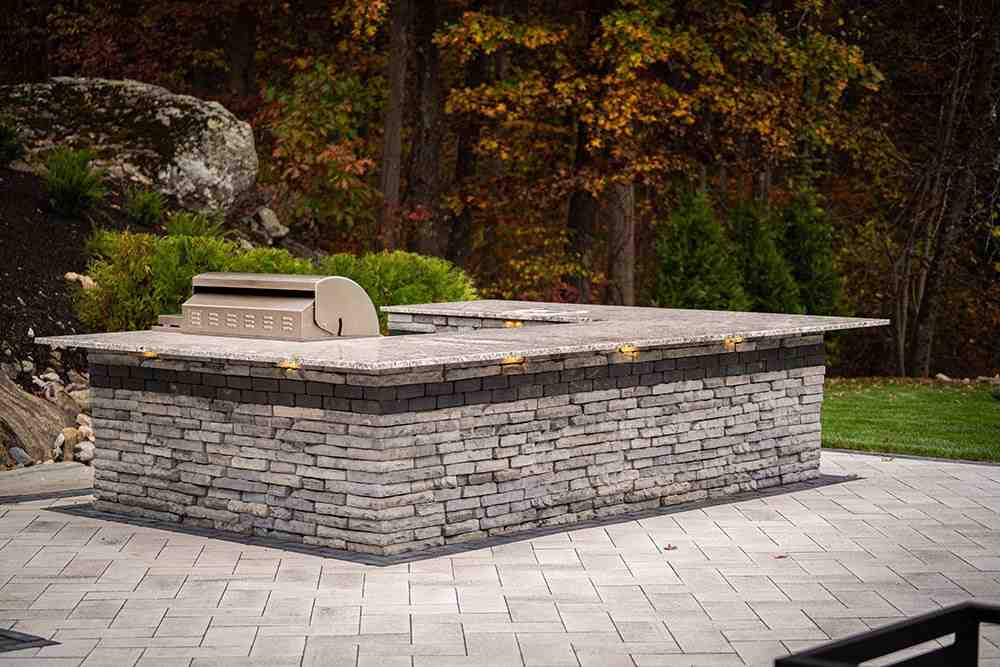

An outdoor kitchen with grill is more than a place to flip burgers; it’s a full culinary station that expands your living space and transforms how you entertain. It brings the heart of the home outdoors, creating a natural gathering place for friends and family.
Key Components of an Outdoor Kitchen with Grill:
The benefits go beyond convenience. Outdoor kitchens can increase your home’s value and save money on utility bills by keeping cooking heat outside. They create a natural gathering place that makes entertaining effortless. Today’s outdoor kitchens offer all the functionality of an indoor kitchen, designed to withstand the elements. Whether you’re planning a compact 10-foot setup or a sprawling culinary paradise, the key is proper planning of the layout, utilities, and materials.
Outdoor kitchen with grill terms you need:
The best grill is useless in the wrong spot. Smart planning and strategic location are the foundation of a great outdoor kitchen with grill.
Location planning is the first step. Your outdoor kitchen should be close enough to the house for convenience but far enough away that smoke isn’t an issue. Safety guidelines recommend keeping your grill at least 10 feet from combustible structures like siding, railings, and eaves. Also, consider sun and wind exposure. A well-placed kitchen avoids direct afternoon sun and gusty winds, ensuring comfort for the cook and guests.
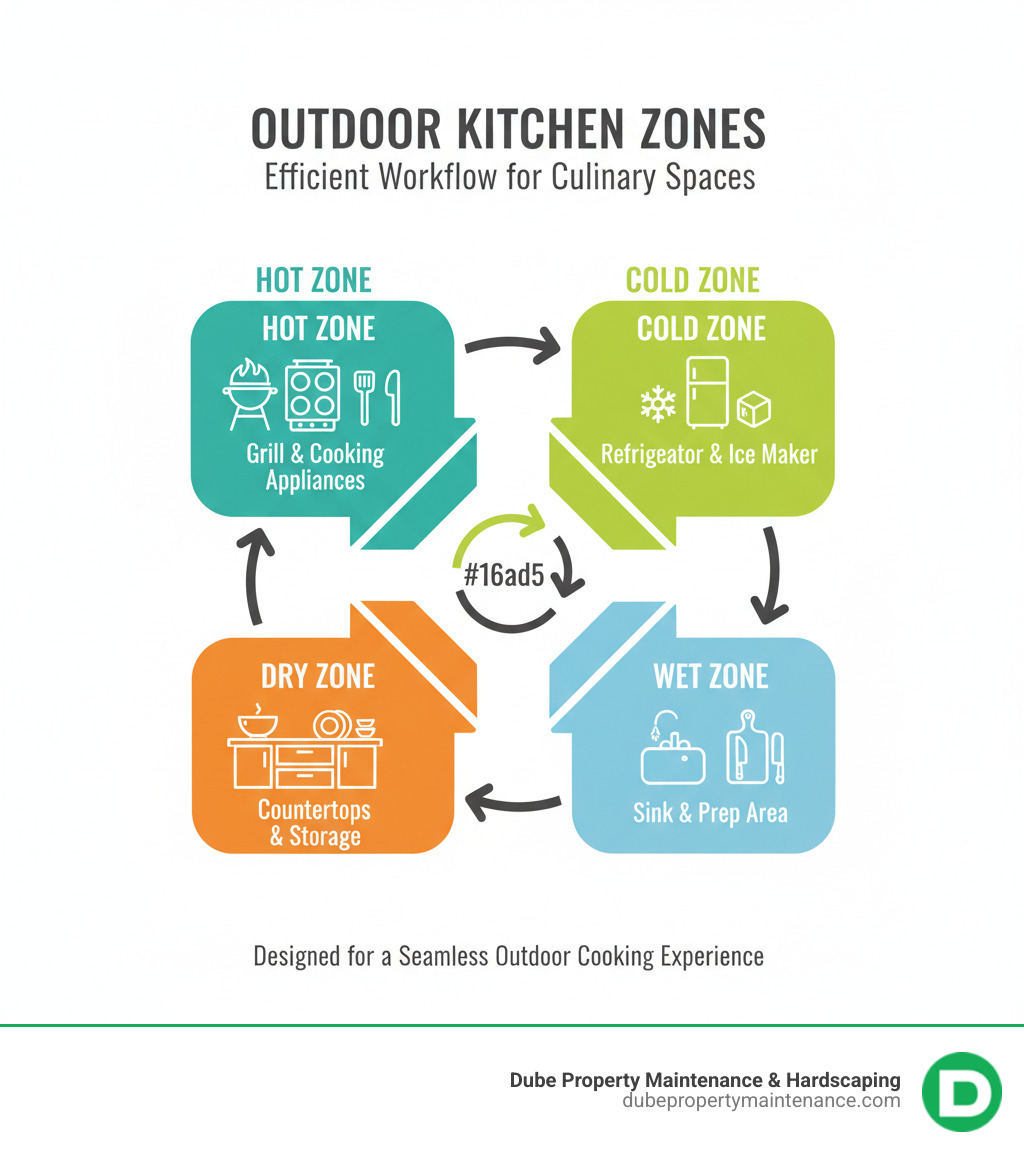
The magic of a great layout is in zoning and workflow. Professional designers use four distinct zones:
Your prep zone needs generous counter space—at least 24 inches next to your grill—for chopping and mixing. The cooking zone is centered around your grill and should be positioned so you can interact with guests. Your serving and entertaining areas should flow naturally from the cooking zone, perhaps with a bar-height counter for seating. For more inspiration, see our Ideas for Outdoor Cooking Area.
Our Outdoor Kitchen Planner Guide offers a deeper dive into the planning process.
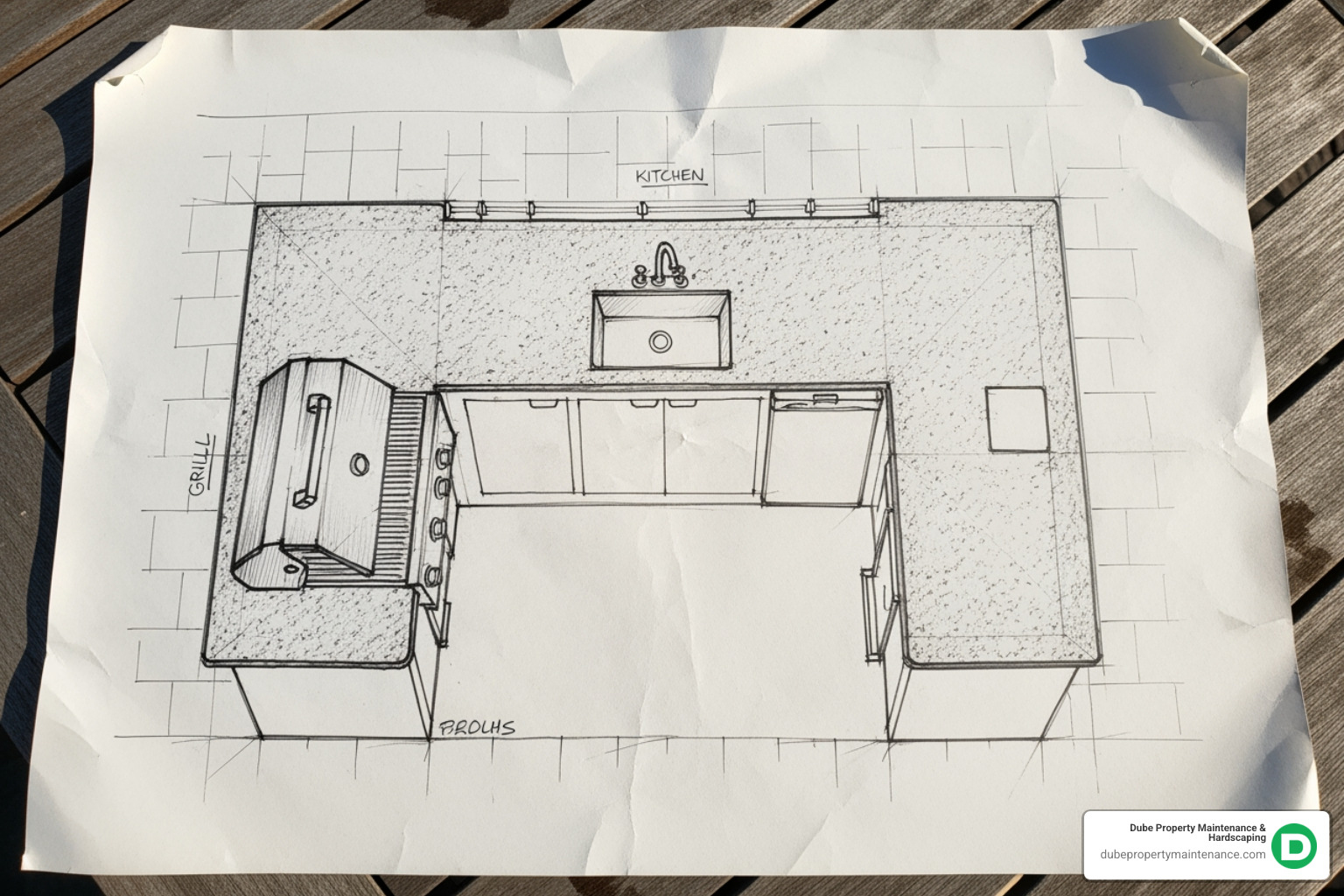
The shape of your outdoor kitchen with grill impacts its functionality.

An L-shaped layout is great for corner spaces, defining the kitchen area while keeping it open. It provides ample counter space and an efficient work triangle.
A U-shaped layout offers maximum counter and storage space on three sides, creating a highly efficient workspace for serious chefs, though it requires more square footage.
A linear layout is perfect for narrow patios, arranging all essentials along a single wall.
Space assessment is critical. Small kitchens are about 10 feet long, medium kitchens around 16 feet, and large kitchens can span 20 feet or more, allowing for multiple stations and bar areas. You can visualize your design with a 3D tool before construction begins.
Finally, consider traffic flow. Ensure there’s enough clearance (at least 4 feet) behind the grill for people to pass safely without getting too close to hot surfaces. A good layout prevents bottlenecks and makes the space feel effortless.
The grill is the star of your outdoor kitchen with grill. Getting this decision right is foundational. For a seamless, professional look, a built-in grill head that sits flush with your countertops is the best choice. Freestanding grills are more portable but lack the integrated aesthetic.
Sizing your grill depends on how you entertain. A 3-burner grill may suffice for a small family, but for larger gatherings, a 4- or 5-burner model is better. Also, consider BTU considerations (British Thermal Units), which measure heating power. Higher BTUs mean faster heating and better searing. Premium grills can offer 75,000 to 90,000 BTUs. For more planning insights, see our guide on Backyard Outdoor Kitchens.
Your choice of fuel type shapes the cooking experience. Natural gas grills offer unlimited fuel from your home’s gas line. Propane grills use tanks, offering more placement flexibility. For authentic smoky flavor, charcoal and wood pellet grills are best.
| Grill Type | Heat Control | Flavor Profile | Convenience | Cleanup | Pros | Cons |
|---|---|---|---|---|---|---|
| Gas Grill | Excellent, precise | Less smoky, clean | Fast, easy start | Minimal | Quick heating, consistent temps, versatile (grilling, roasting) | Lacks intense smoky flavor, requires gas line/tank |
| Charcoal | Good, but slower | Rich, smoky, authentic | Slower start | Ash disposal | Classic smoky flavor, high heat for searing, favored by purists | Longer preheat, messy cleanup, less precise temp control |
| Electric | Very good, consistent | Minimal | Very easy, plug-in | Easy | Convenient, clean, ideal for small spaces or flame restrictions | May lack smoky flavor, limited power/size |
| Wood Pellet | Excellent, digital | Distinct wood smoke | Auto-feed, Wi-Fi | Ash disposal | Authentic wood smoke flavor, versatile (smoking, grilling, baking) | Requires electricity, specialized pellets, can be slower than gas |
A truly functional outdoor kitchen with grill needs a strong supporting cast.
Popular upgrades include an outdoor pizza oven, warming drawers, ice makers, and a kegerator. Our Outdoor Kitchen with Pizza Oven guide explores these options. Always ensure any appliance is specifically rated for outdoor use to guarantee safety and durability.
The materials you choose for your outdoor kitchen with grill will determine its longevity and maintenance needs, especially in a climate with weather extremes like ours in Methuen, MA. Weather-resistant, low-maintenance materials are essential to protect your investment from freeze-thaw cycles, humidity, and sun.

Your kitchen surfaces must be both beautiful and durable.
For countertops, granite is a top choice. It’s highly durable, resists heat and stains (when sealed), and is easy to clean. Concrete offers a modern look but requires regular sealing to prevent stains and can be prone to cracking in our climate. Stainless steel provides a hygienic, heat-resistant surface with a professional aesthetic. Tile is a budget-friendly option with many design choices, but grout lines can be difficult to keep clean.
For cabinets, stainless steel is the gold standard for durability and weather resistance. Marine-grade polymer is another excellent choice, as it’s completely impervious to moisture. For a natural look, teak or ipe wood are beautiful but require regular oiling to maintain their color. Our Brick Outdoor Kitchen designs offer more inspiration on material combinations.
The unseen structure is just as important as the visible finishes.
For framing, welded steel studs offer the best strength and longevity. Pressure-treated lumber is a cost-effective alternative, while masonry block provides exceptional durability.
The flooring beneath your kitchen must be stable and durable. Concrete pavers are popular in the Merrimack Valley because they handle freeze-thaw cycles well and are easy to replace if damaged. Natural stone like bluestone or granite offers a luxurious, timeless look. Poured concrete is affordable but can be vulnerable to cracking in our climate if not installed correctly.
As a full-service hardscaping company, we build your outdoor kitchen from the foundation up, ensuring a durable and beautiful result. Learn more about our hardscaping services.
Installing your outdoor kitchen with grill requires careful planning and professional execution of its core infrastructure.

This involves coordinating gas lines, water and drainage, and electrical wiring. Gas lines for natural gas or propane must be installed by a licensed professional to ensure safety and code compliance. Likewise, plumbing for a sink requires proper connections for hot and cold water and drainage to meet local codes. All outdoor electrical outlets must be GFCI (Ground Fault Circuit Interrupter) protected to prevent shock, especially in wet conditions. As a full-service company, we coordinate all these utility installations. For more details, see our guide on How to Install an Outdoor Kitchen.
Safety is paramount when dealing with fire, gas, and electricity.
For more safety details, visit our resource on Installing an Outdoor Kitchen.
Regular maintenance will keep your outdoor kitchen with grill in peak condition.
For specific materials, use cleaners designed for stainless steel and wipe with the grain. Annually seal granite or stone countertops to prevent staining. Proper care ensures your outdoor kitchen will provide enjoyment for years. To improve your skills, learn grilling techniques with this master class.
Here are answers to the most common questions we receive about building an outdoor kitchen with grill.
The cost varies widely based on size, materials, and appliances. Based on online data, a simple grill island might start around $5,000. A medium-sized kitchen with a built-in grill, sink, and refrigerator typically ranges from $10,000 to $20,000. High-end, custom designs with premium appliances and finishes can easily exceed $30,000, sometimes reaching $50,000 to $75,000.
These are average estimates based on internet data and not actual costs for Dube Property Maintenance and Hardscaping. For an accurate quote custom to your project, a professional consultation is best.
Safety is the top priority. The grill should be at least 10 feet away from combustible structures like your home’s siding, deck railings, and fences. This clearance prevents fires from heat and flare-ups. Always consult local building codes and your grill manufacturer’s installation manual, as our team does for every project in areas like Methuen, MA, and Salem, NH.
Beyond the grill, three components are key to a truly functional outdoor kitchen with grill.
These three elements create a practical and enjoyable outdoor cooking space you’ll use regularly.
An outdoor kitchen with grill is more than an appliance; it’s an investment in your lifestyle, home value, and the creation of lasting memories. It’s a space for connection, where every meal feels a little more special.
We’ve covered the key steps: planning your layout, choosing the right appliances and durable materials, and ensuring safe installation and maintenance. Whether you envision a simple setup or a complete culinary paradise, these fundamentals are the key to success.
For homeowners in Methuen, MA, and our surrounding service areas in Massachusetts and New Hampshire, you don’t have to steer this process alone. At Dube Property Maintenance & Hardscaping, we bring years of professional hardscaping and landscape installation experience to every project. We understand our local climate and building codes, and we are passionate about changing backyards into functional, beautiful living spaces.
Your dream outdoor kitchen with grill is within reach. Let’s build it together.
Ready to build your dream outdoor kitchen? Contact us today!