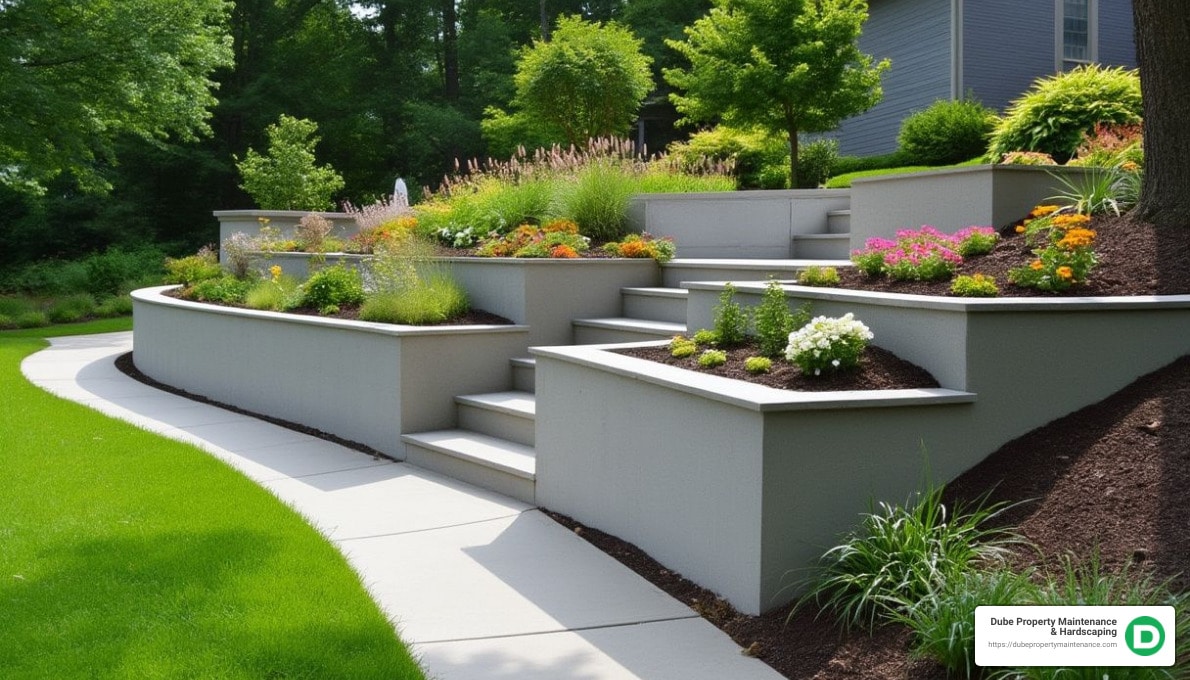

Landscape retaining wall ideas can transform your outdoor space into a masterpiece of both functionality and beauty. Whether you’re dealing with slopes, looking to prevent soil erosion, or simply wanting to improve your landscape’s aesthetic, the right retaining wall design can make all the difference. Here are a few quick ideas to get you started:
Retaining walls are essential to landscape design due to their versatility. They offer a practical solution for creating flat, usable spaces on sloped terrains, which is especially beneficial in regions like Methuen, MA, where homeowners face challenges such as efficient water management and harsh winters. Retaining walls help manage water flow and prevent erosion, fundamentally supporting a lush landscape throughout the year.
An aesthetically pleasing retaining wall not only lifts the look of your garden but can also boost your property’s value. As Mauricio Lobeira aptly notes, “Flatter and uniformed surfaces are more expensive than steep ones.” With the right materials, such as concrete blocks, natural stones, or treated timbers, you can create a custom solution that suits your needs.
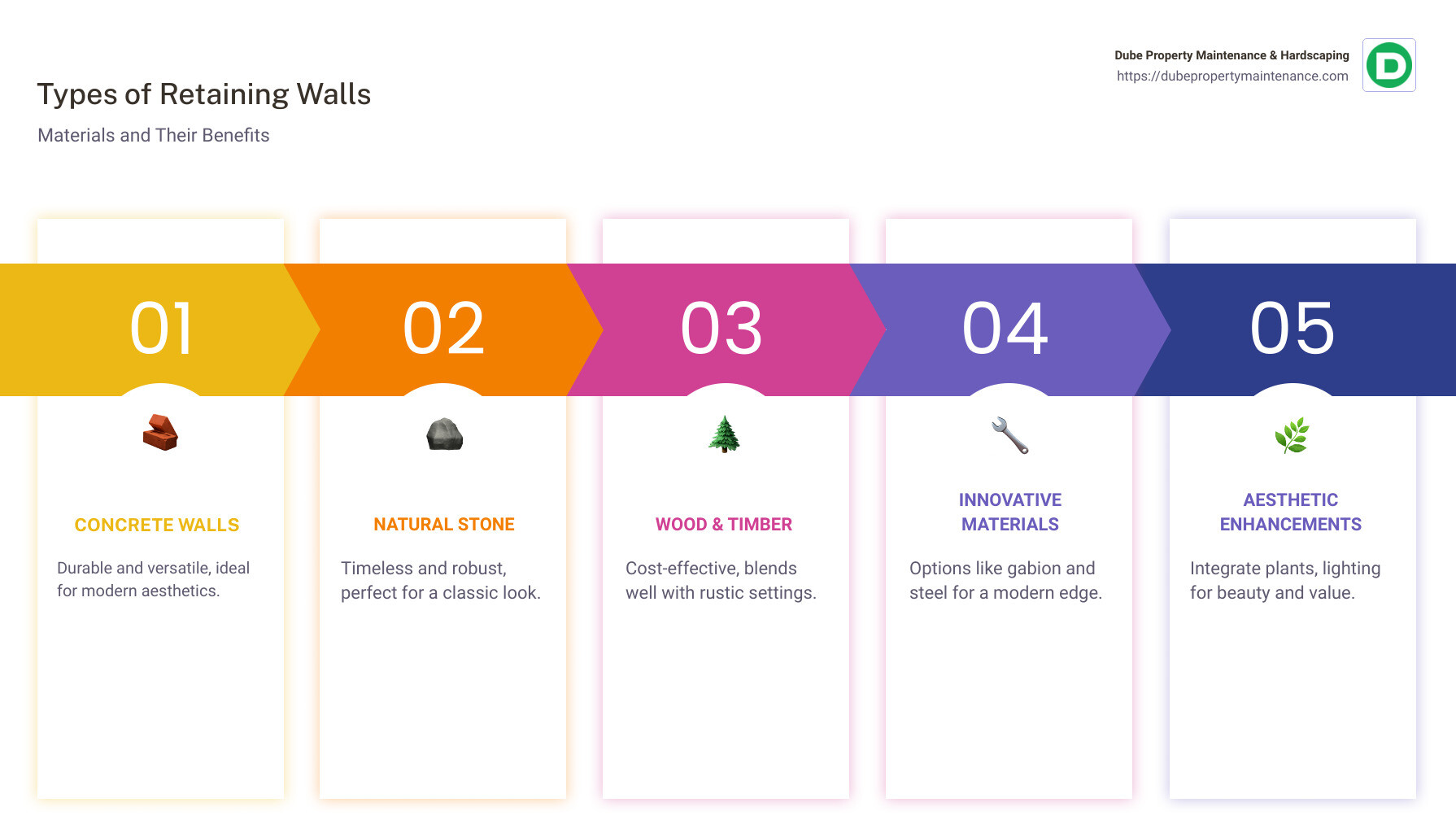
Retaining walls are more than just practical structures; they are key elements in landscape design that blend functionality with aesthetics. Choosing the right type of retaining wall depends on various factors, including materials, durability, and visual appeal. Let’s explore some of the popular options available.
Poured Concrete: This is a favorite for many due to its cost-effectiveness and strength. Poured concrete walls offer a sleek, modern look and can be molded into various shapes and sizes. They are ideal for those who want a minimalist design without compromising on durability. However, concrete can sometimes lack the warmth that other materials provide.
Concrete Blocks: These are pre-made blocks that can be stacked to form a wall. They are versatile and available in various colors and textures, making them a popular choice for DIY enthusiasts. Concrete blocks are durable and provide a clean, uniform appearance. They are also easy to replace if damaged, adding to their practicality.
Granite, Limestone, Sandstone: Natural stone walls exude timeless elegance and blend seamlessly with the natural environment. Granite is known for its exceptional durability and resistance to weathering, making it a long-lasting choice. Limestone and sandstone offer a softer, more rustic look, with unique textures and colors that add character to any landscape. These materials are perfect for creating a classic, sophisticated aesthetic.
Pressure-Treated Pine: Wood retaining walls bring a warm, rustic charm to any landscape. Pressure-treated pine is a popular choice because it is more resistant to rot and pests, extending the wall’s lifespan. However, wood walls generally have a shorter lifespan compared to stone or concrete options and may require more maintenance over time.
Railroad Ties: Once common, railroad ties are less frequently used today due to environmental concerns. They are soaked in creosote, which poses health and environmental risks. Despite this, they offer a rugged, vintage appeal and are a cost-effective option for certain projects.
Gabion Walls: Gabion walls consist of wire cages filled with stones or other materials. They provide a sturdy and flexible retaining solution that allows for natural drainage. Gabion walls also offer a unique, industrial aesthetic that can be softened with the addition of greenery.
Steel: Galvanized steel is strong and durable, making it an excellent choice for retaining walls that require extra reinforcement. It is often used in combination with other materials to provide structural support. Steel walls can add a sleek, modern touch to your landscape but may be more expensive than other options.
Vertical Sleepers: These are timber or concrete posts installed vertically to form a wall. Vertical sleepers provide a contemporary and streamlined look, suitable for modern landscapes. They can be combined with plants or lighting to improve their visual appeal.
Each type of retaining wall offers distinct advantages and aesthetic qualities. Selecting the right material is crucial to ensuring your retaining wall not only serves its functional purpose but also complements your landscape’s overall design.
Retaining walls are not just about holding soil; they’re about creating beautiful, functional spaces in your landscape. Let’s explore some landscape retaining wall ideas that combine design, practicality, and creativity.
Seating Areas: A retaining wall can double as a seating area, making it a perfect spot for gatherings. Imagine sitting on a stone wall, enjoying a fire pit with friends and family. This dual-purpose design saves space and adds utility.
Steps: Adding steps to your retaining wall design makes navigating different levels of your yard easy and stylish. Steps integrate practicality with aesthetics, providing a seamless transition between spaces.
Entryways: Create a welcoming entryway by incorporating an arch or doorway into your retaining wall. Frame it with lush greenery to add a whimsical touch to your garden. This not only adds functionality but also improves the visual appeal of your landscape.
Plant Integration: Use your retaining wall as a canvas for greenery. Incorporate plants directly into the wall with built-in planters or create a “living wall” with gaps filled with vibrant flora. This approach softens the hardscape and brings your garden to life.
Lighting: Illuminate your wall with strategically placed lighting. This not only highlights the wall’s features but also adds safety and ambiance to your outdoor space. Choose from solar lights, LED strips, or classic lanterns to match your style.
Mixed Materials: Combine materials like stone, wood, and metal to create a dynamic look. Mixing materials can add texture and depth, breaking the monotony and adding interest to your landscape design.
Infinity-Edge Lawn: Create an illusion of endless green by designing an infinity-edge lawn with your retaining wall. This design merges the lawn with the horizon, offering a breathtaking view that makes your yard feel expansive.
Rock Wall Garden: Transform your retaining wall into a rock garden. Use a variety of stones and pebbles in different colors and sizes to craft a visually striking feature. This is perfect for adding a natural, rugged charm to your landscape.
Vertical Planters: Maximize space by turning your retaining wall into a vertical garden. Use wall-mounted planters or pocket gardens to grow herbs, flowers, or succulents. This not only saves space but also adds a lush, green backdrop to your outdoor area.
These ideas highlight the versatility of retaining walls in landscape design. By incorporating functional features and aesthetic improvements, you can create a space that is both practical and visually appealing.
Building a retaining wall doesn’t have to drain your wallet. With smart choices and a bit of creativity, you can achieve a beautiful and functional wall without overspending. Let’s explore some cost-effective solutions.
When it comes to affordable retaining wall materials, poured concrete is a top choice. It’s not only economical but also durable and easy to work with. If you’re looking for something even cheaper, consider cinderblocks. These are great for DIY projects and can be stacked to create a sturdy wall.
Another budget-friendly option is using recycled materials. Scour your local community for discarded bricks or pavers. You might be surprised at what you can find for free or at a low cost. Using recycled materials is eco-friendly and gives your wall a unique, rustic charm.
If you’re handy and enjoy tackling projects yourself, a DIY retaining wall can save you a significant amount of money. Here are a few ideas to get you started:
With these cost-effective solutions, you can build a retaining wall that fits your budget and improves your landscape. Whether you choose to DIY or use affordable materials, the key is to plan carefully and ensure your wall is structurally sound.
When it comes to choosing and building retaining walls, many questions can arise. Let’s tackle some common concerns to help you make informed decisions.
If you’re looking for budget-friendly options, poured concrete and pressure-treated pine are excellent choices. Poured concrete is not only economical but also offers longevity and minimal maintenance. It’s a go-to option for those seeking durability at a low cost.
Pressure-treated pine is another cost-effective alternative. It’s widely available and easy to work with, making it a popular choice for DIY enthusiasts. However, keep in mind that while it’s affordable, it may require more maintenance over time compared to concrete.
Building a low retaining wall can be a rewarding DIY project. Here’s a simplified guide to get you started:
Not every landscape requires a traditional retaining wall. Here are some creative alternatives:
By exploring these alternatives, you can find solutions that fit your landscape’s unique needs and aesthetic preferences. Whether you opt for a traditional wall or a creative alternative, the goal is to improve your outdoor space while staying within budget.
As we’ve explored, retaining walls are more than just functional structures; they’re an investment in your property’s longevity and value. Whether you’re aiming to prevent soil erosion, create usable outdoor spaces, or simply improve your landscape’s aesthetics, a well-designed retaining wall can make a significant difference.
Longevity is a key benefit of a well-constructed retaining wall. Materials like concrete and natural stone offer durability that withstands the test of time. Proper installation and maintenance further ensure that your retaining wall remains a sturdy feature for years. Investing in quality materials and professional installation can save you from costly repairs down the line.
Moreover, property value can see a substantial boost with the addition of an attractive and functional retaining wall. Homebuyers often appreciate the aesthetic appeal and practical benefits of a well-maintained landscape. A thoughtfully designed retaining wall can improve the curb appeal of your home, making it more enticing to potential buyers and allowing you to command a higher market price.
At Dube Property Maintenance & Hardscaping, we specialize in creating landscape solutions that marry functionality with beauty. Our team of experts in Methuen, MA, is dedicated to bringing your vision to life with precision and creativity. Whether you’re looking for a simple, cost-effective solution or a grand design statement, we’ve got you covered.
We invite you to explore the endless possibilities of landscape retaining wall ideas with us. Our comprehensive outdoor solutions are custom to meet your specific needs, ensuring that your property not only looks stunning but also stands strong against the elements.
Lift your landscape with a retaining wall that reflects your style and improves your outdoor living experience. Reach out to us today to start your project and enjoy the lasting benefits of a well-crafted retaining wall.