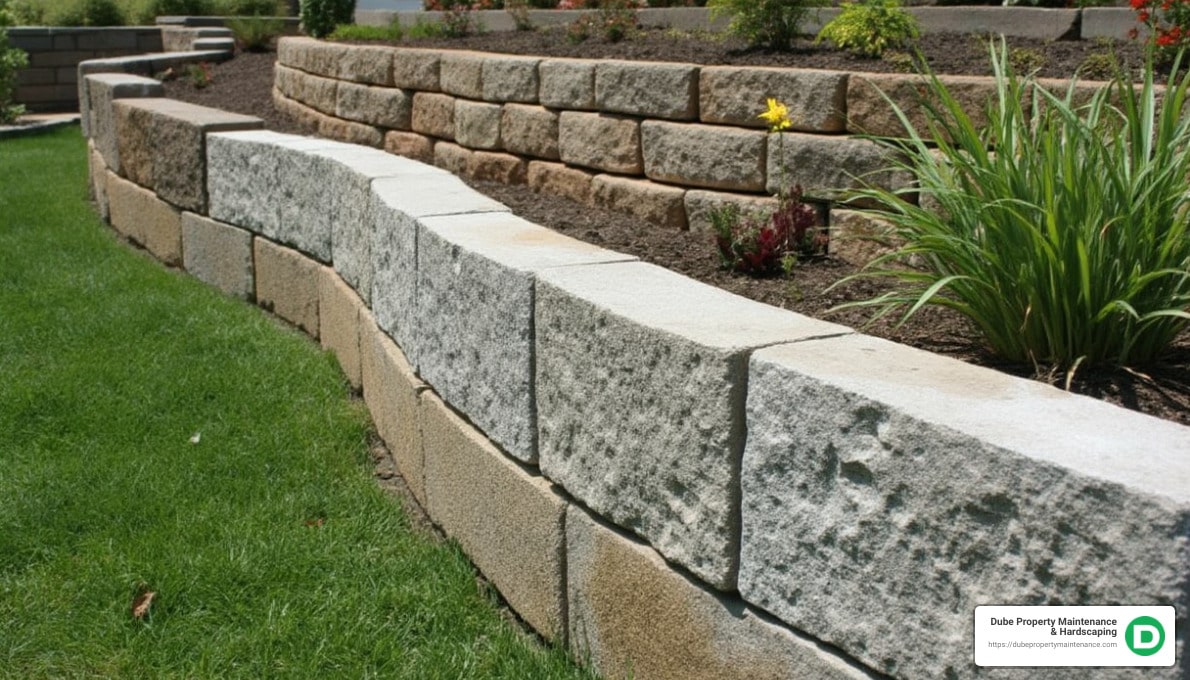

When considering landscape blocks for garden walls, recognize their dual role in both functionality and aesthetic improvement. These blocks are not just practical solutions for structural needs; they significantly boost the visual appeal of any outdoor space. Whether you’re aiming to prevent soil erosion, create distinct garden sections, or simply add a decorative touch, landscape blocks provide a sturdy and stylish solution.
Landscape blocks come in various materials and designs, each offering unique benefits. From natural stone that offers a classic, earthy look to concrete blocks that provide modern shapes and colors, the choices are designed to meet diverse landscaping needs. They are pivotal in changing ordinary spaces into spectacular outdoor environments, making them a valuable addition to both residential and commercial properties.
To quickly grasp the essentials:
– Functionality: Ideal for preventing erosion and managing sloped terrains.
– Aesthetics: Available in various styles to improve garden beauty.
– Versatility: Suitable for different landscape designs, from rustic to contemporary.

Choosing the right type of landscape block can dramatically influence the longevity and appearance of your garden walls, ensuring they remain both beautiful and functional through the seasons.
Key terms for landscape blocks:
– how to build a landscape block retaining wall
– interlocking retaining wall blocks
– landscape retaining wall ideas
When planning your garden walls, selecting the right type of landscape blocks is crucial. Each type offers different benefits in terms of aesthetics, durability, and ease of installation. Let’s explore the most common types used in landscaping today.
Materials: Poured concrete blocks are made from a mixture of cement, sand, aggregate, and water, which is poured into molds to achieve various shapes and sizes.
Colors: These blocks typically come in neutral shades such as grey, beige, and off-white, but can be custom colored during the manufacturing process.
Sizes: Available in standard sizes; however, custom sizes can be made to suit specific project requirements.
Cost-effective: Poured concrete blocks are among the most economical choices for landscape blocks due to their straightforward manufacturing process.
Versatile: They can be used in various applications, from retaining walls to decorative garden walls, adapting easily to different design aesthetics.
Materials: Similar to poured concrete blocks but with added interlocking features designed on the sides of the blocks.
Colors: These blocks offer a range of color options, including more vibrant choices, thanks to modern concrete technology.
Sizes: Standard sizes are available, but like poured concrete, customization is possible to meet specific design needs.
Easy installation: The interlocking system simplifies alignment and ensures stability, making them ideal for DIY projects.
Stability: Their design promotes better load-bearing and structural integrity, making them suitable for higher or more complex wall structures.
Materials: Made from quarried stone such as granite, limestone, and sandstone, each block contains unique natural patterns and textures.
Colors: The colors depend on the type of stone used. Common hues include grays, browns, reds, and greens.
Sizes: Natural stone blocks vary in size due to their natural origins. They can be custom cut, but this often increases the project cost.
Aesthetic appeal: Natural stone offers a premium look that can significantly improve the property’s value and aesthetic appeal.
Durability: Stone is extremely durable, resistant to weathering and erosion, making it an excellent choice for long-lasting structures.
When choosing landscape blocks, consider the specific needs of your project. For durability and a classic look, natural stone blocks are unbeatable. If budget and ease of installation are your priorities, concrete options might be more suitable. Each type offers unique benefits, so consider what will best meet the demands of your landscape project.
Installing landscape blocks correctly is crucial for the stability and longevity of your garden walls. Here’s a guide to help you prepare the ground, lay the base, and set the blocks effectively.
1. Clear the Area: Begin by removing any debris, weeds, or large stones from the area where you plan to build your wall. This ensures a clean workspace.
2. Level the Ground: Use tools like a shovel and rake to make the ground as level as possible. Uneven ground can lead to unstable walls.
3. Compact the Soil: Compaction provides a solid base for your landscape blocks. Use a hand tamper or a plate compactor for larger areas to compact the soil evenly.
1. Gravel Base: Start with a layer of gravel. This helps with drainage and prevents your wall from shifting. Aim for about 4-6 inches of gravel base.
2. Ensure Proper Drainage: Besides gravel, consider installing a drainage pipe behind the wall, especially if it’s retaining soil. This pipe helps direct water away from the wall, reducing pressure and preventing damage.
1. Check Alignment: As you place each block, use a level to ensure it’s perfectly horizontal. Misaligned blocks can lead to an unstable wall.
2. Stagger the Joints: For added stability, stagger the joints between the blocks. This technique distributes the load and improves the strength of the wall.
3. Use the Right Tools: A rubber mallet can be used to adjust the blocks without damaging them. For cutting blocks to fit, a masonry saw or chisel can be handy.
4. Checking Levels Regularly: Every few rows, use a long level to check the alignment and level of the entire structure. Adjust as necessary to prevent any tilting or curving of your wall as it rises.
By following these steps, you can ensure that your landscape blocks are installed correctly, providing a durable and visually appealing structure in your garden. Always remember to consult with a professional if your project is complex or if you’re unsure about any step in the process.
When planning to improve your garden with landscape blocks, understanding the cost implications is essential. This section will explore the most budget-friendly options as well as premium choices, helping you make an informed decision based on your financial considerations.
Poured Concrete Blocks:
Poured concrete is one of the most economical materials for landscape blocks. It offers a balance between cost-effectiveness and functionality. These blocks are versatile enough to fit various design needs and are particularly cost-effective for larger projects due to their standardized production process. Typically, the cost per square foot can be significantly lower compared to other materials.
Pine Blocks:
Using pine for landscape blocks is another budget-friendly option. While not as durable or long-lasting as some other materials, pine can be a good choice for temporary structures or for those on a tight budget. It’s also relatively easy to work with, which can reduce installation costs.
Natural Stone Blocks:
For those looking for a more aesthetic and durable option, natural stone blocks are a premium choice. Materials like granite, limestone, or sandstone provide a timeless appeal and superior durability. These blocks resist weathering and wear, making them a long-term investment. Natural stone also varies in texture and color, offering unique and customized design options. However, the cost is significantly higher due to the quarrying process and the heavier weight, which increases transportation costs.
Custom Designs:
Opting for custom-designed landscape blocks allows for unique, personalized aesthetics that can perfectly match your garden’s theme. Whether it’s specific shapes, sizes, or colors, custom blocks can be designed to meet exact specifications but come at a higher price point. These are ideal for specialized projects where standard blocks cannot deliver the desired effect.

By considering these options, you can plan your budget accordingly and choose the right type of landscape blocks that not only meet your aesthetic desires but also align with your financial capabilities. Whether you opt for the affordability of poured concrete and pine or the durability and elegance of natural stone and custom designs, each choice has its place in the spectrum of landscape projects.
Maintaining your landscape blocks is crucial for preserving their beauty and functionality over time. This section covers essential practices like cleaning, repair, and enhancing durability through various methods.
One of the key challenges in maintaining landscape blocks is preventing erosion, especially in areas prone to heavy rain or runoff. Implementing effective drainage solutions is critical. Here are simple strategies to ensure your landscape blocks remain stable and intact:
To extend the life of your landscape blocks, focus on enhancing their durability through regular maintenance and protective measures:
By following these maintenance tips, you can ensure the longevity of your landscape blocks, keeping your garden walls looking great and functioning effectively for years to come. Regular care not only preserves the structural integrity but also the aesthetic appeal of your outdoor spaces.
When considering cost-effectiveness in retaining wall blocks, poured concrete often emerges as the most budget-friendly option. This type of block is not only affordable but also offers a smooth and uniform finish that can be easily customized with colors or textures. The cost per square foot for poured concrete is generally lower compared to other materials, making it a popular choice for those looking to construct a durable retaining wall on a budget.
The foundation under landscape blocks is crucial for ensuring stability and preventing shifting. Typically, gravel is used as a base material under these blocks due to its excellent drainage properties and ability to compact well. Over the gravel, landscape fabric can be laid to separate the gravel from the soil, preventing weed growth and further enhancing drainage, ensuring that your landscape blocks remain stable over time.
The use of adhesive in assembling landscape blocks depends on the type of blocks and the structure being built. For higher or more load-bearing structures, such as retaining walls, using a construction adhesive between the layers of blocks can provide additional stability. However, for less critical structures like garden borders or low walls, the blocks might simply be stacked without adhesive. Alternative methods include using interlocking blocks that naturally hold together without the need for glue, offering both ease of installation and durability.
By addressing these common questions with straightforward and practical advice, homeowners can make informed decisions about their landscape block projects, ensuring both cost efficiency and long-lasting results.
As we wrap up our guide on landscape blocks, it’s clear that choosing the right materials and methods for your garden walls is not just about aesthetics but also about functionality and durability. At Dube Property Maintenance & Hardscaping, we understand the importance of creating outdoor spaces that are both beautiful and sustainable.
Our team of experts brings over 30 years of experience in landscape installation and hardscaping to ensure that every project meets the highest standards of quality and craftsmanship. Whether you’re looking to install a simple garden wall or a complex terraced landscape, we are here to help you achieve your vision with precision and care.
We pride ourselves on using only the best materials and the latest techniques to ensure that your landscape blocks not only improve the beauty of your property but also contribute to its longevity and stability. From the initial design consultation to the final installation, our focus is on delivering superior service and exceptional results.
If you’re considering adding landscape blocks to your property, or if you have any questions about the best options for your specific needs, don’t hesitate to contact us. Let us help you transform your outdoor space into a stunning and functional area that you and your family will enjoy for years to come.
Thank you for trusting Dube Property Maintenance & Hardscaping with your landscaping needs. We look forward to helping you bring your outdoor dreams to life.