

Landscape around steps isn’t just about making your outdoors look pretty; it’s about blending functionality with aesthetics to create a harmonious outdoor environment. Whether you have a sprawling garden or a compact backyard, landscaping around steps can significantly improve the accessibility, safety, and beauty of your property. Here are some key considerations for changing the area around your steps:
Landscaping around steps can lift your property’s appeal and provide a welcoming environment. Let’s explore how you can achieve this through thoughtful design and expert craftsmanship.
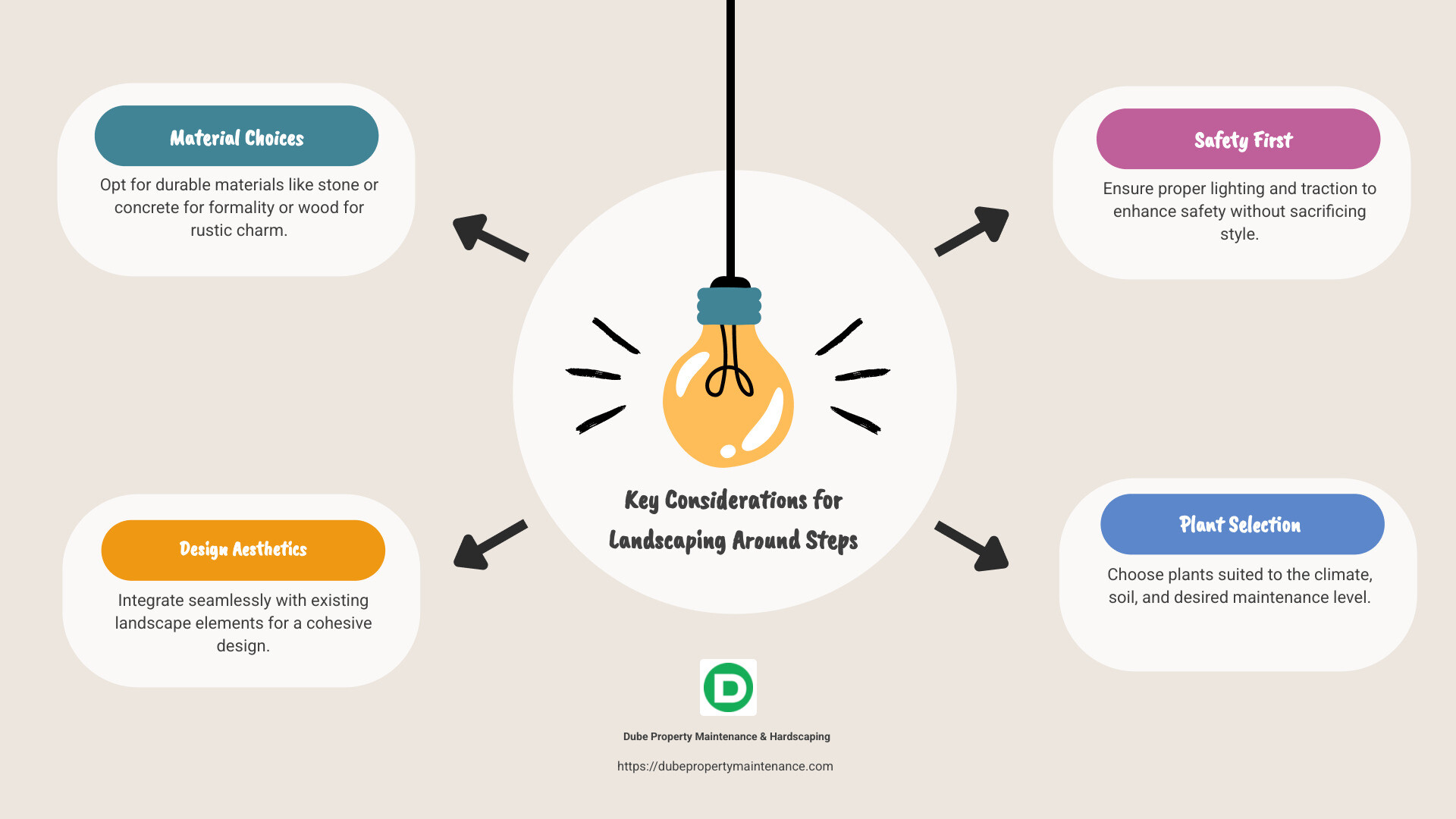
When planning to landscape around steps, the choice of materials plays a crucial role in both the aesthetics and functionality of your design. Here’s a breakdown of some essential materials to consider:
Wood is a versatile material that brings warmth and a natural feel to your landscape. It’s perfect for creating a rustic or informal look.
Tip: Consider using treated wood or composite materials for increased durability.
Using rock in your landscape design adds timeless beauty and durability. Options include natural stone steps or rock gardens.
Fun Fact: Each type of stone, like granite or sandstone, offers unique textures and colors that can complement your overall design.
Concrete is a popular choice for its versatility and affordability. It can be molded into various shapes and even mimic the look of natural stone.
Design Tip: Use colored or stamped concrete to add visual interest and texture.
Brick offers a classic and traditional look that’s both charming and practical. It’s ideal for creating intricate patterns like herringbone or basketweave.
Installation Tip: Ensure a stable base to prevent shifting and maintain the integrity of the design.
Tile can add a modern and sleek appearance to your landscape. Porcelain tiles, in particular, are gaining popularity due to their durability and wide range of finishes.
Safety Tip: Choose tiles with a textured surface to improve traction.
Incorporating steel elements can provide a modern and industrial touch to your landscape design. It’s often used for railings or as an accent material.
Maintenance Tip: Opt for weather-resistant finishes to prolong the lifespan of steel elements.
By carefully selecting and combining these materials, you can create a stunning and functional landscape around your steps that not only improves your property’s curb appeal but also its value.
Designing the perfect landscape around your steps involves careful planning and thoughtful execution. This process ensures your outdoor space is both beautiful and functional. Let’s explore the key steps involved.
Before diving into the installation, have a solid plan in place. This involves selecting the right materials and considering the layout of your landscape.
Once your plan is set, it’s time to bring it to life through installation and maintenance.
By following these steps, you can create a landscape around your steps that is both visually appealing and easy to maintain. This thoughtful approach not only improves the beauty of your outdoor space but also increases your property’s value.
When it comes to changing the area around your steps, creativity is key. By utilizing different materials and integrating plant life, you can create a stunning landscape that improves both functionality and beauty.
One of the most exciting aspects of landscaping around steps is the opportunity to mix and match materials. This not only adds visual interest but also ensures durability.
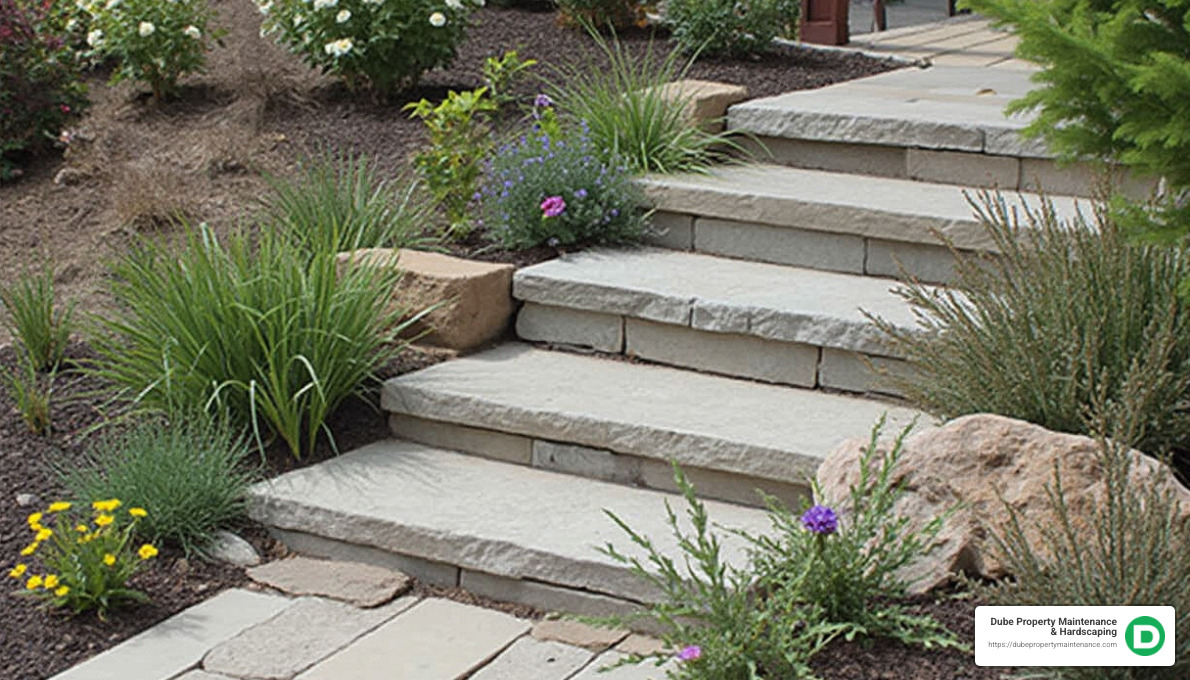
Plants can significantly improve the landscape around your steps, adding color, texture, and even fragrance.

By thoughtfully selecting materials and plants, you can create a landscape around your steps that is not only beautiful but also functional and durable. This approach ensures your outdoor space remains inviting and visually appealing year-round.
When designing steps, safety and functionality should be top priorities. Well-designed steps ensure easy navigation and improve the overall aesthetic of your landscape.
Overhang Importance
The overhang of each step is crucial for comfort and safety. An overhang provides a small lip at the edge of the step, which helps prevent tripping and allows for a more natural foot placement. Aim for an overhang of about 1 inch to strike a balance between safety and appearance.
Tread Safety
The tread, or the horizontal part of the step where you place your foot, should be wide enough for comfortable footing. A tread depth of at least 10 inches is recommended to accommodate most foot sizes and ensure stable footing.
Material Traction
Choosing the right materials can make a big difference in traction, especially in wet or icy conditions. Natural stone steps, like those made from Maya stone or Raffinato stone, offer excellent grip due to their rough textures. These materials help reduce the risk of slips and falls.
Material Choices for Safety
Select materials that are not only aesthetically pleasing but also safe. For example, stone and textured concrete provide better traction than smooth surfaces like polished tiles. Always consider the climate and typical weather conditions in your area when selecting materials.
Visual Lines
Visual lines guide the eye and can make your steps appear more inviting. Aligning your steps with existing architectural features or landscape elements can create a cohesive look. This also helps ensure clear, unobstructed pathways.
Functional Design
Functionality in design means considering how people will use the steps. Ensure that each step is uniform in height to avoid tripping hazards. Consistency in design helps users steer the steps effortlessly, enhancing both safety and aesthetics.
Safety Features
Incorporate safety features like handrails and lighting. Handrails provide additional support, especially for young children and older adults. Meanwhile, well-placed lighting can illuminate each step, preventing accidents during nighttime use. Consider low-voltage LED lights for energy efficiency and a modern touch.
By focusing on these aspects, you can create steps that are not only safe and functional but also improve the beauty of your landscape.
Next, we’ll explore how landscaping around steps can boost curb appeal and increase property value.
When it comes to landscaping around steps, the impact on curb appeal and property value can be substantial. Thoughtful design and strategic choices can transform an ordinary entryway into a stunning focal point.
Strategic Planting
Integrating plants around your steps can create a welcoming atmosphere. Consider using shade-loving perennials and ground covers to add texture and color. These plants not only beautify the area but also help in softening the hard edges of the steps. For a pop of seasonal color, incorporate seasonal bulbs like tulips or daffodils.
Decorative Stonework
Stonework around steps can add an element of sophistication and durability. Using high-quality materials like Röcka stone steps can seamlessly blend with the natural environment while providing a timeless appeal. Decorative stonework can also serve as a visual transition between different areas of your landscape, enhancing the overall flow.
Lighting
Proper lighting is key to both safety and aesthetics. Install low-voltage LED lights along the steps to highlight their design and ensure safe navigation after dark. Lighting can dramatically transform the look of your steps, making them a standout feature of your home.
Durable Materials
Using durable materials like stone or concrete not only ensures longevity but also adds to the property’s value. These materials are low maintenance and able to withstand various weather conditions, making them a practical choice for any landscape design.
Low Maintenance Designs
Designs that require minimal upkeep are attractive to potential buyers. Incorporate elements like drought-tolerant plants and efficient irrigation systems. These features not only reduce maintenance efforts but also appeal to environmentally conscious buyers.
Aesthetic Improvements
A well-designed landscape around steps can significantly improve the visual appeal of your property. Incorporating elements like visual lines and functional design ensures that the steps are both beautiful and practical. Aligning steps with architectural features or garden paths creates a cohesive look that contributes to a polished exterior.
By focusing on these techniques, you can create a landscape that not only improves curb appeal but also adds value to your property. Next, we will dig into the specific design strategies that can transform your landscape into a masterpiece.
At Dube Property Maintenance & Hardscaping, we understand that a well-designed landscape can transform your property. Based in Methuen, MA, we offer comprehensive landscaping solutions custom to improve both the beauty and functionality of your outdoor spaces. Our team specializes in creating landscapes around steps that not only boost curb appeal but also increase property value.
Our professional landscaping services focus on integrating durable materials and low-maintenance designs to ensure your landscape remains stunning and practical year-round. Whether you’re looking to install decorative stonework, efficient irrigation systems, or strategic lighting, our experts are here to bring your vision to life.
We are committed to delivering high-quality results that align with your aesthetic and functional goals. Our extensive experience and dedication to excellence ensure that your landscape around steps becomes a standout feature of your home, reflecting your style and increasing your property’s worth.
Explore our walkway installation services to find how we can help you create a landscape that truly shines. Let us be your trusted partner in achieving a beautiful and valuable outdoor space that you can enjoy for years to come.
