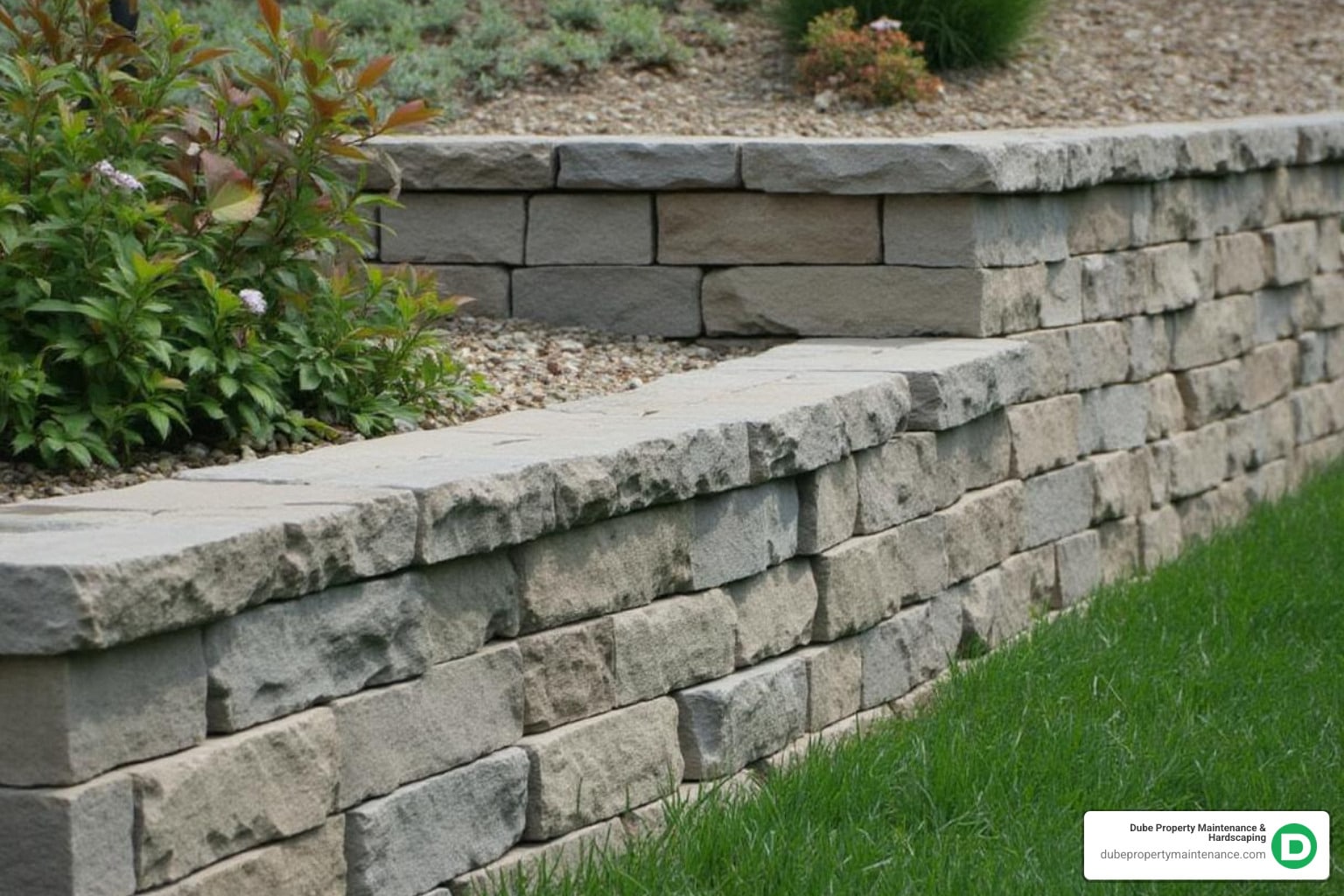

An interlocking stone wall is a modular retaining or freestanding wall system that uses precisely engineered blocks with built-in connection features like flanges, pins, or tongue-and-groove joints to create strong, mortar-free structures.
Quick Answer for Interlocking Stone Wall Seekers:
These innovative wall systems have revolutionized hardscaping by combining the strength of traditional masonry with the speed and precision of modern manufacturing. Unlike mortared stone walls that require skilled masons and perfect weather conditions, interlocking blocks can be installed year-round and offer superior freeze-thaw resistance with their 5000+ PSI compressive strength.
The real magic happens in how these walls transform unusable sloped terrain into functional outdoor living spaces. Whether you’re battling erosion on a hillside, creating raised garden beds, or building an neat seating wall around a fire pit, interlocking stone walls deliver both form and function.
What makes them special? The engineering. Each block is designed with a slight setback angle that leans the wall back into the retained soil, creating incredible stability through gravity alone. Add proper drainage behind the wall, and you’ve got a structure that can handle New England’s harsh freeze-thaw cycles without cracking or shifting.
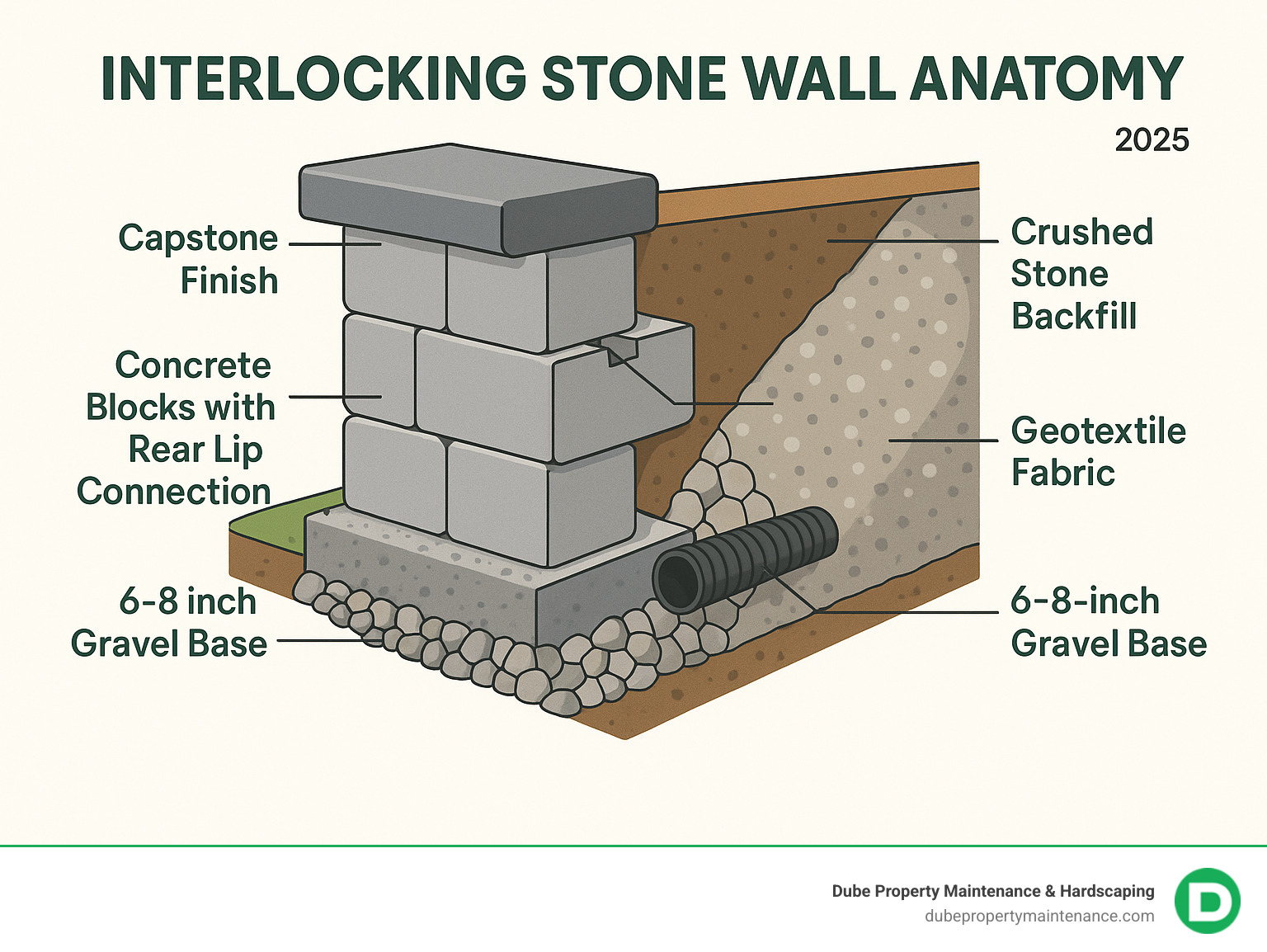
The beauty of interlocking stone walls lies in their brilliant simplicity. Think of them as adult-sized building blocks that use physics instead of glue to stay together. While traditional stone walls depend on skilled masons and perfect mortar joints, these modern systems let gravity and precision engineering do the heavy lifting.
Every block is designed with a built-in lean of 6 to 12 degrees that tilts the wall back into the soil it’s holding. This creates what engineers call a “gravity wall” – the more weight you add on top, the more stable it becomes.
The “interlocking” part comes from clever connection systems built right into each block. Tongue-and-groove systems use raised ridges that fit into matching grooves. Pin-lock systems use vertical pins or clips that thread through holes in the blocks. Rear lip systems – the most popular design – feature a lip on the back that hooks over the block below, automatically creating the right angle.
Quality interlocking blocks can handle over 5000 PSI of pressure – more than most concrete sidewalks! This strength comes from high-quality concrete mixes and precise manufacturing.
But here’s the real game-changer: proper drainage. Unlike solid concrete walls that trap water and eventually crack, interlocking stone walls are designed to let water flow through and around them. This drainage capability, combined with their modular construction, makes them virtually immune to the freeze-thaw cycles that destroy other wall types in New England.
The scientific research on segmental retaining walls continues to prove what we see in the field – these systems consistently outperform traditional construction methods in both durability and cost-effectiveness.
The difference between building with interlocking blocks versus traditional methods is like comparing assembling furniture with detailed instructions versus carving it from scratch with hand tools.
Traditional mortared stone walls require master craftsmen who can eye-ball irregular stones, mix mortar to perfect consistency, and work only when weather conditions are just right. The mortar joints become the weak links – they crack first, leak first, and need constant maintenance.
Poured concrete walls offer raw strength but look like concrete. They need forms, reinforcement, and perfect weather conditions. Once they’re poured, you’re stuck with what you’ve got.
Interlocking block systems eliminate these headaches through modular precision. Every block is manufactured to exact specifications in climate-controlled facilities. No weather delays, no mortar mixing, no guesswork.
| Feature | Natural Stone | Poured Concrete | Interlocking Block |
|---|---|---|---|
| Installation Speed | Slow (skilled labor) | Medium (weather dependent) | Fast (any weather) |
| Strength | Variable | High | Consistent 5000+ PSI |
| Aesthetics | Natural beauty | Limited options | Wide variety |
| Maintenance | High (repointing) | Medium (crack repair) | Low (minimal) |
| Modification | Difficult | Nearly impossible | Easy to extend |
| Cost | High labor | Medium | Predictable |
Interlocking stone walls shine in situations where traditional walls struggle or fail completely. Their versatility makes them the Swiss Army knife of hardscaping.
Soil retention is the primary application. Whether you’re dealing with a naturally sloped yard or carving level spaces from hillsides, these walls hold soil reliably without the complexity and cost of engineered concrete structures.
Slope terracing uses multiple shorter walls instead of one tall one. This approach looks more natural, costs less, and often eliminates the need for engineering permits. Plus, the terraced levels create perfect spots for plantings or seating.
Garden beds and raised planters benefit from the modular design. You can create custom shapes, curves, and sizes that would be expensive or impossible with poured concrete.
Seating walls around fire pits, patios, and outdoor kitchens serve double duty as both functional retaining structures and comfortable places to sit. Built to 18-21 inches high, they’re perfect for conversation areas.
Beyond solving practical problems, well-designed interlocking stone walls add significant value to properties while reducing long-term maintenance headaches.
Not every interlocking stone wall system is built the same way, and understanding these differences can save you headaches (and money) down the road.
Block design variations make a real difference in how your wall performs and how easy it is to install. Blocks with rear lips are the most popular choice because they practically install themselves – the lip automatically creates the proper setback angle when you place each block.
Pin-lock systems give you more precise control over alignment, but they require a steadier hand and more attention to detail. Tongue-and-groove systems create excellent alignment between blocks, but if your base isn’t perfectly level, you’ll feel it in every course above.
The choice between hollow and solid cores often comes down to your specific needs. Hollow core blocks are lighter and easier to handle, making them popular for weekend DIY projects. They also create opportunities for creative features like built-in lighting. Solid core blocks eliminate the guesswork of core filling and provide maximum strength, but they’re heavier and more expensive.
Material composition varies more than you might expect. Standard concrete blocks use traditional aggregate and cement, while premium systems incorporate recycled glass, specialized aggregates, or improved cement mixes. These upgrades translate to better strength, appearance, and longevity – but they come with a price premium.
The aesthetic possibilities for interlocking stone walls have exploded in recent years. What used to look like basic concrete blocks now rivals natural stone in beauty and variety.
Split-face textures create the rough, natural appearance of quarried stone through a manufacturing process that literally splits the blocks. This creates irregular surfaces that catch light and shadow beautifully.
Smooth modern finishes appeal to homeowners with contemporary tastes. These blocks feature clean lines and consistent surfaces that complement modern architecture.
Weathered appearances use special manufacturing techniques to create the look of stone that’s been aging gracefully for decades. These blocks often feature subtle color variations and worn edges.
Multi-face systems offer the ultimate in flexibility. These use backer blocks with horizontal rails that accept interchangeable fascia panels. You can mix colors, textures, and patterns within the same wall, or even change the appearance later without rebuilding.
Color options have expanded far beyond basic gray to include warm earth tones, rich browns, and even custom color matching to complement your existing architecture.
For more detailed information about specific block options and their applications, check out our guide on Interlocking Retaining Wall Blocks.
Concrete interlocking blocks offer the sweet spot of strength, appearance, and cost for most applications. The 5000+ PSI compressive strength handles New England’s brutal freeze-thaw cycles without cracking, and the modular design simplifies both installation and future modifications. The main drawback is weight – solid blocks can turn a weekend project into a serious workout.
Natural stone veneer systems combine the authentic beauty of natural stone with the engineering reliability of interlocking blocks. These systems use thin stone facing over concrete cores, providing the appearance you want with the structural performance you need. They’re more expensive, but the aesthetic payoff can be worth it for highly visible applications.
Recycled content options address environmental concerns while maintaining performance standards. Some manufacturers incorporate recycled concrete, glass, or other materials into their blocks, reducing environmental impact without compromising strength.
A great interlocking stone wall starts long before the first block is set. You need to know your soil, water flow, and local rules.
The real enemy is water. Saturated soils weigh more and create hydrostatic pressure that can topple an otherwise perfect wall.
For deeper construction details visit our guide on Block Retaining Wall Construction.
Building with interlocking blocks is a sequence of repeatable steps. Get each one right and the rest falls into place.
Our network of vetted, insured crews serves Massachusetts and southern New Hampshire—learn more at Retaining Wall Builders Near Me.
Internet research shows most interlocking stone walls land between $100 and $300 per linear foot for straightforward builds, and premium, highly customized work (complex curves, lighting, kitchens, water features) can surpass $500–$1,500 per foot. These are broad national averages—they are not quotes from Dube Property Maintenance & Hardscaping.
Typical cost split:
Variables that move the needle: height, length, soil conditions, site access, curves/steps, permits, engineering, and premium add-ons like LED lighting or built-in seating.

Interlocking blocks aren’t just for retaining slopes:
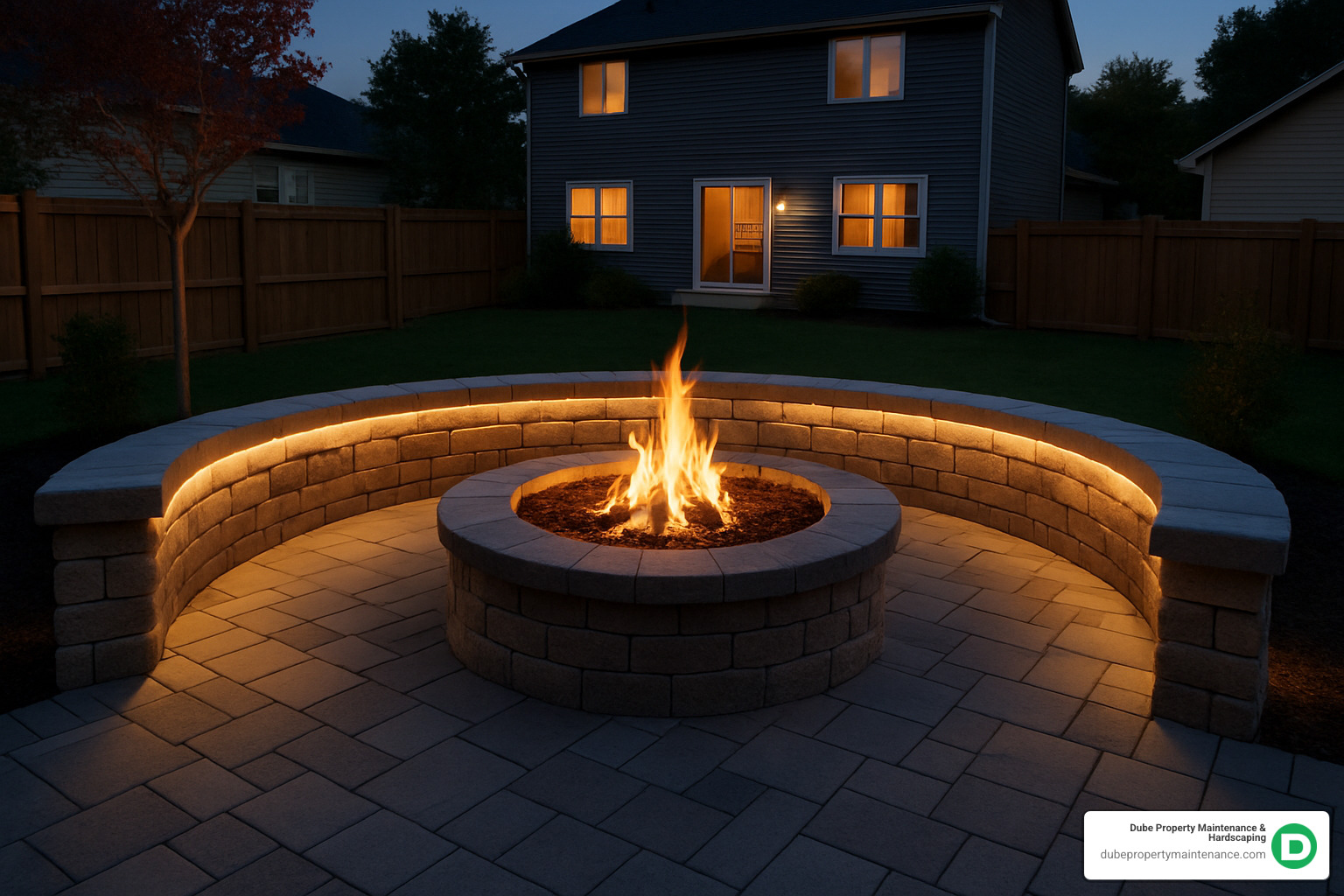
For even more ideas visit our Stone Wall gallery.
Most building codes draw the line at 4 feet when it comes to requiring professional engineering for retaining walls, though some jurisdictions are more conservative and set the limit at just 3 feet. This isn’t bureaucratic red tape—it’s actually based on solid engineering principles.
Here’s the thing: soil pressure doesn’t increase gradually as walls get taller. It jumps exponentially. A 4-foot wall experiences roughly four times the pressure of a 2-foot wall, not just twice as much. That’s why the engineering requirements kick in at these heights.
The engineering review looks at your specific situation—soil type, drainage patterns, what’s being supported above the wall, and whether your neighbor’s driveway is sitting right behind it. Even if your local code doesn’t require engineering, it’s often smart to consult a professional for walls over 3 feet, especially if you’re dealing with clay soil or tight spaces where a failure could damage property.
Think of it this way: the engineering fee is insurance against having to rebuild your wall (and possibly your neighbor’s fence) in a few years.
Absolutely—for the right project. A straight, 3-foot garden wall is definitely within reach if you’re handy with basic tools and don’t mind some hard work. Interlocking stone walls are actually designed with DIY installation in mind, which is one of their big advantages over traditional stone masonry.
DIY makes sense when you’re building walls under 3 feet high, working with straightforward designs, and have decent soil conditions. You’ll also need adequate time and patience—a typical 3×16-foot wall takes most DIYers about 10-20 hours spread over a weekend or two.
Professional installation becomes worthwhile for walls over 4 feet, anything requiring engineering, or complex situations like curved walls or challenging drainage. The tools alone for larger projects—compactors, block splitters, excavation equipment—can cost more to rent than the labor savings justify.
Here’s the reality check: manufacturer warranties often require professional installation, and mistakes can be expensive to fix. If you’re on the fence, consider having a pro handle the excavation and base work while you tackle the block installation. That way you get the foundation right while still enjoying the satisfaction of building your own wall.
A properly built interlocking stone wall should easily last 50+ years with minimal maintenance. We’ve seen walls from the 1990s that still look and perform like new, while poorly installed walls can fail within a few years.
The secret to longevity isn’t just the blocks themselves—it’s the whole system working together. Quality installation with proper base preparation and drainage is absolutely critical. Those premium blocks with 5000+ PSI compressive strength are tough, but they can’t overcome a lousy foundation or water problems.
Drainage performance is really the make-or-break factor. Water trapped behind a wall creates enormous pressure that can push over even well-built structures. Get the drainage right, and your wall will outlast most other landscape features.
The beauty of the modular design is that individual blocks can be replaced if damaged by tree roots or settling. This means your wall system can theoretically last indefinitely with proper care.
Maintenance requirements are refreshingly minimal. An annual walk-around inspection, occasional power washing, and keeping vegetation from growing in the joints is about all most walls need. Compare that to mortared stone walls that need regular repointing, and you’ll appreciate the low-maintenance nature of interlocking systems.
Interlocking stone walls have truly revolutionized how we approach landscape challenges. These engineered marvels combine the strength of traditional masonry with the precision of modern manufacturing, creating solutions that work beautifully in New England’s demanding climate.
The magic isn’t just in the blocks themselves – it’s in understanding how proper planning, drainage, and installation work together. Whether you’re dreaming of terraced gardens cascading down a hillside or need a practical solution for that troublesome slope behind your house, interlocking stone walls deliver both function and lasting beauty.
Success depends on doing things right from the start. Proper base preparation, adequate drainage, and skilled installation aren’t just recommendations – they’re the foundation of a wall that will serve you well for decades.
The cost ranges we’ve discussed – $100-$300+ per linear foot – represent internet averages based on national data and don’t reflect our specific pricing at Dube Property Maintenance & Hardscaping. Every project tells its own story, with unique site conditions, material preferences, and design goals that influence the final investment.
What excites us most about interlocking stone walls is their versatility. We’ve built everything from simple garden bed borders to complex multi-tiered outdoor living spaces. Each project starts with understanding your vision and the unique challenges your property presents.
The change these walls can create goes beyond just solving drainage problems or creating level spaces. They become the backbone of outdoor entertainment areas, the structure that supports your favorite plants, and the seating that brings family and friends together around evening fires.
At Dube Property Maintenance & Hardscaping, we bring years of hands-on experience to every interlocking wall project. Our team serves communities throughout Massachusetts and New Hampshire, and we’ve seen how these walls can completely transform how families use their outdoor spaces.
The investment in quality design and professional installation pays dividends that extend far beyond the construction period. A properly built interlocking stone wall becomes a permanent asset that improves your property value while providing decades of trouble-free service.
Ready to explore what interlocking stone walls can do for your property? We’d love to discuss your ideas and show you how these versatile systems can solve your specific challenges. Visit our Retaining Wall page to see examples of our work and learn more about our comprehensive hardscaping services.
From that first consultation through final cleanup and beyond, we’re committed to delivering the high-quality, comprehensive outdoor solutions that have made us the trusted choice for residential and commercial clients throughout our service area. Let’s build something great together.