Property Maintenance
& Hardscaping
Headquarters In
Methuen, MA

Your Wall’s Best Friend: Top Interlocking Cement Blocks for Retaining Walls

Why Interlocking Cement Blocks Are Changing Retaining Wall Construction

interlocking cement blocks for retaining walls

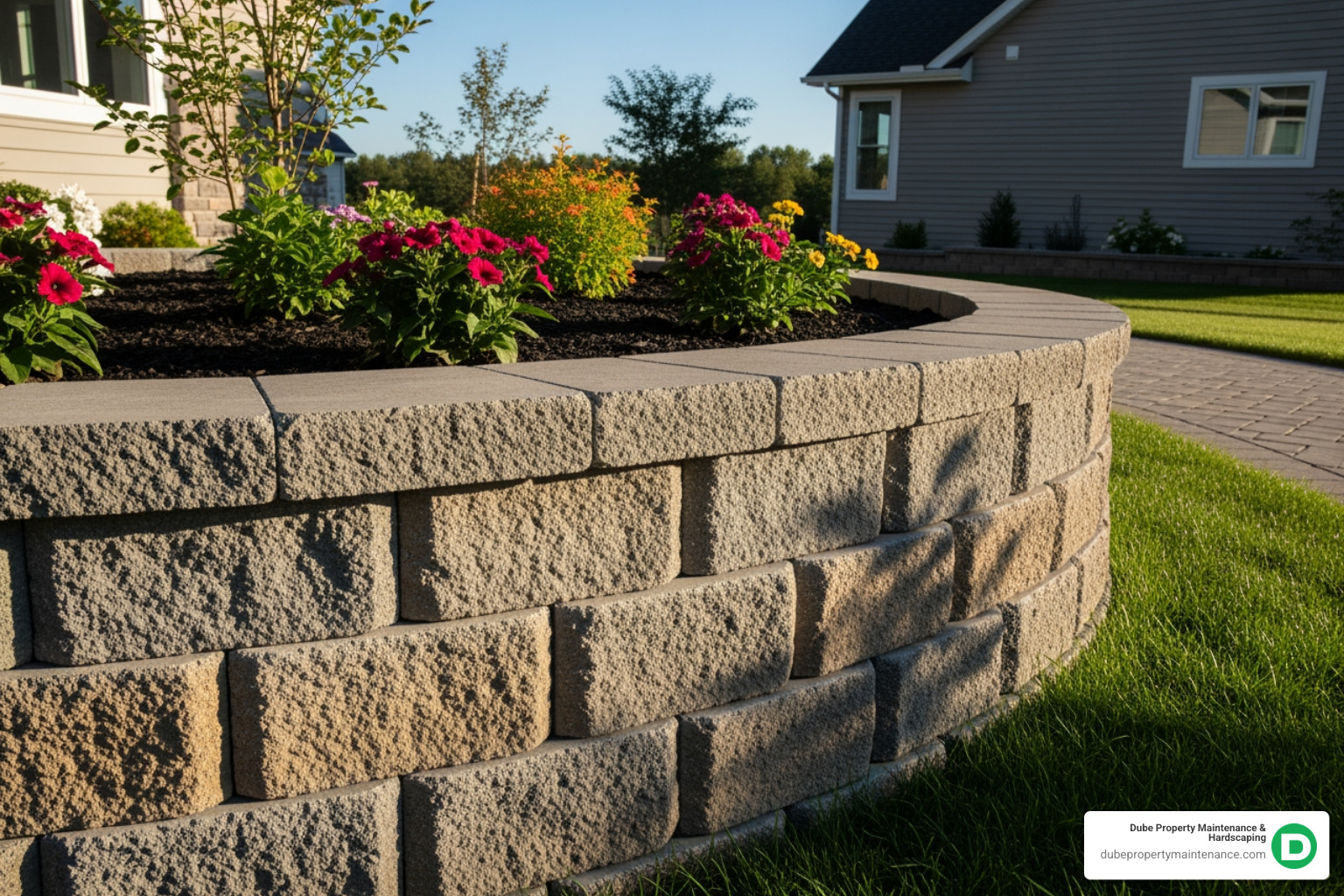
Interlocking cement blocks for retaining walls are revolutionizing slope stabilization and landscape design. These specialized units lock together without mortar, creating durable walls that prevent erosion and turn unusable slopes into functional outdoor spaces.

Top Benefits of Interlocking Cement Blocks:

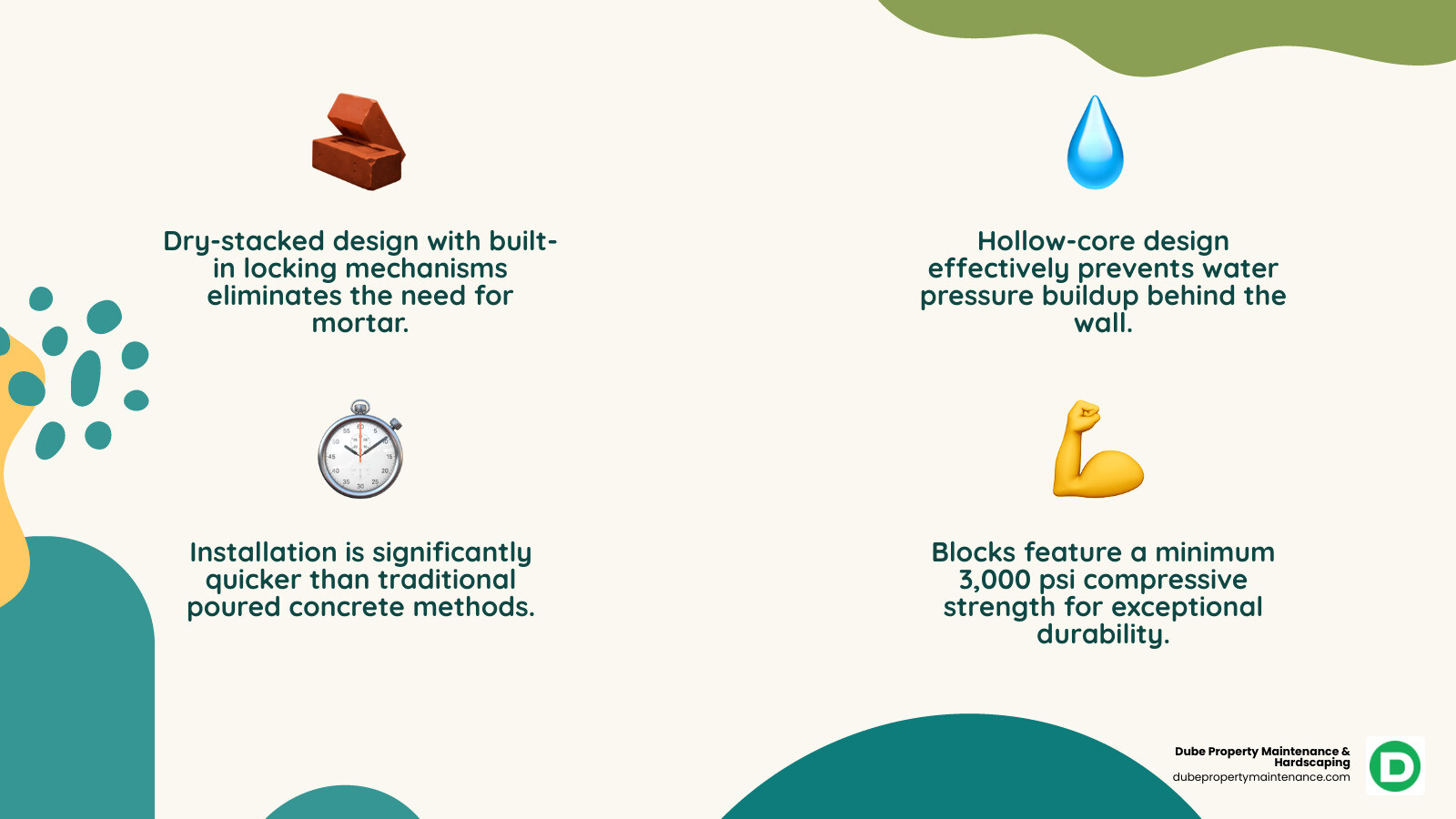
  • No Mortar Required – Dry-stacked design with built-in locking mechanisms
  • Superior Drainage – Hollow-core design prevents water pressure buildup
  • Faster Installation – Can be installed quicker than poured concrete
  • Exceptional Strength – Minimum 3,000 psi compressive strength
  • Design Flexibility – Available in multiple styles, colors, and textures
  • Long-Lasting Durability – Properly installed walls last for decades

Whether creating terraced gardens in North Andover, supporting a patio in Haverhill, or preventing erosion in Salem, NH, interlocking blocks offer a proven solution. Their success lies in an innovative design with features like tongue-and-groove or lip-and-notch systems that lock units together. This mortarless construction creates a flexible yet stable structure that adapts to ground movement without cracking—a critical advantage in the Massachusetts freeze-thaw climate.

For walls over 4 feet or those supporting critical loads like driveways, professional engineering and installation are essential to meet safety standards and local building codes.
Detailed infographic showing cross-section of interlocking block retaining wall system with labeled components including compacted base layer, interlocking block courses with drainage cores, gravel backfill zone, perforated drain pipe, geotextile fabric, and capstone units - interlocking cement blocks for retaining walls infographic 4_facts_emoji_nature

Interlocking cement blocks for retaining walls terms to learn:

What Makes Interlocking Concrete Blocks a Superior Choice?

When considering a retaining wall, interlocking cement blocks for retaining walls stand out as a superior option due to their innovative design, strength, and adaptability. These blocks are engineered to fit together like a puzzle, forming a robust structure that effectively holds back earth and offers significant advantages over traditional materials.

The Interlocking Advantage: How They Differ from Regular Blocks

Unlike standard concrete masonry units (CMUs) that rely on mortar, interlocking blocks are designed for mortarless construction. A rigid, mortared wall can crack from ground movement or the freeze-thaw cycles common in areas like Methuen, MA, and Nashua, NH.

Interlocking cement blocks for retaining walls feature integral locking mechanisms that allow them to fit together securely:

  • Tongue and Groove Systems
  • Lip and Notch Configurations
  • Pins or Shear Keys

This dry-stacking method creates a flexible system that can accommodate minor earth shifts, making the walls incredibly resilient and stable. Our experienced team ensures every block contributes to the wall’s overall integrity. More info about Block Retaining Wall.

Key Benefits for Durability and Structural Integrity

The design of interlocking cement blocks for retaining walls contributes significantly to their durability and structural integrity.

  • High Compressive Strength: Manufactured to rigorous standards, these blocks boast a minimum compressive strength of 3000 psi, ensuring they can withstand immense soil pressure. For northern climates, specifications can be even higher.
  • Hollow-Core Design: Many blocks have a hollow core, which promotes superior drainage, reduces hydrostatic pressure, and improves resistance to freeze-thaw cycles. It also makes the blocks lighter and easier to install.
  • Consistent Unit Dimensions: Precision manufacturing ensures uniform dimensions, leading to a level, aesthetically pleasing wall with predictable structural performance.
  • Weight and Mass: The substantial weight of the blocks, combined with infill, creates a gravity wall system that effectively resists earth pressure.

The combination of these features results in a retaining wall that is strong, reliable, and built to last for decades.

Exploring Styles and Types of interlocking cement blocks for retaining walls

Beyond their structural prowess, interlocking cement blocks for retaining walls offer an impressive range of aesthetic possibilities to complement any landscape design.

Variety of interlocking concrete block styles, colors, and textures for retaining walls - interlocking cement blocks for retaining walls

When selecting blocks for your project, you’ll find a diverse array of options:

  • Aesthetic Variety: Blocks come in various textures and finishes, such as those mimicking natural quarried stone, hand-worked chiseled faces, sleek smooth faces for a modern look, or a tumbled finish for a weathered appearance.
  • Color Options: The color palette is extensive, ranging from natural earth tones like grays and browns to more vibrant hues, often with blended finishes for visual interest.
  • Block Shapes: While many blocks are rectangular, trapezoid shapes are invaluable for building smooth, curved walls. Some manufacturers also offer custom shapes like stair units for greater design versatility.

This extensive selection means we can tailor your retaining wall to perfectly match your vision, whether you desire a rugged, natural look or a refined, contemporary finish for your property in towns like Andover, MA, or Pelham, NH.

Planning Your Professional Retaining Wall Project

Starting a project with interlocking cement blocks for retaining walls requires careful planning. The success and longevity of your wall depend on thorough preparation and adherence to best practices. More info about Building a Retaining Wall.

Essential Pre-Construction Considerations

Before any work begins, our team conducts a comprehensive property assessment. This phase lays the groundwork for a stable and compliant retaining wall.

Contractor surveying a sloped property for a retaining wall, marking out areas with stakes and tape. - interlocking cement blocks for retaining walls

Key considerations include:

  • Soil Type Analysis: Understanding the soil is paramount. We evaluate soil conditions to ensure adequate stability, as some types like expansive clays are unsuitable. The base is compacted for optimal stability.
  • Drainage Planning: Water is a retaining wall’s enemy. We plan for effective drainage to prevent hydrostatic pressure buildup, a primary cause of wall failure.
  • Surcharges: We account for additional loads (surcharges) near the wall, such as driveways, patios, or slopes, as they significantly impact the design.
  • Wall Height and Length: The wall’s dimensions are critical. Taller walls, or those supporting loads, are considered structural and require specific engineering.

Careful consideration of these factors ensures your retaining wall is built right. More info about Hardscape Design.

When to Consult an Engineer for Your Retaining Wall Project

While interlocking cement blocks for retaining walls are user-friendly, professional engineering is essential in certain scenarios for safety and compliance.

You should consult a qualified engineer if:

  • Wall Height Exceeds 4 Feet: Most municipalities in Massachusetts and New Hampshire require permits and engineering for walls over 4 feet high.
  • Supporting Critical Loads (Surcharges): If the wall supports a driveway, patio, or pool, an engineer must verify the design can handle the weight.
  • Poor Soil Conditions: Problematic soils like expansive clays or loose sand require an engineer’s expertise for foundation design.
  • Tiered Wall Systems: Building multiple terraced walls requires engineering to manage pressures between levels.
  • Complex Site Geometry: Unusual slopes or irregular wall shapes need an engineered design.

An engineer’s assessment provides detailed specifications to ensure your wall meets all safety standards and local building codes, protecting your investment. Find professional retaining wall installers.

Complying with local permits and regulations is critical before any digging begins. This ensures your wall is safe, properly constructed, and doesn’t negatively impact your property or neighbors. Our team is well-versed in the requirements across Massachusetts and Southern New Hampshire.

Here’s what you need to know:

  • Building Permit Triggers: A building permit is typically required for walls exceeding a certain height, often 2 to 4 feet. These rules ensure structural safety.
  • Property Lines: Regulations may dictate how close a wall can be built to a property line. We always verify boundaries and discuss any implications.
  • Professional Responsibility: As professionals, we guide you through the permit process. Ignoring requirements can lead to fines or demolition orders.

We always advise checking with your local municipality’s building department, as regulations can differ. Our goal is to ensure your interlocking cement blocks for retaining walls project is fully compliant. View industry standards at the National Concrete Masonry Association.

The Professional Construction Process for interlocking cement blocks for retaining walls

Building a retaining wall with interlocking cement blocks for retaining walls is a precise process that demands professional installation. Our commitment to longevity, stability, and safety standards ensures your investment improves your property for years to come. More info about Block Retaining Wall Construction.

Tools and Materials for a Flawless Installation

A successful retaining wall project starts with the right tools and high-quality materials. A professional installation requires specialized equipment, including:

  • Excavation & Compaction Tools: Shovels or mini-excavators for digging, and a plate compactor to ensure a solid base.
  • Leveling & Cutting Tools: A laser level for precision, string lines, and a masonry saw for custom cuts.
  • Base & Drainage Materials: A minimum 6-inch compacted gravel base, clear ¾” stone for backfill, a 4-inch perforated drain pipe, and Geo Fabric Retaining Wall to prevent clogging.
  • Finishing Touches: Capstones for a finished look, secured with high-strength Retaining Wall Block Adhesive.

By utilizing these specialized tools and materials, our skilled team ensures that your interlocking cement blocks for retaining walls project is constructed with precision.

Step-by-Step: Building for Stability and Longevity

The construction of an interlocking block wall is a methodical process where each step is crucial for stability. Here’s a general overview of our professional approach:

  1. Site Preparation and Trench Excavation: We mark the layout and excavate a trench, ensuring it’s deep enough to bury the first course for stability and wide enough for the block and drainage zone.
  2. Base Preparation: A minimum 6-inch layer of gravel is installed, then compacted and perfectly leveled to create a solid foundation. This is arguably the most critical step.
  3. Laying the Base Course: The first course of blocks is set on the prepared gravel base, ensuring it is perfectly level front-to-back and side-to-side.
  4. Installing Drainage: A perforated drain pipe is installed behind the first course. Geotextile fabric is placed to separate the drainage gravel from the native soil.
  5. Stacking and Backfilling: We stack subsequent courses, engaging the interlocking mechanism and using a running bond pattern for strength. After each course, we backfill behind the wall and inside block cores with clear gravel, compacting it in layers (lifts).
  6. Finishing: Blocks are cut as needed for a clean finish. Finally, capstones are secured on top with concrete adhesive, and the area is graded to direct water away from the wall.

This meticulous, step-by-step approach guarantees a robust and long-lasting retaining wall.

The Critical Role of Drainage and Backfilling

Proper drainage and backfilling are absolutely critical to the long-term stability of interlocking cement blocks for retaining walls.

  • Hydrostatic Pressure: The Silent Killer: The biggest threat to a retaining wall is hydrostatic pressure—water buildup behind the wall that can cause it to bulge, crack, or fail. This is especially true in our region’s freeze-thaw cycles.
  • The Drainage System: To combat this, we create a drainage zone behind the wall using free-draining clear gravel (at least 12 inches deep). A perforated drain pipe at the base collects this water and channels it away. Geotextile fabric is used to separate the gravel from the soil, preventing the system from clogging over time.

By carefully implementing these drainage and backfilling strategies, we ensure that your retaining wall can effectively manage water, guaranteeing its stability and longevity.

Design Inspiration: Applications and Possibilities

Beyond holding back earth, interlocking cement blocks for retaining walls offer remarkable versatility, turning ordinary landscapes into functional and beautiful outdoor living spaces. They are foundational components of hardscape design that add significant property value. More info about Landscape and Hardscape Design.

Functional and Beautiful Landscape Retaining Walls

The adaptability of interlocking cement blocks for retaining walls makes them perfect for enhancing landscapes on sloped properties in areas like Shrewsbury, MA, or Derry, NH.

Popular applications include:

  • Tiered Gardens: Changing a steep slope into a series of beautiful, accessible garden beds.
  • Leveling a Sloped Yard: Creating flat, usable lawn space for recreation or easier maintenance.
  • Raised Planters: Building durable, attractive raised beds for gardening.
  • Defining Spaces: Using low walls to delineate patios, gardens, or other outdoor areas.

These applications solve practical problems like erosion and significantly improve your property’s curb appeal. More info about Landscape Retaining Walls.

Integrating Features into Your Wall Design

The modular nature of these blocks allows for creative integration of features, turning a simple wall into a multi-functional element.

Consider these possibilities for your property in towns like Andover, MA, or Manchester, NH:

  • Built-in Stairs: Seamlessly incorporate steps for safe access between levels. More info about Block Retaining Wall With Steps.
  • Seating Walls: Design low walls to serve as permanent seating around a patio or fire pit.
  • Pillars and Columns: Add architectural interest or support for lighting fixtures.
  • Water Features: Integrate cascading waterfalls or small ponds.
  • Outdoor Lighting: Embed low-voltage lighting to illuminate paths and create ambiance.

By blending these features into your retaining wall, we can create a cohesive and highly functional outdoor environment.

Structural Applications for Your Property

Beyond landscaping, interlocking cement blocks for retaining walls are formidable structural components for demanding applications on properties in Massachusetts and New Hampshire.

Key structural applications where these blocks excel:

  • Raised Patios: Creating level outdoor living spaces on sloped ground.
  • Driveway Support: Stabilizing the ground and preventing erosion next to a sloped driveway.
  • Pool Surrounds: Providing structural support and defining the area for a pool built into a slope.
  • Walkout Basements: Retaining earth to allow for a grade-level exit from a basement.

For these structural uses, especially for walls over 4 feet or supporting critical loads, engineering is essential to meet safety codes. Our team has the expertise to execute these complex projects, combining functionality with an attractive finish. The Ultimate Guide to Understanding Hardscaping Services.

Conclusion: Partner with Experts for a Lasting Retaining Wall

As we’ve seen, interlocking cement blocks for retaining walls offer a superior solution for managing slopes and enhancing outdoor spaces. Their mortarless design, durability, and versatility make them a wise investment, especially for withstanding the freeze-thaw cycles in Massachusetts and Southern New Hampshire.

However, the success of any retaining wall hinges on expert installation. Proper site assessment, base preparation, and drainage are critical for the stability and longevity of your wall. This is where professional installation truly shines.

At Dube Property Maintenance & Hardscaping, our experienced team designs and builds beautiful, structurally sound retaining walls. We understand the local climate and terrain in our service areas, from Methuen, MA, to Salem, NH, and apply best practices to every project.

Whether you need a tiered garden, a supportive wall for a new patio, or an erosion solution, we can bring your vision to life with expert hardscaping solutions. Don’t let a challenging landscape limit your property’s potential.

Contact us to discuss your project and get a quote for your Interlocking Retaining Wall Blocks installation today and find how we can transform your outdoor space into a functional and beautiful extension of your home.

retaining wall contractor

Table Of Contents

Get Started Today!
Dube Property Maintenance
& Hardscaping
Dube Property Maintenance
160 Hampstead St., Methuen, MA 01844
Servicing Merrimack Valley & Southern NH
For 25+ years Dube Property Maintenance & Hardscaping has provided top-rated residential and commercial landscape design, installations, hardscaping, irrigation systems and commercial snow and ice management. Our hardscaping division proudly serves the Merrimack Valley, Middlesex and Essex County and Southern, NH regions, transforming outdoor spaces into stunning works of art.