Property Maintenance
& Hardscaping
Headquarters In
Methuen, MA

Cook Up a Storm: Installing Your Perfect Outdoor Kitchen

Installing an Outdoor Kitchen: Top 5 Essential Tips


Installing an outdoor kitchen transforms your backyard into a culinary paradise, blending home improvement with the joy of outdoor living. It offers a unique space for entertaining, allowing family and friends to gather and enjoy delicious meals under the open sky.

For those eager to dive into outdoor cooking, here’s a quick snapshot of what’s involved:

  • Planning and Design: Consider the layout and utilities.
  • Core Components: Include essentials like a grill, sink, countertops, and storage.
  • Installation Process: Focus on foundation and connecting utilities.

This approach ensures a seamless integration of your outdoor kitchen into your home’s aesthetic and functionality.

Creating an outdoor kitchen not only lifts your home’s value but also improves your lifestyle by making alfresco dining convenient and enjoyable. Whether you’re hosting a summer barbecue or a quiet evening meal, an outdoor kitchen is the perfect setting to cook up a storm.
Outdoor Kitchen Installation Process Infographic: 1. Planning space & layout with illustrated kitchen layout. 2. Selecting appliances like grill and refrigerator. 3. Choosing durable materials like granite and stainless steel with sample textures. 4. Step-by-step installation guide with graphics of tools used. 5. Practical maintenance tips with checklist and cleaning images. - installing an outdoor kitchen infographic roadmap-5-steps

Planning Your Outdoor Kitchen

Designing your perfect outdoor kitchen begins with careful planning. This involves considering the layout, budget, and permits needed to bring your vision to life. Let’s break down these essential elements to ensure your project starts on the right foot.

Space and Layout

When it comes to layout, think about traffic flow and accessibility. You want a design that allows easy movement between cooking, prep, and dining areas. Consider the proximity of your outdoor kitchen to your home. A location closer to the house can make running utilities easier and offers quick access to indoor amenities. However, a standalone kitchen farther away provides a more intimate and flexible space.

Pro Tip: Always keep cooking surfaces at least 10 feet away from your home to ensure safety.

Budget Considerations

Budgeting is a crucial step. The cost of installing an outdoor kitchen can vary widely based on size, materials, and appliances. Here’s a simple breakdown:

  • Basic Setup: Includes a grill and small countertop. Costs can start around $2,000.
  • Mid-Range: Adds storage and a sink. Expect to spend between $5,000 to $10,000.
  • High-End: Incorporates luxury appliances and custom features. These can exceed $20,000.

DIY enthusiasts can save money by tackling parts of the project themselves, but hiring professional help can ensure quality and adherence to safety standards.

Permits and Regulations

Before breaking ground, check with local authorities about permits and regulations. Running gas, water, and electrical lines often requires permits. Here’s what to consider:

  • Plumbing Permits: Necessary if you’re installing a sink or dishwasher.
  • Electrical Permits: Required for any electrical work, like adding lights or outlets.
  • Local Codes: Be aware of zoning laws and HOA regulations that might affect your project.

Consulting with a licensed contractor can help steer these requirements and ensure your outdoor kitchen complies with all local codes.

By addressing these key areas—layout, budget, and permits—you lay a solid foundation for a successful outdoor kitchen project. Up next, we’ll dive into the essential components that every outdoor kitchen needs.

Essential Components of an Outdoor Kitchen

Creating an outdoor kitchen is all about combining functionality with your personal style. Here’s a look at the essential components you’ll need to consider:

Choosing the Right Grill

The grill is the heart of any outdoor kitchen. When selecting one, consider the size, fuel type, and features that best suit your cooking habits.

  • Size: Choose a grill that fits your space and cooking needs. Two-burner grills work well for small gatherings, while four- or six-burner grills are better for larger parties.
  • Fuel Type: Decide between propane and natural gas. Propane is portable and easy to set up, while natural gas can be more economical if you already have a gas line.
  • Features: Look for grills with additional features like side burners, rotisseries, or smoker boxes for more cooking options.

Durable Countertops

Countertops need to withstand the elements while providing a robust work surface. Here’s a look at some popular options:

  • Granite: Known for its durability and natural beauty, granite is a top choice. It requires sealing every few years to maintain its appearance.
  • Concrete: Offers a modern look and can be customized with various colors and finishes. However, it can be prone to cracking if not properly installed.
  • Stainless Steel: Provides a sleek, modern look and is resistant to rust and heat. It’s also easy to clean, making it a practical choice for outdoor use.

Storage Solutions

Keeping your outdoor kitchen organized is crucial for efficiency and aesthetics. Consider these storage options:

  • Weather-Resistant Materials: Opt for cabinets and drawers made from materials that can withstand rain, sun, and temperature changes.
  • Cabinets: Use them to store cooking utensils, dishes, and non-perishable food items.
  • Drawers: Ideal for smaller items like cutlery and grill tools. Make sure they have a good seal to keep out moisture and pests.

Adding a Sink

A sink adds convenience by providing easy access to water for cooking and cleaning. Here’s what to consider:

  • Running Water: Installing a sink requires plumbing work. Ensure you have access to a water source and proper drainage.
  • Plumbing Installation: This can be complex and might require a professional. Ensure all connections are secure to prevent leaks and water damage.

By carefully selecting these components, you can create an outdoor kitchen that is both functional and stylish. Next, we’ll guide you through the step-by-step process of installing your outdoor kitchen, from preparing the base to adding a shelter structure.

Installing an Outdoor Kitchen: Step-by-Step Guide

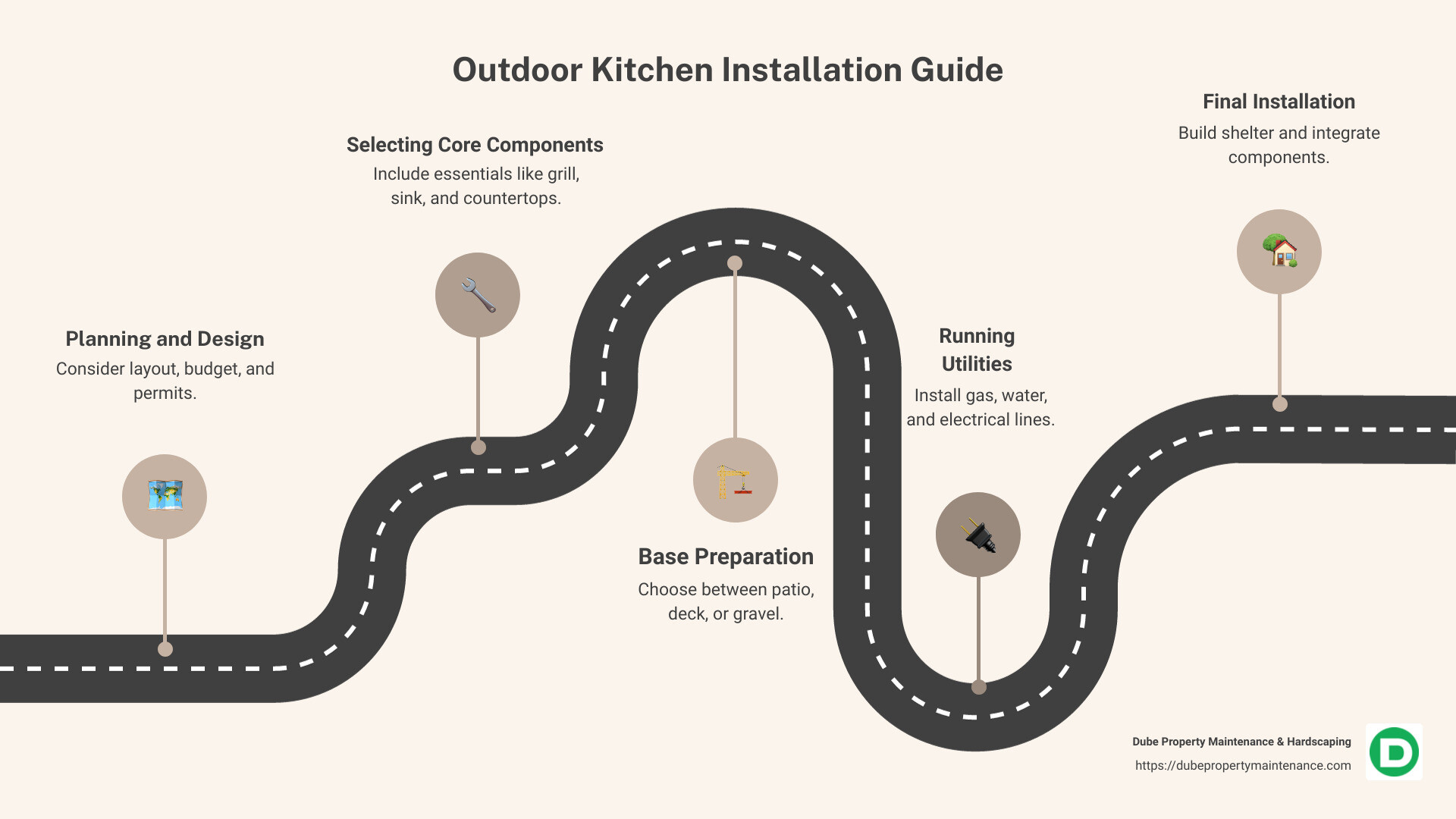
Building an outdoor kitchen involves careful planning and execution. Here’s a simple guide to help you through the process, from preparing the base to installing utility lines and shelter structures.

Preparing the Base

The foundation of your outdoor kitchen is crucial for stability and longevity. Here are some options to consider:

  • Patio: A patio made of poured concrete or brick pavers provides a solid and durable base. This option is excellent for heavy appliances and offers a long-lasting solution.
  • Deck: A wood-framed deck can lift your kitchen, allowing utility lines to be hidden beneath. It’s a great choice if you want a raised platform that integrates seamlessly with your home.
  • Gravel: For a more budget-friendly option, consider a gravel base. It involves using 2×6 lumber to create a frame filled with pea gravel over landscape fabric. This is ideal for informal settings.

Running Utility Lines

Utility lines are essential for a fully functional outdoor kitchen, providing gas, water, and electricity.

  • Gas Lines: Decide whether you’ll use propane or natural gas. If opting for natural gas, have the line installed before construction begins. This step often requires a licensed professional.
  • Water Lines: If you’re adding a sink, plan for water supply and drainage. This might require trenching and connecting to the main water line, which can be complex and might need professional help.
  • Electrical Lines: Plan for lighting, outlets, and any electric appliances. Ensure all electrical work complies with local codes and consider using GFCI outlets for safety.

Building a Shelter Structure

A shelter adds protection and style to your outdoor kitchen, making it usable in various weather conditions.

  • Pergola: A pergola offers partial shade and an open feel, perfect for sunny climates. It can be customized with climbing plants or fabric for added coverage.
  • Gazebo: For more substantial shelter, a gazebo provides a covered space that protects against rain and sun. It’s a great option if you want a more enclosed feel.
  • Canopy: A canopy is a versatile and often more affordable option. It provides temporary shelter and can be moved or adjusted as needed.

By following these steps, you can start building an outdoor kitchen that fits your needs and improves your outdoor living space. Next, we’ll explore the various material options available for your kitchen to ensure durability and style.

Material Options for Outdoor Kitchens

Choosing the right materials is key to ensuring your outdoor kitchen is both stylish and durable. Let’s explore the options: stone, wood, and metal.

Stone Choices

Stone is a top choice for outdoor kitchens due to its natural beauty and resilience. Here’s why it’s popular:

  • Granite: Known for its durability and resistance to heat, granite is perfect for outdoor countertops. It stands up to weather changes without losing its shine.
  • Marble: Offers a classic and neat look. However, it requires sealing to prevent stains and scratches, making it a bit more high-maintenance.
  • Quartzite: A strong and beautiful stone, quartzite is highly resistant to heat and scratches. It’s a great option for those looking for something unique and less common than granite.

Wood Options

Wood adds warmth and a rustic feel to outdoor kitchens. Choosing the right type of wood is crucial for longevity:

  • Cedar: Naturally resistant to rot and insects, cedar is a durable choice for outdoor cabinets and structures. Regular sealing helps maintain its appearance.
  • Teak: Known for its strength and weather resistance, teak is ideal for outdoor furniture. It requires less maintenance than other woods due to its natural oils.

To keep wood looking its best, regular maintenance such as sealing and cleaning is essential.

Metal Features

Metal, particularly stainless steel, is a staple in outdoor kitchens for its modern look and durability:

  • Stainless Steel: Highly durable and resistant to rust and corrosion, stainless steel is perfect for appliances and cabinetry. It’s easy to clean and maintains a sleek appearance over time.

This material offers a contemporary style that complements other elements in your outdoor kitchen, creating a cohesive look.

By selecting the right materials, you ensure your outdoor kitchen not only looks great but also withstands the elements. Up next, we’ll answer some frequently asked questions about installing an outdoor kitchen.

Frequently Asked Questions about Installing an Outdoor Kitchen

How much does it cost to install an outdoor kitchen?

The cost of installing an outdoor kitchen can vary greatly depending on several factors. Generally, you can expect to spend anywhere from $5,000 to $30,000. This range depends on the size of the kitchen, the materials used, and the appliances you choose.

  • Basic Setup: If you’re going for a simple setup with essential components like a grill and countertops, you might spend closer to the lower end of the scale.
  • High-End Installations: For a more luxurious outdoor kitchen with high-end appliances, custom stonework, and additional features like a sink or refrigerator, costs can reach the upper end.

Factors that affect the cost include:

  • Size and Complexity: Larger kitchens with more features will naturally cost more.
  • Material Choices: Premium materials like granite or stainless steel can increase costs.
  • Labor: DIY projects can save you 20%–40% on labor fees. However, hiring professionals ensures quality and adherence to local codes.

Does an outdoor kitchen need a foundation?

Yes, a solid foundation is crucial for the stability and longevity of your outdoor kitchen. A proper foundation prevents shifting and settling, which can cause damage over time.

  • Concrete Slab: This is the most common choice for a foundation. It’s durable and provides a level surface for your kitchen components. A concrete slab is ideal for heavy installations and ensures permanence.
  • Deck Area: If you prefer a wooden deck, make sure it’s structurally sound and can support the weight of your kitchen. Reinforcements may be necessary, especially for larger setups.

What is the best base for an outdoor kitchen?

Choosing the right base is vital to ensure your outdoor kitchen stands the test of time.

  • Stone: Offers a natural and timeless look. It’s durable and can withstand various weather conditions.
  • Brick: Provides a classic appearance and is known for its strength and longevity. Brick bases require proper installation to prevent shifting.
  • Permanence: Both stone and brick are excellent choices for those seeking a permanent and durable base for their outdoor kitchen.

In conclusion, understanding the costs and structural needs of your outdoor kitchen will help you make informed decisions. A well-prepared base ensures your kitchen remains a functional and enjoyable space for years to come.

Conclusion

At Dube Property Maintenance & Hardscaping, we believe that your outdoor space should be a reflection of your lifestyle and aspirations. Our professional team is dedicated to turning your vision into reality, ensuring that your outdoor kitchen is both functional and beautiful. We offer comprehensive outdoor solutions custom to your needs, from design to installation.

Our expertise in hardscaping and landscaping allows us to create outdoor kitchens that are not only practical but also improve the aesthetic appeal of your home. We use only the highest quality materials to ensure durability and longevity, so your investment stands the test of time.

Whether you’re dreaming of a simple grill station or a fully equipped outdoor kitchen with all the amenities, we’ve got you covered. Our team takes care of every detail, including permits, utility connections, and material selection, so you can focus on what matters most—enjoying your new outdoor space.

Ready to transform your backyard into a culinary oasis? Let us help you create the perfect outdoor kitchen that’s uniquely yours. Visit our Outdoor Kitchen Design page to learn more about our services and start planning your project today.

Your outdoor kitchen is just the beginning of endless gatherings, delicious meals, and cherished memories. Let’s cook up a storm together!


Table Of Contents

Get Started Today!
Dube Property Maintenance
& Hardscaping
Dube Property Maintenance
160 Hampstead St., Methuen, MA 01844
Servicing Merrimack Valley & Southern NH
For 25+ years Dube Property Maintenance & Hardscaping has provided top-rated residential and commercial landscape design, installations, hardscaping, irrigation systems and commercial snow and ice management. Our hardscaping division proudly serves the Merrimack Valley, Middlesex and Essex County and Southern, NH regions, transforming outdoor spaces into stunning works of art.