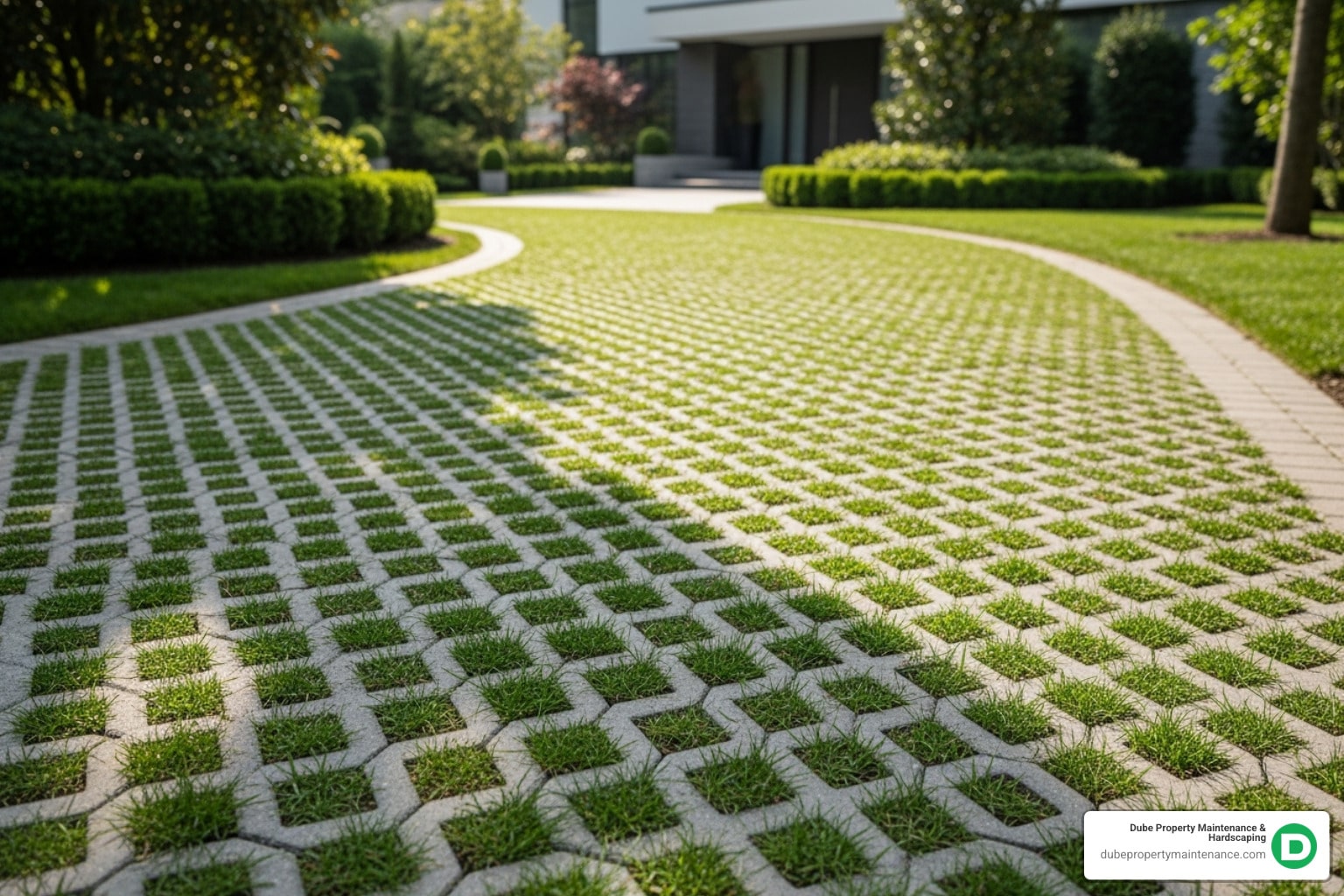

Install grass pavers to create durable, eco-friendly surfaces that combine the strength of pavement with the natural beauty of a lush lawn. Here’s a quick look at what the process involves:
Quick Installation Overview:
Have you ever wished you could have a driveway or walkway that doesn’t turn into a muddy, rutted mess every time it rains? Or perhaps you’re tired of looking at a vast, boring concrete patio that radiates heat and makes your yard feel more like a commercial parking lot than a personal oasis.
Grass pavers solve both of these common problems with neat simplicity. These innovative paving systems use robust concrete or plastic grids with open cells, allowing vibrant grass to grow through. The result is a hybrid surface that gives you the stability and load-bearing capacity of traditional pavement along with the undeniable environmental benefits and aesthetic appeal of living grass.
The installation process requires careful planning and physical work, but it’s an achievable goal for a dedicated DIY enthusiast. Most homeowners can successfully complete a small patio or walkway over a weekend or two. However, for larger projects like a full driveway, the scope and labor involved might make professional installation a more practical choice, often taking a week to complete correctly.
Why are grass pavers gaining so much popularity? Their rise is tied to a growing desire for sustainable and visually integrated landscaping. They manage stormwater naturally by allowing rain to percolate into the ground, reduce the urban heat island effect that plagues solid concrete surfaces, and look fantastic year-round. In many municipalities with strict regulations on impervious surfaces, grass pavers are an approved solution that adds value and function. Plus, when installed properly, they are engineered to handle everything from daily foot traffic to the weight of passenger vehicles.
Picture this: you want the structural integrity and durability of concrete but you love the lush, natural look of a healthy lawn. That’s exactly what grass pavers deliver. These clever systems go by several names – permeable pavers, turf block pavers, or grow-through pavers – but they all perform the same brilliant function: creating a load-bearing surface that is also a living, breathing part of your landscape.
Think of them as nature’s parking lot. Instead of a solid, impermeable slab of concrete or asphalt, grass pavers use a grid structure with open spaces. These cells are filled with soil where real grass grows, creating a surface that’s both strong enough to drive on and green enough to make your neighbors jealous. When you install grass pavers, you’re solving multiple problems at once. No more muddy ruts in your driveway after heavy rain. No more boring gray concrete that makes your property look like a strip mall. And as a significant bonus, you’re actively helping the environment.
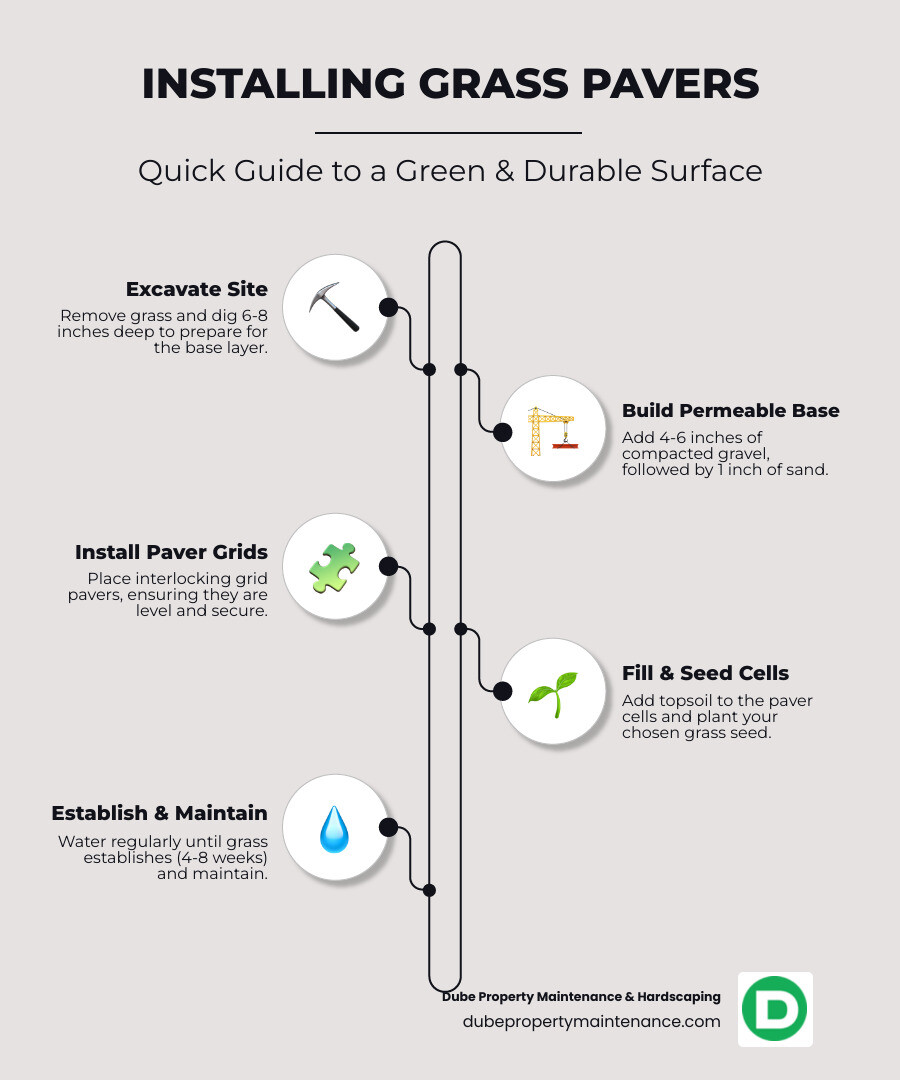
The magic happens in the carefully engineered layered system underneath the visible grid. It starts with your compacted native soil as the foundation. This is topped with a layer of geotextile fabric, which acts as a separator to prevent the gravel base from mixing with the soil and stops weeds from growing up through the system. Then comes a deep gravel base for superior drainage and stability, followed by a thin sand layer for precise leveling. The paver grid sits on top of this foundation, gets filled with a nutrient-rich topsoil, and is finally planted with grass.
Stormwater management becomes effortless. Rain and snowmelt soak directly through the paver cells into the ground below, instead of sheeting off into storm drains. This natural groundwater recharge helps replenish local aquifers, prevents flooding, and reduces the burden on municipal water treatment systems. As the water filters through the soil and root system, pollutants are naturally removed, improving local water quality.
The environmental benefits continue to stack up. While traditional pavement absorbs and radiates solar energy, creating heat islands that make summer days even hotter, grass pavers combat this effect. The grass cools the surrounding air through evapotranspiration, a natural process where water is transferred from the land to the atmosphere by evaporation from the soil and transpiration from plants. It’s like having a natural air conditioner built right into your driveway.
And let’s talk curb appeal. There’s something undeniably attractive about a green driveway or walkway that blends seamlessly with your landscape instead of cutting through it like a concrete scar. It softens the hard lines of a home’s exterior and creates a more organic, welcoming entrance. Your property value gets a boost, and you get to enjoy a more beautiful, functional outdoor space every day.
When you’re ready to install grass pavers, you’ll choose between two main types, each with its own distinct characteristics and ideal applications.
Concrete pavers are the heavy-duty workhorses of the grass paver world. These are pre-cast concrete blocks, often in honeycomb or grid patterns, designed to handle serious weight and constant use. We’re talking full-size trucks, delivery vehicles, emergency access lanes, and even RVs. Their substantial mass and rigidity make them exceptionally durable, especially in climates with freeze-thaw cycles. If you need a driveway that won’t budge under pressure or a commercial parking area that needs to last, concrete grass pavers are your most reliable choice.

Plastic pavers take a different, more lightweight approach. Typically manufactured from 100% recycled materials like high-density polyethylene (HDPE), they are the champions of sustainability and DIY-friendliness. Don’t let their lighter weight fool you; high-quality plastic grass pavers are engineered with incredible compressive strength, often able to support over 97,000 pounds per square foot. Their flexibility allows them to conform slightly to the ground, reducing the risk of cracking.
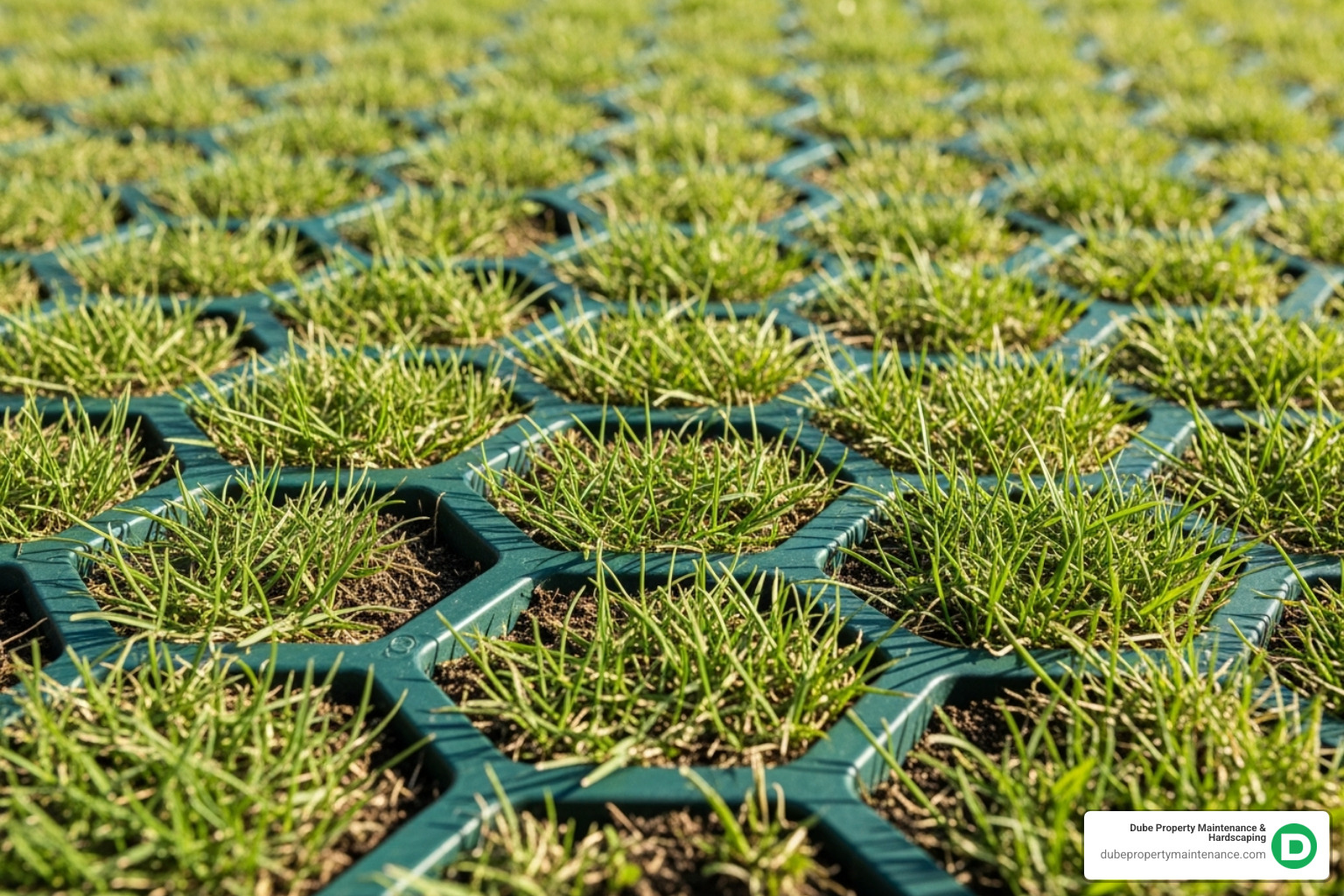
The interlocking design of most plastic pavers makes installation faster and more forgiving for those tackling the project themselves. They are an ideal choice for walkways, patios, residential driveways, and overflow parking areas. Their lower weight also means they are easier on your wallet when it comes to shipping costs and easier on your back during installation.
Both types work beautifully for heavy traffic and light traffic applications when installed over a properly prepared base. The key is to match the right paver type to your specific needs, budget, and expected load requirements.
Let’s be honest about what you’re getting into when you choose grass pavers. Like any home improvement decision, there are trade-offs to consider.
The good news is pretty compelling. Beyond the aesthetics and permeability we’ve already covered, grass pavers excel at reduced runoff and groundwater recharge. Your property becomes part of the solution to stormwater problems instead of part of the problem.
The reality check comes with higher maintenance requirements. You’ll be mowing, watering, and occasionally reseeding – things you never worry about with plain concrete. The lifespan is typically shorter too, usually 10-15 years for residential use compared to decades for traditional concrete.
There’s also the potential for unevenness over time as the ground settles or grass grows unevenly. And yes, the initial cost is typically higher than basic concrete or asphalt.
According to online data, material costs can range from $4 to $25 per square foot, with professional installation adding to the total. These are industry averages and not a quote for services from Dube Property Maintenance & Hardscaping.
The question isn’t whether grass pavers are perfect – it’s whether their unique benefits align with what you want from your outdoor space. For many homeowners, that answer is a resounding yes.
Before you commit to the project and install grass pavers, it’s crucial to weigh the significant benefits against the potential drawbacks. Like choosing between a high-performance sports car and a rugged SUV, the best choice depends entirely on your lifestyle, priorities, and budget. Let’s break it down.
Despite these challenges, many homeowners find that the unique combination of beauty, environmental responsibility, and functionality makes grass pavers a worthwhile investment. It ultimately comes down to your personal priorities and how much you value having a truly green, permeable driveway.