

How to install landscape fabric behind retaining wall is a crucial question for many homeowners and business owners interested in maintaining attractive and functional outdoor spaces. Here’s a quick answer to guide you through the process:
Retaining walls not only add aesthetic appeal to your outdoors but play an essential role in preventing soil erosion and managing water runoff. Proper drainage is critical to avoid water accumulation, which can lead to structural failures. Incorrect installation without attention to drainage can turn your dream landscape into a headache. By installing landscape fabric behind retaining walls, you improve water drainage and increase the wall’s longevity. Let’s explore the process of ensuring your retaining wall stands strong and serves its purpose beautifully.
How to install landscape fabric behind retaining wall vocab to learn:
– building a retaining wall
– interlocking retaining wall blocks
– landscape retaining wall ideas
Using landscape fabric behind retaining walls is a smart choice for several reasons. Let’s explore how it helps prevent soil migration, improve water drainage, and increase wall longevity.
One of the main benefits of using landscape fabric is its ability to prevent soil migration. Soil migration occurs when loose soil shifts and moves, often leading to erosion and instability. By placing fabric behind the wall, you create a barrier that keeps the soil in place. This is particularly important in areas with heavy rains or slopes, where soil movement can be more pronounced.
Proper drainage is vital for retaining walls. Without it, water can build up behind the wall, leading to pressure that might cause the wall to fail. Landscape fabric allows water to pass through while keeping soil particles in place. This improves water drainage by directing water towards drainage pipes or outlets.

By preventing soil migration and enhancing drainage, landscape fabric also helps increase the longevity of your retaining wall. Walls that are well-drained and stable are less likely to crack, lean, or collapse over time. This means fewer repairs and a longer-lasting structure, saving you time and money in the long run.
In summary, using landscape fabric behind retaining walls is a crucial step in ensuring your landscape’s durability and functionality. It not only keeps soil in place but also manages water effectively, contributing to the overall health and longevity of your retaining wall.
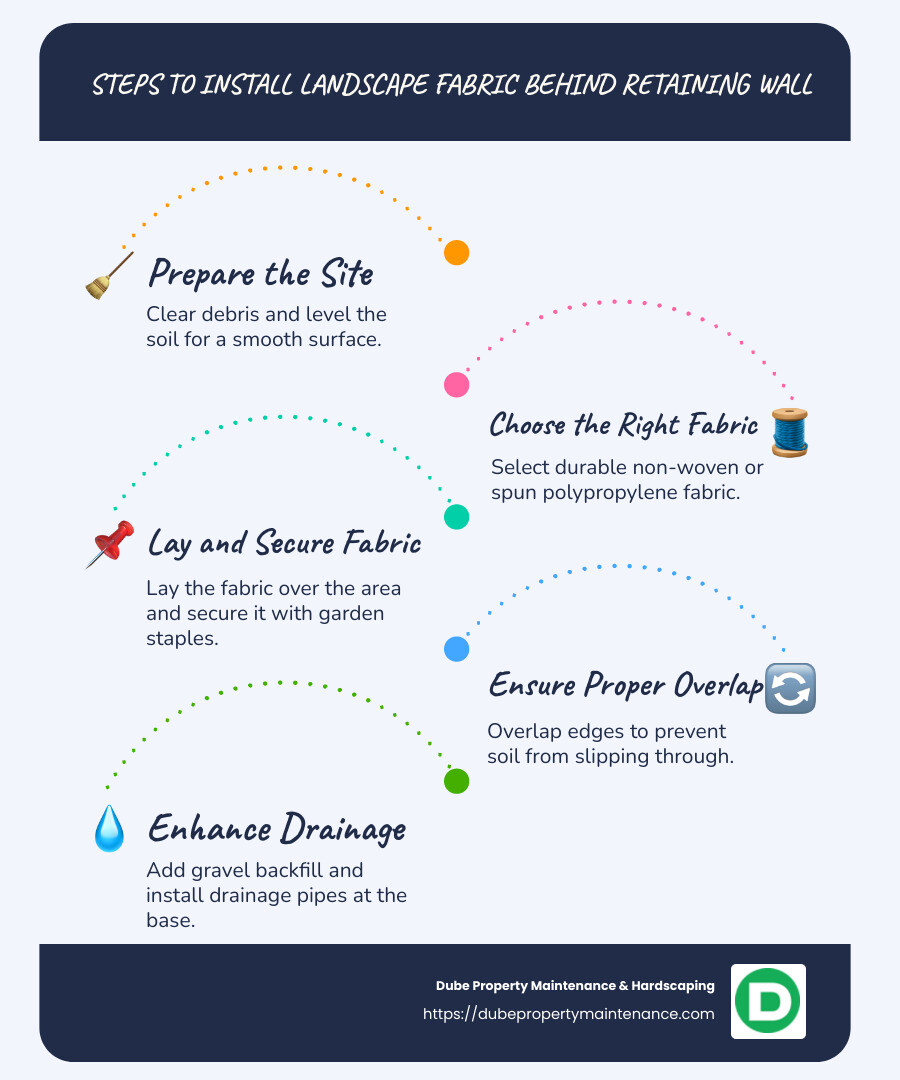
Selecting the right landscape fabric is essential for the success of your retaining wall project. The type of fabric you choose will affect how well it performs its job. Non-woven fabrics are excellent for stability and weed blocking, making them ideal for use behind retaining walls. They are durable and allow water to pass through while keeping soil in place.
Spun fabrics are another option, providing good drainage and strength. They are often used in areas with higher moisture levels. Polypropylene fabrics are also popular due to their durability and resistance to tearing. These fabrics are less permeable but offer strong support, which can be beneficial in certain soil conditions.
Before installing landscape fabric, proper site preparation is crucial. Start by clearing debris such as rocks, sticks, and weeds from the area where the fabric will be laid. This ensures a clean surface for installation.
Next, focus on leveling the soil. Use a rake or hoe to create a flat, even surface. This step is important because uneven soil can lead to improper fabric placement, reducing its effectiveness.
Finally, assess the soil type in your area. Understanding whether the soil is sandy, clay-based, or loamy can help determine how much drainage assistance your retaining wall will need. For instance, clay soils may require more drainage solutions to prevent water buildup.
Once the site is prepared, it’s time to install the landscape fabric. Begin by laying the fabric at the base of the retaining wall. Ensure that the fabric extends beyond the wall’s base to cover the area where soil will be backfilled.
Use a utility knife to measure and cut the fabric to fit the wall’s dimensions. It’s important to overlap the edges of the fabric by at least 6 inches. This overlapping technique prevents soil from seeping through gaps and maintains a continuous barrier.
To secure the fabric, use landscape staples. Place the staples every 8 to 12 inches along the edges and seams of the fabric. This keeps the fabric in place and prevents movement during backfilling.
By following these steps, you ensure that your landscape fabric is properly installed, providing the necessary support and drainage for your retaining wall. This preparation and installation process is key to maintaining a stable and durable landscape structure.
Ensuring proper drainage behind retaining walls is crucial to prevent water buildup, which can lead to wall failure. Here are some best practices to keep in mind:
Sock-Incased Pipes: Drainage pipes wrapped in a fabric “sock” are excellent for preventing soil and debris from clogging the pipe. This ensures efficient water flow away from the retaining wall.
Placement Tips: Place the drainage pipe at the base of the wall, within the first layer of gravel. This location helps capture and redirect water before it can exert pressure on the wall. For taller walls, consider adding additional drainage pipes at intervals of 2 feet in height.
Connection Methods: Connect the drainage pipes to a suitable outlet, such as a storm drain or a daylighted area, where water can safely exit. Ensure that the pipes maintain a slight slope to facilitate water movement by gravity.
Types of Gravel: Use clean, medium-sized gravel, such as 3/4-inch crushed stone, for backfilling. This type of gravel provides excellent drainage while maintaining stability.
Layering Methods: Start by laying a small layer of gravel directly behind the wall. Place the sock-incased drainage pipe on this layer, then continue to backfill with gravel up to within 10 inches of the top of the wall.
Compaction Tips: Lightly compact each layer of gravel to eliminate air pockets and ensure stability. However, avoid over-compaction, which can reduce the gravel’s ability to drain water effectively.
Gravel Backfill: A gravel backfill zone is essential for drainage. It should be at least 12 inches thick and extend the full height of the wall. This zone acts as a buffer, allowing water to filter through and reach the drainage pipes.
Weep Holes: Incorporate weep holes into the wall design to allow water to escape. These should be spaced every 4 to 6 feet along the wall’s base.
Slope Considerations: Ensure the backfill and drainage pipes are slightly sloped away from the wall. This encourages water movement away from the structure, reducing pressure on the wall.
By following these best practices for drainage, you can improve the longevity and stability of your retaining wall, preventing water-related issues and ensuring a robust landscape feature.
When installing landscape fabric behind a retaining wall, avoiding common mistakes is key to ensuring a successful and long-lasting installation. Here are some pitfalls to watch out for:
One common mistake is not overlapping the fabric correctly. Proper overlap is crucial to prevent soil from seeping through the gaps and compromising the wall’s stability. Aim for at least a 6-inch overlap between fabric sheets. This ensures a seamless barrier that effectively blocks soil migration.
Securing the landscape fabric inadequately can lead to it shifting or tearing over time. Use landscape staples to anchor the fabric firmly to the ground. Place staples every 12 inches along the edges and throughout the fabric’s surface. This will keep it in place, even under the weight of gravel and soil.
Before laying the fabric, it’s important to prepare the site properly. Failing to do so can result in uneven surfaces and poor drainage. Clear all debris from the area and level the soil to create a smooth base. Assess the soil type to determine if additional measures, like adding a layer of sand or gravel, are needed to improve drainage.
By avoiding these common mistakes, you can ensure your landscape fabric installation is effective and durable. This will help maintain the integrity of your retaining wall and prevent issues like soil erosion and water buildup.
Regular maintenance of your retaining wall and landscape fabric is essential to keep your outdoor space looking great and functioning well. Here’s how you can ensure everything stays in top shape:
Frequent inspections are your first line of defense against potential problems. Check your retaining wall and landscape fabric at least twice a year. Look for signs of wear or damage in the fabric, such as tears or areas where it might have shifted. Also, inspect the wall for any signs of movement or cracking, which could indicate underlying issues with drainage or soil pressure.
Landscape fabric doesn’t last forever. Over time, it can degrade due to exposure to the elements and soil pressure. If you notice significant wear and tear during your inspections, it might be time to replace the fabric. Generally, replacing the fabric every 5 to 10 years can help maintain optimal performance, but this can vary depending on the specific conditions of your site.
Water build-up behind a retaining wall is a serious issue that can compromise the wall’s stability. If you notice pooling water or damp spots, it’s crucial to address them promptly. Ensure that your drainage system, including weep holes and drainage pipes, is functioning correctly. You might need to clean out blocked drainage pipes or adjust the slope of the backfill to improve water flow.
By following these maintenance tips, you can extend the life of your retaining wall and landscape fabric, keeping your outdoor space safe and beautiful. Next, we’ll explore frequently asked questions about landscape fabric installation to address any lingering queries you might have.
Installing landscape fabric behind retaining walls offers long-term benefits that go beyond immediate functionality. By preventing soil migration and enhancing drainage, landscape fabric helps maintain the structural integrity of your retaining wall. This leads to a longer lifespan for both the wall and your entire landscape setup. Proper installation and maintenance ensure that your wall remains as effective and beautiful as the day it was built.
Choosing Dube Property Maintenance & Hardscaping for your retaining wall project means partnering with experts who understand the nuances of landscape fabric installation. Our team has over 30 years of experience in creating durable and aesthetically pleasing retaining walls that not only meet but exceed your expectations. We’re dedicated to using the best materials and techniques to ensure your outdoor space is both functional and stunning.
Whether you’re dealing with the rocky soils of Andover, MA, or the clay-heavy grounds of Salem, NH, our team has the local expertise to tackle any challenge. We understand the unique needs of each area we serve, ensuring that your retaining wall is built to withstand local conditions while enhancing the beauty of your property.
For more information on how we can help you with your retaining wall and landscape fabric needs, contact Dube Property Maintenance & Hardscaping today. Our experts are ready to assist you in changing your outdoor space into a masterpiece that will stand the test of time.
Landscape fabric should be installed behind the retaining wall, not underneath it. This placement helps prevent soil migration while allowing water to pass through, reducing pressure on the wall. Proper installation involves laying the fabric against the soil side of the wall and securing it with landscape staples. This setup ensures effective drainage and minimizes the risk of wall failure due to water buildup.
When selecting landscape fabric for retaining walls, choose a non-woven, spun-bonded polypropylene fabric. This type of fabric is durable and allows water to pass through while blocking soil particles. It is specifically designed for applications where drainage and soil separation are essential. Avoid using standard weed control fabric, as it may not provide the necessary strength and permeability required for retaining walls.
Landscape fabric behind retaining walls typically lasts for many years, but regular inspections are crucial to ensure its effectiveness. Check for signs of wear, such as tears or blockages, especially after heavy rains. If you notice any issues, it’s best to replace the fabric to maintain proper drainage and wall stability. Generally, fabric replacement is not frequent unless damage is evident or the wall undergoes significant repairs.
For more guidance on maintaining your retaining wall and landscape fabric, or to explore our services, visit Dube Property Maintenance & Hardscaping. Our team is ready to help you achieve a beautiful and lasting outdoor space.
