
How to install a paver driveway is a common question among homeowners looking to improve their property’s curb appeal and functionality. If you’re in Methuen, MA, or the surrounding areas, we understand that finding reliable and affordable paver driveway installers might be difficult. But the good news is that installing a paver driveway yourself is not as hard as you might think!
Here’s a quick overview if you’re short on time:
Installing a paver driveway has several major benefits:
Completing this DIY project can be satisfying and rewarding. It boosts your home’s visual appeal while also providing a durable and low-maintenance driveway solution. So, roll up your sleeves and let’s get started with the installation process!
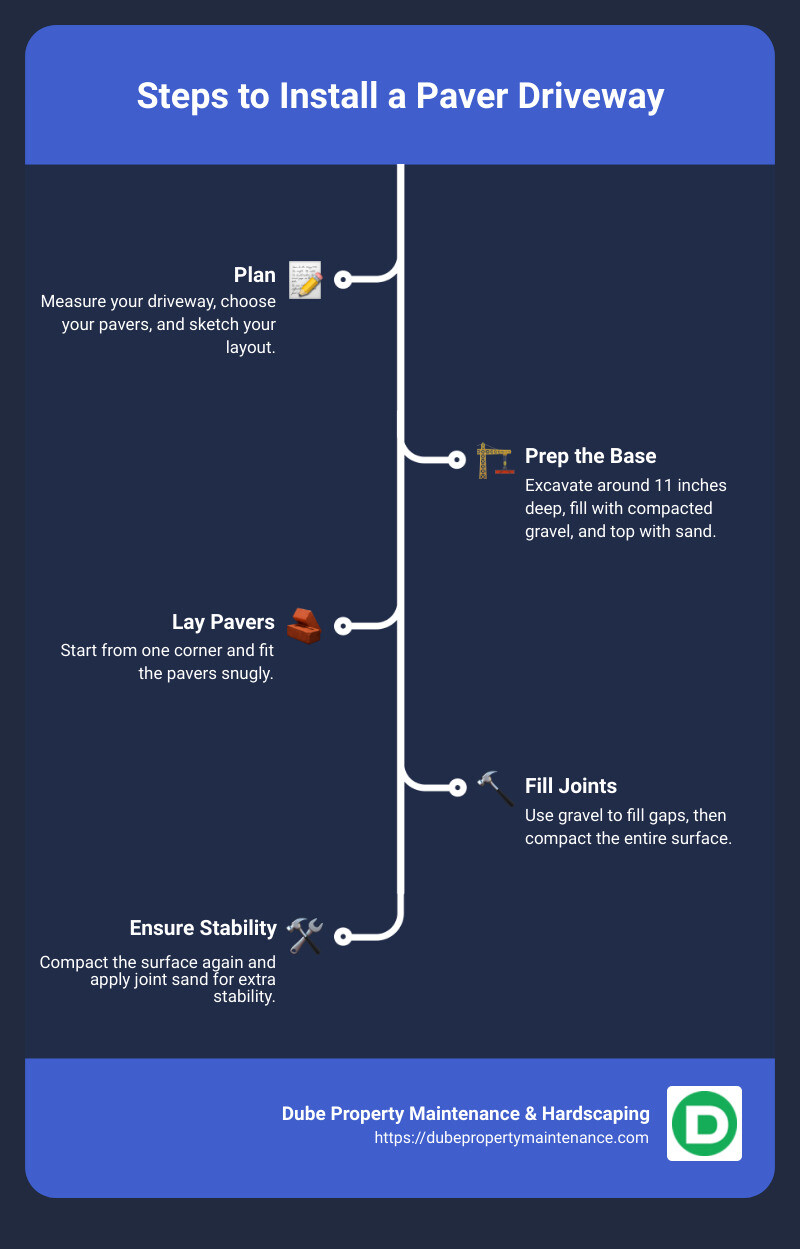
Proper preparation is key to a successful paver driveway installation. This section will guide you through excavation, soil testing, base preparation, sub-base leveling, and compaction methods.
The first step is to excavate the area where you plan to install your paver driveway. This involves removing the existing pavement, soil, or any other materials down to a depth of about 11 inches. This depth allows for the sub-base, base, and paver layers.
Pro Tip: Before you start digging, call 811 for an underground utilities check to avoid damaging any pipes or cables.

Testing the soil is crucial to understand its drainage properties. A percolation test can tell you how fast water is absorbed by the soil. If your soil drains slowly, you may need a deeper base or additional drainage solutions.
Contact your local Cooperative Extension office for details on how to conduct a percolation test.
Once the area is excavated and the soil tested, the next step is preparing the base. This involves laying a sub-base and a base layer to ensure stability and proper drainage.
Sub-Base Leveling
Base Layer
Pro Tip: For areas with severe winters, consider adding a snow-melting system under the pavers to keep the driveway clear.
Proper compaction is essential to prevent future settling and ensure the longevity of your driveway. Use a plate compactor for the sub-base and base layers. Compact the layers in multiple passes to achieve a solid foundation.
Important: Compacting the base material with at least three passes ensures it is firmly packed and stable.
Preparing the ground for a paver driveway involves several critical steps: excavation, soil testing, base preparation, sub-base leveling, and compaction. Each step is crucial for creating a stable, long-lasting driveway.
Next, we’ll dive into how to choose the right materials for your paver driveway.
When it comes to how to install a paver driveway, choosing the right materials is crucial. The materials you select will affect the driveway’s durability, appearance, and maintenance needs.
The base is the foundation of your paver driveway. A well-prepared base ensures stability and longevity. Here are the common base materials:
Selecting the right pavers involves considering the material, style, and functionality. Here are some popular options:
Choosing the right materials for your paver driveway is essential for a durable and visually appealing result. Next, we’ll guide you through the step-by-step process of installing your paver driveway.
Installing a paver driveway may seem like a big task, but with the right steps, it’s doable. Here’s a simple guide to help you get started.
First, you need a solid plan. Sketch out your driveway, including any curves or turns. This will help you visualize the project and estimate the number of pavers needed.
Pro Tip: Use a string line or garden hose to outline the shape on the ground.
Next, mark the area where you’ll install the pavers. Use stakes and string to define the boundaries. Make sure you account for any slopes to ensure proper drainage away from your house.
Pro Tip: A minimum slope of 2% is recommended to prevent water pooling.
Now, it’s time to dig. Excavate the marked area to a depth of about 11 inches. This depth includes the base material, sand, and pavers.
Important: Check for underground utilities before you start digging.
After excavation, lay a geotextile fabric over the soil to prevent weed growth. Then, add about 6 inches of gravel for the base. Compact the gravel with a plate compactor. This step is crucial for a stable driveway.
Pro Tip: Compact the gravel in layers for better stability.
Spread a 1-inch layer of sand over the compacted gravel. Use a screed board to level the sand. This will create a smooth surface for the pavers.
Pro Tip: Avoid walking on the sand once it’s leveled.
Install edge restraints along the perimeter of the driveway. These can be made of plastic, metal, or concrete. Edging keeps the pavers in place and prevents them from shifting over time.
Pro Tip: Secure the edging with spikes every 12 inches for maximum stability.
Start laying the pavers along the longest straight edge. Place them directly onto the sand, fitting them closely together. Use a rubber mallet to tap them into place.
Pro Tip: If you need to cut pavers to fit, use a masonry saw or splitter.
Once all the pavers are in place, spread joint sand over the surface. Sweep the sand into the gaps between the pavers. This locks them in place and adds stability. Finally, use a plate compactor to press the pavers into the sand.
Pro Tip: For extra durability, consider using polymeric sand, which hardens when wet.
By following these steps, you’ll have a beautiful and durable paver driveway. Next, we’ll discuss how to ensure the stability and longevity of your installation.
Ensuring the stability and longevity of your paver driveway involves several key steps: compaction, joint sand, and sealing. These elements work together to keep your pavers in place and looking great for years.
Compaction is crucial for a stable base. After laying your pavers, use a plate compactor to press them into the sand. This step helps to:
Pro Tip: Make at least three passes with the compactor for best results.
Joint sand fills the gaps between pavers, locking them in place. There are two types of joint sand:
Polymeric sand is particularly effective because it:
Installation Tip: Sweep the sand into the gaps and compact again to ensure it settles properly.
Sealing your paver driveway adds an extra layer of protection. While not always necessary, sealing offers several benefits:
Choose a sealant recommended for your specific paver type and follow the manufacturer’s instructions for application.
The design of the pavers themselves also contributes to their stability. Pavers are made to interlock, creating friction that helps keep them in place. The edges of the pavers grip each other, preventing movement.
To maximize this effect:
By focusing on these elements, you can ensure your paver driveway remains stable and beautiful for years to come.
Next, we’ll address some frequently asked questions about paver driveways to help you make the most of your installation.
No, you should not install driveway pavers directly over dirt.
Laying pavers over dirt can lead to several issues:
– Shifting and settling: Dirt can shift and settle over time, causing the pavers to move and become uneven.
– Weed growth: Without a proper base, weeds can grow between the pavers.
– Poor drainage: Dirt does not provide adequate drainage, leading to water pooling and potential damage.
For a stable and long-lasting driveway, follow these steps:
1. Excavate the area: Remove the topsoil and dig to a depth of at least 11 inches.
2. Add a gravel base: Fill the excavation with a compacted layer of gravel, about 6 inches deep.
3. Top with sand: Spread a layer of sand over the compacted gravel to create a smooth surface for the pavers.
Regular maintenance is key to keeping your paver driveway looking great and functioning well.
Here’s how you can maintain it:
Repairing a paver driveway is relatively straightforward and can often be done without professional help.
Here are the steps:
By following these steps, you can ensure your paver driveway remains in top condition for years to come.
Next, we’ll wrap up with some final thoughts and tips on maintaining your paver driveway.
Installing a paver driveway is a rewarding project that enhances your home’s curb appeal and functionality. By following the steps outlined in this guide, you can achieve a durable and visually stunning driveway that stands the test of time.
Keeping your paver driveway in good shape is essential for its longevity. Here are some simple maintenance tips:
While DIY projects can be fulfilling, sometimes it’s best to leave it to the professionals. At Dube Property Maintenance & Hardscaping, we specialize in creating beautiful, durable paver driveways that elevate your home’s curb appeal. Our team of experts will handle everything from design to installation, ensuring a flawless finish.
For a free consultation, contact us today. Let us help you transform your driveway into a stunning and functional space.
By following these guidelines and maintenance tips, your paver driveway can remain a beautiful and long-lasting feature of your home. If you have any questions or need professional assistance, don’t hesitate to reach out to us. We’re here to help!