
How to build an outdoor fireplace with chimney involves careful planning, a proper foundation, and key safety measures. The essential process includes:
An outdoor fireplace with a chimney transforms any backyard into a stunning gathering space. Research shows that spending time by a fire provides real benefits for your physical and emotional health, while also increasing your property value by up to 12 percent.
Unlike a simple fire pit, a fireplace with a chimney offers architectural presence, creating a true focal point. Its chimney system safely channels smoke away from your seating area, making it more enjoyable than open fire features. A typical fireplace can weigh up to 4,000 pounds, requiring a proper foundation to prevent frost heave in New England’s winters. Whether you choose wood or gas, understanding the essential components and safety requirements is key.
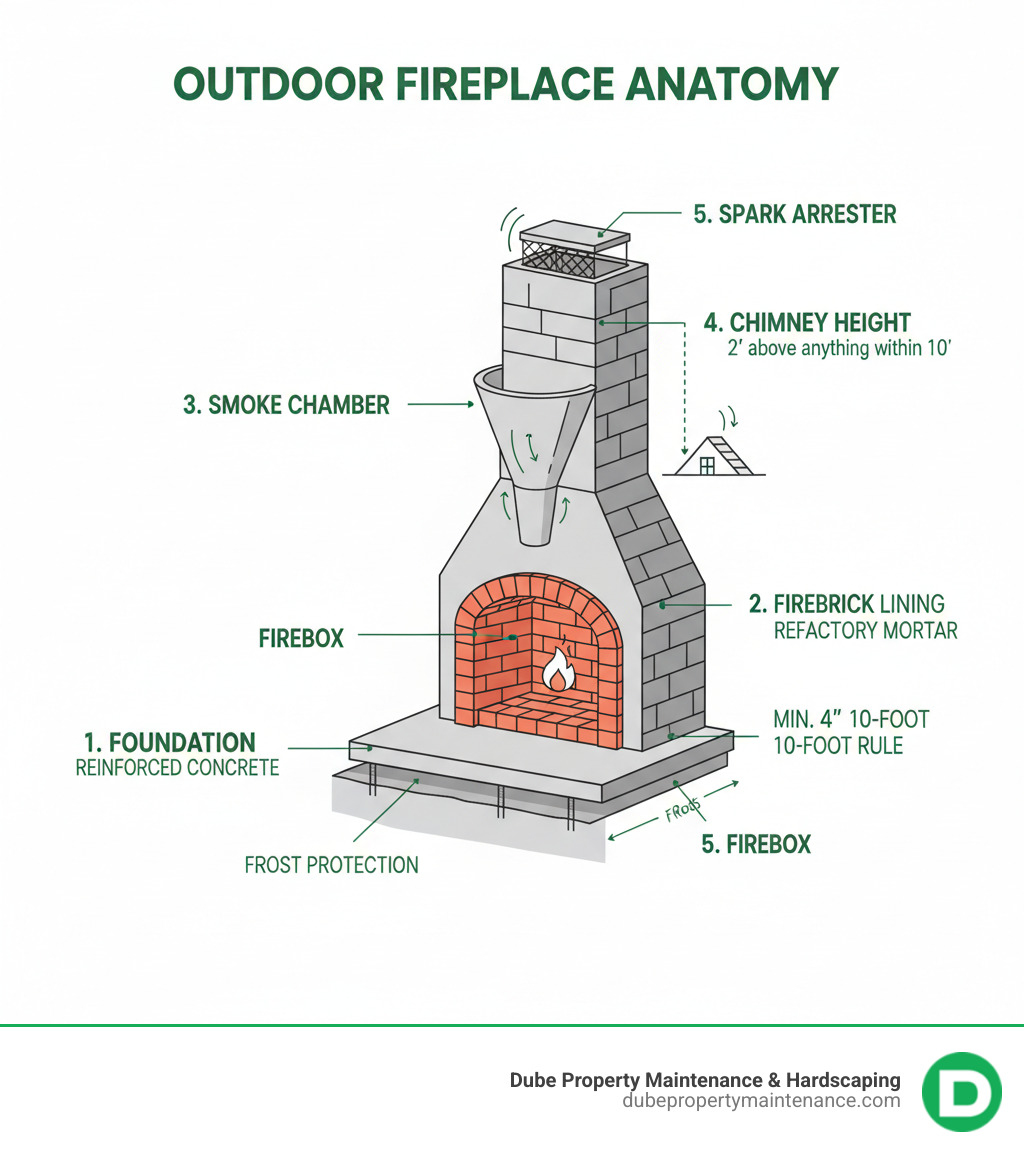
How to build an outdoor fireplace with chimney terms to know:
Building an outdoor fireplace with a chimney isn’t something you want to jump into without a solid plan. Think of it as creating the heart of your backyard – a place where family and friends will gather for years to come. The planning phase might not be the most exciting part, but it’s absolutely crucial for success.

Your outdoor fireplace will do more than just provide warmth. Studies show that spending time by a fire offers genuine benefits for your physical and emotional well-being. From a practical standpoint, a NAR study shows it can increase property value by up to 12 percent, making this a worthwhile investment.
Proper planning makes the difference between a beloved outdoor feature and a future headache. This means careful site selection, realistic budgeting, and understanding local regulations before you break ground.
One of your first big decisions when figuring out how to build an outdoor fireplace with chimney is what will fuel your fires. This choice affects your budget, installation, and long-term maintenance.
| Feature | Wood-Burning Outdoor Fireplace | Gas Log Set Outdoor Fireplace |
|---|---|---|
| Cost (Industry Avg.) | $1,500 – $9,000+ | $2,000 – $10,000+ |
| Ambiance | Authentic crackling sounds, smoky aroma, natural flame | Clean burn, consistent flame, easy start/stop |
| Maintenance | Requires firewood storage, ash cleanup, regular chimney cleaning | Minimal cleanup, no ash, typically less chimney maintenance |
| Installation | Requires proper venting for smoke, firebox, and chimney | Requires gas line installation (licensed professional recommended) |
| Convenience | Requires lighting, tending to fire, and cleanup | Instant on/off, often with electronic ignition or remote control |
Please note these are industry averages based on internet data and not actual costs for Dube Property Maintenance & Hardscaping.
Wood-burning fireplaces deliver that classic outdoor experience with the scent of burning wood and the crackle of logs. You’ll need to plan for firewood storage and ash cleanup, but many find this part of the charm. For more details, check out more on wood burning fireplaces.
Gas log sets offer modern convenience. With electronic ignition and remote control options, you can have flames at the push of a button. Installation requires running a gas line, which should always be handled by licensed professionals, but ongoing maintenance is significantly easier.
Getting the design right from the start saves you from costly mistakes. Placement safety is your top priority. Maintain proper clearance from structures – typically at least 10 feet from your house, fences, or anything combustible. Also, consider your prevailing winds to keep smoke from blowing into your seating area.
Foundation depth is critical in New England’s climate. Your fireplace can weigh up to 4,000 pounds, and without proper frost heave prevention, the structure can shift and crack. Always check your local frost line and dig your foundation below it.
The firebox size should match your space and intended use. Standard outdoor fireplaces are 36 to 44 inches wide, but consider how the scale works with your overall patio design.
Chimney height rules are essential for safety and function. The standard 2-foot/10-foot rule means your chimney must extend at least 2 feet higher than any structure within 10 feet. This creates the draft needed to pull smoke up and away.
Looking to integrate your fireplace into a complete outdoor living space? Our patio design ideas can help you create a cohesive look.
Skipping the permit process can turn your dream project into a nightmare. Building codes exist to keep you and your family safe.
Permit requirements vary, but most communities require them for structures like fireplaces. The process ensures your project meets safety standards.
Local ordinances can be specific, restricting fuel types or distances from property lines. HOA rules can also add another layer of guidelines to follow.
Scheduling inspections at key stages keeps your project on track. This is where professional consultation pays off. Experienced contractors understand local regulations and can steer the permit process efficiently. Safety is paramount in any fire feature construction. Our team can guide you through planning and approval; learn more about our masonry services.
With planning complete, it’s time to build. This guide covers the construction process of how to build an outdoor fireplace with chimney. This is a substantial undertaking requiring masonry tools, safety gear, and patience for curing times.

While some fireplace kits can be assembled in a few hours on a ready foundation, a custom build is far more complex. Due to the weight, complexity, and safety requirements, many homeowners leave this project to experienced professionals.
For peace of mind and expert craftsmanship, our Professional hardscaping services can turn your backyard dreams into reality without the stress of a DIY approach.
A solid foundation is the critical, unseen hero of your fireplace project. Since a finished fireplace can weigh up to 4,000 pounds, there’s no room for shortcuts.
First, excavate to the appropriate depth for your local conditions to prevent frost heave, which can damage your fireplace during New England’s freeze-thaw cycles.
Next, pour a concrete slab that is at least 4 inches thick, though up to 8 inches is better for heavy structures. This involves setting up forms, adding a gravel layer for drainage, and then pouring the concrete.
Reinforcement with rebar is essential to prevent cracking and add strength. The steel bars are placed strategically within the concrete before it sets.
The concrete surface must be perfectly level. Any imperfections at this stage will be magnified as you build upward. Curing time is non-negotiable; the concrete needs at least 48-72 hours to gain adequate strength before you can build on it. Rushing this step can lead to future problems. Foundational principles are also covered in our guide on Building a Retaining Wall.
Once the foundation is cured, you can construct the firebox. Cinder blocks typically form the sturdy, economical skeleton of the fireplace. Each block is laid with mortar and must be perfectly level.
The firebrick lining is crucial, as the firebox interior faces intense heat. These special bricks are laid with high-temperature refractory mortar, with the smooth side facing inward for easier cleaning.
High-temperature refractory mortar is a specialized product that handles extreme heat without cracking, making it essential for any masonry exposed to flames.
A lintel installation (a steel angle bar or pre-made block) provides horizontal support above the firebox opening to bear the weight of the masonry above. The main structure is then built up around the firebox using your chosen material, keeping everything plumb and square. If your existing fireplace needs work, our Fireplace Brick Repair services can help.
The chimney system is crucial for safety and performance, engineering airflow to direct smoke away from your seating area.
The smoke chamber, located above the firebox, funnels smoke from the wide firebox into the narrower chimney flue. Without this transition, smoke would spill back into your outdoor living space.
Flue liner installation creates a smooth, protected path for smoke and gases to exit. Clay tiles or stainless steel liners protect the outer masonry from heat and corrosion.
Stacking chimney blocks continues the upward build, following the flue liner. Keeping the structure plumb and level is critical as you gain height.
Chimney height requirements are based on safety and physics. The 2-foot/10-foot rule dictates that the chimney must be at least 2 feet higher than any part of a building within a 10-foot radius to ensure proper draft.
A spark arrester (a metal mesh cap) is installed at the top to prevent embers from escaping and starting fires. Finally, a chimney cap protects the flue from rain, snow, and debris while helping to prevent downdrafts.
Finishing touches transform the structure into a stunning centerpiece reflecting your personal style.
Adding an outdoor fireplace with mantel creates visual appeal and a practical shelf for decorations. Our Outdoor Fireplace with Mantel designs can inspire you. Built-in wood storage keeps firewood organized and accessible, adding another attractive and practical design element.
Once the main structure is built, you can improve your outdoor fireplace with custom features that reflect your style and lift your outdoor living experience. Whether you want a rustic look or a sleek, Modern Outdoor Fireplace design, thoughtful improvements make all the difference.

The beauty of how to build an outdoor fireplace with chimney lies in the endless possibilities for customization. Think of the completed structure as a blank canvas for adding personality and charm.
These upgrades can transform your fireplace into a captivating centerpiece. Stone veneers add incredible texture and character, with a wide array of colors and styles to match your home or create a striking contrast.
Built-in seating, such as integrated benches or seat walls, provides permanent, comfortable seating that encourages gathering and feels more intentional than portable furniture.
Integrated wood storage keeps firewood neat, dry, and accessible. Custom-built niches or compartments within the structure add visual interest and show attention to detail.
A custom mantel crafted from stone, reclaimed wood, or concrete adds sophistication and provides a surface for seasonal décor.
Lighting integration, like recessed LEDs in the hearth or uplighting on the facade, dramatically improves ambiance and highlights architectural details, making your space beautiful and usable after dark.
For the ultimate entertainment zone, consider combining your fireplace with an outdoor kitchen. An Outdoor Kitchen with Fireplace setup creates a cohesive outdoor room for cooking, dining, and relaxing.
Ensuring your fireplace’s safe operation and longevity requires ongoing attention. A little maintenance protects your investment and prevents future headaches.
First fire precautions are critical. Wait at least 30 days for all materials to cure fully. When you do light the first fire, start small with kindling to gradually acclimate the masonry to heat and prevent cracks.
Ash cleanout is a regular task. Remove cool ashes from the firebox every few uses to ensure proper airflow. Store ashes in a metal container away from combustibles.
An annual chimney inspection is as important for outdoor fireplaces as for indoor ones. Have a professional check for creosote buildup, blockages, and structural damage. Our Fireplace Masonry Experts can handle this for you.
Check for cracks regularly. Visually inspect the structure for any cracks in the masonry or mortar, especially given New England’s freeze-thaw cycles. Addressing small issues promptly prevents larger repairs.
Covering your fireplace with a breathable, waterproof cover during the off-season protects it from the elements and prolongs its life.
We’ve helped countless homeowners create their dream outdoor fireplaces and have heard just about every question imaginable. Here are the most common concerns about how to build an outdoor fireplace with chimney.
Yes, but with important safety caveats. The key is maintaining proper clearances from all combustible materials, including your home’s siding, deck, and any overhanging eaves or nearby trees.
Most building codes require at least 10 feet of clearance, but this can vary by town. It’s crucial to check with your local building department first to understand the specific requirements for your area.
When a fireplace is near a structure, chimney height becomes even more critical. The chimney must extend at least 2 feet higher than any part of your house within a 10-foot radius. This ensures smoke is directed safely up and away from your roofline and windows. Verifying local codes upfront can save you from costly mistakes.
The smoke chamber is a hidden but essential component for proper fireplace function. Located between the firebox and the chimney flue, it acts as a funnel, smoothly transitioning smoke from the wide firebox into the narrow chimney.
This funnel shape is a work of sophisticated engineering that creates the draft needed to pull smoke up and away from your seating area. Without a proper draft, smoke would spill back out into your face. The smoke chamber also helps prevent downdrafts on windy days, ensuring the upward flow of smoke is maintained.
Costs vary dramatically based on materials, size, complexity, and whether it’s a DIY or professional project.
For a DIY project, material costs can start around $1,300 for basic components like cinder blocks, mortar, and firebrick. This figure doesn’t include tools, your time, or potential costs for fixing mistakes.
Professional installations have a wider range. Based on industry data, costs typically run from $3,000 to over $20,000. Wood-burning fireplaces generally range from $1,500 to $9,000, while gas-fired options can be $2,000 to $10,000 or more.
What drives the price? The details. A simple design with basic finishes is at the lower end. Elaborate designs with premium stone veneers, integrated seating, custom mantels, and larger footprints require more substantial foundations and materials, pushing costs higher.
Please note these are industry averages based on internet data and not actual costs for Dube Property Maintenance & Hardscaping. We can provide a personalized estimate for your specific project.
Building an outdoor fireplace with a chimney is about more than construction; it’s about crafting the heart of your outdoor living space where you can create memories that last a lifetime. It transforms your backyard into a year-round destination, providing a natural gathering spot for friends and family.
Beyond the ambiance, a well-built outdoor fireplace makes excellent financial sense, potentially increasing your property value by up to 12 percent. It’s a home improvement that pays you back while you enjoy it.
While a DIY build is possible for those with experience, the complexity should not be underestimated. From pouring a foundation that can support 4,000 pounds to ensuring proper chimney height for safety, the details matter. Navigating local building codes, permits, and frost line requirements adds another layer of complexity.
Partnering with experienced hardscaping professionals makes all the difference. Professional installation ensures your fireplace meets all safety codes and will provide decades of reliable enjoyment. You get peace of mind knowing it’s done right, plus the warranty that comes with professional work.
At Dube Property Maintenance & Hardscaping, we’ve helped countless homeowners across Massachusetts and New Hampshire create their dream outdoor living spaces. Our team understands New England’s unique climate and building requirements. We handle every aspect of your project with the attention to detail you deserve.
Ready to transform your backyard into the retreat you’ve always envisioned? Contact us today to get started on your custom outdoor fireplace and see how we can bring your vision to life.
