
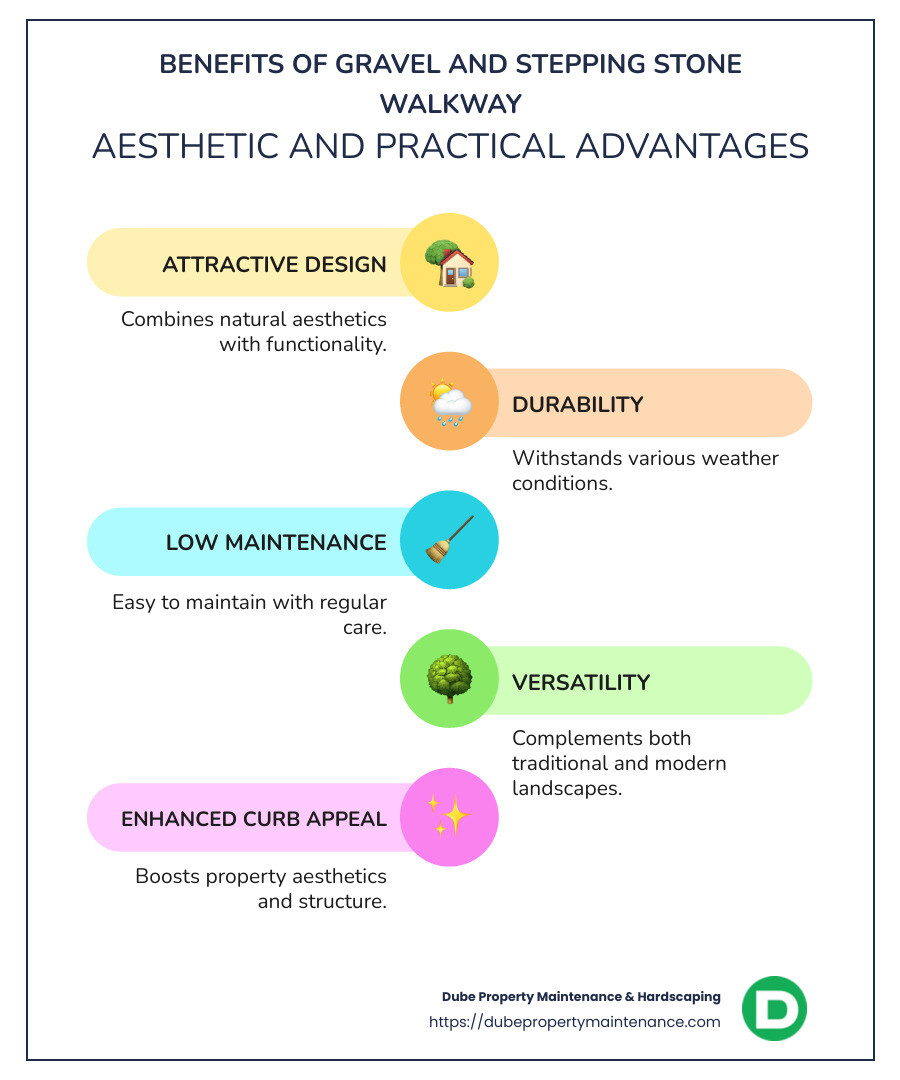
Gravel and stepping stone walkway offers a charming and practical solution to improve the look of your outdoor spaces. This type of walkway combines rustic appeal with durability, creating an inviting path that guides you or visitors through gardens or around the property. Here’s a quick look at why many property owners find this blend so alluring:
Building a gravel and stepping stone walkway not only boosts your property’s curb appeal but also adds structure to your outdoor space. Unlike plain pathways, this option integrates into the natural environment, allowing you to showcase and protect your lawn and gardens effectively.
Gravel provides a stable and flexible foundation, while stepping stones offer firm places to tread, reducing soil erosion and keeping footwear clean on rainy days. Designed thoughtfully, these pathways blend seamlessly, bringing both aesthetic pleasure and convenience.
Gravel and stepping stone walkway terms to know:
– flagstone steps and walkway
– gardens with steps
– outdoor step designs
Creating a gravel and stepping stone walkway is an exciting project that can transform your outdoor space. But before you start digging, it’s crucial to plan carefully. Here’s how to get started with the design, layout, materials, and preparation.
First, visualize how you want your walkway to look. Will it be a straight path or a winding trail? Use a garden hose or mason line to experiment with different shapes. This helps you see the potential design right in your yard.
Choosing the right materials is essential for both the look and durability of your walkway.
Preparation is key to a successful installation.

By considering these factors, you’re setting the stage for a beautiful and functional gravel and stepping stone walkway. Proper planning saves time and effort, leading to a smoother installation process. Next, we’ll dive into the step-by-step construction process to bring your vision to life.
Creating a gravel and stepping stone walkway involves a few essential materials that ensure durability and aesthetic appeal. Let’s explore what you’ll need.
Gravel forms the backbone of your walkway. It’s affordable, easy to work with, and offers excellent drainage. When choosing gravel, consider the type and size:

Stepping stones provide a solid path and add visual interest. They come in various materials and styles:
Edging is crucial for maintaining the shape and structure of your walkway. It prevents gravel from spreading and keeps the path neat:
Landscape fabric is laid beneath the gravel to prevent weed growth and improve stability. Here’s how it helps:
By choosing the right materials, you ensure your gravel and stepping stone walkway is both beautiful and long-lasting. Next, we’ll guide you through the step-by-step construction process to bring your outdoor vision to life.
Creating a stunning gravel and stepping stone walkway is a rewarding DIY project. Let’s break down each step to make the process simple and enjoyable.
Start by marking the area where your walkway will go. Use stakes and string to outline the path. Think about the width and shape—will it be straight or curved? This is your chance to plan the layout and calculate the space needed for your stones and gravel.
Now, it’s time to prepare the base. Begin by digging out the area to a depth of about 4-6 inches. This allows room for your gravel and stepping stones.
A solid foundation is key. Spread a layer of crushed stone in the trench. This provides stability and helps with drainage.
Next, lay down landscape fabric over the crushed stone. This step helps prevent weeds and keeps your gravel in place.
Now for the fun part—placing the stepping stones. Arrange them according to your design, ensuring they’re evenly spaced.
With the stepping stones in place, fill the gaps with gravel. This creates a smooth, cohesive look.
Finally, add the finishing touches to your walkway. Install edging to keep everything in place and clean the area for a polished look.
And there you have it! By following these steps, you’ve crafted a beautiful gravel and stepping stone walkway that improves your outdoor space. In the next section, we’ll explore how to maintain your walkway to keep it looking great for years to come.
Keeping your gravel and stepping stone walkway in mint condition is crucial for its longevity and appearance. Here’s how to maintain and care for it effortlessly.
Regular cleaning is essential to keep your walkway safe and attractive.
Weeds can sneak through if not managed properly.
Over time, gravel may shift or settle, especially in high-traffic areas.
With these simple steps, your gravel and stepping stone walkway will remain a beautiful and functional part of your landscape for years to come. Up next, we’ll tackle some frequently asked questions to help you get the most out of your walkway.
Yes, placing gravel under stepping stones is a smart move. It provides a stable base and helps with drainage. Without gravel, stones might shift, especially after rain. A layer of crushed stone or pea gravel can keep everything in place and prevent water from pooling. This makes your walkway safer and more durable.
The best stone for a gravel walkway depends on your style and budget. Pea gravel is popular for its smooth texture and affordability. It’s easy on the feet, too. Crushed granite offers a more rugged look and excellent drainage. If you’re after elegance, consider bluestone gravel, though it’s pricier. Each type has its pros and cons, so choose based on your needs and the walkway’s purpose.
Maintaining your walkway is simple with a few regular tasks:
By following these steps, your gravel and stepping stone walkway will stay in top shape, adding beauty and function to your outdoor space.
A gravel and stepping stone walkway is more than just a path—it’s a blend of durability and aesthetics that improves your outdoor space. With proper planning and maintenance, it can last for years, providing a charming and functional addition to your landscape.
Durability is a key benefit of this type of walkway. Gravel acts as a flexible base that adapts to natural ground movements, reducing the risk of cracks. Stepping stones, when laid on a solid foundation, resist shifting and wear. Regular maintenance, like redistributing gravel and controlling weeds, ensures that the walkway remains sturdy and safe.
On the aesthetic side, this walkway offers endless possibilities. The combination of stones and gravel creates a natural look that complements any garden style. You can choose stones that match your home’s design or opt for contrasting colors to make your path stand out. Add lighting along the edges for a magical touch at night.
At Dube Property Maintenance & Hardscaping, we specialize in creating beautiful, durable walkways that transform your outdoor space. Our expert team will work with you to design and install a walkway that meets your needs and improves your property’s appeal. Whether you’re in Methuen, MA, or surrounding areas, we’re here to bring your vision to life.
Ready to start your project? Contact us today to learn more about how we can help you create the perfect gravel and stepping stone walkway for your home.
