
If you’re searching for grass pavers near me, you’re likely looking for a solution that combines the strength of pavement with the natural beauty of grass. Here’s what you need to know:
What are grass pavers?
Common applications:
Key benefits:
Grass pavers are changing how we think about hardscaping. These innovative systems let you create functional surfaces that look natural while handling serious structural loads. They’re permeable paving systems that combine durable materials – typically recycled plastic grids or concrete lattice – with living grass.
The concept is simple but brilliant. Water flows through the grid structure into the ground below, eliminating runoff and supporting healthy grass growth. As one manufacturer notes, grass pavers “can make any building’s surroundings ‘green’ by providing drainage, paths, walkways, and trails that grow grass and percolate up to ten inches of rainfall per hour.”
This technology addresses two major concerns for property owners in Methuen, MA: managing water runoff during heavy rains and maintaining attractive green spaces that can handle vehicle traffic. Whether you need overflow parking, an emergency access route, or simply want a driveway that doesn’t sacrifice your lawn, grass pavers offer a sustainable solution.

Grass pavers near me terms to learn:
Searching for grass pavers near me means considering a smart solution that works with nature. These innovative systems offer benefits that go way beyond what traditional pavement can deliver.

Think about what happens when it rains on your current driveway or walkway. All that water runs off, carrying pollutants into storm drains and potentially flooding low areas. Now imagine that same rain soaking right into the ground where it falls. That’s exactly what grass pavers do – they turn every rainstorm into a natural recharge for your local water supply.
This isn’t just good for the environment; it’s good for your property too. No more worrying about water pooling or runoff damaging your landscape. The water goes exactly where nature intended it to go.
The environmental wins with grass pavers are amazing. Unlike solid concrete or asphalt that blocks water completely, these permeable systems let every drop filter through naturally. This means less strain on our overworked storm sewer systems and more water returning to underground aquifers.
But here’s where it gets really interesting – the soil and grass act like a natural cleaning system. As water moves through, pollutants get filtered out before they can reach groundwater or nearby streams. It’s like having a water treatment plant right in your driveway.
The biodiversity benefits are another bonus many people don’t think about. Grass pavers support healthy soil conditions and provide habitat for beneficial insects and microorganisms. Your hardscape actually becomes part of the ecosystem instead of blocking it out.
Here in New England, we know how hot summer pavement can get. Grass pavers help fight the Urban Heat Island effect by staying much cooler than traditional surfaces. While asphalt can reach 150°F on a summer day, grass rarely gets above 85°F. That means a more comfortable outdoor space and potentially lower cooling costs for your home.
Most grass paver systems use recycled HDPE plastic – often 97% recycled content. This gives new life to materials that might otherwise end up in landfills. If you’re working on a LEED-certified project, grass pavers can contribute valuable points toward your sustainability goals.
Grass pavers can percolate significant rainfall, supporting local water cycles. Some systems handle up to ten inches of rain per hour – that’s more than most New England storms can throw at them. This water conservation approach helps maintain natural drainage patterns while reducing flooding risks. For more ways to make your landscape work with nature, check out more info about our landscaping services.
Don’t let the grass fool you – these systems are incredibly strong. Quality grass pavers provide high compressive strength that can easily support vehicle weight. We’re talking about systems that can handle over 97,000 pounds per square foot. Your family car? Not even close to a challenge.
This strength means you can have green driveways that look completely natural while handling daily traffic. No more choosing between function and beauty. You get a surface that blends seamlessly into your landscape while providing all the structural support you need.
The aesthetic possibilities are endless. Imagine natural-looking paths that wind through your garden, or a patio area that feels like an extension of your lawn. Grass pavers excel at blending hardscapes with landscapes in ways that traditional materials simply can’t match.
Whether you need overflow parking for gatherings, emergency access routes, or just want to expand your usable outdoor space without sacrificing green area, grass pavers deliver. They’re particularly popular for fire lanes and service areas where you need occasional vehicle access but want to maintain a natural appearance most of the time.
For homeowners in Methuen and surrounding areas looking to combine durability with natural beauty, grass pavers offer the perfect solution. Learn more about creating functional outdoor spaces with more info about our hardscaping services.
When you’re searching for grass pavers near me, you’ll find there are two main types to choose from, each with its own strengths and ideal applications. Understanding these options will help you make the best choice for your specific project.
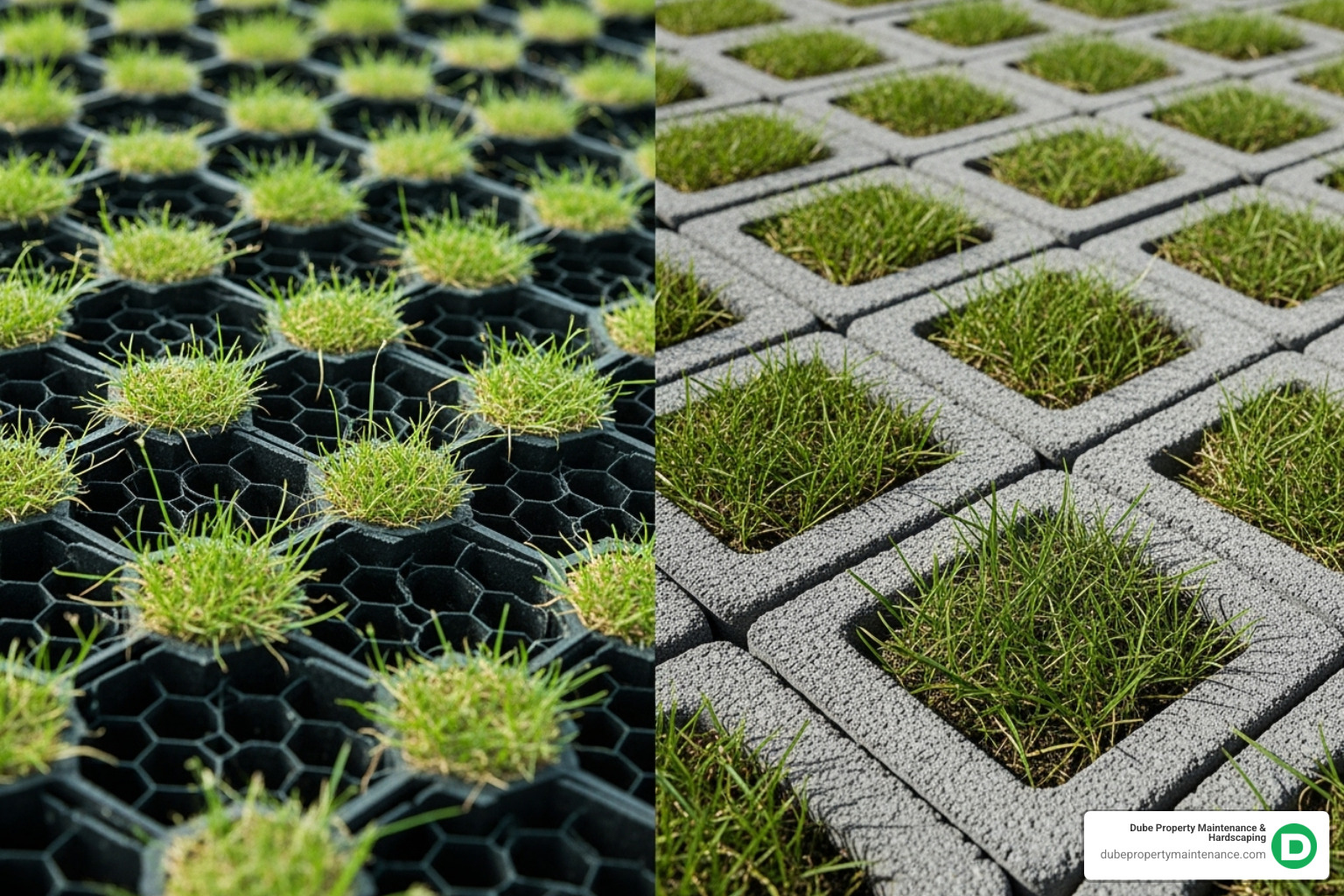
Plastic grid systems are the most popular choice for residential applications. These lightweight champions are typically made from recycled high-density polyethylene (HDPE) and feature an open, honeycomb-like structure with hexagonal cells. The hexagonal design isn’t just for looks – it provides superior strength compared to other shapes like circles or squares. These systems come in convenient interlocking sections or large rolls, making installation relatively straightforward.
What makes plastic grids so appealing is how they practically disappear once your grass grows in. The result is a seamless green surface that looks completely natural while providing incredible load-bearing capacity. Once filled with soil and established with grass, these systems become nearly invisible to the eye.
Concrete lattice pavers, sometimes called “Turfstone” or “Grass Block,” take a different approach. These pre-cast concrete units are substantially heavier and thicker – often around 3-1/8 inches thick. They create a more pronounced pattern of concrete interspersed with grass, giving you a distinctive look that some property owners prefer.
While concrete pavers offer robust durability and a unique aesthetic, they require more effort during installation due to their weight. However, their substantial nature makes them excellent for areas that need to handle extremely heavy loads or high-traffic situations.
When it comes to filling your grass pavers, you have several options. Seeding is the most common and cost-effective method – simply fill the cells with soil mix, spread grass seed, and water regularly. For faster results, sodding gives you an immediate green effect by cutting pre-grown sod to fit the openings. Hydroseeding offers a middle ground, using a sprayed mixture of seed, mulch, fertilizer, and water to promote quick, even growth.
The beauty of grass pavers lies in their incredible versatility. Whether you’re planning a project in Methuen, MA, or the surrounding areas, these systems adapt to countless applications.
Residential driveways represent one of the most popular uses. Imagine pulling into your driveway on lush green grass instead of boring asphalt! Grass pavers prevent the rutting and mud that plague traditional grass driveways while maintaining that natural look you love.
Overflow parking areas solve a common problem for homeowners who occasionally need extra parking space. During parties or family gatherings, you have functional parking. The rest of the time, it’s simply part of your beautiful lawn.
For commercial and institutional properties, emergency access lanes and fire lanes often require permeable surfaces by regulation. Grass pavers provide the structural integrity emergency vehicles need while meeting green infrastructure requirements – a perfect solution that satisfies both safety and environmental concerns.
Walkways and paths created with grass pavers offer a unique alternative to traditional hardscaping. They provide stability underfoot while maintaining that soft, natural feel that concrete or stone simply can’t match. Patios designed with grass pavers create outdoor living spaces that feel more connected to your garden and landscape.
Golf cart paths benefit from grass pavers’ ability to handle regular traffic while blending seamlessly with the surrounding turf. And for soil stabilization projects, these systems excel at controlling erosion on slopes or in areas prone to soil movement while protecting and reinforcing existing grass root zones.
The key to choosing the right system depends on your expected traffic load, desired aesthetic, and budget. Plastic grids work beautifully for most residential applications, while concrete lattice pavers might be better for commercial uses or areas requiring maximum durability.
For more insights into how these innovative paving solutions can transform your property, explore more info about driveway pavers. We’re here to help you choose the perfect grass paver system for your unique needs and create a surface that’s both functional and beautiful.
Getting grass pavers right starts with proper installation – it’s really the foundation of everything that follows. While these systems might look straightforward once they’re in place, the preparation work underneath makes all the difference in how well they perform over the years. Here in Methuen, MA, where we deal with everything from heavy spring rains to freezing winters, that solid foundation becomes even more critical.

The installation process begins with site preparation – basically, we’re creating the perfect stage for your grass pavers near me to perform. First comes excavation, where we dig down to the right depth based on what you’re planning to drive or walk on and what type of soil we’re working with. This isn’t a one-size-fits-all measurement; a residential driveway needs different preparation than an emergency access lane.
Next comes the real hero of the operation: the aggregate base. This 4 to 6-inch layer of compacted gravel is absolutely essential. As installation experts point out, “a 4″-6″ aggregate base must be installed directly below the pavers. The grass roots will grow into the aggregate (gravel) and anchor firmly. If an aggregate base isn’t installed, the pavers can sink into the soil.” We take compaction seriously here – this base needs to be rock-solid and perfectly level.
Once our foundation is ready, laying the pavers becomes the exciting part. Plastic grid systems are surprisingly user-friendly, often coming in interlocking sections that snap together like puzzle pieces, or in large rolls that we can unroll across the prepared area. Concrete lattice pavers require more precision since each piece is placed individually, but the result is worth the extra effort.
Filling the cells is where the magic really starts to happen. We use a carefully chosen mix of topsoil and sand – typically a sandy loam that allows water to filter through while giving grass roots everything they need to thrive. Every cell gets filled completely to the top, then we lightly compact everything to eliminate air pockets.
The final step is seeding or sodding. Fresh seed needs consistent watering to get established, while sod gives you that instant green look. Either way, you’ll start seeing your functional green surface come to life within weeks. For more detailed insights into our installation process, check out more info about installing pavers.
Here’s the good news about grass paver maintenance – it’s mostly just like taking care of any other lawn, with a few smart adjustments to protect your investment. Think of it as lawn care with a little extra consideration for the structure underneath.
Regular mowing keeps everything looking neat and professional. Your grass will grow just like it does anywhere else, so out comes the mower on schedule. Don’t worry if your mower occasionally scuffs the paver walls – normal lawn equipment won’t hurt the structural integrity of a quality system.
Watering requirements are pretty straightforward, especially during those first few weeks when your grass is getting established. During dry spells, consistent watering keeps everything lush and green. Fertilization follows the same schedule you’d use for the rest of your lawn – healthy grass is happy grass, whether it’s growing through pavers or not.
Weed control might need a bit more attention since weeds can sometimes find their way into joints between pavers. These usually come from seeds blowing in, not from underneath your system. A pre-emergent granular weed killer can prevent most problems, and spot treatments handle any stubborn invaders without damaging your pavers.
Winter snow removal requires the most care. When plowing, keep that blade raised above the grid surface – direct contact with metal plow blades can damage both your pavers and your grass. A little extra height during plowing protects your investment and keeps everything looking great come spring.
Following these simple maintenance practices keeps your grass paver system beautiful and functional for decades. It’s really that straightforward – treat the grass well, respect the structure, and enjoy your durable green solution. For detailed step-by-step guidance, you can download a printable version of an Installation Guide.
When you’re thinking about upgrading your driveway or creating new outdoor spaces, the big question is always whether you’re making a smart financial choice. With grass pavers near me searches becoming more common, homeowners are clearly interested – but are they worth the investment? After years of installing these systems throughout the Methuen, MA area, we can confidently say yes, especially when you look at the bigger picture.
The beauty of grass pavers lies in their incredible durability. These aren’t flimsy plastic grids that’ll crack under pressure. We’re talking about engineered systems that can handle serious weight – some supporting over 97,000 lbs per square foot. That’s not just your family car; that’s emergency vehicles, delivery trucks, and even the occasional moving van without breaking a sweat.
What makes them so tough? Most quality grass pavers use UV-resistant HDPE plastic that can handle everything Mother Nature throws at them. We’re talking about temperature extremes from -40°F to 194°F without degrading. While your neighbor’s asphalt is cracking from freeze-thaw cycles, your grass pavers just keep performing.
The longevity numbers are pretty impressive too. Many manufacturers offer 10-year warranties, but the real story is the expected service life of 50+ years. Some systems are designed to outlast asphalt and match concrete’s lifespan – all while looking like a natural lawn. That’s a lot of years without major replacements or repairs.
| Material Type | Estimated Average Cost Per Sq Ft (Installed) |
|---|---|
| Grass Pavers | $5 – $30+ |
| Asphalt Driveway | $2 – $5 |
| Concrete Driveway | $4 – $10 |
Please note: The figures above represent average costs found on the internet and are not a quote from Dube Property Maintenance & Hardscaping. Actual costs for your project will vary based on specific materials, site conditions, and labor.
Let’s talk numbers, because we know that’s what you really want to know. The cost of grass pavers varies quite a bit depending on what type you choose and how complex your installation is. These are average costs based on internet data and not actual costs for Dube Property Maintenance & Hardscaping – every project is unique, so we’d need to see your specific situation to give you a real quote.
Material costs depend heavily on whether you’re going with plastic grid systems or concrete lattice pavers. The plastic grids tend to be more budget-friendly, while concrete options typically cost more upfront. But here’s the thing – you’re not just buying the pavers. Professional installation includes site preparation (that’s excavation and base material), labor, the pavers themselves, and all the fill material like soil, sand, and seed.
Based on various internet sources, you’re looking at anywhere from $5 to $30+ per square foot installed. That’s a pretty wide range, and there’s a good reason for it. A simple residential walkway with basic plastic pavers will be on the lower end, while a heavy-duty driveway with premium materials and complex drainage requirements will push toward the higher end.
Now, we know that initial cost might make you pause, especially compared to basic asphalt. But here’s where the math gets interesting. Some of our commercial clients have actually saved money by using grass pavers because they eliminated the need for expensive stormwater detention systems. When you can achieve 100% land utilization while meeting environmental requirements, those savings add up fast.
The long-term value is where grass pavers really shine. While traditional pavement needs regular sealing, crack repairs, and eventual replacement, properly installed grass pavers just need the same care as your lawn. Less maintenance, longer lifespan, and you’re helping the environment – that’s what we call a win-win-win situation.
For projects that need both beauty and serious durability, check out more info about our masonry services to see how we can create lasting outdoor solutions for your property.
When you’re ready to transform your driveway or outdoor space with grass pavers, finding the right materials and installer is crucial for success. The good news is that grass pavers near me searches will reveal several local options, but knowing where to look and what to ask can save you time and ensure you get quality results.
Your search for grass pavers near me should start with local landscape suppliers and building material centers. These businesses often carry concrete lattice pavers and can provide valuable insights about which products work best in your specific area. They understand local soil conditions and weather patterns, which makes their recommendations particularly valuable.
Home improvement stores like major retail chains sometimes stock basic concrete grass pavers and can often special-order plastic grid systems if you know exactly what you want. Their online product pages typically include detailed specifications, which can help you compare different options before making a trip to the store.
For the widest selection, consider specialized paver distributors who focus specifically on permeable paving and hardscaping materials. These companies often carry multiple brands of plastic grid systems and can ship directly to your job site in places like Lowell, MA, or Lynnfield, MA. Many offer wholesale pricing for larger projects, which can provide significant savings.
Some manufacturers also sell directly to consumers or work through networks of regional dealers. This approach can ensure you’re getting authentic, professional-grade products, though you’ll want to verify warranty coverage and support options.
Pro tip: Always request actual product samples before making your final decision. Photos online can be misleading, and seeing the actual color, texture, and build quality in person will help ensure the finished project meets your expectations.
While some plastic grid systems might look simple enough for a weekend DIY project, professional installation is absolutely worth the investment. The difference between a grass paver system that lasts decades and one that fails within a few years often comes down to proper installation techniques.
Base preparation is everything. A properly compacted aggregate base is the foundation of any successful grass paver installation. Without this crucial step, pavers can sink into the soil, creating uneven surfaces and potentially expensive repairs down the road. Professional installers understand local soil conditions, proper drainage requirements, and the compaction techniques needed to create a solid, stable foundation.
Drainage design matters too. Installing grass pavers isn’t just about laying down a grid – it’s about creating a complete system that effectively manages stormwater. An experienced contractor can assess your property’s specific drainage needs, determine the right base depth and fill materials, and design the overall system to prevent issues like water pooling or soil erosion.
When hiring a contractor, always verify their experience with similar projects. Ask to see their portfolio and request references from local installations. A reputable company will gladly share examples of their work and connect you with satisfied customers. Make sure they’re properly licensed and insured – this protects both you and them if something goes wrong during installation.
Our team at Dube Property Maintenance & Hardscaping brings years of experience in hardscaping and landscape construction to every project across our service areas, including North Andover, MA, and Salem, NH. We understand that every property is unique, from initial site assessment and excavation through base preparation, paver installation, and final seeding. Our goal is ensuring your grass paver system not only looks beautiful but functions perfectly for years to come. For specific examples of our outdoor change work, explore more info about our patio installation services.
After exploring everything from installation to long-term costs, it’s clear that grass pavers near me searches are leading property owners to a truly innovative solution. These remarkable systems represent more than just a trend – they’re a fundamental shift toward smarter, more sustainable hardscaping that actually works with nature instead of against it.
Think about it: where else can you find a surface that supports over 97,000 pounds per square foot while looking like a natural lawn? Grass pavers deliver this incredible combination of structural integrity and natural beauty, creating spaces that are both functional and environmentally responsible. They’re not just solving today’s problems – they’re preventing tomorrow’s headaches.
The environmental benefits alone make grass pavers a smart choice. Effective stormwater management, reduced urban heat island effects, and the use of recycled materials mean you’re actively contributing to a healthier environment every time it rains. Add in their impressive durability and low maintenance requirements, and you’ve got a solution that makes sense both environmentally and economically.
Professional installation is key to getting the most from your investment. The meticulous attention to base preparation and proper drainage design ensures these systems will perform flawlessly for decades. When installed correctly, grass pavers often outlast traditional asphalt and concrete surfaces while providing benefits those materials simply can’t match.
For homeowners and businesses in Methuen, MA, and throughout our service areas – including Woburn, MA, and Atkinson, NH – Dube Property Maintenance & Hardscaping brings the expertise needed for successful grass paver installations. Our experienced team understands that combining beauty, function, and sustainability requires both technical knowledge and careful craftsmanship.
Whether you’re planning a permeable driveway, overflow parking area, or eco-friendly walkway, we’re here to help you create a durable and beautiful surface that improves your property for years to come. Let’s work together to build something that’s as good for the environment as it is for your landscape.
Contact us for a consultation on your hardscaping project and find how grass pavers can transform your outdoor space.
