
Grass cell pavers are permeable paving systems that merge the strength of traditional pavement with the natural beauty and environmental benefits of grass. These innovative structural grids create a stable foundation that supports vehicle weight while allowing grass to grow through open cells, offering an eco-friendly alternative to solid concrete or asphalt surfaces.
Quick Answer: What Are Grass Cell Pavers?
For homeowners in Methuen and surrounding areas, grass cell pavers offer a practical solution that maintains green space while providing the durability needed for New England weather. Traditional impermeable surfaces like asphalt create runoff that can overwhelm drainage systems. As one industry expert noted, “Modern construction has shifted from permeable natural materials to impermeable ones, leading to land and water pollution.” Grass cell pavers help restore the natural water cycle while maintaining functional vehicle access.
These systems work by transferring vehicle weight to a prepared base course, minimizing soil compaction and protecting grass root systems. The grid structure provides stability while allowing air, water, and nutrients to reach the soil.
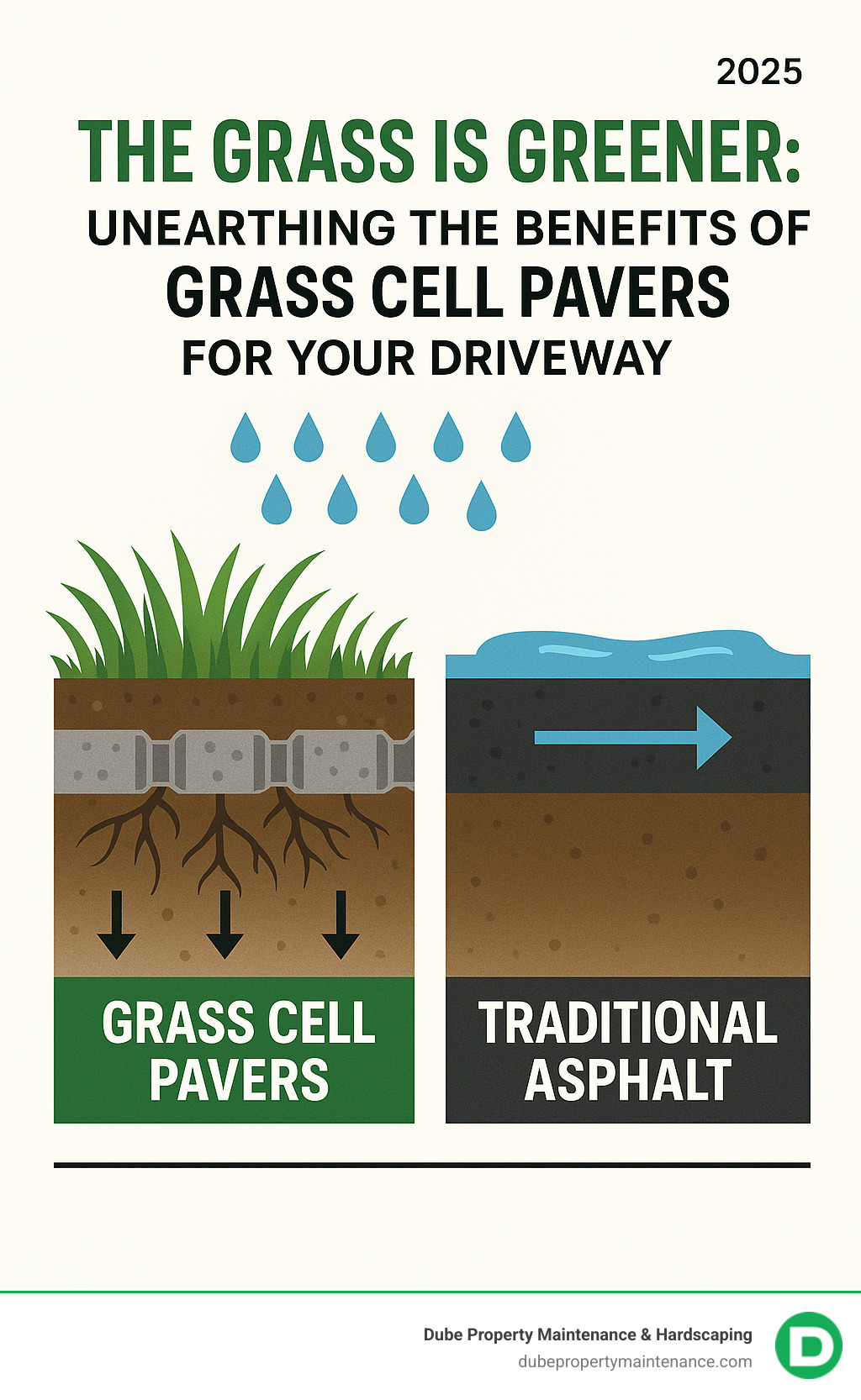
Simple guide to grass cell pavers terms:
A driveway with grass cell pavers is more than just a surface; it’s an active part of your landscape’s ecosystem. The primary benefit is superior stormwater management. Unlike traditional asphalt that creates immediate runoff, these pavers allow rainwater to soak directly into the ground. This process reduces strain on local drainage systems, prevents pooling, and aids in groundwater recharge.
For properties on slopes, grass cell pavers provide excellent erosion control, as the grass roots create a natural mesh that holds soil in place. They also help combat the Urban Heat Island effect. While asphalt absorbs and radiates heat, the grass in these systems cools the air through natural evapotranspiration.
Beyond the environmental perks, these systems offer fantastic aesthetic appeal. They transform a standard driveway into increased usable green space that blends seamlessly with your landscape, providing durability without sacrificing beauty.
For homeowners considering eco-friendly options, our permeable driveway services can help you explore what’s possible for your property.
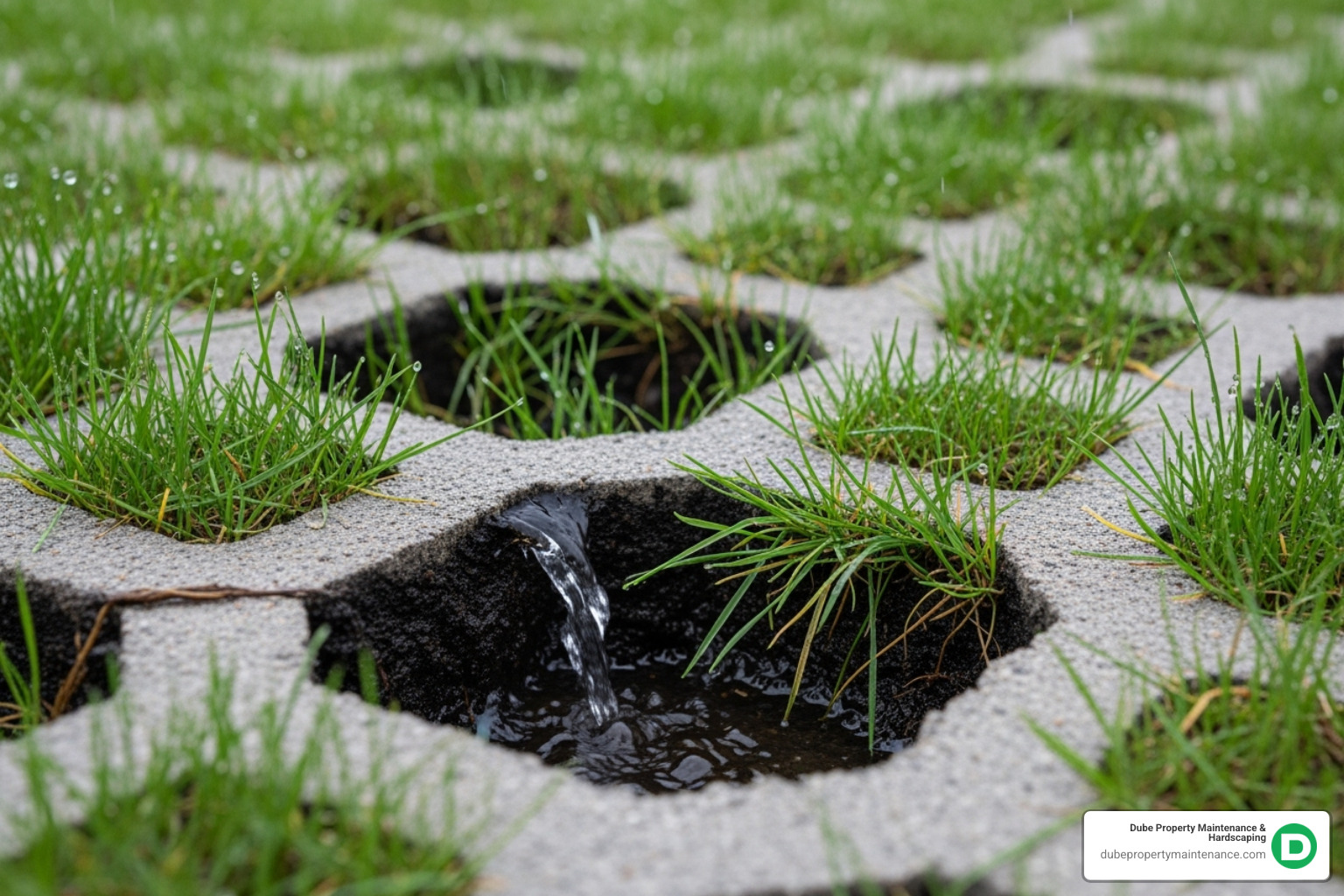
Despite their green appearance, grass cell pavers offer exceptional strength and load-bearing capacity. The grid structure provides incredible soil stabilization, preventing the sinking and rutting common with gravel driveways. High-quality systems can support over 97,000 pounds per square foot, more than enough for residential cars and trucks.
The cell structure transfers vehicle weight to the prepared base course underneath, protecting the grass roots from compaction. Many grass cell pavers are rated for H-20 and H-25 loads—engineering standards for heavy highway traffic. With proper installation, these systems maintain their compressive strength for decades, with some manufacturers claiming a 25-year life expectancy. As the grass establishes its root system, the entire surface becomes even stronger.
When weighing driveway options, it helps to see how grass cell pavers stack up against asphalt and concrete. While each has its place, grass cell pavers often come out ahead for those seeking both function and environmental benefits.
| Feature | Grass Cell Pavers | Asphalt | Concrete |
|---|---|---|---|
| Permeability | Highly permeable; manages stormwater naturally | Completely impermeable; creates runoff | Impermeable; water runs off surface |
| Aesthetics | Natural green appearance; blends with landscape | Black surface; utilitarian look | Gray hardscape; can develop cracks |
| Heat Absorption | Stays cool through natural evaporation | Gets very hot; adds to heat island effect | Absorbs and radiates heat |
| Maintenance | Lawn care (mowing, watering, occasional reseeding) | Regular sealing, crack repair, patching | Crack repair, less frequent sealing |
| Installation Complexity | Multi-step process with base prep and infill | Requires specialized equipment and timing | Concrete mixing, pouring, and curing |
The environmental differences are striking. Traditional paving contributes to runoff and heat buildup, whereas grass cell pavers improve your property’s ecological footprint. From a durability standpoint, all three options can last for decades, but grass pavers have the unique advantage of getting stronger over time as root systems develop.
If you’re curious about cost comparisons, our guide on paver driveway cost vs concrete breaks down the financial considerations.
When it comes to grass cell pavers, selecting the right system depends on your traffic patterns, aesthetic goals, and specific needs. The main differences come down to material composition and structural design.
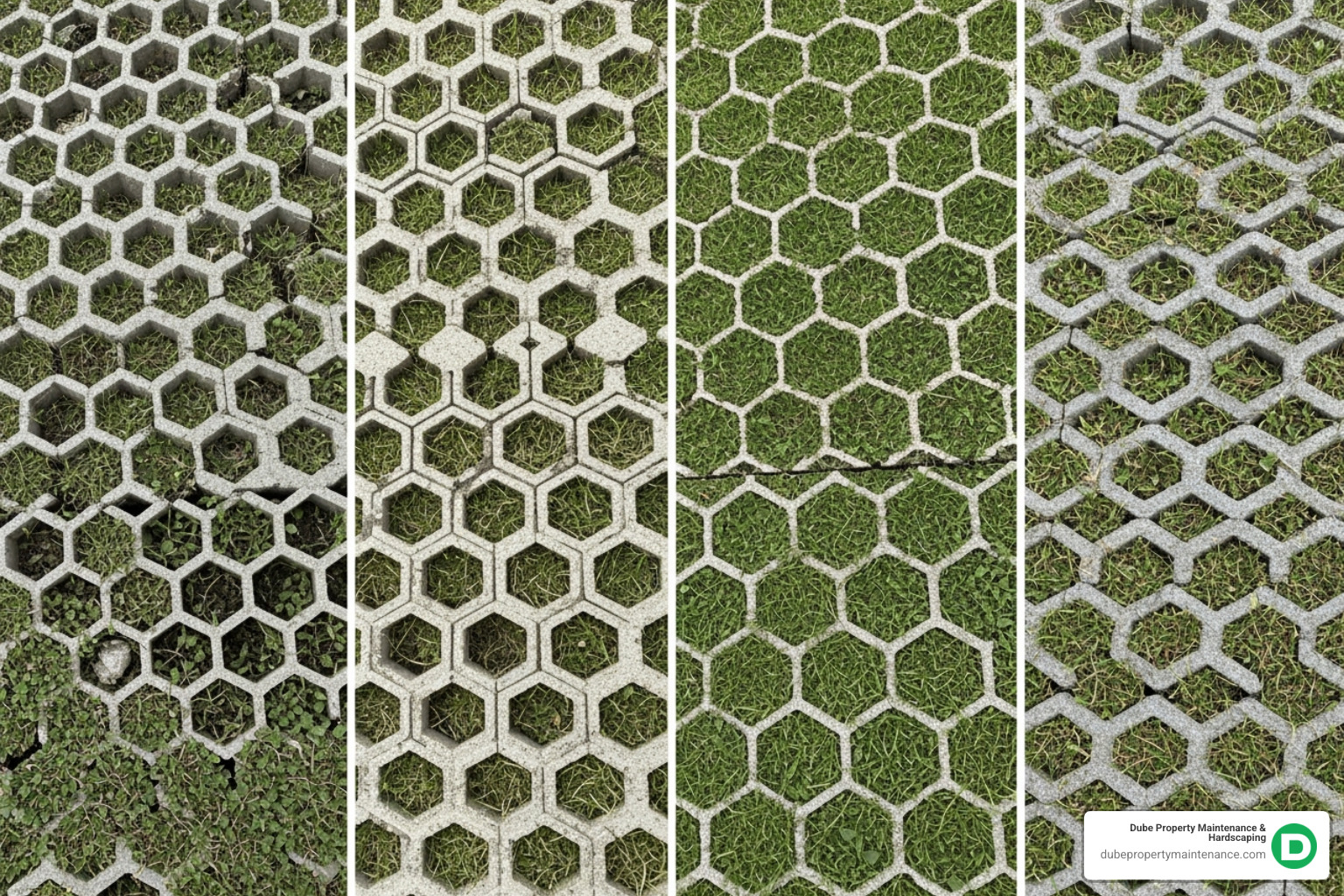
Some systems are lightweight and flexible, ideal for residential driveways, while others are built for heavy commercial use. You’ll also find variations in cell patterns, from honeycomb to grid structures, each engineered for specific loads. The form factor also varies, with some systems offered as interlocking panels and others as individual blocks. This variety allows us to match the perfect system to your project.
Most residential grass cell pavers are crafted from High-Density Polyethylene (HDPE), often using 100% recycled materials. These lightweight and flexible pavers adapt to minor ground variations and feature a honeycomb cell structure that protects grass roots. Built-in UV inhibitors prevent sun degradation, ensuring your investment remains strong for decades. Many come in convenient rolls or sheets with interlocking tabs and slots that create a secure, seamless surface and allow for an easy installation process.
For more details on how these versatile systems work, check out our guide on grass and gravel pavers.
For commercial lots, emergency access roads, or driveways with frequent heavy traffic, heavy-duty grass cell pavers are the solution. These systems use reinforced plastic or composite materials engineered for extreme loads. They boast high compressive strength, with some options handling over 57,000 pounds per square foot even when empty. This is enough to support loaded commercial vehicles while protecting grass roots.
Built for high-traffic areas, these pavers offer outstanding performance and longevity. While they may have a more industrial classic grid look, they are designed to maintain structural integrity under constant stress for decades while still creating suitable conditions for healthy grass growth.
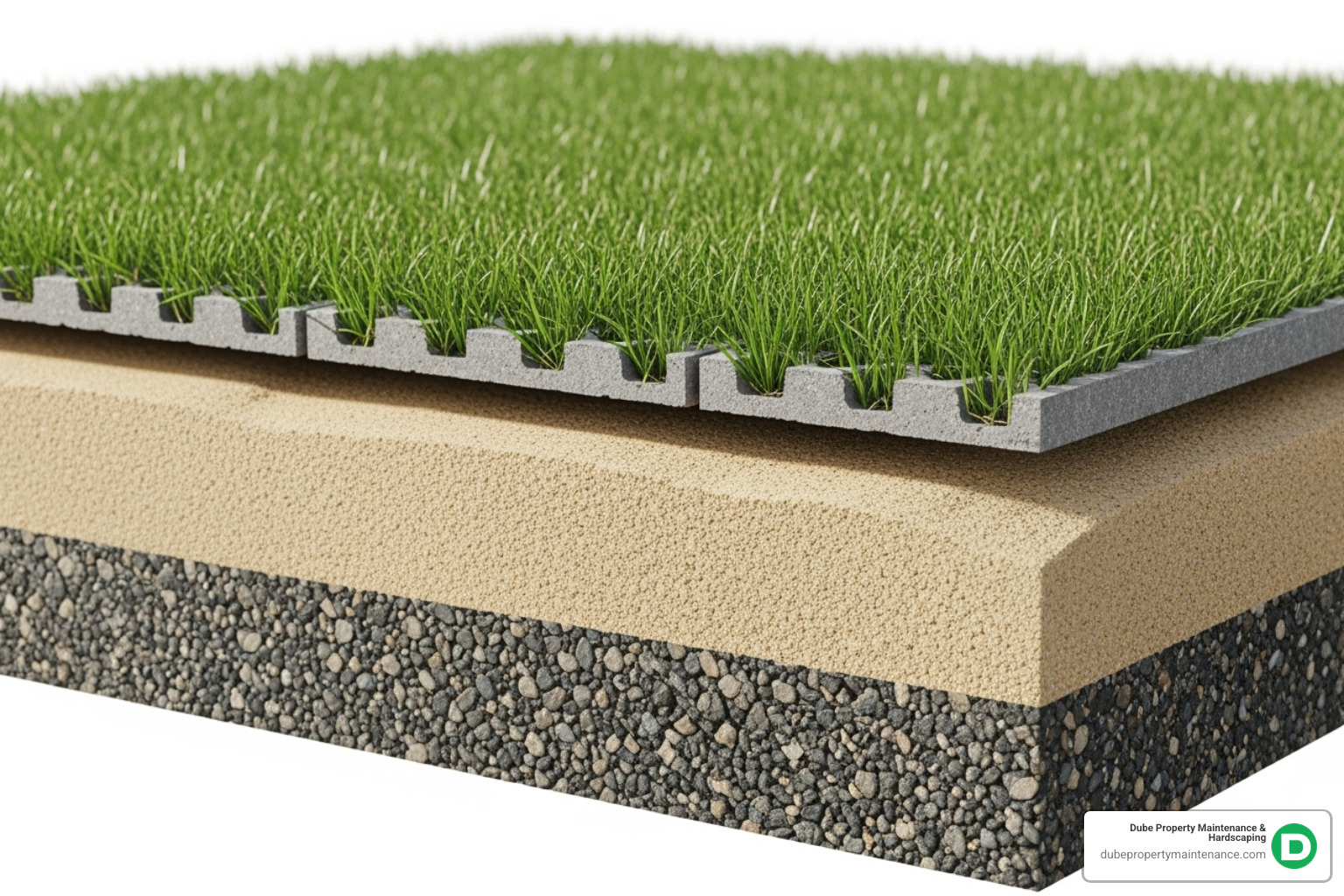
Correctly installing grass cell pavers is the foundation for a beautiful, functional green space that lasts for decades. The process is straightforward with the right expertise and tools, such as an excavator, compactor, wheelbarrow, rake, and level.
For those who want to dive deeper into paver installation, our guide on how to install a paver driveway covers many of the same principles.
Installing grass cell pavers is a multi-layer process where each step is critical for a stable, long-lasting result.
Manufacturers often provide comprehensive instructions. For example, you can download a detailed installation guide that walks through every step.
Selecting the right grass is crucial for performance and appearance. The infill material—a mix of fertile topsoil and sand—provides the foundation for strong root development.
As the grass grows, its roots interlock with the paver openings, binding the system together and making it stronger.
Caring for a grass cell paver driveway is similar to regular lawn maintenance.
Budgeting for grass cell pavers is a key consideration. While the upfront cost can be higher than some alternatives, they often provide long-term value through reduced maintenance and environmental benefits.
Please note: The following are average costs based on internet data and not actual costs for Dube Property Maintenance and Hardscaping. For a precise quote custom to your specific project in Methuen, MA, or surrounding areas, we encourage you to contact us directly.
Material costs for grass cell pavers typically range from $2 to $10 per square foot, depending on the type. Basic recycled plastic pavers are on the lower end, while heavy-duty systems cost more.
Installation labor is a significant part of the investment, ranging from $3 to $20 per square foot. This covers excavation, sub-base preparation, and finishing. The total installed cost for grass cell pavers generally ranges from $5 to $30+ per square foot. This wide range reflects project complexity, site conditions, and materials used.
In the long run, grass cell pavers can be cost-effective. Maintenance costs are similar to lawn care (mowing, watering), which can save you thousands over a 20-year period compared to sealing asphalt or repairing concrete.
For a more detailed breakdown, check out our paver driveway cost calculator. The environmental benefits, aesthetic appeal, and reduced long-term maintenance make grass cell pavers a smart choice for forward-thinking homeowners.
We get many questions from homeowners in Methuen and surrounding areas about grass cell pavers. Here are answers to the most common ones.
Yes. Many grass cell paver systems are engineered for heavy loads and can support over 97,000 pounds per square foot when installed correctly. Some are even rated for H-20 and H-25 highway loads. The key is proper installation with a sufficient aggregate base, which transfers the vehicle’s weight to the foundation, protecting the grass roots from compaction. Always check the load capacity specifications for your chosen system.
Maintenance is surprisingly similar to caring for a regular lawn. You will need to mow, water during dry spells, and occasionally fertilize to keep the grass lush and healthy. Weed control is also part of the routine. In high-traffic spots, you may need to reseed occasionally to fill in worn areas. Many clients find this type of maintenance more rewarding than sealing asphalt or patching concrete.
Absolutely. Grass cell pavers are incredibly versatile and are perfect for creating natural-looking pathways through a garden or connecting different landscape areas. For patios, they provide excellent drainage, preventing water from pooling after a storm. They create a stable, level surface for furniture and guests while maintaining the look of a lawn. They also stay cooler underfoot than solid surfaces. For more creative ideas, check out our guide on paver walkway ideas.
Grass cell pavers are a game-changing approach to modern landscaping, offering a smart solution that combines environmental impact, aesthetic value, and durability. They turn a functional space like a driveway into a living part of your property’s ecosystem, reducing stormwater runoff and mitigating the urban heat island effect.
At Dube Property Maintenance & Hardscaping, we’ve seen how transformative these systems can be for properties throughout Methuen, MA, and the surrounding New England communities. Our team brings years of expertise in landscape installations and hardscaping to every project. We understand the challenges of New England weather and know how to install grass cell paver systems that thrive in these conditions.
Professional installation is crucial for the longevity and performance of any grass cell paver project. The difference between a system that lasts for decades and one that fails often comes down to proper base preparation and attention to detail. Our experience ensures your green driveway will perform beautifully for years to come.
Whether you’re dreaming of a stunning green driveway, a permeable parking area, or natural-looking pathways, we’re here to bring that vision to life. Our comprehensive approach means we handle everything from design and excavation to final seeding.
Ready to transform your property with a solution that’s as functional as it is beautiful? Contact us for your hardscaping project today, and let’s explore how grass cell pavers can revolutionize your outdoor space.
