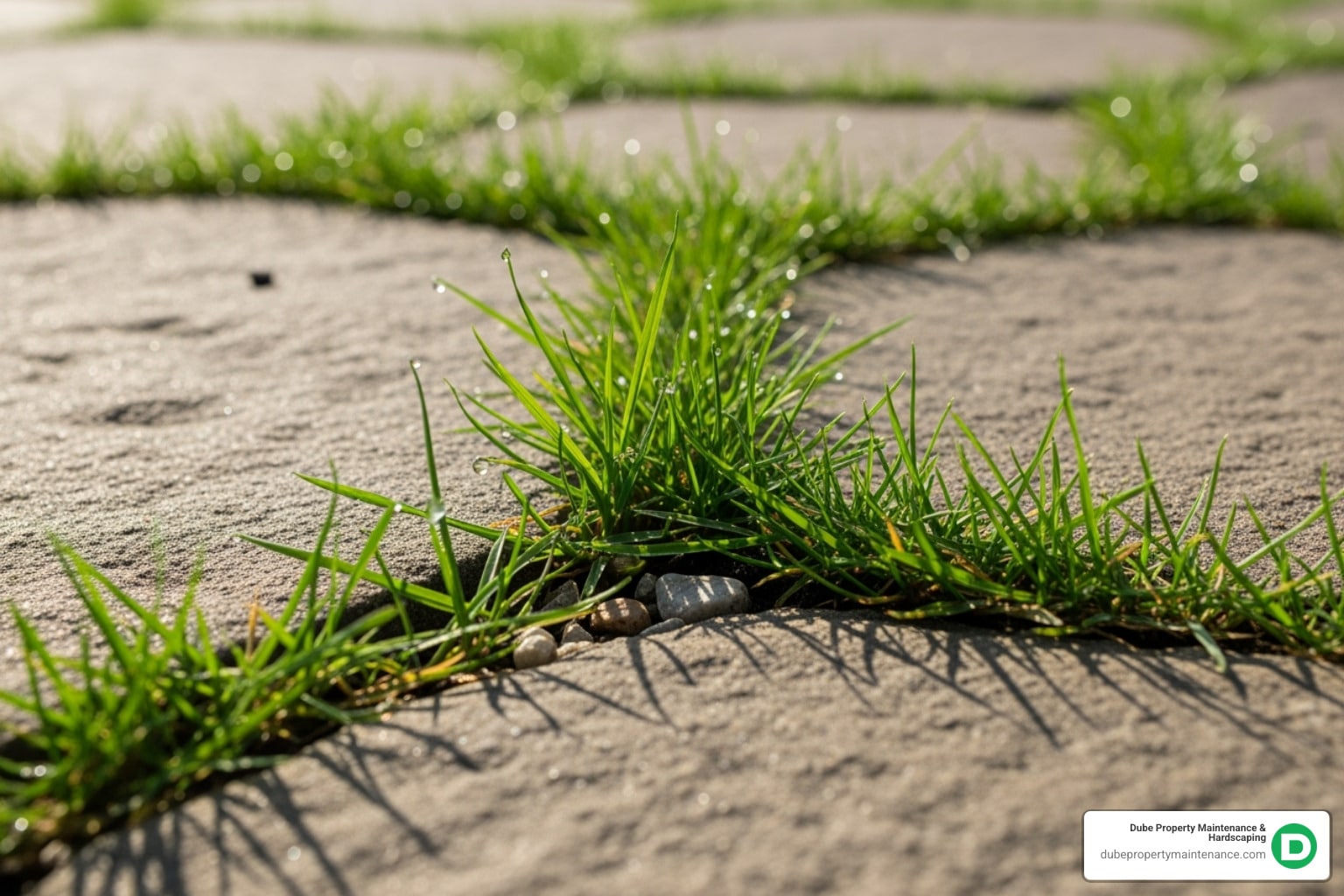

Grass between stone pavers is one of the most frustrating maintenance issues facing property owners. Those unsightly green invaders don’t just ruin your carefully designed outdoor space—they can actually damage your investment over time.
Quick Solutions for Grass Between Stone Pavers:
The problem starts small but grows fast. As one homeowner from our research noted: “During the spring and summer, it’s practically impossible and downright frustrating to keep weeds and grass from sprouting-up between patio stones.”
Why does this happen? Wind carries seeds into the gaps between your pavers. Combined with trapped moisture and organic debris, these joints become perfect growing conditions for unwanted plants.
The good news? You have multiple options to tackle this issue, from simple DIY methods to professional-grade solutions. The key is choosing the right approach for your situation and following up with proper prevention.
Whether you’re dealing with a small patio or an extensive driveway, understanding your options helps you make the best choice for your property’s needs and your maintenance schedule.
Grass between stone pavers vocabulary:
We’ve all been there: admiring our beautiful patio or walkway one day, only to spot a defiant blade of grass poking through the pristine lines of our pavers the next. It’s not just an optical illusion; grass between stone pavers is a common occurrence, and there’s a science to why these persistent plants choose our hardscapes as their preferred residence.
The main culprit is surprisingly simple: opportunity. Those narrow spaces between each stone, known as paver joints, are essentially tiny ecosystems just waiting to happen. Wind is a prolific delivery service, carrying countless windblown seeds from nearby lawns, gardens, or even distant fields. These seeds settle comfortably into the crevices, often unnoticed until they’ve taken root.
Once there, they find everything they need to thrive. Over time, the joints accumulate a mix of soil and sand filler, dust, and organic matter (think fallen leaves, decomposing plant bits, and even pet dander). This mixture provides a nutrient-rich bed, far more hospitable than you might imagine. Add to that the crucial element of moisture retention. Rainwater, dew, and even humidity can get trapped in these narrow gaps, creating a consistently damp environment that’s ideal for germination and growth. Coupled with ample sunlight exposure, these conditions create a perfect storm for unwanted vegetation.
This is why the importance of proper installation cannot be overstated. A well-installed paver system begins with a solid foundation and carefully filled joints, designed to minimize these inviting conditions. For instance, when we handle a walkway installation or a paver patio installation, we pay meticulous attention to these underlying principles to give you the best chance at a weed-free future.
While a little green might seem charmingly rustic, allowing grass between stone pavers to flourish can lead to a host of problems far beyond mere aesthetics.
First and foremost, there’s the obvious hit to your outdoor beauty. That crisp, clean look of your pavers gets overshadowed by unruly growth, making your space appear unkempt and neglected. But the issues run deeper than just visual appeal.
Grass and weed growth can create tripping hazards. As roots expand and plants grow, they can subtly lift or shift individual pavers, creating uneven surfaces that are easy to stumble over. Over time, this paver shifting can compromise the entire structural integrity of your paved area, leading to costly repairs down the line. We’ve seen how persistent root damage can undermine the carefully laid base beneath your pavers.
Beyond structural concerns, decaying grass and plant matter can start attracting pests, creating a less inviting environment for you and your family. So, addressing grass between stone pavers isn’t just about curb appeal; it’s about protecting your investment and ensuring the safety and longevity of your outdoor living spaces.
The best offense is a good defense, and when it comes to preventing grass between stone pavers, that defense starts with a strong foundation. Proper base preparation is absolutely critical for both the longevity of your pavers and the prevention of unwanted growth.
A well-prepared base, as outlined in our guide on base for pavers, involves careful grading, compaction, and the use of the right materials. This creates a stable, well-draining sub-surface that discourages plant growth.
Crucially, installing landscape fabric directly beneath your base layer acts as a powerful barrier, preventing weeds from sprouting up from the soil below. This fabric is permeable, allowing water to drain through, but tough enough to block persistent roots.
Finally, the type and application of jointing sand play a vital role. While traditional sand can be washed away or become a breeding ground for seeds, as we’ll discuss, polymeric sand offers a superior solution. When we explain how to install a paver walkway, we emphasize these foundational steps because they are the secret to a durable, low-maintenance hardscape.
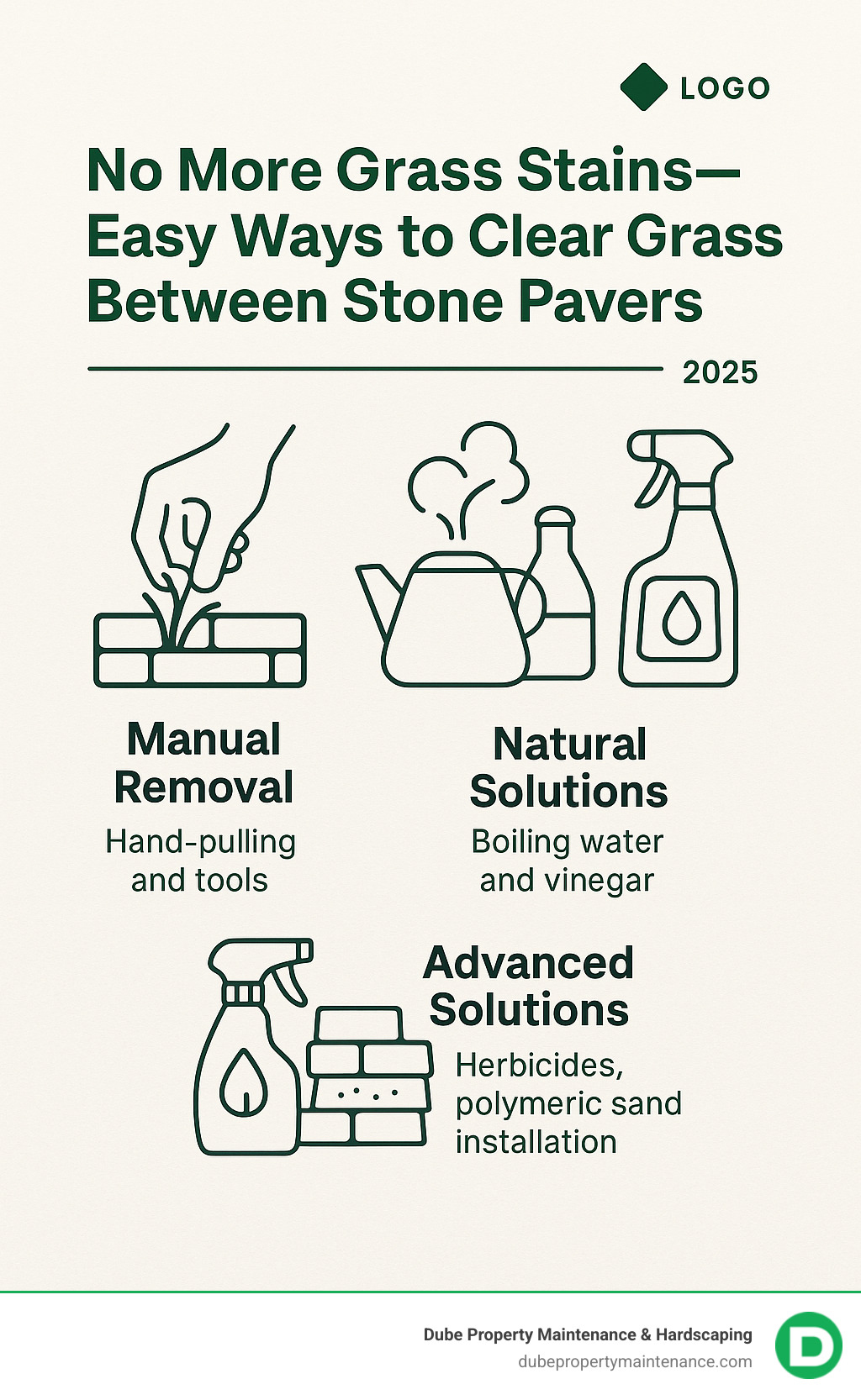
Alright, so those stubborn green invaders have set up shop between your beautiful pavers. Don’t worry, you’re not alone! The good news is, you’ve got several effective strategies to send that grass between stone pavers packing. Each method has its own perks and things to consider, so let’s break them down to help you find your perfect match.
Here’s a quick comparison to get us started:
| Method | Cost | Effort | Eco-Friendliness | Long-Term Effectiveness |
|---|---|---|---|---|
| Manual Removal | Low (tools) | High | High | Low (roots often remain) |
| Natural Methods | Low | Medium | High | Medium (reapplication needed) |
| Herbicides | Medium | Low | Low | Medium to High |
| Polymeric Sand | Medium-High | Medium | Medium-High | High (prevention) |
There’s something uniquely satisfying about tackling a problem head-on, isn’t there? When it comes to getting rid of grass between stone pavers, sometimes a good old-fashioned manual approach is just what you need. No chemicals involved, just a little bit of effort and the right tools!

The most basic method is hand-pulling. It sounds simple, and it can be for small, young weeds. But let’s be honest, for deeper roots or dry soil, it can feel like quite the workout! A little tip: try pulling weeds when the soil is damp, maybe after a rain shower. The roots come out much easier, and you’re less likely to leave bits behind that will just regrow.
For those tougher invaders, you’ll want some specialized help. A paving knife (sometimes called a crack weeder) is fantastic for digging deep into those joints, cutting roots and making removal much simpler. A tough wire brush can also do wonders for scraping away surface growth and cleaning out loose debris.
Some folks even reach for their pressure washer to blast away weeds and dirt. It can be super effective for clearing out joints quickly! Just a word of caution: that powerful stream can also wash away the jointing sand that keeps your pavers stable. If you go this route, be ready to top up that sand afterward to keep everything secure.
Want even more tips for battling unwanted growth? Check out these helpful resources on controlling weed and grass growth.
Prefer a gentler approach for your home and the environment? Good news! There are some fantastic, eco-friendly ways to tackle grass between stone pavers without reaching for harsh chemicals. These natural solutions are often safer for your kids and pets, too, once they’ve dried.

First up, the boiling water method. It’s wonderfully simple and surprisingly effective! Just boil a kettle of water, then carefully pour it directly onto the unwanted grass and weeds in those paver joints. The intense heat shocks the plant cells, and poof! They’re gone. Just be super careful when handling hot water to avoid any splashes or burns. A calm, windless day is best for this job.
Next, there’s the trusty vinegar solution. White vinegar (you know, the kind in your pantry!) contains acetic acid, which basically dries out the plant tissues until they shrivel up. You can use it straight for really stubborn weeds or mix it with a tiny bit of dish soap – that helps it stick to the leaves. Apply it on a sunny day, and watch it work its magic!
And then there’s salt application. This one can be effective because salt dehydrates plants. Some folks recommend a mix of about three parts water to one part salt. However, here’s a big heads-up: salt can be tough on your surrounding soil and even other plants. It can make the area unfriendly for future growth, so it’s generally best used very sparingly, and only in spots where you’re sure you won’t want anything else to grow, like far from your garden beds or lawn.
Using these natural methods is a wonderful way to keep your beautiful hardscape and landscaping looking great without relying on strong chemicals.
Sometimes, you need to bring out the big guns, especially for widespread grass between stone pavers or if you’re looking for a more long-term solution. That’s where advanced methods like herbicides and polymeric sand really shine.
Let’s talk about herbicides first. These are chemical treatments designed to target and eliminate unwanted plants. You’ll typically find two main types:

Now, for a true game-changer in long-term prevention and stability: polymeric sand. This isn’t just any sand; it’s a special blend with polymers that, when you add water, harden up to form a strong, flexible bond between your pavers. It essentially creates a solid, almost impenetrable barrier that weed seeds simply can’t push through. Plus, it does double duty by stabilizing your pavers, keeping them from shifting or wobbling. It’s a key ingredient in great paver driveway maintenance and other hardscaping projects, making your life much easier in the long run!
Removing grass between stone pavers is like winning a battle; keeping it away for good is winning the war! The real secret to maintaining your beautiful, pristine pavers lies in a consistent, long-term prevention strategy. It’s all about creating an environment where those pesky weeds and grass simply can’t thrive, making your life much easier in the long run.
A few simple habits can make a world of difference. For starters, regular sweeping is a surprisingly powerful tool. By sweeping your paved areas weekly, you whisk away fallen seeds, dirt, and organic debris before they have a chance to settle into the joints and provide nourishment for new growth. We always tell our clients that preventing a problem is far less work than fixing it later!
Beyond sweeping, sealing your pavers with a quality product offers another layer of protection. A good sealant not only improves the color and protects the surface from stains, but it also helps to further harden the jointing sand, creating a less hospitable environment for weeds to take root. And don’t forget to regularly top up your joint sand.
Over time, even the best polymeric sand can experience a little erosion or wash away in small amounts. By replenishing and re-activating the jointing material as needed, you maintain that critical barrier against unwanted growth. This proactive approach is a cornerstone of our hardscape maintenance service. Choosing the right joint filler from the start, like polymeric sand, is also key to this long-term success.
When we talk about preventing grass between stone pavers, we simply have to give polymeric sand its well-deserved moment in the spotlight. This innovative material is truly one of the best lines of defense you can have against those persistent green invaders. It’s a game-changer!
So, how does this magic sand work? Polymeric sand is a special blend of finely graded sand mixed with unique polymer additives. When you sweep it into the paver joints and then moisten it with water, these polymers activate. They form a durable, flexible bond that essentially “glues” the sand particles together.
Our research highlights that “Polymeric sand acts as a sealant that hardens after activation by water, binding sand particles and preventing weed seed germination.” This hardening creates a tough, impenetrable barrier that weed seeds simply can’t push through or even germinate within. Some polymeric sands even boast a high pH level, which can further inhibit future weed growth.
Beyond its incredible weed prevention capabilities, polymeric sand also offers significant benefits for the overall stability and longevity of your paved surfaces. It effectively locks your pavers in place, preventing shifting and erosion of the joint material, which can be a common headache with traditional sand.
For best results when applying, always ensure the joints are dry, sweep the sand thoroughly into all crevices, and then activate it with a gentle mist of water. Let it dry completely to form that super-strong, hardened seal. When you’re considering materials for your outdoor spaces, understanding options like polymeric sand is key to choosing the perfect pavers: materials and styles.
A little consistent effort throughout the year goes a very long way in keeping your pavers looking their absolute best and completely free from grass between stone pavers. Establishing a regular maintenance schedule will save you significant time and headaches in the long run, and helps catch small issues before they become big ones.
Here’s a simple seasonal checklist we often recommend for our clients:
By following a consistent year-round property maintenance plan, you can significantly reduce the effort needed to keep your pavers looking pristine and enjoy your outdoor spaces worry-free.
It’s completely normal to have questions when you’re tackling grass between stone pavers. Many homeowners face the same challenges! Here are some common inquiries we hear and our straightforward answers to help you out.
In a word? Yes! While a few green sprouts might seem minor or even “natural,” letting grass between stone pavers grow isn’t just an aesthetic headache. It can actually cause bigger problems for your beautiful hardscape down the line.
Think of it this way: those tiny roots are surprisingly mighty. As they grow, they can push and pull at your pavers, causing them to shift, crack, or become uneven. This not only looks messy, but it can also create tripping hazards for you and your family. Our research really emphasizes this point, noting that it “can also cause the stones to become uneven over time.” Over time, this kind of shifting can even compromise the stability of your entire paved area. Plus, decaying plant matter can sometimes invite unwanted pests or lead to stubborn discoloration. So, while a little green might seem innocent, it’s a clear signal that it’s time to take action and protect your investment.
It’s tempting, isn’t it? Grabbing that string trimmer seems like a quick and easy way to zap those pesky green invaders. However, when it comes to grass between stone pavers, we strongly recommend against using a string trimmer or weed whacker.
While they’re fantastic for lawn edges, these tools can cause more harm than good to your pavers. The rapidly spinning line can easily chip, scratch, or damage the edges of your stones, leaving unsightly marks. Even worse, that powerful spinning action can aggressively blast away the jointing sand that sits between your pavers.
This sand is super important! It’s what locks your pavers in place and keeps them stable. When it’s dislodged, your pavers can start to shift and become uneven, leading to more weed growth and potential damage. Instead, consider gentler manual tools like a paving knife or wire brush, or explore natural or chemical solutions that won’t risk your hardscape’s integrity.
That’s a great question, and the answer can vary a bit! Generally, you can expect polymeric sand to hold strong for several years – typically anywhere from 5 to 15 years. It’s a fantastic long-term solution for keeping grass between stone pavers at bay.
However, how often you might need to refresh it depends on a few things. For instance, climate factors play a big role; areas with heavy rainfall, extreme temperature swings, or harsh winters might see the sand degrade a bit faster. Also, consider the traffic levels on your paved area. A busy driveway will experience more wear and tear on the polymeric sand compared to a quiet patio that’s used less often.
The best way to know if it’s time for a reapplication is to keep an eye out for signs of degradation. If you notice the sand washing out from the joints, visible cracks in the hardened sand, or new weeds starting to sprout through, those are clear signals that it’s time to top up. Including a quick check of your joint sand during your regular seasonal maintenance will help you determine exactly when it’s time to refresh and ensure the ongoing integrity of your hardscape. For comprehensive care, exploring options like our hardscape construction service can ensure your pavers stay pristine for years to come.
We’ve explored quite a journey together, haven’t we? From the hands-on satisfaction of manual removal to the eco-friendly charm of natural solutions, and then delving into the power of advanced treatments like herbicides and the absolute game-changer that is polymeric sand. The big takeaway, as you’ve likely gathered, is that prevention truly is the secret sauce. By understanding why grass between stone pavers shows up and then consistently applying those smart maintenance strategies, you’re well on your way to keeping your hardscapes looking sharp.
However, let’s be real. Sometimes, those pesky green invaders are just too stubborn, the area you’re tackling is simply too vast, or your busy schedule just won’t allow for another DIY project. For those large-scale challenges, deeply rooted infestations, or when you simply crave that precious peace of mind, bringing in the pros ensures a result that’s not just effective now, but truly lasts.
That’s where Dube Property Maintenance & Hardscaping comes in! We’re not just about pulling a few weeds; we specialize in delivering high-quality, comprehensive outdoor solutions that reclaim your beautiful spaces. Our expert team is fully equipped with the know-how and the right tools to not only banish existing grass between stone pavers but also to put in place those crucial long-term prevention strategies. This includes everything from proper base preparation, which is the unsung hero of any hardscape, to the expert application of polymeric sand, protecting your investment for years to come.
We’re proud to offer year-round services, including everything from landscape installations and construction to all things hardscaping and even snow management, for both residential and commercial clients. Serving Methuen, MA, and numerous surrounding communities like Andover, Billerica, Lowell, Salem, NH, and Windham, NH, we’re ready to bring our expertise right to your doorstep.
So, don’t let unsightly grass between stone pavers dim the sparkle of your property. Let us help you reclaim your outdoor living spaces and enjoy the pristine beauty you deserve!
Contact us for expert hardscaping services today, and let’s get those pavers looking pristine!