
A geo fabric retaining wall uses geotextile fabric to filter water, prevent soil from clogging drainage stone, and reduce the destructive hydrostatic pressure that causes walls to fail. This synthetic layer is the key to changing a 5-year wall into a 50+ year structure. It lets water pass through while blocking soil, keeps drainage gravel clean, and can cut water pressure by up to 90%.
Water is the number one enemy of retaining walls. When trapped, it builds tremendous force—just two feet of water behind a 4-foot wall creates 500 pounds of sideways force per linear foot. This is enough to topple walls that seem solid. A proper drainage system with geotextile fabric is the difference between a wall that lasts and one that becomes a future headache. While the blocks get the attention, the fabric does the critical work behind the scenes.

Geosynthetics are engineered materials that solve critical construction problems. For a geo fabric retaining wall, two key players are geotextile fabric and geogrid. They have different jobs but work together to ensure your wall’s longevity.

Geotextile fabric is a permeable synthetic textile (polypropylene or polyester) that acts like a sophisticated coffee filter. It lets water through while stopping soil particles. This prevents your drainage gravel from clogging, which in turn relieves hydrostatic pressure. By keeping the drainage system clean, it enables a wall to last 50+ years. It provides filtration and separation, ensuring each material layer behind the wall does its job effectively. For a deeper look at how we build walls that last, check out our Retaining Walls services.
Not all fabrics are the same. For drainage in a geo fabric retaining wall, you need non-woven geotextile fabric. Its felt-like structure offers excellent water flow (high permeability) while filtering soil. Look for a weight of 3-4 ounces per square yard and a tensile strength of at least 200 pounds per inch to prevent tearing during installation.
Woven geotextile fabric, in contrast, is like a tarp. It’s very strong but has low permeability, making it unsuitable for drainage. Also, never use thin black landscape fabric meant for weed control; it will tear and clog, causing the very failure you’re trying to prevent. For detailed specifications, you can download the full geotex install guide here.
People often confuse these two, but their roles are distinct:
Geotextile fabric is needed for virtually all retaining walls to manage drainage. Geogrid is critical for walls over 4 feet tall, or those supporting heavy loads like a driveway. On larger projects, you’ll use both: fabric for water management and geogrid for structural reinforcement. Skipping fabric because you have geogrid is a common, costly mistake.
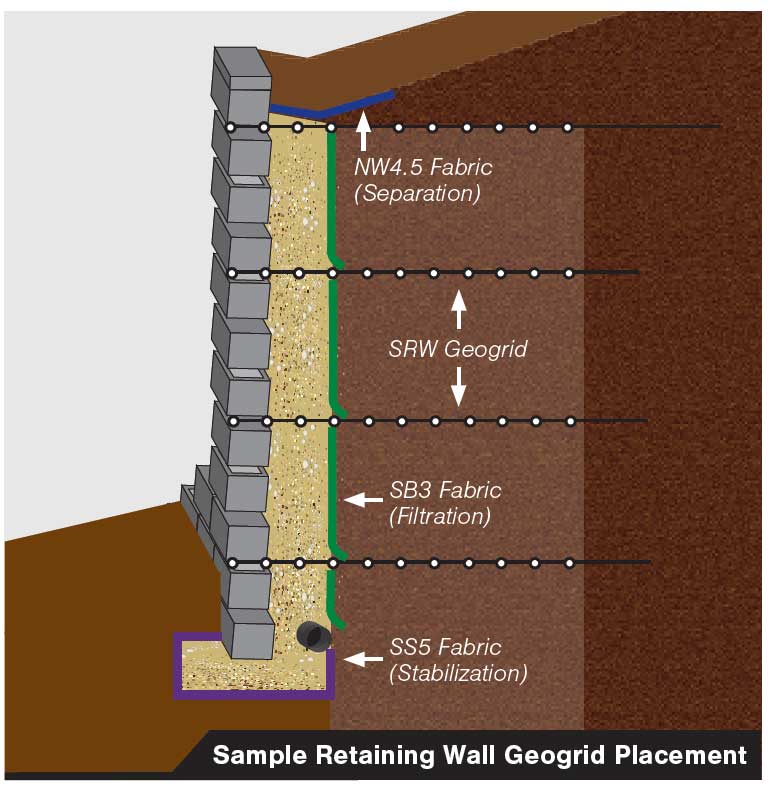
Proper installation is non-negotiable for a geo fabric retaining wall. Even the best materials will fail if installed incorrectly. While small DIY projects are possible, professional installation is essential for walls over 4 feet, on slopes, or with poor soil to ensure safety and longevity.
Before digging, gather your tools and materials and prepare the site.
Site Preparation is Critical:
Precision at each step is key to a lasting wall.

For more details, see our guide on How to Install Landscape Fabric Behind Retaining Wall.
Avoid these costly errors:
The drainage system is the lifeblood of your geo fabric retaining wall, preventing the immense force of hydrostatic pressure. This system, combining fabric, gravel, and pipe, is the ultimate solution for water management and clog prevention.

A successful drainage system has four key components working together:
This complete system is essential for managing water. Learn more in our guide on More info about Retaining Wall Drainage Pipe.
Follow these rules for a drainage system that lasts for decades:
A geo fabric retaining wall, built correctly, is a long-term investment. You’re not just building for a few years; you’re building for decades. This longevity is the core of its value and sustainability.
A properly installed geo fabric retaining wall can last 50+ years. In contrast, a wall without proper drainage may fail in as little as 5-10 years. This incredible lifespan is possible because professional-grade non-woven geotextiles are engineered to resist rot, mildew, and chemical breakdown when buried.
The key is combining quality fabric with correct installation. Once the fabric is protected from UV light by gravel and soil, it performs its filtration job for decades. This small upfront investment saves you from the massive expense and headache of rebuilding a failed wall down the road.
While geotextiles are plastic-based, their environmental benefit lies in their longevity. The most sustainable wall is the one you don’t have to rebuild.
Consider the resources consumed in rebuilding a failed wall: new blocks, gravel, fuel for transport, and landfill waste from the old materials. By extending a wall’s life from 10 years to 50+ years, geotextile fabric prevents this cycle of waste and consumption multiple times over. This lifecycle benefit is the heart of sustainable construction. Building it right once is far more eco-friendly than rebuilding a poorly designed wall repeatedly. A geo fabric retaining wall embodies this principle, treating your landscape as a lasting investment.
Understanding the role of a geo fabric retaining wall system is key to making informed decisions. Here are answers to the most common questions we hear.
Non-woven geotextile fabric is the best choice for drainage and filtration. Its felt-like material allows water to pass through freely while blocking soil particles, preventing clogs. Woven geotextiles are generally too dense for drainage, and standard landscape weed barrier is completely unsuitable and will fail quickly. Geogrids are for reinforcement, not drainage, and are used in conjunction with geotextile fabric on taller walls.
Yes. Even on walls under 4 feet, water pressure can cause failure. Geotextile fabric is a low-cost insurance policy that protects your entire investment. It prevents soil from contaminating your drainage stone and relieves hydrostatic pressure, which is critical for the long-term stability of any retaining wall, regardless of its size. For more on this, read our guide: Do I Need Filter Fabric for Dry Stack Retaining Wall?
No, absolutely not. This is a critical error that defeats the entire purpose of the system. The fabric is designed to let water pass into a clean drainage zone. Backfilling with soil will clog the fabric, trap water, and create the immense hydrostatic pressure you are trying to prevent. You must use 3/4-inch clean, angular gravel for the drainage zone to allow water to flow freely to the drain pipe and away from the wall.
The invisible layer of geotextile fabric is the unsung hero of your geo fabric retaining wall. It filters water, prevents clogs, relieves destructive hydrostatic pressure, and adds decades to your wall’s lifespan.
Water is a powerful force, but a well-designed system can manage it. With non-woven geotextile fabric, clean angular gravel, and a properly sloped drain pipe, you transform a temporary structure into a permanent one that can last 50 years or more. Skipping these steps to save a little money upfront will lead to costly failure down the road.
For smaller walls on flat sites, a meticulous DIY approach can succeed. However, for walls over 4 feet, on slopes, or in areas with poor soil, professional expertise is crucial. We have installed hundreds of retaining walls in communities like Methuen, MA, Salem, NH, Andover, MA, Burlington, MA, and Derry, NH. Our experience ensures every wall is built with a robust drainage system designed to last.
At Dube Property Maintenance & Hardscaping, we build it right, so you only have to build it once. We know the invisible components determine whether a wall lasts five years or fifty.
Ready to build a retaining wall that stands the test of time? Contact us today to discuss your hardscaping project and build a retaining wall that lasts!
