

Gardens with steps are a beautiful fusion of garden design and landscape architecture, offering both functionality and aesthetic appeal. For those contemplating this type of garden, the basics include understanding their versatility and the visual charm they bring to any outdoor space. Whether you’re looking to improve accessibility on a slope or simply add an enchanting feature to your landscape, steps can play an essential role.
Here’s what to consider when creating gardens with steps:
Changing slopes into graceful garden steps can profoundly affect how your landscape is perceived and used. They can guide the eyes and feet through a garden, introducing new energy to flat areas and making steep areas more accessible. No wonder so many homeowners invest time in getting their garden steps just right. Whether it’s practicality or beauty you seek, well-designed steps can deliver both.
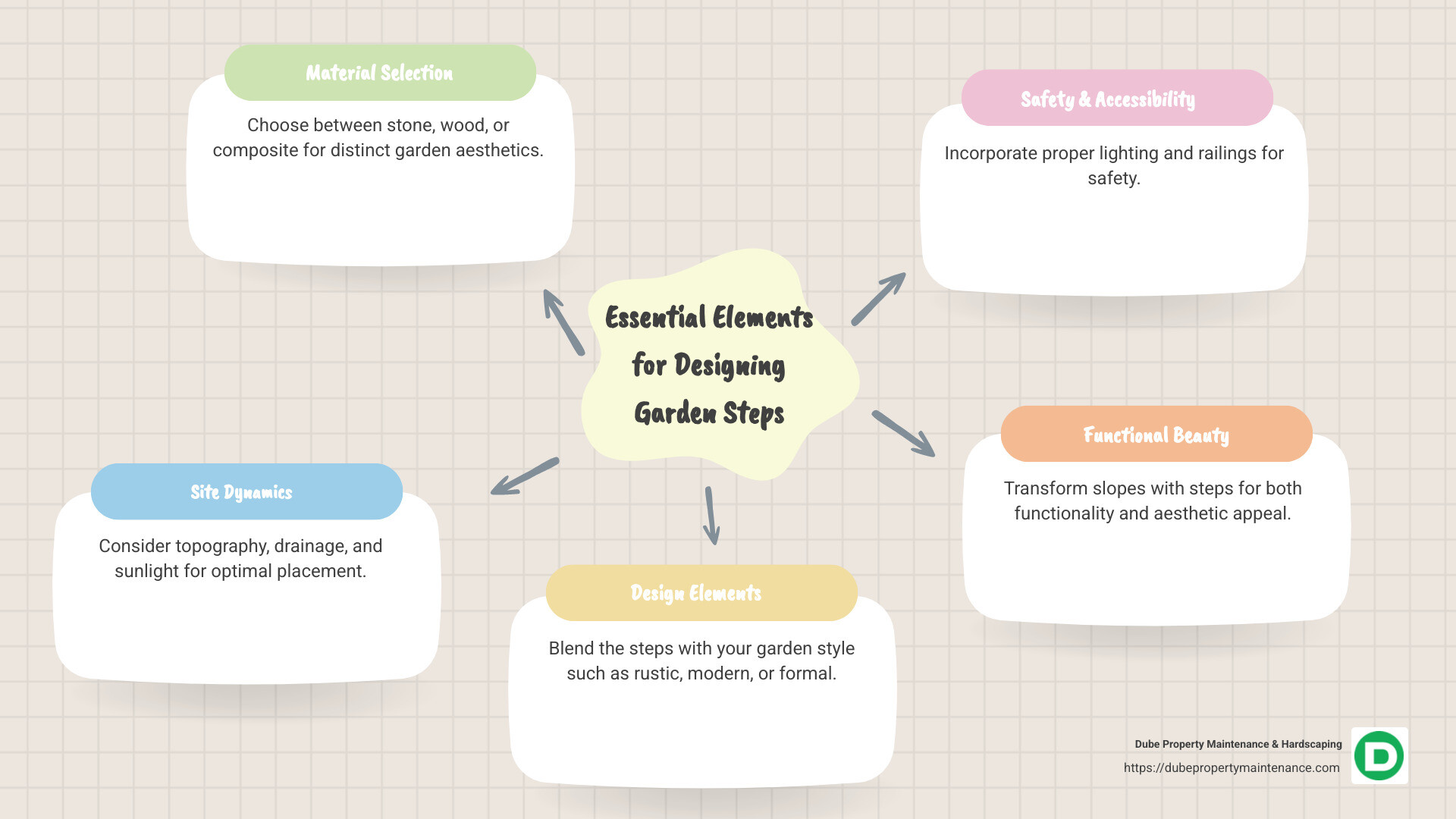
Gardens with steps terms to know:
– outdoor step designs
– flagstone steps and walkway
– front step and walkway designs
When planning your garden with steps, there are a few foundational aspects to consider: site selection, soil testing, and determining the garden type. Each plays a crucial role in ensuring your garden not only looks beautiful but also functions well.
Choosing the right location for your garden steps is essential. Look for areas with natural slopes or places where steps would improve accessibility. Consider the views you want to highlight or hide. For example, steps leading to a secluded seating area can create a sense of findy and privacy.
Key points for site selection:

Before you start digging, it’s important to test your soil. This will help you understand its composition and what amendments might be necessary to support the construction and any plants you wish to install nearby.
Steps for effective soil testing:
Testing ensures that your steps have a solid foundation and that surrounding plants thrive.
Deciding on the type of garden you want will influence the design and materials you choose for your steps. Whether you envision a lush, formal garden or a low-maintenance xeriscape, the garden type will guide your planning process.
Considerations for choosing your garden type:

By thoughtfully planning your garden with steps, you create a harmonious blend of beauty and functionality. Each decision, from site to soil to style, contributes to a garden that improves your outdoor space in both form and function.
Designing a garden with steps is an exciting way to add dimension and interest to your outdoor space. Let’s explore some key elements in choosing materials, creating layouts, and maximizing small garden areas.
The materials you select for your garden steps greatly influence the overall look and durability. Here are some popular options:
Choosing the right material depends on your garden’s style, maintenance preferences, and budget.
The layout of your garden steps can transform the space. Here are some ideas to consider:
Consider the style and function of your garden when choosing a layout. Each design element should complement the overall aesthetic.
In small gardens, every inch counts. Here’s how to make the most of your space:
Incorporating steps thoughtfully can turn even the smallest gardens into dynamic, functional spaces.
By carefully selecting materials and considering layout options, you can create a stunning garden with steps that improves both beauty and usability. Next, we’ll dive into the construction process to bring your design to life.
Creating a garden with steps involves some careful planning and execution to ensure safety, durability, and aesthetic appeal. Let’s break down the process into manageable steps and look at how to maintain them over time.
1. Excavation:
Start by marking the area where your steps will be. Use stakes and string to outline the path. Then, excavate the soil to the depth required for your materials. A depth of about 6-8 inches is typical for most garden steps. Ensure the base is level and compacted to prevent settling.
2. Base Preparation:
Lay a base of crushed stone or gravel. This layer should be about 4 inches thick. It helps with drainage and provides a stable foundation. Compact the gravel with a tamper to ensure it’s solid and even.
3. Step Laying:
Now, you can start laying the steps. If you’re using natural stone, place each stone carefully, ensuring it’s level with the previous one. For other materials like timber or gravel, follow the manufacturer’s guidelines for installation. Make sure each step is consistent in height and depth to avoid tripping hazards.
Inspect your steps regularly for signs of wear or damage. Look for loose stones, rotting wood, or uneven surfaces. Early detection of issues can prevent bigger problems later on.
Weed Control:
Weeds can quickly invade the space between steps, especially if you’re using gravel. Use a weed barrier fabric under the gravel or apply a natural weed killer regularly to keep them at bay.
Repair Tips:
For minor repairs, such as filling gaps or replacing a loose stone, keep extra materials on hand. For example, have some spare stones or gravel available. If the steps are sinking or shifting, you may need to re-level the base or seek professional help for more extensive repairs.
By following these steps and maintaining your garden steps, you can ensure they remain a beautiful and functional part of your garden for years to come. Next, we’ll explore alternatives to steps that can offer accessibility and ease of use in your garden design.
Not every garden can accommodate steps. For those seeking accessibility or dealing with challenging landscapes, alternatives like ramps and gentle gradients offer practical solutions.
Ramps provide a smooth transition between different levels of your garden. They are especially beneficial for wheelchair users and those with mobility issues. When designing a ramp, the gradient is crucial. A common recommendation is a 1:12 slope, meaning for every 12 meters of horizontal distance, the ramp rises by 1 meter. This ensures a gentle incline that’s easy to steer.
Key Points for Ramps:
In gardens where space is abundant, gentle gradients can replace steps entirely. These sloped pathways blend seamlessly with the landscape and are less intrusive than ramps or steps. They can be designed to curve or meander through the garden, adding a natural flow to the layout.
Design Tips for Gentle Gradients:
Incorporating ramps and gentle gradients in your garden improves accessibility for everyone. It’s not just about compliance; it’s about creating a welcoming environment for all visitors.
Accessibility Features:
By integrating ramps and gentle gradients, you can create a garden that’s both beautiful and accessible, ensuring everyone can enjoy the space comfortably.
Adding plants and lighting to your gardens with steps can transform the area into a vibrant and welcoming space. The right combination of greenery and illumination not only improves beauty but also increases safety.
Perennials are an excellent choice for step borders as they return year after year, offering consistency and reliability. Consider plants like Hostas or Lavender which add texture and color. Their low maintenance needs make them ideal for busy gardeners.
Annuals, on the other hand, provide a burst of seasonal color. Think about using Petunias or Marigolds to create a lively border that can be changed annually for variety. They are perfect for those who enjoy refreshing their garden’s look every season.
Succulents are another great option, especially for dry areas. Their varied shapes and colors, like those of Sedum or Echeveria, can create an interesting and eye-catching border. Plus, they require minimal watering, making them a sustainable choice.
Proper lighting is crucial for both aesthetic appeal and safety. LED options are popular due to their energy efficiency and long lifespan. They can be recessed under the step treads to create a soft glow that highlights the steps without being overpowering.
Solar lights are a sustainable alternative, using sunlight to illuminate your steps at night. They are easy to install since they don’t require wiring. Position them along the step edges to improve visibility and guide visitors safely.
Safety features in lighting are essential. Consider adding motion sensors to your lights, which will turn on automatically when someone approaches. This not only saves energy but also increases security by deterring intruders.
By incorporating a thoughtful selection of plants and lighting, your garden steps can become a stunning focal point that is both functional and beautiful.
Building affordable garden steps can be done using materials like sleepers and treated timber. These materials are cost-effective and durable, making them a great choice for budget-conscious gardeners.
Sleepers, often made from reclaimed wood, provide a rustic look and are sturdy enough for step construction. Lay them horizontally to form the treads, and stack them for risers. Ensure they are securely anchored to prevent movement.
Treated timber is another economical option. It’s resistant to decay and insects, extending the life of your steps. Cut the timber to your desired tread and riser dimensions, and assemble using galvanized screws to avoid rusting.
Designing a garden can be simplified into ten manageable steps:
If steps aren’t suitable for your garden, consider ramps as an alternative. Ramps provide a gradual incline, making them ideal for accessibility and easy navigation.
Space requirements are crucial when planning a ramp. The recommended gradient is 1:12, meaning for every 12 meters of horizontal distance, the level should change by 1 meter. This ensures a gentle slope that is safe for all users, including those with mobility challenges.
Ramps can be constructed using a variety of materials, such as gravel, concrete, or timber. Ensure the surface is non-slip, and incorporate landings every 10-12 meters for safety and rest areas.
By considering these options, you can create a garden that is both functional and welcoming for everyone.
Creating a garden with steps is an art that combines functionality with aesthetic appeal. At Dube Property Maintenance & Hardscaping, we pride ourselves on delivering high-quality, comprehensive outdoor solutions that transform your garden into a dynamic space.
Our Professional Team: Our team of experts is dedicated to crafting gardens that not only meet your needs but exceed your expectations. We understand that each property is unique, and we tailor our services to fit your specific requirements. Whether it’s designing intricate garden steps or ensuring the safety and accessibility of your outdoor spaces, our professionals are equipped with the skills and experience to bring your vision to life.
High-Quality Solutions: We believe in using the best materials and techniques to ensure durability and beauty in every project. From natural stone to treated timber, our choice of materials reflects our commitment to quality and sustainability. Our attention to detail and meticulous craftsmanship guarantee that your garden steps will not only be functional but also a stunning feature of your landscape.
For those looking to improve their outdoor spaces with expertly designed garden steps, Dube Property Maintenance & Hardscaping is your trusted partner. Our comprehensive services, coupled with our commitment to excellence, make us the ideal choice for all your landscaping needs.
Let us help you create a garden that is both a functional space and a beautiful sanctuary. Contact us today to start your journey towards a stunning garden with steps that truly stand out.
